When you look at the United States from Riyadh, Berlin or Seoul, different things come into focus, but the set of topics surprisingly echoes. In mid‑winter 2026 the U.S. is simultaneously perceived as an indispensable military guarantor, an irritating hegemon, an unpredictable presidential court and a country whose internal conflicts are increasingly becoming an external factor. In the Saudi, German and South Korean debates about Washington three major lines are especially noticeable right now: security and military dependence, a shift in the global balance toward Asia and China, and growing anxiety about internal instability and radicalization within the U.S. On top of that sits an acute agenda around Iran and the Middle East and an expectation about what exactly America wants from its allies — and what allies are no longer willing to accept unconditionally.
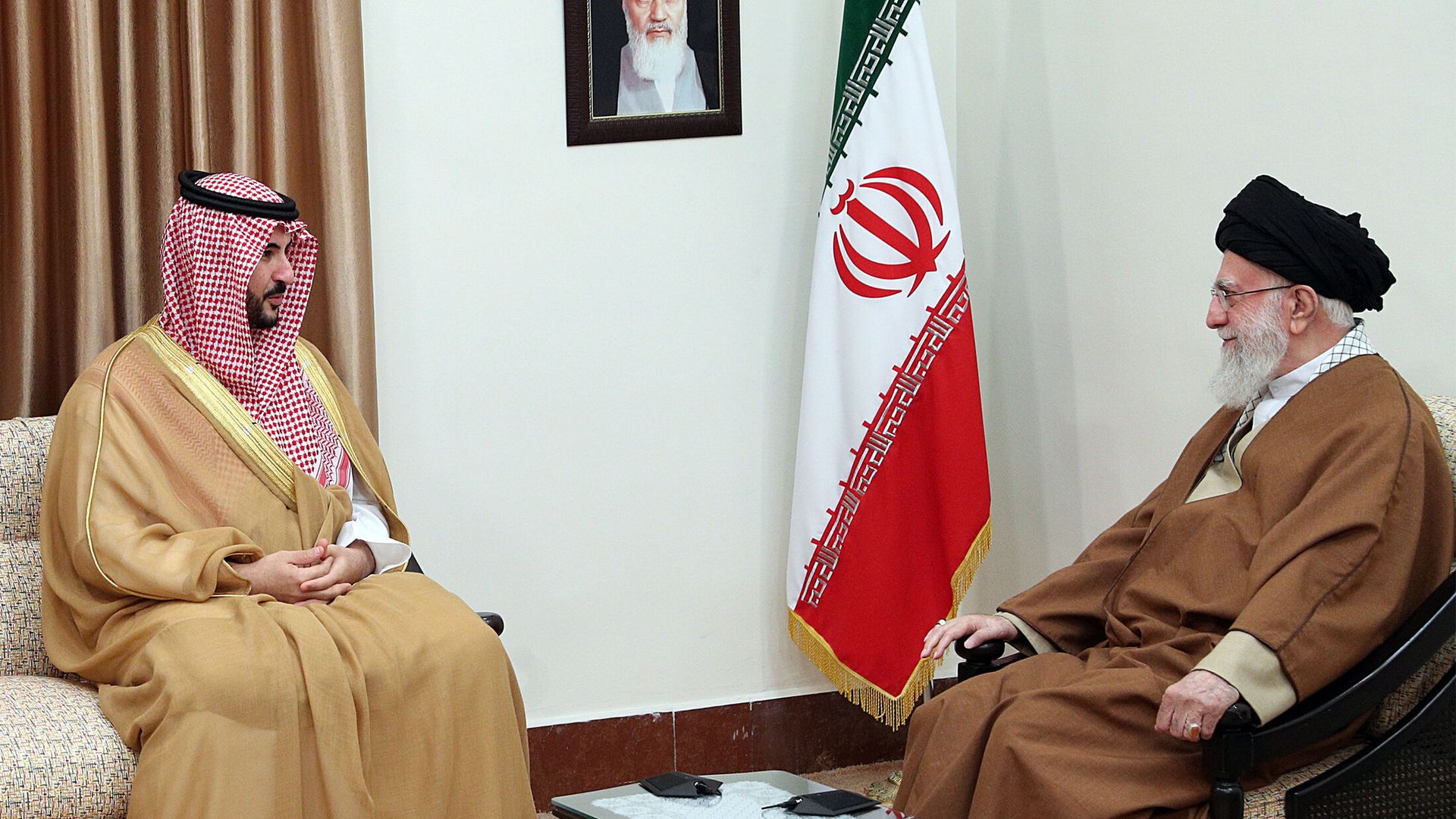
The first line is a hard‑nosed pragmatic conversation about security, where the U.S. remains the center but no longer the sole pillar. The sharpest, though ambivalent, tone comes from Saudi Arabia. There Washington is criticized, feared for its weakness, and still regarded as a key military partner. A recent leak about a closed conversation of Saudi Defense Minister Prince Khalid bin Salman in Washington showed how nervous the kingdom is about Iran: according to Axios, he warned that if President Donald Trump does not carry out his threats toward Tehran, this will “embolden the regime” and strengthen the Iranian leadership’s confidence in impunity.(axios.com) This private, much more hawkish tone contrasts with official Saudi calls for restraint in the region, echoed by Arab media wary of a direct U.S.‑Iran confrontation and strikes on oil infrastructure.(apnews.com)
At the same time the Saudi political elite publicly emphasize a “shared vision with the U.S. of a stable Middle East” — a formulation recently reiterated in a cabinet statement after Crown Prince Mohammed bin Salman’s visit to the U.S. The statement stressed the strengthening of strategic partnership and coordination on regional issues.(saudigazette.com.sa) This line of official unity is reinforced by major defense contracts: the Trump administration approved potential sales to Riyadh of Patriot PAC‑3 interceptor missiles worth about $9 billion — a step that Saudi press interprets as confirmation that the U.S. remains ready to be an umbrella against Iran and the Yemeni Houthis.(wsj.com)
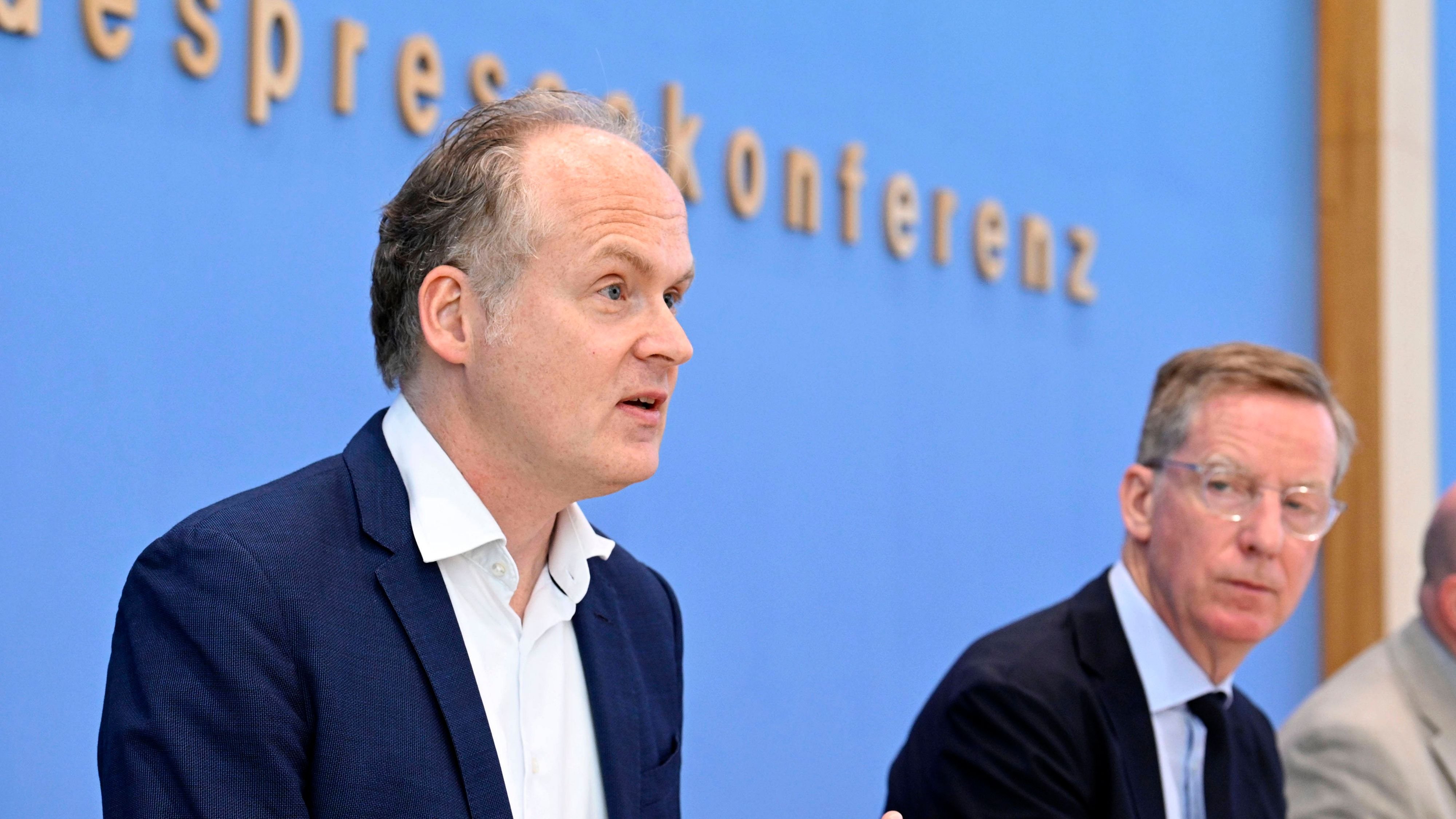
The German discussion about security is built on a different emotional background, but around the same axis of dependence. Influential German media in recent weeks have examined to what extent the Bundeswehr is “tied” to American technologies: F‑35 fighters with critically important software, P‑8A Poseidon anti‑submarine aircraft, Patriot interceptors, naval weapons systems, and in the future — a whole package of American long‑range capabilities, including the Dark Eagle hypersonic system, which the parties agreed to station in Germany from 2026. All this creates a situation where, without regular updates and decisions from Washington, a significant part of German defense simply will not function.(zeit.de)
Hence the nervous tone in discussions around the new American national security strategy, where Washington effectively demands that Europeans take on the “primary responsibility” for their own defense while at the same time reproaching them for democratic decline and ineffective migration policy. German Foreign Minister Johann Wadephul was forced to publicly assure that the U.S. “clearly stands behind NATO” and that the nuclear umbrella continues to “daily ensure our political capacity to act,” although some formulations of the American document are called “unacceptable” in Berlin.(zeit.de) Against that backdrop Chancellor Friedrich Merz, in a programmatic speech on foreign policy, demanded that Europe “speak the language of Machtpolitik” — politics of power — and cited the episode of Trump’s attempt to achieve de facto annexation of Greenland as a moment of Europe “gaining self‑respect,” having been able to give a firm response and repel both territorial claims and tariff threats.(welt.de)
The South Korean security debate is less loud, but the American factor there is literally existential. Changes of administrations in Washington and talk about a possible reduction of U.S. commitments in Asia have for several years fed both fear and the idea of a “sovereign pillar” in Seoul — from indigenous missile programs to periodically resurfacing discussions about the possibility of South Korean nuclear weapons. For Korean commentators episodes like the U.S.‑German conflict over Greenland or Trump’s threats to “punish” Europe with tariffs serve as a reminder: an ally that provides security today could tomorrow start bargaining on geopolitical issues in the transactional logic familiar from business.
The second cross‑cutting theme is the shift of the global center of gravity and how that changes attitudes toward the U.S. In Saudi Arabia, even before the current wave of tension with Iran, polls showed that for public opinion China had become a more desirable partner than America: a majority of respondents called good relations with Beijing “important” for the kingdom, while the U.S. lagged noticeably in priority — roughly two‑thirds agreed with the thesis that “you cannot rely on the U.S. now, and you should look more to countries like China and Russia as partners.”(washingtoninstitute.org) At the same time, official Saudi authors such as former diplomat Fahd Nazir in English‑ and Arabic‑language columns have been insistently telling Western audiences that between Saudi Arabia and the U.S. there are now not only common interests but also “shared values” — from religious tolerance to reforms in women’s rights under “Vision 2030” — and that this is what makes the bilateral alliance sustainable.(washingtoninstitute.org)
The German press, in turn, increasingly discusses how America’s role is changing on the geoeconomic field. Against the backdrop of sluggish European growth and a predicted slowdown of the U.S. economy to roughly 1.5% in 2026, some German research centers forecast that in the next year or two Germany’s growth rates could even briefly overtake the U.S. — not because of a German leap forward, but due to a general normalization after recession and a cooling of the American cycle.(handelsblatt.com) This is taken as an argument that Europe should free itself from the junior‑partner complex and build a more autonomous economic and technological position, including in relations with China. The tone of German commentary on British Prime Minister Keir Starmer’s visit to Beijing is telling: this “thaw” in Sino‑British relations is described as part of a broader trend where European capitals seek a balance between China and an increasingly confrontational Washington, aiming to reduce strategic and economic dependence on the U.S.(welt.de)
For the South Korean audience the shift of gravity is even more acute. Proximity to China and the DPRK makes any U.S.‑China escalation a concrete risk, not a theoretical dispute. On Korean foreign‑policy institute pages the U.S. is increasingly described as a force pushing the region toward a “new cold war” over technologies, semiconductors and military blocs, while a large part of business and the expert community would prefer a more flexible balance between the American market and Chinese manufacturing space. Thus a careful reader of the Korean press will find both pieces urging Washington to be tough on Pyongyang and articles warning that irresponsible escalation between the U.S. and China could hit the Korean economy harder than the American or Chinese ones.
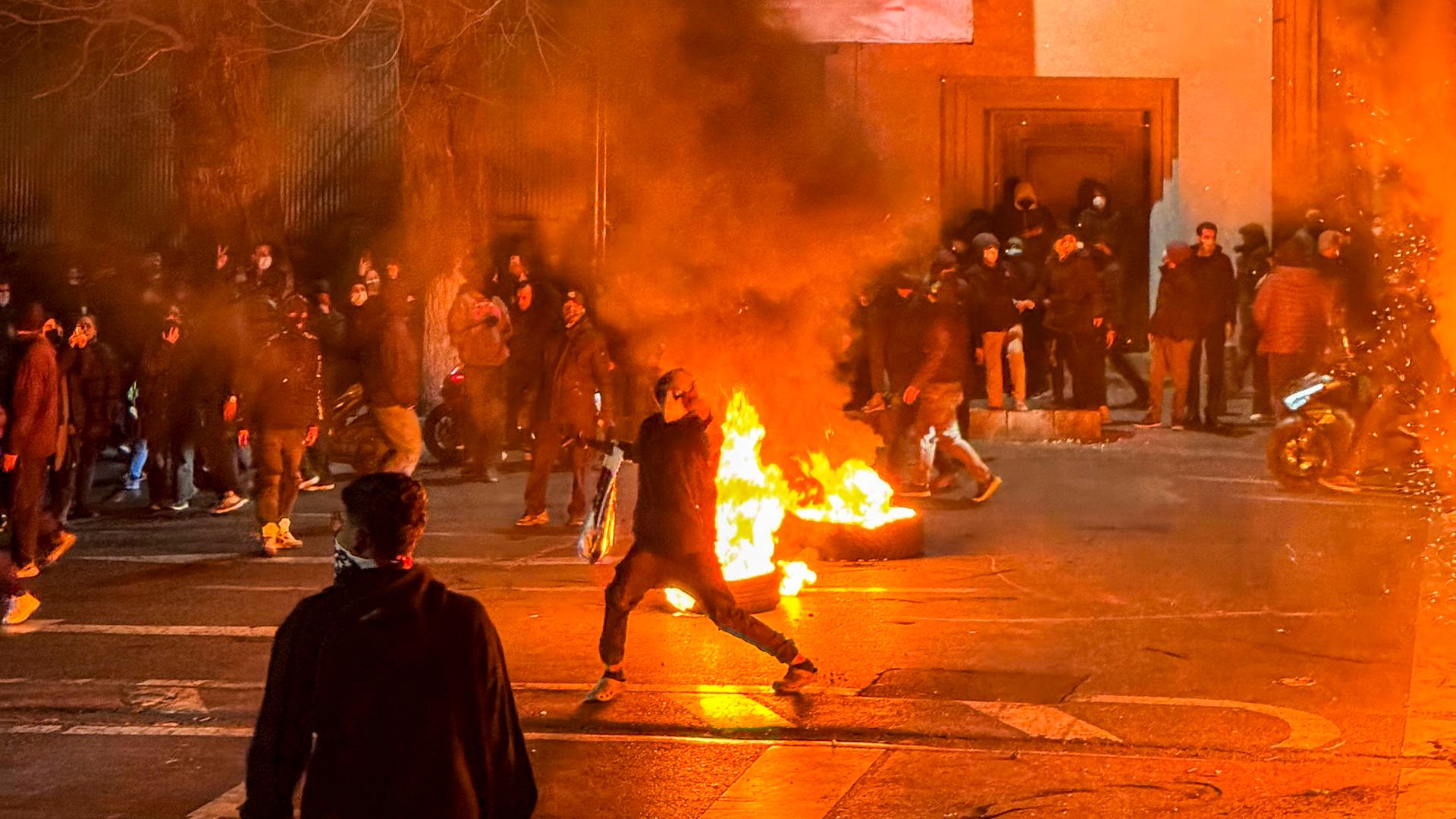
The third line uniting the three countries is growing concern about the internal condition of America itself. Saudi press traditionally writes cautiously about U.S. domestic affairs, but in recent years it has paid more attention to issues directly related to regional and Islamic agendas: rising Islamophobia, disputes over migration policy, mass protests. Recent reports in pan‑Arab media about the case of Rene Nikki Good, a 37‑year‑old American woman who died during an ICE operation in Minnesota in January 2026, are presented as an example of how aggressive use of force by U.S. agencies can erode public trust and provoke mass protests, including clashes between federal authorities and local “sanctuary cities” refusing to cooperate with immigration agents.(aawsat.com) For many Middle Eastern commentators it is paradoxical: a country that for decades lectured the region about human rights now struggles with protests triggered by the killing of a citizen by its own security forces.
In Germany attention to American domestic politics has always been high, but now it is shaded by more anxious tones. The first and second Trump administrations are written about as factors undermining the predictability of an ally — what used to be considered a fundamental advantage of the U.S. The new U.S. national security strategy, accusing Europe of degrading democratic standards, was received in Berlin not only as an attempt at pressure but also as a symptom that the American political elite increasingly views the world through the prism of its internal culture war — exporting it to allies.(zeit.de) German commentary regularly raises the theme of rising polarization in the U.S., the risk of political violence and how reliably an American leadership so afflicted can make long‑term strategic decisions. At the same time these texts often add another note: despite all this, it is still the American nuclear shield and military bases in Europe that deter Moscow.
South Korean observers take the American internal drama less emotionally but far more instrumentally. For them the question is: how resilient is American democracy and how will that affect treaty obligations to allies? Korean analytical reviews recall episodes like the January 6 Capitol attack in 2021 or periodic stalemates over the budget and national debt not as moral lessons but as reminders that even a superpower can be paralyzed by its own internal conflicts — and then Asian allies must be prepared for times when Washington’s help or attention are unavailable.
A separate but cross‑cutting storyline remains Iran and a possible American intervention. Turkish, Russian and Arab press — cited in German surveys of the international press — have in recent days actively discussed the scenario of a U.S. military strike on Iran. Turkish Cumhuriyet outright asserts that given the current character of the Iranian regime the only real option for changing the system is external intervention, comparing it to the defeat of Nazi Germany by the USSR, the U.S. and Britain and to interventions in Bosnia and Serbia in the 1990s. Russian Nezavisimaya Gazeta, relying on leaks from closed dialogues, points out that Saudi representatives in private talks with Americans express fears that if Trump does not carry out his threats, this will only strengthen the Iranian leadership.(deutschlandfunk.de) For the Saudi audience this confirms the ambivalence: publicly the kingdom opposes escalation, but in private a tough American line on Iran is perceived as a vital insurance.
In Germany a possible U.S. operation against Iran is viewed through the lens of familiar dilemmas: on the one hand Berlin is interested in neither a nuclear Iran nor explosive regional destabilization; on the other hand the memory of the Iraq war and the Libyan campaign makes any American “regime change” deeply unpopular. German commentators this time write much more about risks to European energy security, potential increases in migration and how the U.S. at any moment could force its allies to “support an operation” by leveraging security dependence.
Finally, there is a softer but also unifying line — cultural and symbolic. German and Korean press pay noticeable attention to the upcoming 250th anniversary of U.S. independence in summer 2026 and the World Cup to be hosted by the U.S., Canada and Mexico. Interpreting American history as first an anti‑colonial and then an imperial story helps many European and Asian writers draw parallels to the present: a country that once fought a “distant monarchy” is now perceived by many allies as a distant center of power interfering in their internal affairs.(bpb.de) For parts of the Saudi and Korean audiences, especially the young, America remains above all a source of pop culture, technology and education — but even these voices increasingly combine admiration with criticism, from racial politics to attitudes toward Muslim communities.
The overall motif across all three countries is the same: the world is tired of U.S. monopoly, yet still not ready to do without American military and economic power. In Riyadh they count on American missiles and diplomatic cover while simultaneously building bridges to Beijing and Moscow and amplifying anti‑Israeli rhetoric in the media space, which complicates American projects for normalization with Israel.(wsj.com) In Berlin they argue with Washington about democracy, migration and Greenland, but continue buying American planes and missiles and increasing participation in NATO operations, including a new Arctic mission devised largely to “calm” Trump.(welt.de) In Seoul they anxiously watch both Beijing and Washington, trying not to be crushed between a “new cold war” and the unpredictability of American domestic politics.
The common shift is not that the world is turning away from the U.S., but that more capitals are thinking in terms of “multi‑vector” policies — even traditional pillars of Washington like Saudi Arabia and Germany. America remains the main player, but no longer the only arbiter. And it is precisely how the U.S. responds to these new expectations for a more equal, less hierarchical world that Riyadh, Berlin and Seoul are listening for most attentively today.