In early February, leading Asian media focused on several US-related storylines at once — threads that in the United States are often treated separately but that from abroad combine into a single picture. For India, the key issue is a new trade‑energy deal with Washington and the question of how safe it is for Delhi to tie its energy security to American terms. For China, it is another, even if brief, federal government shutdown and the escalation of Washington’s trade‑tariff policy, which in Beijing is already being described directly as “关税战” — a tariff war. Japanese discourse is traditionally more restrained, but there, too, the sense is growing that political instability in the US and a hard trade line are undermining America’s role as a predictable leader.
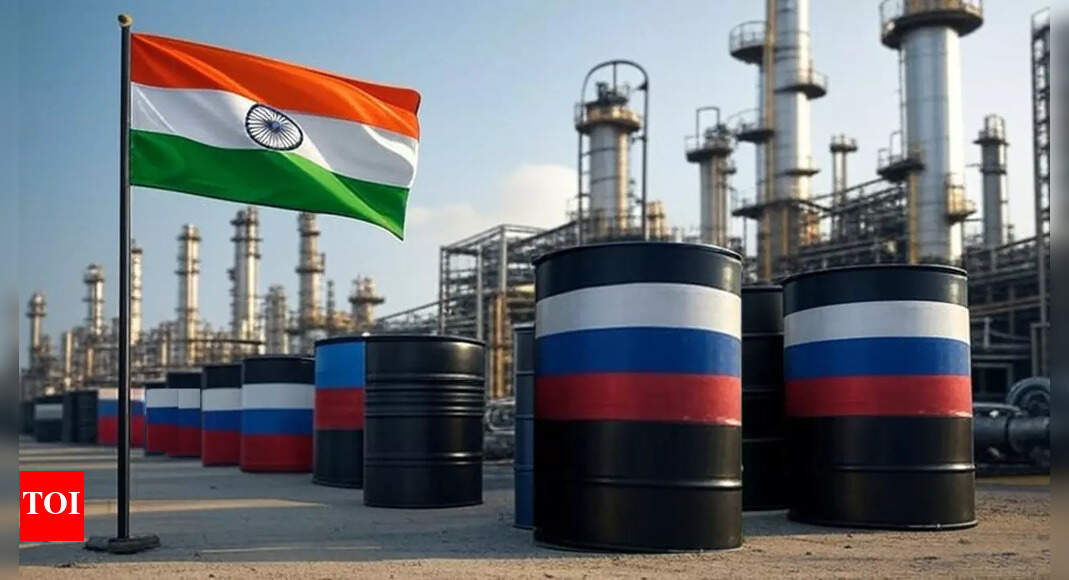
On the surface are the headlines about a US–India deal. President Donald Trump announced that Washington is reducing additional tariffs against India, introduced in 2025 and then bringing cumulative duties to roughly 50%, down to about 18% in exchange for India “stopping imports of Russian oil” and switching to purchases of American energy resources and possibly supplies from Venezuela. Russian and Chinese outlets, citing Trump’s statements and sources in Washington, relayed the White House message: the US had achieved another “victorious” reorientation of energy flows in its favor. Meduza noted that after a conversation with Narendra Modi, Trump directly stated that the Indian prime minister “agreed to stop buying Russian oil and to buy much more in the United States and possibly in Venezuela” in exchange for reduced tariffs on Indian goods in the US and other trade concessions. Presented this way, the deal is framed for audiences as part of Washington’s energy strategy and simultaneously as an element of pressure on Moscow and Beijing via the Indian direction.
However, the tone in Delhi itself is noticeably different. The Indian news agency Press Trust of India, cited, for example, by EADaily, conveyed the position of government sources: this is not about a full cessation of Russian oil but about “limiting purchases” within the framework of agreements with the US in exchange for tariff reductions. According to Indian and Russian economic publications, in January 2026 India had already reduced imports of Russian oil by about three and a half times compared with a year earlier, compensating volumes with supplies from the US and Middle Eastern countries. Kommersant described this as diversification under double pressure — the threat of European sanctions on processing Russian oil and political pressure from Washington — but with the caveat that most analysts do not expect a “complete halt” of Russian supplies in the medium term, since that would contradict the interests of Indian refineries and the country’s concept of strategic autonomy.
Against that backdrop, Indian officials conspicuously emphasize positive dynamics in relations with the US and try to sideline the oil topic. Foreign Minister Subrahmanyam Jaishankar, after a recent visit to Washington, said that ties between the two countries are on a “positive trajectory” and that critical minerals, high technology and defense cooperation were at the center of the agenda. As Indian and Russian media note, the State Department, after meetings with Jaishankar, did not publicly mention Russian oil imports at all, focusing its releases on “cooperation on critical supply chains and strengthening the Indo‑Pacific security architecture.” In the Indian information space this is read as an attempt by Washington not to corner Delhi publicly with an “either with us or with Moscow” ultimatum, but to move sensitive topics into closed formats.
Interestingly, some analysis of US–India now reaches Indian readers through Chinese and Russian platforms, which place emphasis precisely on the geopolitics of oil. The economic portal Mondiara, in an article titled “Energy war: how the US is pushing Russia out of the Indian oil market,” stresses that the new Washington‑Delhi deal “is another achievement by the US in displacing Russia from energy markets,” and India’s reduction in Russian oil imports is described as a direct result of the “EU ban on petroleum products from Russian crude and US pressure.” For an Indian audience, this is a double mirror: on one hand, strengthening strategic partnership with the US does promise easier access to the American market and technologies; on the other hand, Russian and Chinese commentators emphasize the risks of India becoming an instrument of others’ energy and sanctions logic.
At the local level in India cautious skepticism is already being heard. In comments to PTI reports and in expert columns cited by regional outlets, former diplomats and economists remind readers that India cannot afford “geopolitical romanticism” at the expense of cheap supplies — Russian oil, given discounts, was and remains an important factor in curbing inflation. They also recall episodes when the US in the past imposed and removed tariffs and sanctions unilaterally, casting doubt on the longevity of current concessions. In this context the oft‑quoted remark by Indian oil minister Hardeep Singh Puri is telling: “India will buy oil where it is beneficial to the Indian consumer,” which in the new circumstances sounds like a principle Delhi is not ready to abandon even while expanding its partnership with Washington.
Chinese media pieces about the same US–India deal are noticeably more structurally distrustful of Washington. In the business press, such as 证券时报网 and its republications on other platforms, the agreement is presented primarily as an event on the global energy market: sharp strengthening of Indian ETFs and the rupee after Trump’s announcement, promises of hundreds of billions of dollars in American energy purchases, and the bolstering of the US role as an energy exporter. But caveats immediately follow: several Chinese analytic centers cited by the business press doubt that the volumes claimed by the American president can be realized given the real scale of bilateral trade. This is presented as another example that Trump and his team use loud figures and “deals” more as a tool of domestic PR and a signal to markets than as a well‑calculated long‑term policy.
A harsher tone comes from official and semi‑official mouthpieces in Beijing when the subject is not India itself but the US trade line in general. In an article published by the Chinese MFA written by the Chinese ambassador to Afghanistan, addressing the introduction of an additional 10% duty on a wide range of Chinese goods under the pretext of fighting fentanyl, the American approach is directly characterized as “单边霸权” — unilateral hegemonism — contrary to the spirit of globalization. The ambassador lists the “four sins” of Washington in the tariff war: absurdly blaming China for the fentanyl crisis, abusing WTO mechanisms, using “归零” (zeroing) to artificially inflate anti‑dumping duties, and blocking the full functioning of the WTO appeals body. The text on the MFA website notes that such tools have repeatedly been found by the WTO to violate rules, yet the US continues to seek legal workarounds to “复活‘归零’做法” — revive zeroing in new formats. This language forms, for domestic and foreign audiences, an image of the US as a systemic rule‑breaker that not only “pressures” China but also redirects energy flows in its favor, as in the case of India.
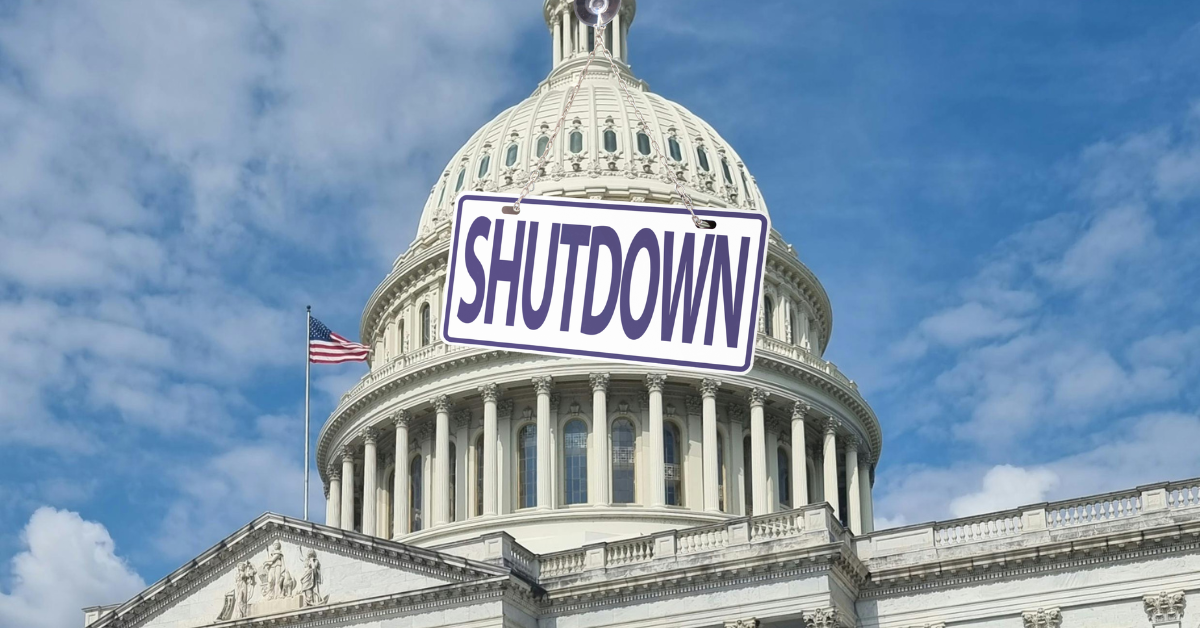
The second major thread of the Chinese agenda about the US is another “technical” partial shutdown of the federal government. Chinese news agencies and opinion columns give this phenomenon their own name: “停摆政治” — the politics of shutdowns. An article from China News Service titled “不是‘停摆’就是在‘停摆’路上,美国政治运作恶性循环” (“Either already a shutdown or on the way to one: the vicious cycle of American political operations”) details recent instances of government stoppage, including the record 43‑day shutdown in autumn 2025, and stresses that the current three‑day crisis is merely another symptom. The authors, journalists Zheng Yuntian and Kong Qinglin, guide readers to the conclusion that frequent shutdowns and the threat of new ones are the result of deep political polarization, where temporary budget measures, short‑term extensions and partial closures have become the “new normal” of the congressional budget process. American democracy here appears as a system captured by partisan confrontation to such an extent that its basic function — ensuring the uninterrupted operation of the state — is regularly called into question.
Chinese TV channels, including CCTV, emphasize that this “technical shutdown” this time affected key departments such as Defense, Health, Labor, Transportation and Treasury, as well as homeland security. Reports recall images from past shutdowns: closed national parks, nonfunctioning government services, delays in benefit payments. Analytical pieces, for example in the “世界说” column on Sina News, note that even when a stoppage is short‑term, direct economic damage can be measured in billions of dollars, and citizens’ trust in the state and financial markets’ confidence in American institutions are systematically undermined. Thus, in Chinese discourse shutdowns are used not only as an example of “chaos” in Western democracy, but also as an argument that a model based on constant partisan struggle and blocking decisions is incapable of long‑term strategic planning — whether in economics, trade, or foreign policy.
Japan’s coverage of these topics is traditionally milder, but it also shows concern about the predictability of the US as the primary security ally. In major Japanese outlets such as Asahi Shimbun and Nihon Keizai Shimbun, discussion of the latest shutdown and Washington’s trade moves is woven into a broader conversation about how resilient American leadership is amid growing internal divisions. Japanese analysts point out that the Trump administration is pursuing several fronts in trade at once — from the protracted “关税战” with China to a new phase of conflict within the North American trading system, referred to in Chinese‑language materials as the “2025–2026 US‑Canada‑Mexico trade war.” Japanese commentary emphasizes that this style — reliance on broad unilateral tariffs declared under the logic of “national emergency” — makes the US a less reliable partner even for its allies, because it creates uncertainty for Japanese exporters and investors.
Some Japanese experts draw parallels between the recent US–India deal and Tokyo’s own negotiations with Washington over steel, automobiles and agricultural products. Political magazine columns suggest the theme that “Trump’s America” prefers bilateral deals where it can dictate terms rather than multilateral institutions like the WTO and the CPTPP. From Japan’s perspective, this weakens the common rules of the game in the region and intensifies competition for “special conditions” with the US, into which India is now openly entering by offering geopolitical and energy bonuses in exchange for tariff concessions. For Tokyo this is both a challenge and an incentive: Japan must strengthen its own multilateral initiatives in the Indo‑Pacific region so as not to find itself in a situation where every new administration in Washington revisits prior commitments.
A unifying motif across all three countries is less about reaction to any single US decision than the broader picture of American policy as a mix of a tough, sometimes impulsive external economic line and internal political instability. India views this through a pragmatic lens: how to extract maximum benefit from a trade deal with the US without burning bridges with Moscow and while preserving maneuvering space. China uses shutdowns, tariff wars and energy deals as proof that Washington is not only a competitor but also a source of systemic risks to the global economy and trade rules. Japan is more anxious: can such an America remain a stable anchor of security and the economy in the region, or will partners have to shoulder a greater share of responsibility for the architecture of order?
It is in this complex picture — composed of Indian worries and hopes, Chinese accusations of hegemonism, and Japanese concerns for stability — that Asia’s perception of America is being formed today: a country whose economic and military power remains large, but whose domestic and foreign policy is increasingly seen in the region as less predictable.