Several threads of an America‑centred agenda have flared up simultaneously in different parts of the world — from Geneva and the Donbas to Jerusalem and Pretoria. At the centre: the Trump administration’s attempt to push through a “big deal” on Ukraine by summer 2026, a growing mismatch of expectations between Kyiv and Washington, the tense US–Israel–Iran triangle, and US trade wars with South Africa that South African authors already describe as undermining the very foundations of the rule‑based global trading order. In each of the three countries — Israel, Ukraine and South Africa — the United States is viewed from a very specific local reality, and it is precisely these perspectives that today shape an image of “America” scarcely visible within America itself.
The main theme linking Kyiv, Jerusalem and Pretoria is the sense that the US is becoming an increasingly transactional, starkly self‑interested player. In Ukraine this shows up as pressure to make territorial concessions in exchange for a quick “victory” for Trump; in Israel — as hard bargaining over Iran and growing fear that the traditional US consensus in support of Israel is eroding; and in South Africa — as tariff blows to key economic sectors and the threat of turning trade into an instrument of political coercion.
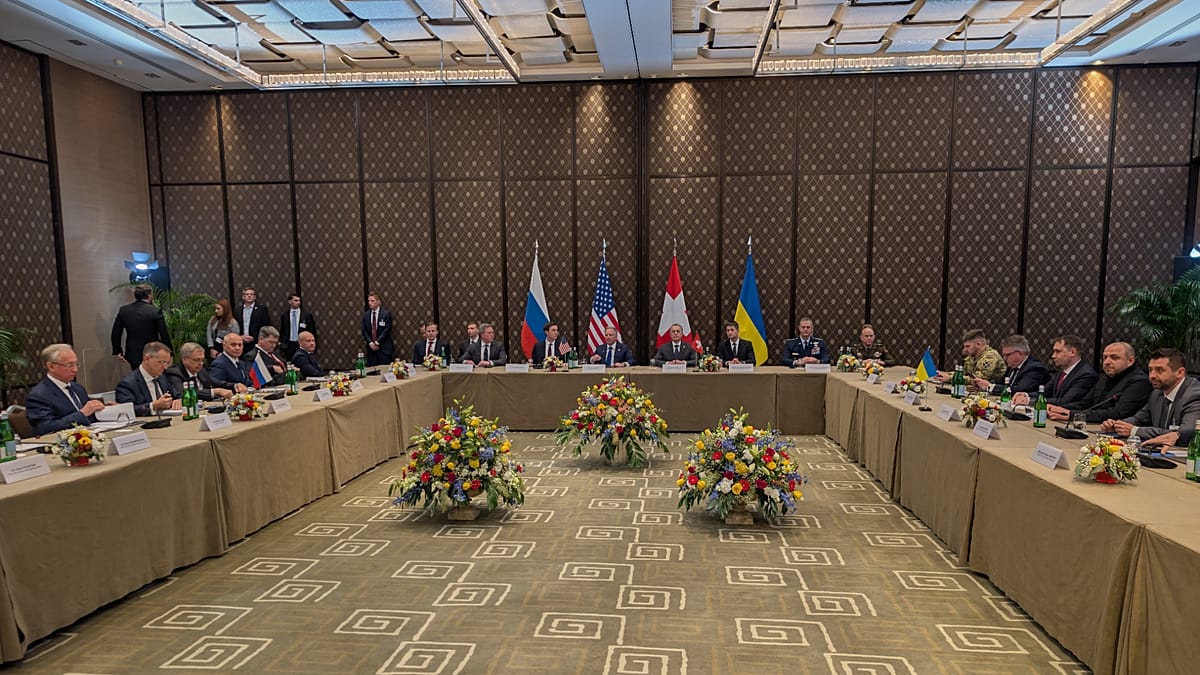
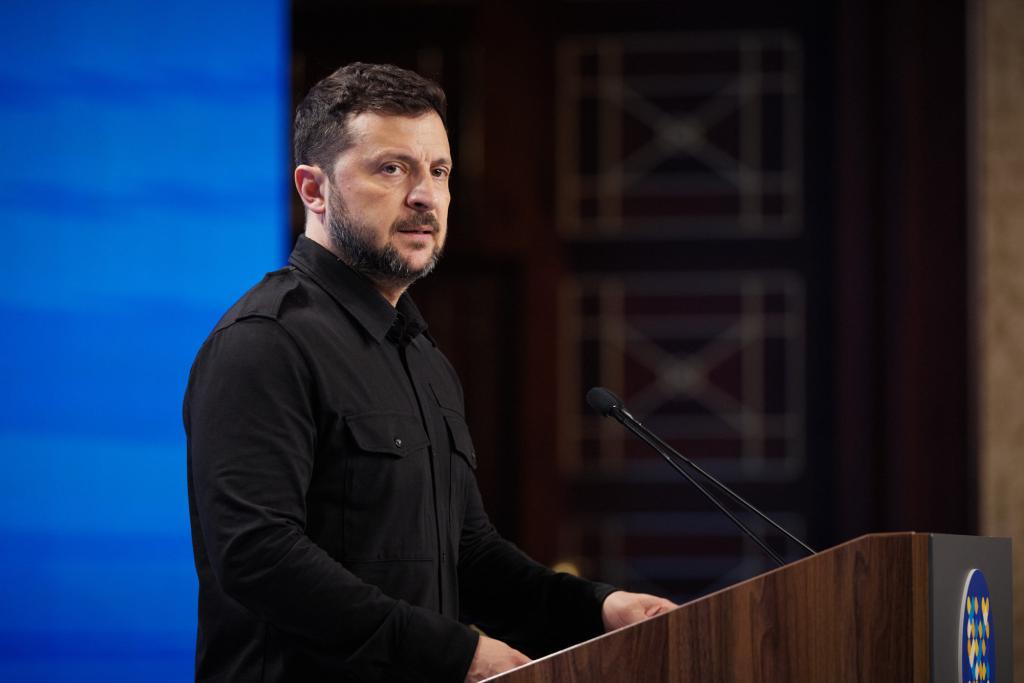
The loudest storyline in recent days is a new phase of the three‑way Ukraine–Russia–US talks. The Geneva round, which lasted only a couple of hours, produced cautious optimism on the military track and a much heavier feeling on the political one. After the meeting Vladimir Zelensky emphasized that “progress” had been made on the military front and singled out an agreement on the US role in monitoring a potential ceasefire: according to him, the American side will take part in control mechanisms, which in Kyiv is presented as an important “constructive signal” and a guarantee against another fake “truce” (ru.euronews.com). But Zelensky’s next interview with international media was a cold shower: the Ukrainian president publicly acknowledged that both Moscow and Washington are demanding Kyiv withdraw its forces from the Donbas if Ukraine wants an immediate end to the war. “Both the Americans and the Russians say: if you want the war to end tomorrow, get out of the Donbas,” AFP quotes him as saying, cited by Lenta.ru and other outlets (lenta.ru).
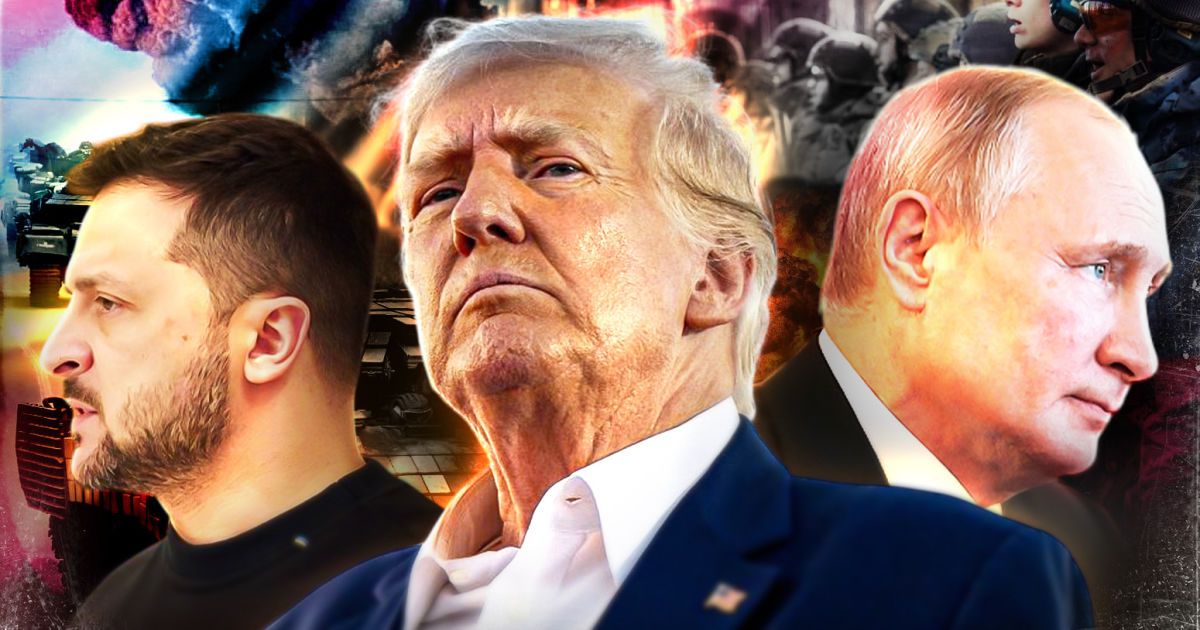
In Ukrainian discourse this demand has become a symbol of a new type of American policy. Popular Ukrainian media such as TSN discuss a “US deadline” to end the war by summer 2026 — a date tied less to military logic than to Trump’s domestic politics and his desire to present voters with a “deal of the century” (tsn.ua). At the same time, Ukrainian news resources cite Zelensky’s statement that Kyiv’s and Washington’s positions “do not coincide on some issues of a peace agreement,” even though both sides formally seek a swift end to the war (donpress.com). Behind the dry wording lies a powerful wave of debate inside Ukraine: where is the line of acceptable concessions if the main ally is “pushing” for territorial withdrawal in exchange for a ceasefire that many experts call a risk of a “treacherous truce”?
Against this backdrop European scepticism about the US’s ability to secure a durable peace is growing. German‑ and Russian‑language European press cite heads of five European intelligence services who, in a Reuters leak, said they do not believe the conflict will end in 2026: in their assessment, Moscow uses talks involving the US as a tool to ease sanctions and conclude favourable deals, not as an honest roadmap to peace (amp.dw.com). One Reuters source calls the current diplomatic architecture plainly a “negotiation theatre” — a phrase instantly taken up in Ukraine, where the recent memory of the Minsk agreements is still alive.
Within Ukraine there is also a debate that the American role in the war is evolving from unconditional support toward an attempt at “managed de‑escalation.” A US Congressional report cited by post‑Soviet media notes a sharp decline in US aid to Kyiv after the peak years of the war: around $188 billion was approved since the full‑scale invasion began, but in recent months the flow has noticeably dwindled (sputnik.by). Against this backdrop, influential American realist John Mearsheimer’s remark that Ukraine “may not survive 2026” is widely quoted in Ukrainian and Russian press no longer as a marginal view but as a symptom of Western fatigue and a harbinger of a “hard bargain” over Ukrainian sovereignty (gazeta.ru).
For many Ukrainian commentators Washington’s current line is both an opportunity to stop the bloodshed and a danger of consolidating “grey zones” and effectively rewarding aggression. Hence the specific attitude toward the US: without it there would have been neither the military resistance nor the current negotiating format, but it is precisely the American push for a quick deal that today is seen as the main source of pressure on Kyiv.
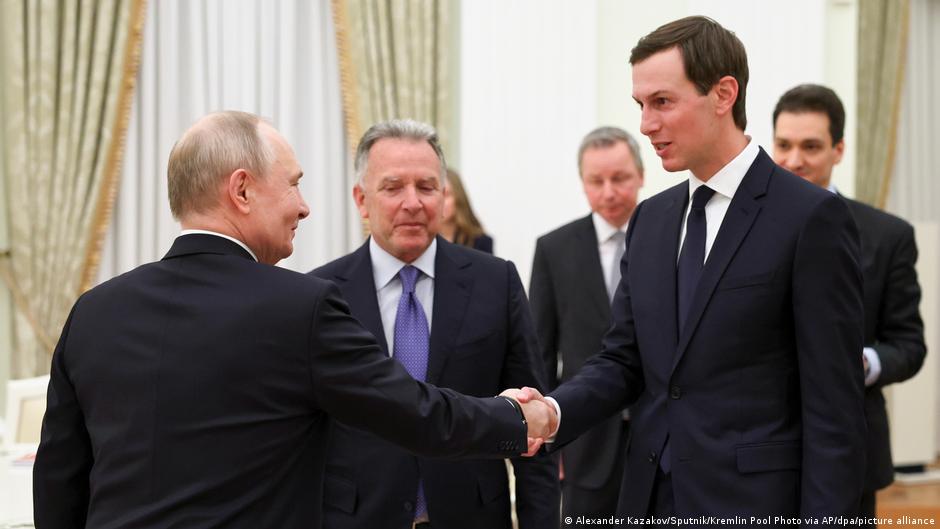
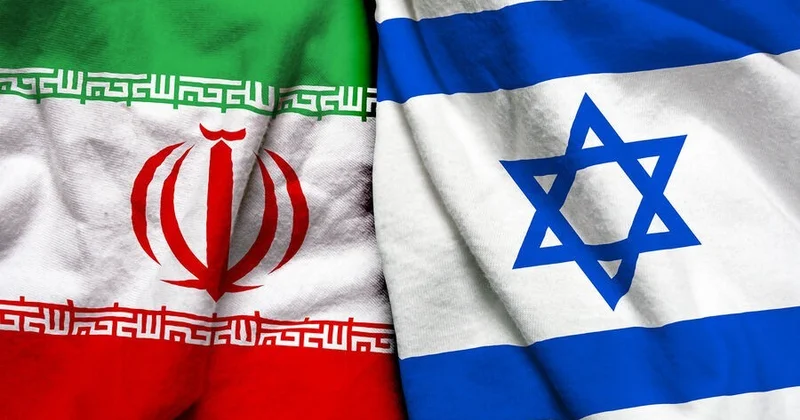
In Israel the US remains the primary security pillar, but the discussion about Washington has become much more anxious and ambivalent. On the surface are familiar storylines: US–Israeli consultations on Iran, Trump’s deadlines for a nuclear deal, and sharp exchanges with Tehran. Israeli media, including Russian‑language outlets, recount reports from Channel 12 that Benjamin Netanyahu’s cabinet presented Trump’s special envoy Stephen Witkoff with a package of demands for upcoming US‑Iran talks: from strict limits on uranium enrichment to clear “red lines” on the presence of pro‑Iran forces near Israel’s borders (icma.az). Simultaneously, Iranian statements say explicitly that in case of aggression by Israel or the US, targets belonging to both countries in the Middle East would become “legitimate targets” for Tehran (fedpress.ru), and this rhetoric amplifies the feeling in Israel that the American track on Iran could either secure the country or push the region toward a major war.
Beneath the current news layer, however, a deeper strategic debate is brewing over the very character of US–Israeli relations. Analytical reports from centres like the Institute for National Security Studies (INSS) speak directly of an “unprecedented crisis of Israel’s status in the US”: traditional support, they say, is falling sharply among Democrats and noticeably declining even among some Republicans, especially younger voters (inss.org.il). The authors link this not only to the humanitarian catastrophe in Gaza and Netanyahu’s hardline military stance, but also to the fact that Israel’s right wing is increasingly borrowing the American “Trumpist” model — from distrust of the courts to suspicions of liberal elites. On Ynet and in academic publications the “Americanization of the Israeli right” is discussed, where the US is simultaneously a source of inspiration and a mirror in which Israel sees its own internal conflicts (ynet.co.il).
This produces a paradoxical duality in perceptions of America. On one hand, Israel depends on the US for military and diplomatic support more than ever: Washington remains the key supplier of high‑tech weaponry, a guarantor in international forums, and the main audience for Israeli public diplomacy. On the other — the more unpredictable and polarized American politics appears, the more fragile that foundation seems. What ten years ago seemed an immutable “bipartisan consensus” in favour of Israel is now described in Israeli analyses as a resource that could be lost within one or two electoral cycles if Jerusalem does not revise its line in Gaza and on the Palestinian track more broadly (inss.org.il).
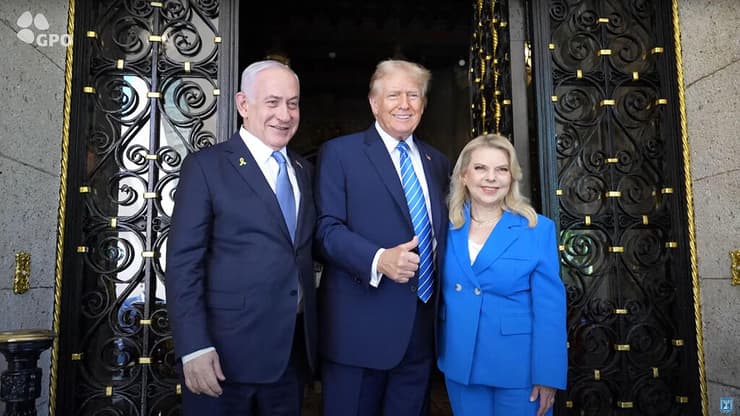
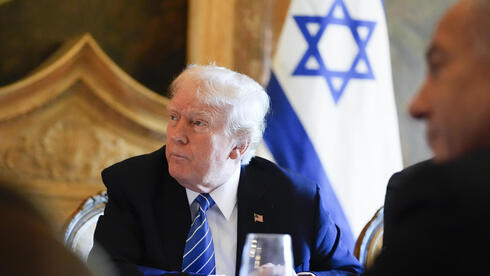
Against this background Donald Trump’s return to the White House is received in Israel with noticeably less enthusiasm than in his first term. If back then Trump was seen as an unconditional ally who “did the unpleasant work for Israel” — from recognising Jerusalem as the capital to withdrawing from the Iran nuclear deal — today experts are more cautious. It’s not only that the current Trump presents the US as an “autocratic revisionist hegemon,” in the words of a recent Hebrew analysis (debugliesintel.com), but that his team is building an architecture of “hierarchical alliances” where even close partners receive security guarantees in exchange for clear economic and political concessions. For Israel, accustomed to near‑unconditional military assistance, this is a worrying signal: in Jerusalem people increasingly ask what Washington might demand “in return” to maintain the current level of support.
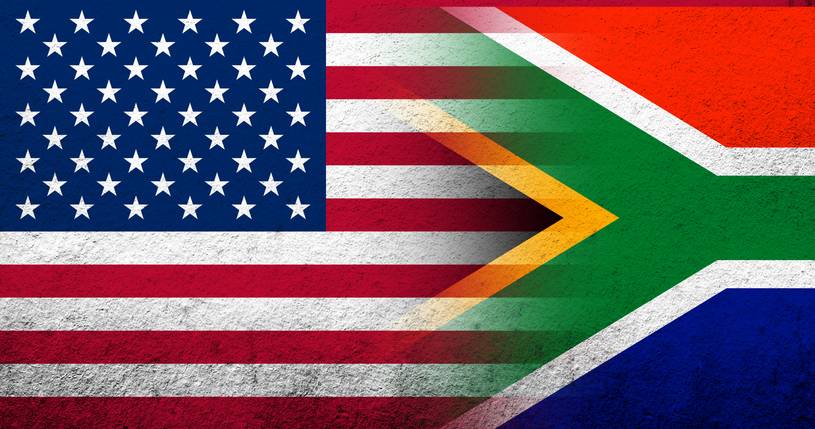
South Africa views America through a very different but no less contentious lens — a lens of tariffs, sanctions, and the fate of the African Growth and Opportunity Act (AGOA). Here the US’s evolution from architect of a “rules‑based” global order to a great power acting on the principle of force has become most tangible.
In August 2025 the Trump administration imposed 30 percent tariffs on most South African goods, which the South African government estimates put up to 30,000 jobs at risk, primarily in the auto industry and agriculture (apnews.com). South African writers in Mail & Guardian and other outlets called these measures a direct violation of basic WTO provisions and the principle of non‑discrimination: opinion columns stress that the US — one of the architects of the current trading regime — is now destroying it by imposing “reciprocal” tariffs not agreed with partners (mg.co.za).
Even more strongly felt in South Africa is the link between economy and politics. The tariff strike and the suspension of much American aid in 2025, reported by Western and South African media, are explained in Washington as “combating racial discrimination against white Afrikaners” and displeasure with land reform, as well as Pretoria’s position on Israel and its activism within BRICS (ft.com). South African commentators see this as an attempt to export a specifically American view on race and property into South Africa’s domestic discourse, and to punish the country for an overly independent foreign policy — from international cases against Israel to refusal to join an anti‑China axis.
The AGOA renewal saga became a symbol of this ambiguity. On one hand, the South African press notes that the US House’s passage of a law extending AGOA is an important step that formally renews duty‑free access for African goods and confirms Washington’s continued interest in an economic presence on the continent (businessday.co.za). On the other — analysts like Saul Levin point out that the extension does not cancel Trump’s unilateral tariffs and could at any moment be “overridden” by a new executive order, making the regime effectively discretionary rather than legal (businessday.co.za). In response, South African business associations and economists are increasingly calling for a faster pivot toward Europe, China and other Global South markets — not to “replace” America but to hedge against US unpredictability (g20.mg.co.za).
Still, Pretoria’s official rhetoric also contains a motive of forced interdependence. Trade Minister Parks Tau recently stressed that South Africa does not intend to retaliate with mirror tariffs and does not seek to “decouple” from the US: in his view both countries remain important partners and negotiation is the best tool to resolve disputes (thedtic.gov.za). The parliamentary trade committee chair Sonja Boshoff in 2024 spoke of the “unbreakability” of trade ties with the US despite Trump’s sharp tweets about BRICS (parliament.gov.za). Within South African society this is perceived as pragmatic realism: the country is too integrated into the American market and the dollar financial system to allow a demonstrative break, yet it has been burned by the new tariffs and can no longer view the United States as an unquestioned “anchor of predictability” in the global economy.
Notably, even positive news from the US is viewed in South Africa through a lens of distrust. A US Supreme Court decision that some analysts say opens new possibilities to challenge protectionist measures and may ease African access to the American market is described by commentators as an “important legal signal,” but they immediately recall that South Africa already faced tariffs that cost 0.4 percent of GDP growth and tens of thousands of jobs (fatshimetrie.org). South African authors’ conclusion is simple: even strong legal tools guarantee little if key decisions across the ocean are made according to domestic political battles and media effects.
The unifying thread of these varied, sometimes contradictory reactions is the perception of the US as a state whose foreign policy is ever more tightly woven into domestic electoral cycles, culture wars and economic populism. In Ukraine this appears as fear that “Trump deadlines” on peace will trump the country’s real security; in Israel — as anxiety that US polarization will shatter once‑monolithic support for the Jewish state and turn it into an object of partisan dispute; in South Africa — as conviction that Washington’s trade and sanctions policy increasingly reflects the ideology of a particular administration rather than long‑term rules of the game.
And yet in all three cases the reaction to the US remains deeply ambivalent. Kyiv recognises that without American military and financial support there would be neither the current defensive lines nor the possibility to negotiate on something like equal terms. Israel admits that even amid a “crisis of image” in the US there remains a single country capable of truly guaranteeing its military edge and offering political cover in case of escalation with Iran. South Africa, despite harsh criticism of tariffs and sanctions, does not see a break with the US as possible or desirable, but seeks to integrate Washington into a broader, multipolar set of partnerships.
From this aggregate of local debates emerges an image much more complex than the one in America’s self‑assessment. For Ukraine, Israel and South Africa the US is no longer simply a “hegemonic guarantor of order” or merely “one of the poles,” but a powerful, unpredictable actor whose decisions must simultaneously be courted, constrained and insured against. And it is precisely this threefold stance — dependence, distrust, and necessity — that sets the tone of conversations about America outside America today.