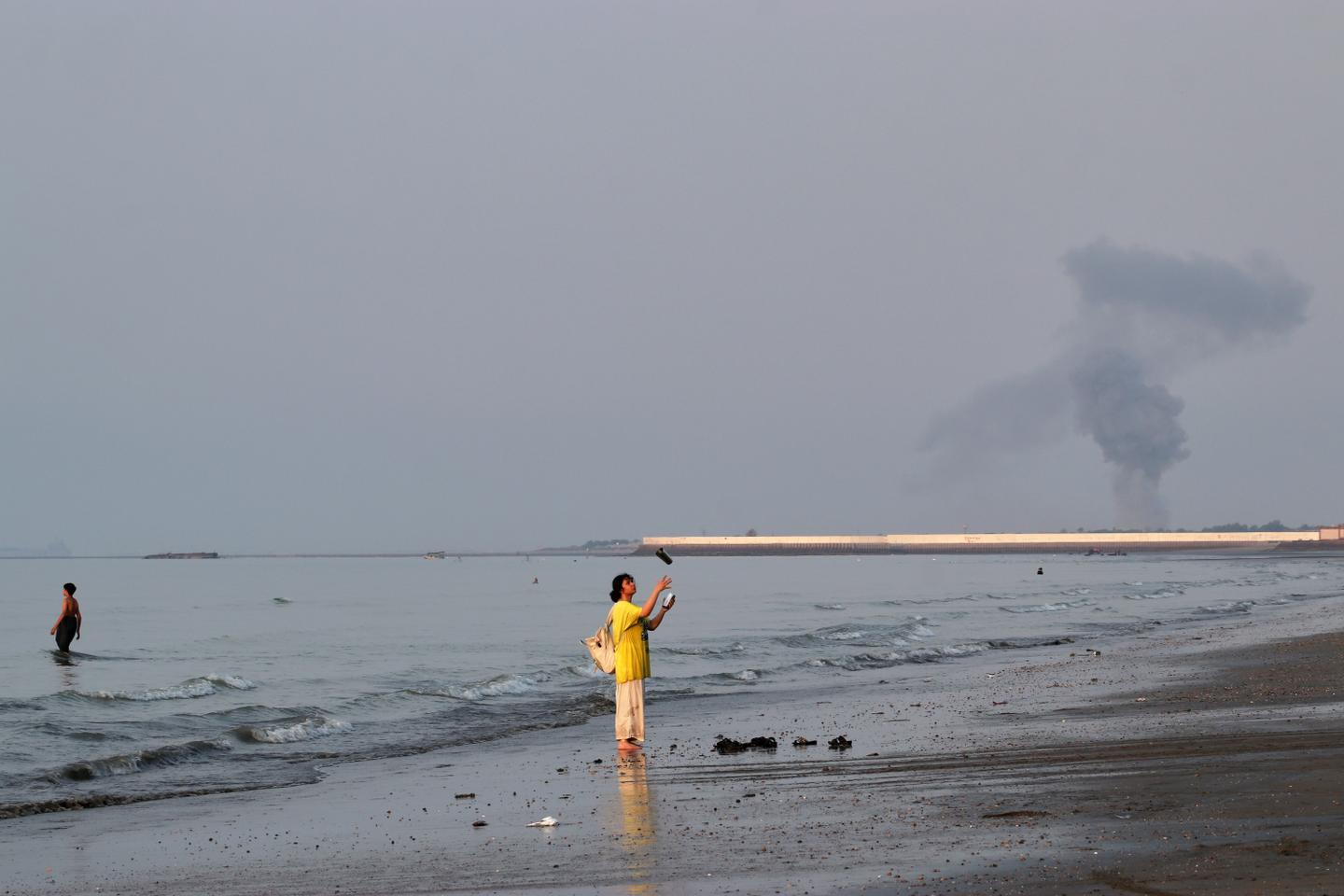
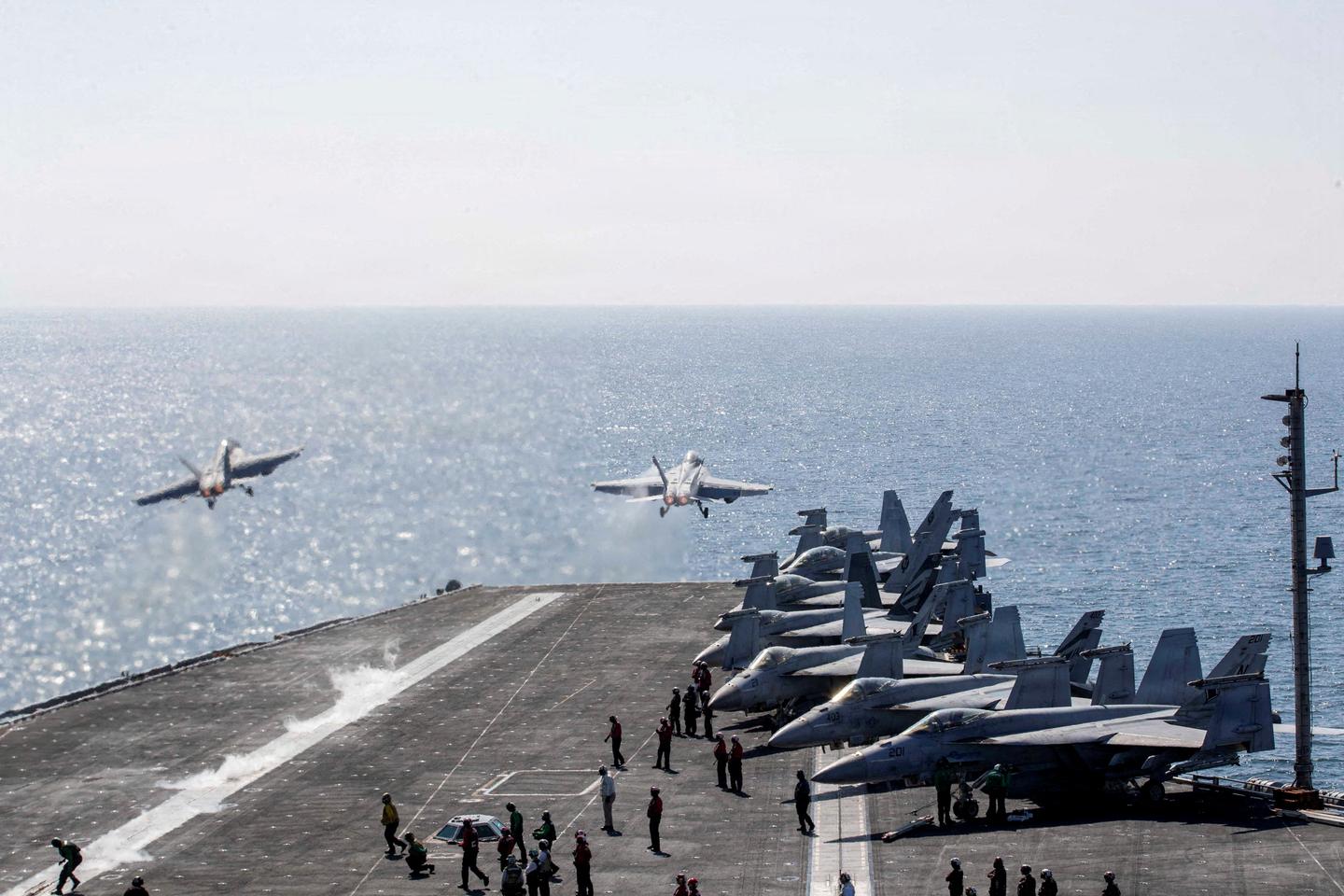
In Indian, French and Turkish discussions of America in recent days, the dominant issue has not been yet another diplomatic scandal, but a more troubling question: is Donald Trump’s administration capable of ending the war it started itself, and what price will the rest of the world pay for its inability to do so? The focus is on the protracted US confrontation with Iran, the de facto blockade of the Strait of Hormuz, the threat of secondary economic penalties against countries trading with Tehran, and the resulting desire of regional powers to hedge against American unpredictability. The difference between New Delhi, Paris and Ankara is that India is primarily counting barrels of oil and assessing the vulnerability of its supplies, France sees a strategic failure of American power, while Turkey simultaneously fears sanctions, offers mediation and builds its own security architecture. (indianexpress.com)
The Indian reaction is the most down-to-earth—and therefore perhaps the most ruthless. In an editorial published by The Indian Express on August 18, the conflict is described not as an abstract geopolitical duel but as a “new normal” in which the entire world remains hostage to a war that neither Washington nor Tehran can end. The newspaper emphasizes that American bombing has not forced Iran’s leadership to capitulate, while Iran cannot drive the United States out of the region through missile strikes. Yet this mutual deadlock is already changing India’s calculations: the country should expand its strategic oil reserves, reduce excessive dependence on imports and accelerate the development of alternative energy. This is crucial from the Indian perspective: the issue is not who will “win,” but that the cost of the American operation is being passed on to Asian energy consumers. (indianexpress.com)
The same point is expressed even more sharply in another editorial by The Indian Express, where the current choice is framed as a trap “between Iranian blackmail and Trump’s bullying.” The authors do not justify Tehran’s attempts to control shipping through the Strait of Hormuz, but they also regard the American response as a dangerous unilateral experiment. They are particularly concerned by the idea of charging vessels for passage under US protection: for India, this would mean not safeguarding freedom of navigation, but risking the transformation of a vital sea route into an instrument of pressure wielded by both sides. The article also recalls the human cost: Indian citizens were among the sailors affected by attacks on tankers. Thus, in the local view, American foreign policy is no longer a dispute over the “leadership of the free world,” but a question of food inflation, the cost of fertilizer and fuel, and the safety of Indian crews. (indianexpress.com)
The French press views the same crisis through the prism of the erosion of American strategy. The editors of Le Monde believe that the Washington campaign has exposed the limits of military superiority: the initial goal—pressuring the Iranian regime and its nuclear program—has been displaced by the much narrower task of reopening the Strait of Hormuz. The French assessment is particularly scathing about the quality of American diplomacy: a poorly worded agreement gave Tehran the opportunity to interpret the issue of the strait in its own favor, while the US attempt to establish an alternative route through Omani waters does not resolve the underlying political problem. In Paris, the discussion is not simply about Trump’s weakness, but about an institutional flaw in an approach that uses force before defining achievable goals and the legal framework for peace. (lemonde.fr)
In an investigation published on August 14 by Le Monde, this criticism goes even deeper. Jennifer Kavanagh, a military analyst at Defense Priorities, calls the situation the first case in which the United States has, in her assessment, “clearly suffered a strategic defeat,” with long-term consequences. Another expert, Mark Cancian, compares the Iranian campaign to Afghanistan but points to an unusual feature: war aims normally expand over time, whereas here they have narrowed over six months—from changing the regime’s behavior and achieving nuclear disarmament to attempting to restore the previous shipping regime. For a French audience, this matters as more than an American domestic drama. It supports the argument that Europe cannot automatically regard American power as synonymous with order and predictable results. (lemonde.fr)
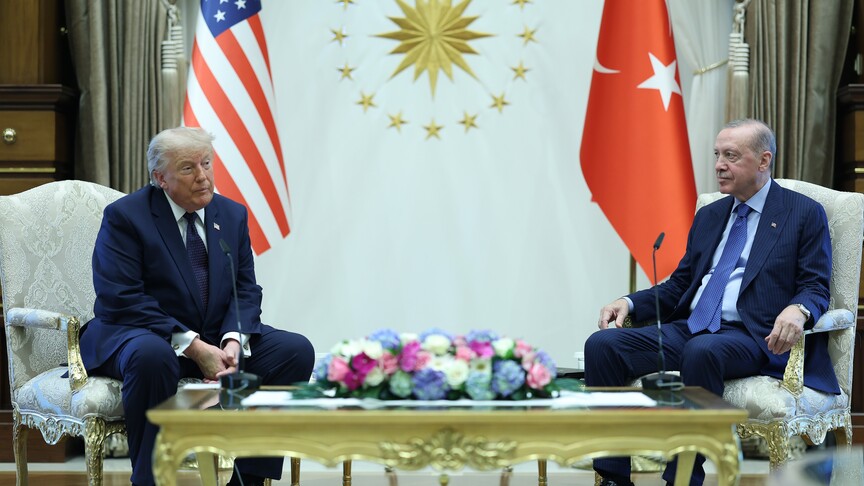
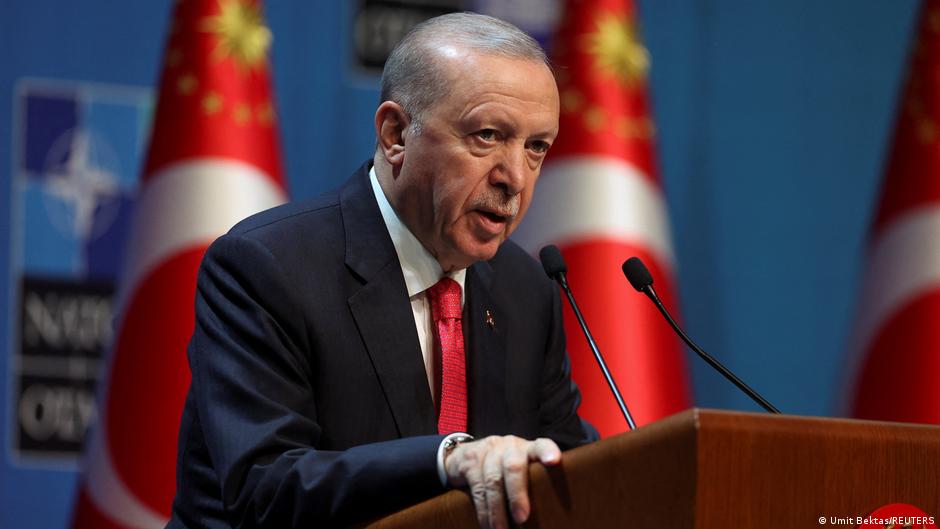
The Turkish debate differs in that the United States is simultaneously a partner, a source of risk and a convenient reason to strengthen regional autonomy. During a phone call on August 18, Recep Tayyip Erdoğan told Trump directly that it was necessary to “make maximum use of diplomacy” in the US-Iranian crisis, and confirmed Turkey’s readiness to support peace efforts. As reported by Anadolu Ajansı, Ankara links this to a broader plan: lasting peace in the region and the reconstruction of Gaza. In Turkey’s logic, diplomatic mediation is not neutrality for neutrality’s sake: instability in neighboring Iran poses risks to Turkey’s trade, energy supplies, borders and migration.
But the call for dialogue comes against a backdrop of direct pressure. DW Türkçe notes that Trump’s threat to impose “severe economic consequences” on countries maintaining economic ties with Iran is painful for Turkey as well: by the end of 2025, its trade turnover with Iran stood at around $5.5 billion, while Iranian gas remained a significant part of its imports. This gives Turkey’s calls for negotiations a different tone from French criticism or Indian energy concerns. Ankara is defending not only the principle of de-escalation, but also its right not to choose between a neighboring market and American restrictions.
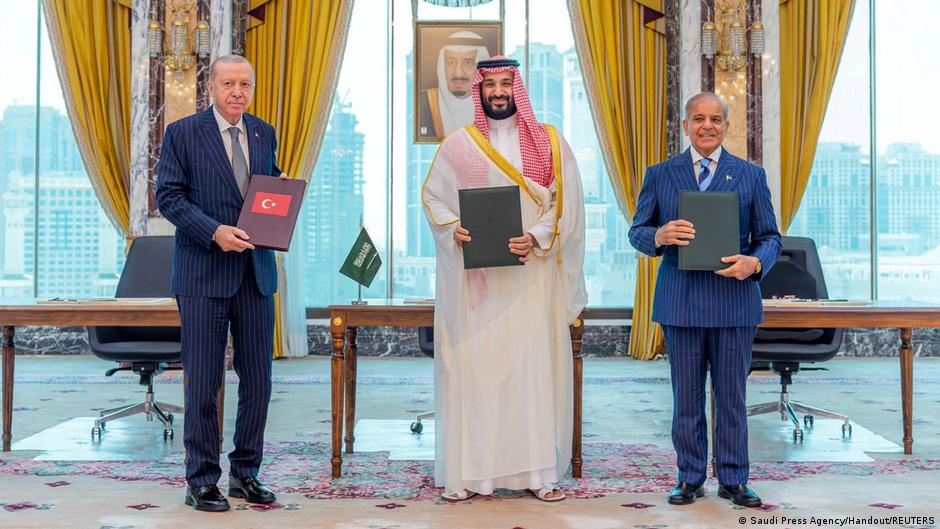
The most unexpected Turkish response is not defensive but constructive. Local analysts see the joint defense agreement signed by Turkey, Saudi Arabia and Pakistan in Mecca on August 7 as an attempt to fill the vacuum created by declining trust in Washington. An analysis by DW Türkçe notes that the Trump administration is increasingly viewed by regional actors as an unreliable ally; Riyadh is therefore strengthening alternative ties, while Ankara gains an opportunity to consolidate its role as an independent center of power. Erdoğan, however, has not abandoned a deal with the United States: in an interview recounted by DW Türkçe, he recalled that he expects Trump to fulfill his promise regarding F-35 deliveries. The Turkish formula therefore looks like this: maintain a channel with America, demand concrete commitments from it, but do not base security solely on an American guarantee.
Ultimately, India, France and Turkey agree on one thing: the problem is no longer limited to Iran. American policy has become a generator of secondary consequences—energy-related, commercial, alliance-related and institutional. India is responding with talk of oil reserves and supply autonomy; France with doubts about the effectiveness of force without a diplomatic strategy; and Turkey by balancing mediation, resistance to sanctions risks and the creation of regional coalitions. The common conclusion of local commentators is blunt: America remains too powerful for its actions to be ignored, but is becoming too unreliable for order to be built on its promises.