By September 19, 2026, the discussion of America in Japan, France, and Germany is no longer focused primarily on yet another provocative statement by Donald Trump. Instead, it revolves around a more troubling question: can Washington simultaneously wage war, maintain its technological lead over China, preserve its allies’ trust, and avoid destroying its own institutions? Local commentary from Tokyo, Paris, and Berlin presents a remarkably consistent picture. The United States still possesses enormous military, financial, and innovative power, but its ability to turn that power into lasting influence is increasingly being called into question.
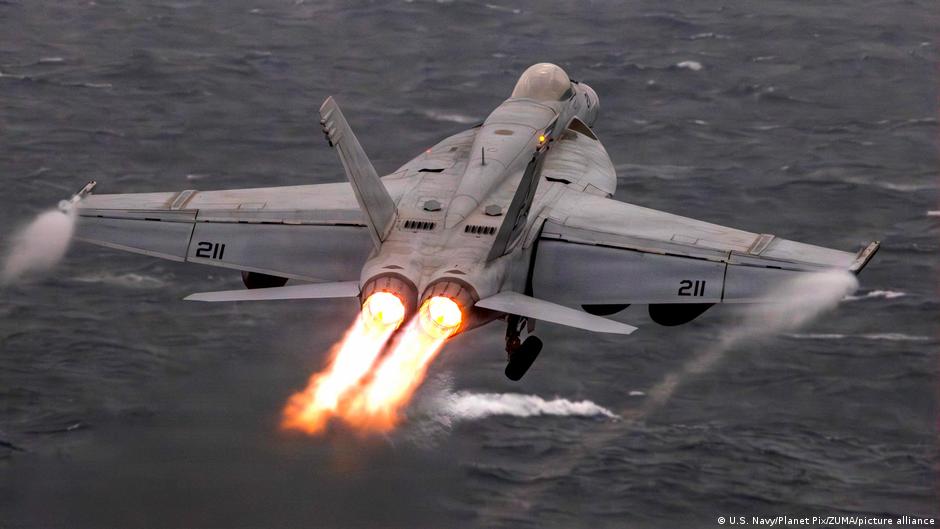
The most acute issue is the protracted American campaign against Iran. In Germany, it is discussed primarily as a risk of strategic exhaustion. In an analysis by Deutsche Welle, Andreas Noll describes the new logic of the war as a potentially endless cycle: Iran restores its radars, air defenses, and infrastructure; the United States launches another strike; and then faces retaliatory missile and drone attacks. This is not a scenario of decisive victory, but a strategy of continuously “mowing the grass”—an expensive effort to prevent the adversary from recovering without any clear political exit.
For German audiences, the issue is not limited to the Middle East. The war is seen as a test of whether American involvement is consuming resources that previously served European and Asian security. This perspective is particularly sensitive in a country where military dependence on the United States remains substantial, while fatigue with American unpredictability is also growing. In a broader DW analysis of the end of the era of multilateralism, this concern is framed even more broadly: Trump’s policies are viewed not simply as a reaction to the collapse of the old order, but as one of the forces accelerating its destruction. For Berlin, this creates an unpleasant dilemma: Europe needs to prepare for greater autonomy, but it must do so precisely at a time when its trade, technological, and military ties with America remain critical.
In France, the war with Iran is viewed through the lens of U.S.-China rivalry. Parisian commentators are less concerned with debating the tactics of the strikes than with asking who benefits from the fact that the United States has become bogged down in the conflict. In his column, Le Monde columnist Alain Frachon reaches an almost provocative conclusion: in the current confrontation, Trump is, at least for now, unintentionally serving China’s interests. His argument is not that Beijing is directly “defeating” the United States, but that the war with Iran exposes the limits of American military effectiveness and forces Washington to reduce its focus on the Pacific.
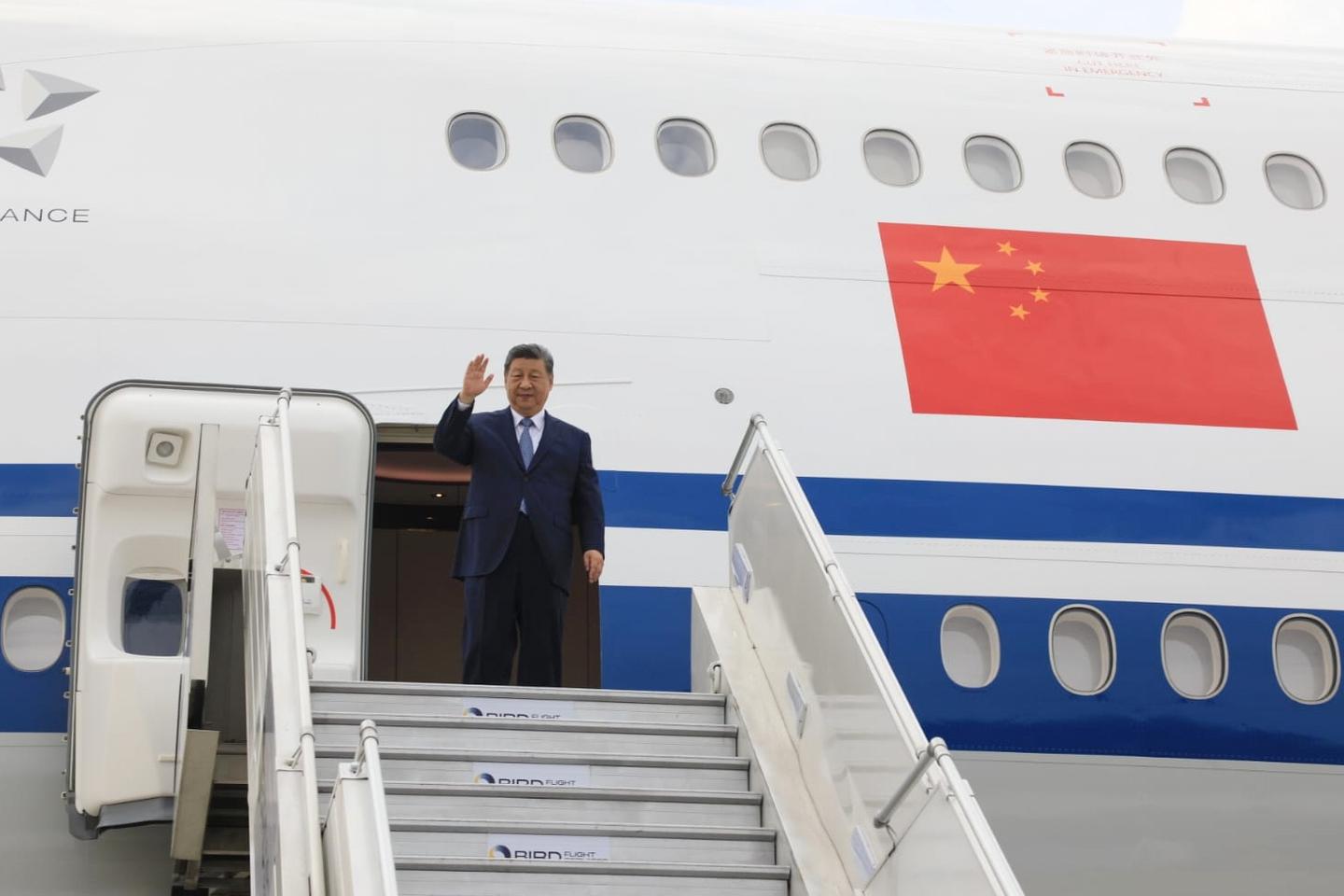
This is particularly important ahead of Xi Jinping’s visit to Washington, scheduled for September 24. The French perspective differs noticeably from the American language of “strategic competition.” Frachon sees the problem in the fact that Trump is more inclined to think in terms of personal relationships with “strong leaders” and spheres of influence than in terms of alliances, norms, and the protection of small states. In this view, allies become not partners but countries expected to make concessions—commercial, financial, or political. For France, traditionally protective of the idea of European “strategic autonomy,” this is not an abstract moral complaint. It is a warning: if America simultaneously pressures its allies with tariffs and seeks deals with its rivals, Europeans cannot regard American guarantees as an unchanging given.
Japan views the same problem less ideologically, but perhaps even more concretely. In Tokyo, the central issue is not only the upcoming Trump-Xi meeting, but also the competition over artificial intelligence, chips, computing capacity, and technological standards. A Japan Research Institute study published on September 18 emphasizes that China has nearly eliminated the gap with the United States in the quality of advanced AI models: according to data from the Stanford AI Index cited in the report, the best American model’s lead was only 2.7% in March 2026. At the same time, the United States retains stronger positions in investment and data centers.
The Japanese analysis is notable for refusing to treat American export controls on China as a magic solution. Another recent report by the same institute says that controls on supplies of advanced chips, memory, semiconductor-manufacturing equipment, and cloud computing can slow China’s progress and make it more expensive, but cannot stop it permanently. China has a vast market, skilled personnel, state investment, its own manufacturing base, and the ability to compensate for hardware shortages through more efficient algorithms and software methods.
This leads to a distinctly Japanese recommendation: rather than simply following the American line automatically, Japan should identify its own technological “bottlenecks”—areas in which Japanese companies are strong in equipment, materials, measurement technology, and precision processing. For Tokyo, the issue is not reducible to loyalty to Washington or distance from Beijing. It is about avoiding a situation in which Japan becomes a passive platform where the two superpowers determine the rules governing access to the technologies of the future.
The paradox of the current moment is that both the American and Chinese sides acknowledge the risks of AI, yet neither is prepared to slow the race. Japanese experts note that Washington and Beijing agreed to begin an intergovernmental dialogue on AI after the leaders’ meeting in May, but by mid-September even the format of the future discussions was still being negotiated. In other words, security is recognized as a shared problem, but each side fears that security rules would merely cement its rival’s advantage. In the European view, this looks like yet another indication of the crisis of multilateralism; in the Japanese view, it is a practical risk that the world will split into incompatible technological ecosystems.
Finally, Japan, France, and Germany are showing growing interest in the domestic side of American instability. In Japanese coverage, Trump’s September 18 decision to bar CNN, MS NOW, and Politico from operating in the White House under the pretext of combating “fake news” was directly linked to the threat to press freedom and the First Amendment, as reported by TBS Cross Dig. In France, the move fits an already established image of a president who responds to political failures by attacking the intermediaries between government and society. In Germany, it reinforces a broader fear: if a country claiming the role of defender of the liberal order weakens its own independent institutions, its foreign commitments become less credible.
This is the most unexpected common conclusion among the three countries. They do not believe that America has suddenly become “weak,” or that China has already replaced it as the leading global power. On the contrary, the United States remains an indispensable center of power. But in Tokyo, Paris, and Berlin, the distinction between power and reliability is becoming increasingly clear. The war with Iran, negotiations with China, the AI race, and pressure on the press are seen as parts of a single problem: the United States can still force the world to respond to it, but it is becoming less and less able to convince the world that it can safely be relied upon.