Over the past two days, the image of the United States in German, Israeli and Russian discussions has taken shape around the same cluster of issues: the war and uncertainty surrounding Iran, the shipping crisis in the Strait of Hormuz, expensive diesel and Washington’s willingness to shift the costs of its policies onto its allies. In Germany, this is seen primarily as a test of economic resilience and the reliability of transatlantic commitments. In Israel, it is viewed as a dangerous moment in which Donald Trump’s desire for a “deal” may conflict with Israel’s demand for irreversible restrictions on Iran. In Russia, it is seen as evidence that American foreign policy is increasingly subordinated to domestic fuel prices and bargaining across a broad range of issues, from the Middle East to Ukraine.
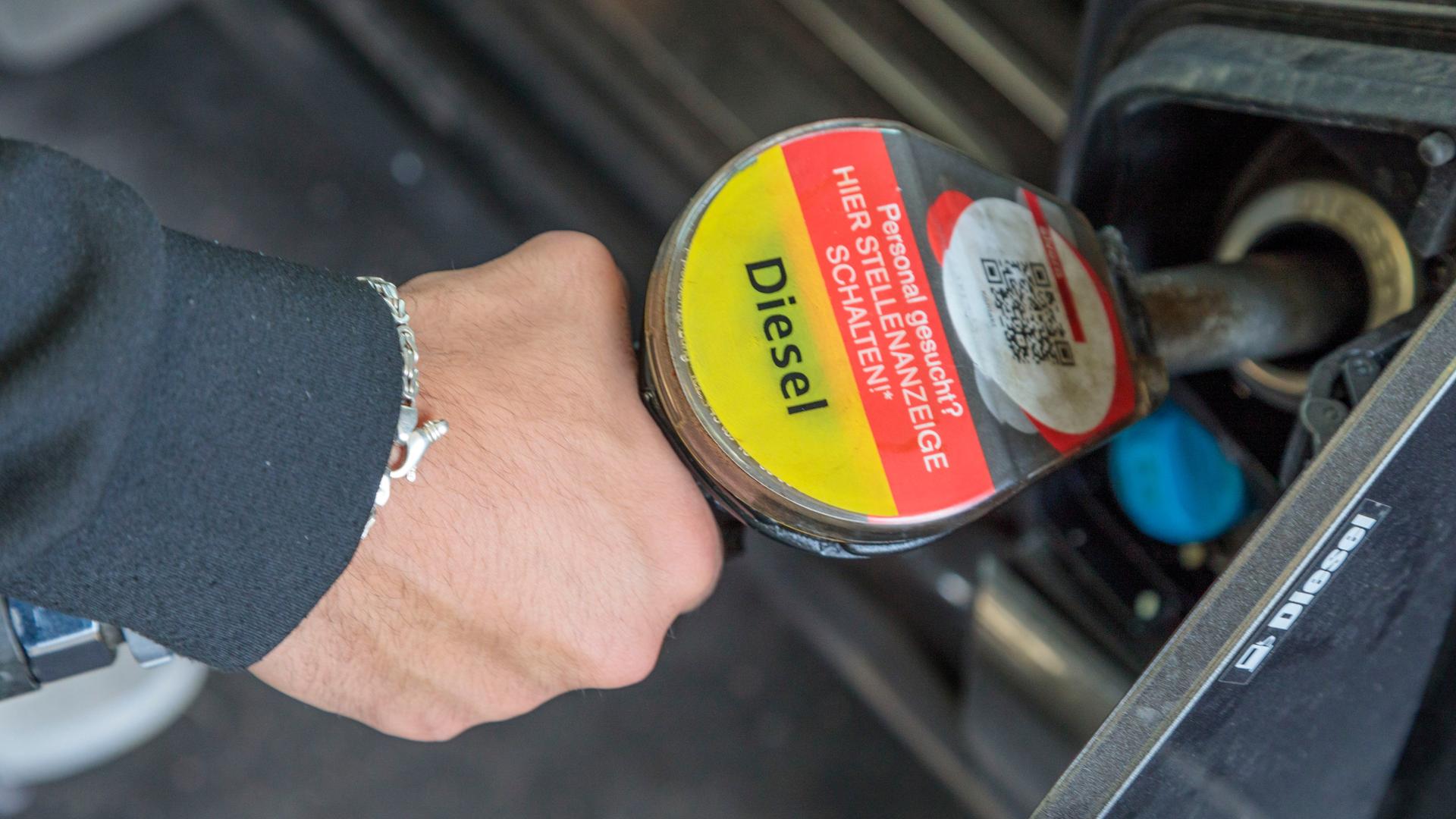
The most resonant story is the US demand that Germany and France release emergency diesel reserves. According to German media reports, the Trump administration has made it clear that if Europe does not send more reserves to the market, Washington may restrict American diesel exports. A Deutschlandfunk report explicitly links this to the White House’s desire to sharply reduce fuel prices in the United States ahead of the November midterm elections. In German public discourse, this is already being described not as allied coordination, but as pressure: t-online used the word Erpressung—“blackmail”—in its headline.
The German reaction is especially painful because Berlin itself is experiencing fuel stress. According to Tagesschau, on October 1, a liter of diesel in Germany cost an average of €2.39, compared with €1.75 before the start of the war with Iran. For Germany, diesel is not merely a motor fuel: it is critical to logistics, industry and some heating systems. The government’s decision to subsidize gasoline and diesel again through a “tank discount” is therefore seen as a forced defensive measure rather than an energy strategy. Monika Schnitzer, an economist and member of the Council of Economic Experts advising the government, called the measure “an expression of political desperation” in an ARD analysis. (tagesschau.de)
Behind the dispute over reserves lies a deeper German anxiety: the United States, on which Europe depends as a supplier of fuel and military power, is now using that dependence as a negotiating tool. A geo-economic analysis by Süddeutsche Zeitung notes that Berlin, Paris, London and the European Commission are already coordinating their response, while Brussels is trying to persuade the United States to act jointly rather than through threats. This is an important shift: the German debate is not limited to whether the reserves should be released. It is about whether Europe has the right to preserve strategic reserves for an even worse crisis—or is obliged to spend them for the sake of the American president’s pre-election stability. (sueddeutsche.de)
In Israel, the same crisis looks entirely different. The main concern there is not diesel, but the political cost of a possible US-Iran agreement. Israeli analyst Eldad Shavit, a former military intelligence officer and senior researcher at INSS, stated the dilemma clearly in a column for ynet: Trump needs an agreement that would allow the war to end, while Israel needs an agreement that would prevent Iran from restoring its nuclear program, missile infrastructure and military capabilities. His conclusion—that ending the fighting by itself does not eliminate the threat—reflects significant distrust of diplomacy unless it is accompanied by verifiable restrictions and an enforcement mechanism.
This anxiety is intensifying amid new signs that the United States is preparing for a military scenario. Israeli media reported on October 1 that the aircraft carrier Theodore Roosevelt and an additional Marine unit were being sent to the region, while Trump was considering resuming large-scale operations against Iran as early as next month. At the same time, the US president himself called Iran’s conditions for reopening the Strait of Hormuz “not good enough” and, when asked about possible escalation after the elections, replied: “possibly.” (ynet.co.il)
However, there is also a paradox in Israel’s view of Washington. The United States remains Israel’s indispensable military backer, but its desire to avoid becoming bogged down in another major war creates the risk of a deal that Jerusalem would consider premature. Shavit stresses that, for the White House, military threats, economic pressure and negotiations are elements of a single strategy; for the Israeli establishment, this could mean that American pressure will be used not to eliminate the threat completely, but to reach a politically advantageous compromise. (ynet.co.il)
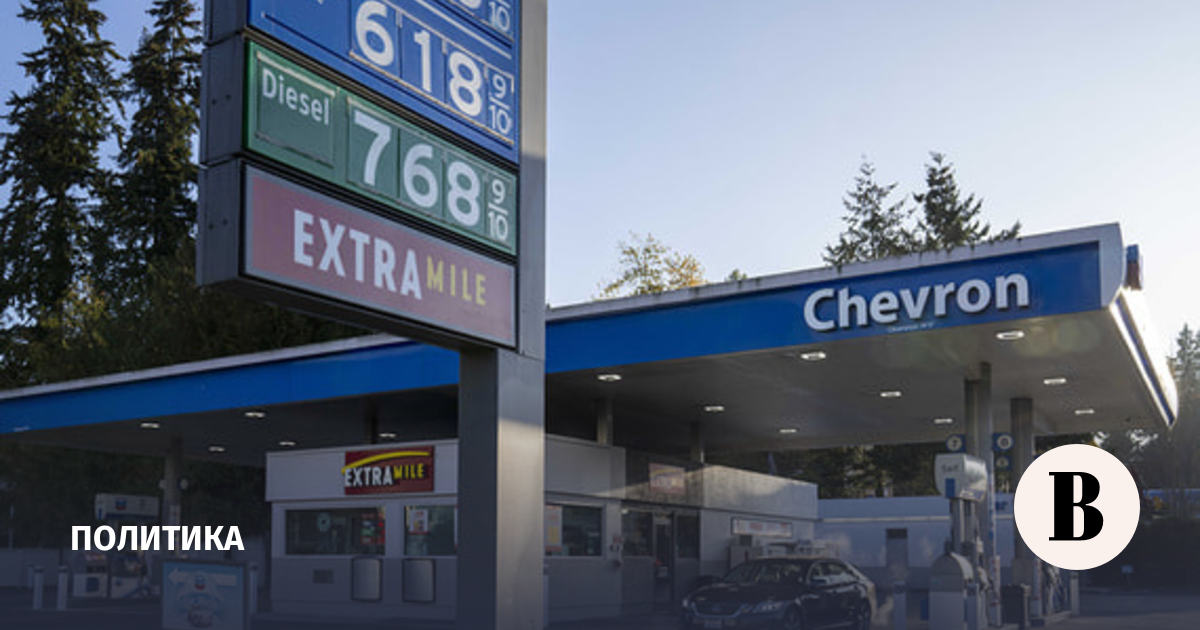
The Russian reaction focuses on another aspect of the same picture: energy is turning international conflict into a bargaining arena in which the United States is acting not as a selfless coalition leader, but as a country protecting its own market. In an analysis by Vedomosti, Alexey Belogoryev, director of research at the Institute for Energy and Finance, notes that the United States accounts for a significant share of global diesel exports, while restrictions on supplies would hit the already undersupplied European market first. The Russian view is therefore less sympathetic toward the Europeans: Moscow sees the diesel dispute as confirmation of its long-standing argument that American guarantees are unreliable and that the West’s sanctions and energy architecture can turn against the Europeans themselves. (vedomosti.ru)
At the same time, the Kremlin is trying to separate relations with the United States from a settlement in Ukraine. On October 1, Dmitry Peskov said that Moscow would prefer not to wait for the conflict in Ukraine to end before resuming economic cooperation with America: according to him, major joint projects would benefit “both Russia and America.” In an Interfax report, this position is presented as a practical response to Washington’s linking of business and politics. The Russian official line is notable here: it does not imply any imminent trust in Washington, but offers the United States the logic of a deal—cooperation wherever it produces benefits, even while fundamental disagreements over Ukraine remain. (interfax.ru)
It is precisely at this intersection that the difference between the three countries becomes especially clear. Germany is asking whether its alliance with the United States is becoming an economic vulnerability. Israel fears that, in order to exit the war, America may agree to an insufficiently strict compromise with Iran. Russia, by contrast, reads the same events as proof that Washington is prepared to bargain when domestic pressure becomes strong enough. But the overall conclusion is the same: US policy is currently perceived not as a unified, long-term strategy, but as a constant balancing act between war, fuel prices, elections and negotiations.
The most unexpected local conclusion comes from Germany. There, the diesel crisis is increasingly being viewed not as a temporary energy disruption, but as an argument for Europe’s ability to independently protect critical infrastructure, reserves and industry. The Israeli debate adds a warning: independence from the United States is impossible in the short term, but unconditional trust in the American political cycle is also dangerous. The Russian debate, meanwhile, sees an opening for pragmatic contacts with Washington—not because the conflict is disappearing, but because American foreign policy is becoming ever more tightly tied to the domestic political cost of every barrel and every gallon.