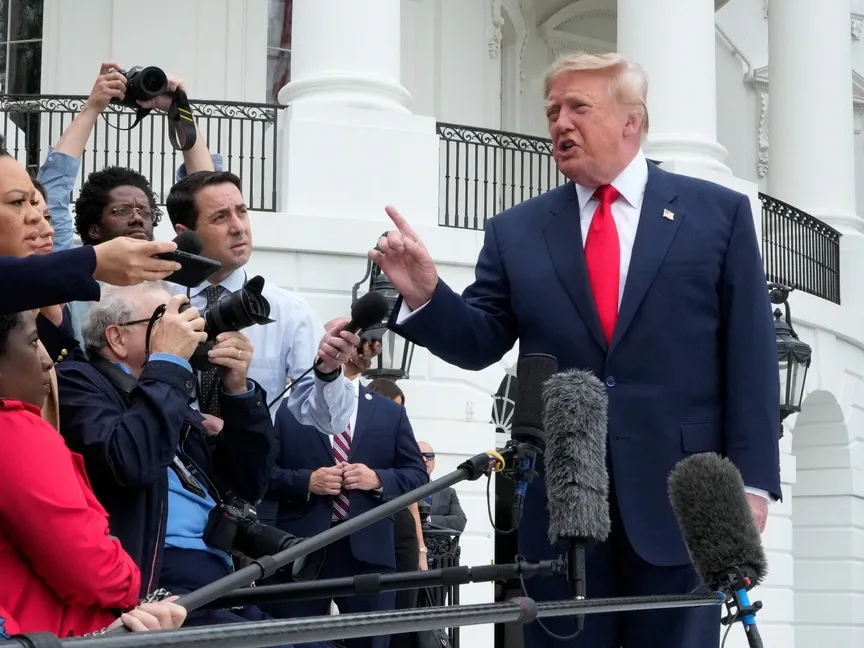
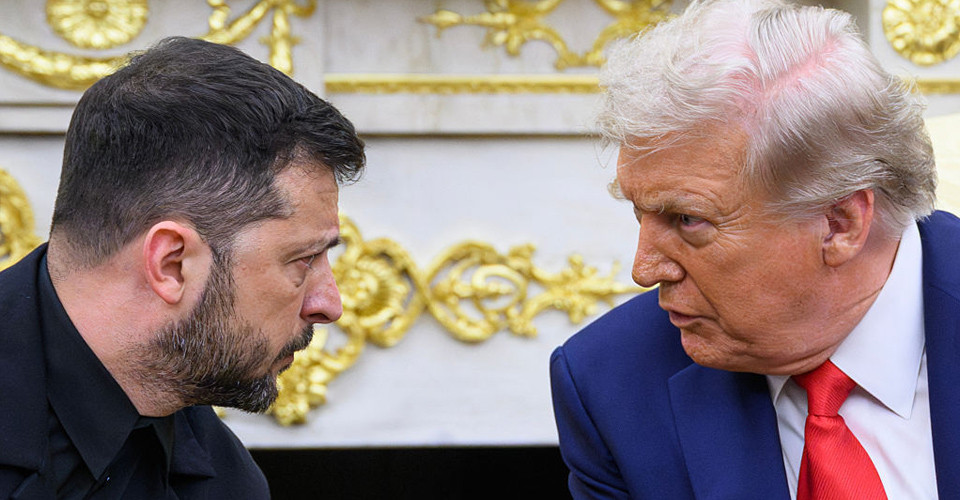
In recent days, America has become the subject of especially fraught debate in three very different countries. The reason is not so much domestic scandals in Washington as the consequences of US policy abroad: the protracted conflict with Iran and the risk of a new energy shock; uncertainty over what real help Saudi Arabia can expect against the Houthis; and the increasingly apparent subordination of the Ukraine issue to Donald Trump’s political calendar. The common thread in Japanese, Saudi and Ukrainian reactions is that the United States remains an indispensable power, but its partners can no longer treat American promises as an automatic guarantee of security.
For Japan, the US campaign of pressure on Iran has ceased to be a “distant Middle Eastern war.” In the Japanese energy journal Energy Forum, columnist Masanori Koyama describes the situation as a “complex oil crisis”: since September, pro-Iranian forces have stepped up operations across the Persian Gulf, while US military and economic pressure, in his assessment, is not moderating Tehran but pushing it toward an even harder line. For a country dependent on seaborne fuel supplies, this is not an abstract debate about regime change in Iran, but a question of electricity and fuel costs and the resilience of supply chains. (energy-forum.co.jp)
Japanese commentators also point to a deeper problem: Washington seems to have expanded the operation’s goals faster than it has defined the conditions for ending it. In an analysis by the Institute for Middle Eastern and Asian Studies, Akinobu Kinoshita writes that the US-Israeli campaign has shifted from strikes on Iran’s nuclear and missile capabilities to pressure on its political system, a blockade and a struggle over the Strait of Hormuz. His central question is almost characteristically pragmatic: not “how to win,” but “how to end it.” If the measure of success keeps changing—from weakening Iran’s missiles to changing its behavior or political system—then the war has no clear political exit. (imeais.tokyo)
The Saudi response is different: here, US uncertainty is seen not as a risk to an import-dependent economy but as a direct threat to cities, airports and oil infrastructure. Following Houthi attacks, including strikes on King Khalid International Airport in Riyadh on October 10–11, the official Saudi agenda has emphasized the kingdom’s right to self-defense and the need to stop weapons from reaching the Houthis. On October 21, the Saudi Press Agency, SPA, reported the interception of four drones headed toward the country, reinforcing the sense that the crisis is not a one-off incident but an ongoing threat. (spa.gov.sa)
A view is gaining ground in the Saudi press: US assistance matters, but security cannot be built solely around waiting for an American decision. In a column for Al Riyadh, Abdel Aziz Aluwaisheg, secretary-general of the Gulf Cooperation Council, calls for a shift from UN resolutions to practical measures to cut off weapons flows to the Houthis. He notes that American, European and multinational naval forces are already operating in the region, and in effect poses a blunt question: if international mechanisms are not working, states must ensure the arms embargo is enforced themselves. (alriyadh.com) This marks an important shift in tone: Riyadh is not rejecting its partnership with Washington, but demanding that it be measured not by statements of solidarity, but by the ability to protect airspace and shipping.
At the same time, the Saudi debate is not simply about accusing America of abandoning an ally. The regional broadcaster Asharq reported Trump calling the strike on the airport “horrible and unacceptable,” but his formula for possible further action—“maybe we’ll do it, we’ll consider it”—only deepened doubts. Against this backdrop, an Arabic-language BBC analysis describes the situation as a test of the old oil-for-security deal: stable energy supplies in exchange for the American security umbrella. Researcher Mitchell Plitnick puts it bluntly: “America let Saudi Arabia down here” [translated from Arabic], while former State Department adviser Aaron David Miller explains the White House’s restraint as a reluctance to open another front, as well as a consequence of the US midterm elections. (bbc.com.im)
It is this factor—US domestic politics—that is especially troubling to Ukraine. In Ukrainian coverage, America is seen not as a single, stable institution but as a political system in which the outcome of the November 3 elections could alter both the negotiating position on the war and the limits of pressure on Russia. In an article for LB.ua, US expert Oleksandr Kraiev warns that even a potential Democratic victory may not bring Kyiv immediate relief: without the agreement of both chambers of Congress, the president will retain broad room to maneuver through executive powers. Professor Oleksiy Haran adds that Trump is increasingly becoming a source of tension within the American system, but Ukrainians should not expect US elections alone to fix American foreign policy. (lb.ua)
The most interesting Ukrainian conclusion is that frustration with Trump has not turned into a call to break with Washington. Taras Semenyuk of the Solid Info think tank calls the US president’s style “show politics”—“every day is like a TV series, with drama” [translated from Ukrainian]—in an interview with Espreso, but insists that diplomatic channels must remain open. His reasoning is clear-eyed: Trump’s harsh rhetoric can give way to substantive agreements, as has happened before, after public clashes between Kyiv and Washington. At the same time, Ukraine needs to rely on more dependable European support without abandoning dialogue with the United States. (espreso.tv)
An unusual common picture is taking shape. Japan sees a risk in an American strategy that could produce an endless war, disrupting global energy supplies and sea routes; Saudi Arabia sees the risk that alliance commitments may prove weaker than Washington’s electoral calculations; and Ukraine fears that its security will become an element in an American political spectacle and bargaining with Moscow. Yet in Tokyo, Riyadh and Kyiv, no one is discussing a complete break with the United States. They are discussing something else: how to get through an era in which America still wields decisive power, but its partners have to build backup layers of security themselves—from adapting their energy systems and cooperating at sea to relying on European defense support and maintaining constant, even uncomfortable, diplomacy with the White House.