In recent days, the main American story abroad has been not so much the November 3, 2026 midterm elections themselves—which saw Democrats regain control of both chambers of Congress—as the question of what they actually mean. In South Korea, Brazil and Germany, the result is being viewed without illusions: U.S. voters have checked the White House, but they have not undone American self-interest, trade protectionism or the president’s freedom of action in foreign policy. The only difference is that for Berlin, this is primarily a test of the resilience of American democracy and NATO; for Seoul, a source of risks to chips, investment and the military alliance; and for Brasília, a potential—but highly limited—easing of pressure from Washington.
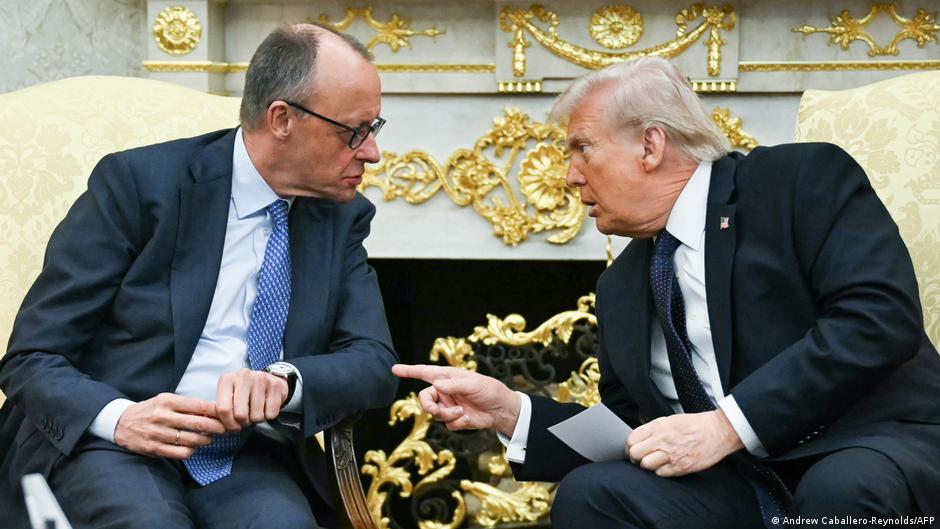
The German response is the most politicized. In Deutsche Welle’s analysis, the Democrats’ victory is described as a rebuke to Trump and his policies, but with an immediate caveat: in foreign policy, the president remains “a force to be reckoned with.” For Germany, that is the crucial detail. Berlin does not expect the new Congress to automatically restore a predictable order based on rules, free trade and reliable alliances. Chancellor Friedrich Merz’s government frames its interests in terms of a “stable international order,” “rules-based trade” and a strong NATO—almost a diplomatic way of saying that in the Trump era, Germany is confident of none of these things. (amp.dw.com)
German commentators also see a deeper signal in the vote. Deutsche Welle interprets it as evidence that American institutions have proved more resilient than fears of a rapid authoritarian drift suggested: voters demanded that Congress regain oversight of the executive branch. Vice Chancellor Lars Klingbeil called the Democrats’ victory “encouraging” and saw it as a return of the political center. But this is cautious optimism, not a belief that a new era has begun: the German press stresses that budgetary oversight and investigations can make life difficult for the White House, while the president still makes many decisions on security, sanctions, alliances and crises largely on his own. (amp.dw.com)
South Korea views the same American event in far less ideological terms. In Seoul’s debate, the midterms are not about the merits of Democrats versus Republicans, but a new variable in calculating the cost of the alliance with the United States. An editorial in Asia Economy puts the local consensus especially clearly: even if Trump’s unilateral push has been checked, “America First” is not going anywhere. Both Democrats and Republicans want to protect American manufacturing, draw advanced industries to the United States and contain China; they differ mainly in their tools and in how they pressure allies. (asiae.co.kr)
That is the source of Korean concern over tariffs, export controls and the artificial intelligence industry. A Deloitte Korea briefing describes the election result not as the end of the “Trump 2.0” agenda, but as a brake on its unilateral implementation: tariffs and restrictions on technology exports are likely to remain in place, while tax breaks, budget subsidies and permits for new projects are becoming less predictable. For a country whose economy depends on memory-chip production, semiconductor equipment, automobiles and shipbuilding, this uncertainty is more troubling than bold declarations. (deloitte.com)
It is particularly telling that Korean analysts do not expect Democrats to bring simple relief. The South Korean law firm BKL explicitly calls tariffs a “constant” and export controls a “variable”: Congress may step up oversight and seek to limit the president’s trade powers, but bipartisan hawkishness toward China and the drive to bring critical manufacturing back to America remain. (bkl.co.kr) In this view, Seoul fears not only new duties, but also that the American fight over data centers, energy and investment could hurt demand for Korean chips. An editorial republished by Supple warns that a slowdown in the construction of U.S. data centers could reduce orders for Samsung and SK Hynix. (supple.kr)
The military and political dimension of South Korea’s response is even more pragmatic. Segye Ilbo reports a “red flag” for security talks: personnel turmoil in the Trump administration and the White House’s conflict with Congress could slow discussions on transferring wartime operational control to Seoul and other bilateral agreements. This reveals a distinctively Korean perspective: American domestic polarization is seen not as an abstract crisis of democracy, but as a factor that could alter the timetable for military planning on the Korean Peninsula. (sgt.co.kr)
The Brazilian view draws an even sharper line between hope and expectation. In Brasília, the Democrats’ victory is seen as an opening for negotiations, but not as a guarantee that pressure will be lifted. In an article in Folha de S.Paulo, economist Otaviano Canuto, a former vice president of the Inter-American Development Bank, warns that a Democratic Congress will create more opportunities for dialogue with Brazilian diplomats, but will not be able to quickly reverse Trump’s trade policy—the area currently causing the most serious repercussions for relations between the two countries. (www1.folha.uol.com.br)
This conclusion matters because, for Brazil, U.S. tariffs are not an abstract debate about globalization, but a symbol of Washington’s attempt to combine trade pressure with political influence. Folha notes that Democrats intend to use hearings, investigations and legislative initiatives to restore Congress’s role in trade policy and challenge the president’s tariff decisions. This gives Brazil a chance to shift the conflict from the bilateral political arena into the sphere of American domestic politics and law. But local analysts are not promising quick results: the White House still has sufficient administrative tools to maintain pressure. (www1.folha.uol.com.br)
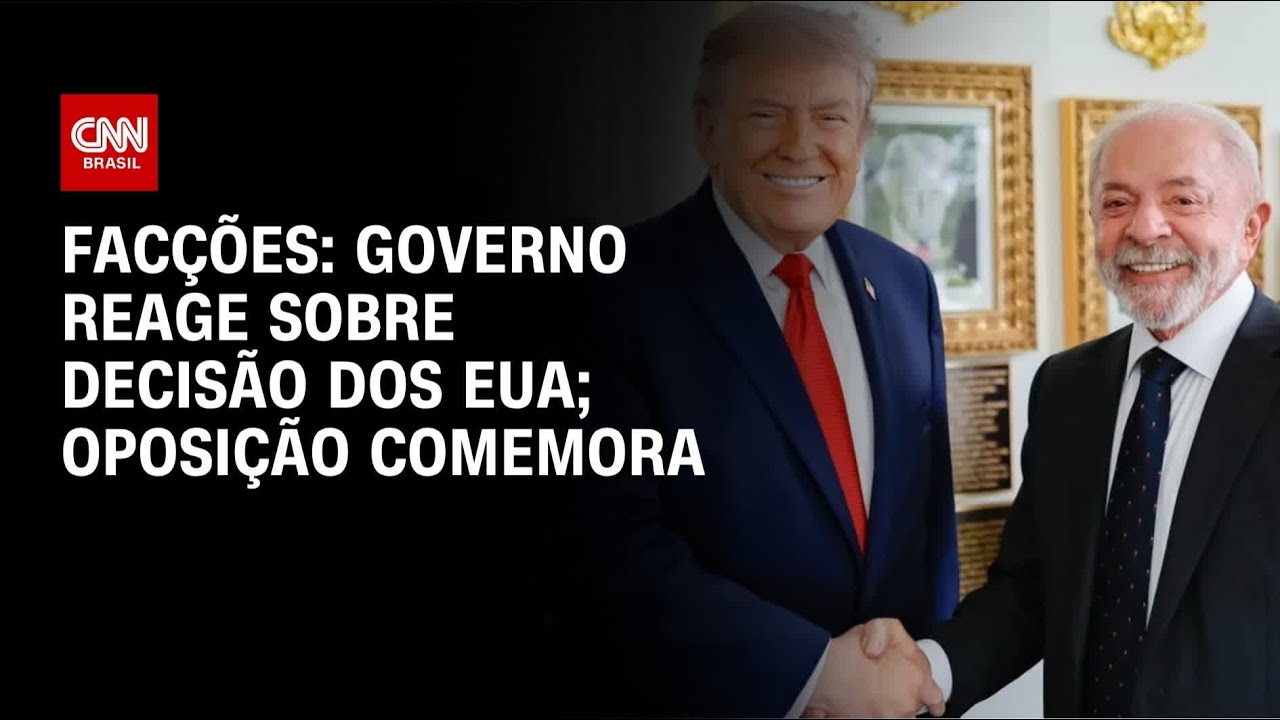
Brazil’s response to the United States has long extended beyond trade. The most sensitive issue is Washington’s decision to designate Brazil’s largest criminal groups, PCC and Comando Vermelho, as terrorist organizations. Some right-wing politicians welcomed the move: São Paulo Governor Tarcísio de Freitas said they were not merely criminal gangs, but “terrorists armed against the people.” The government, prosecutors and experts, however, have a different concern: the U.S. legal designation could create a pretext for foreign intervention and complicate routine police cooperation. (cnnbrasil.com.br)
Marinalvo Cardoso, secretary for legislative affairs at Brazil’s Ministry of Justice, went further in an interview with Agência Brasil: in his view, the terrorism label could even weaken criminal prosecutions, since Brazilian law provides more precise and stringent mechanisms for dealing with especially violent criminal organizations. He also warns that cooperation could shift from the transparent “federal police–FBI” framework to intelligence-service collaboration. (agenciabrasil.ebc.com.br) This response reflects not anti-Americanism as such, but a fear of losing sovereign control over the country’s internal security.
A broader international diagnosis emerges. Germany sees the American elections as a chance to restore institutional checks, but not to bring back the America of the past. South Korea sees the risk that bipartisan industrial nationalism will outlast Trump and become even more entrenched. Brazil recognizes that a weakened president may be more politically vulnerable, but can still use tariffs, sanctions and security rhetoric as levers of influence. The most unexpected common thread in these responses is the near-total absence of any expectation that a Democratic Congress will make the United States less focused on its own interests. Abroad, the midterms were read not as a turn in American foreign policy, but as a complication of it: Washington may become less unilateral at home, but not necessarily less assertive toward its partners.