In early May 2026 the conversation about the United States outside its borders sounds very different from what it did ten years ago. In the South African, Australian and French press America remains a central actor in world politics, but increasingly—an origin of uncertainty, risk and the need to "reconfigure" rather than an unquestioned lodestar. Through the prism of the war with Iran, Donald Trump's new foreign policy, trade conflicts and symbolic gestures like King Charles III’s recent address to Congress, three different societies are trying to answer the same question: what to do with a United States that no longer guarantees the familiar order but still largely defines it.
This is felt most acutely in the example of the US and Israeli war with Iran. For Australia it is primarily a test of an old alliance reflex: the country is being drawn into a conflict that its public views with growing skepticism. For South Africa the war confirms a long‑standing thesis about Washington’s "unilateralism" and indifference to international law, strengthening the pull toward the Global South and BRICS. In France and more broadly in Europe, it fits into a picture of the "staged end of American unipolarity" and the search for a geopolitical language independent of bloc logic. Against this backdrop, trade disputes, defense agreements and human rights add new emotional layers—fatigue, distrust of American competence and, at the same time, fear of a world without an American "anchor."
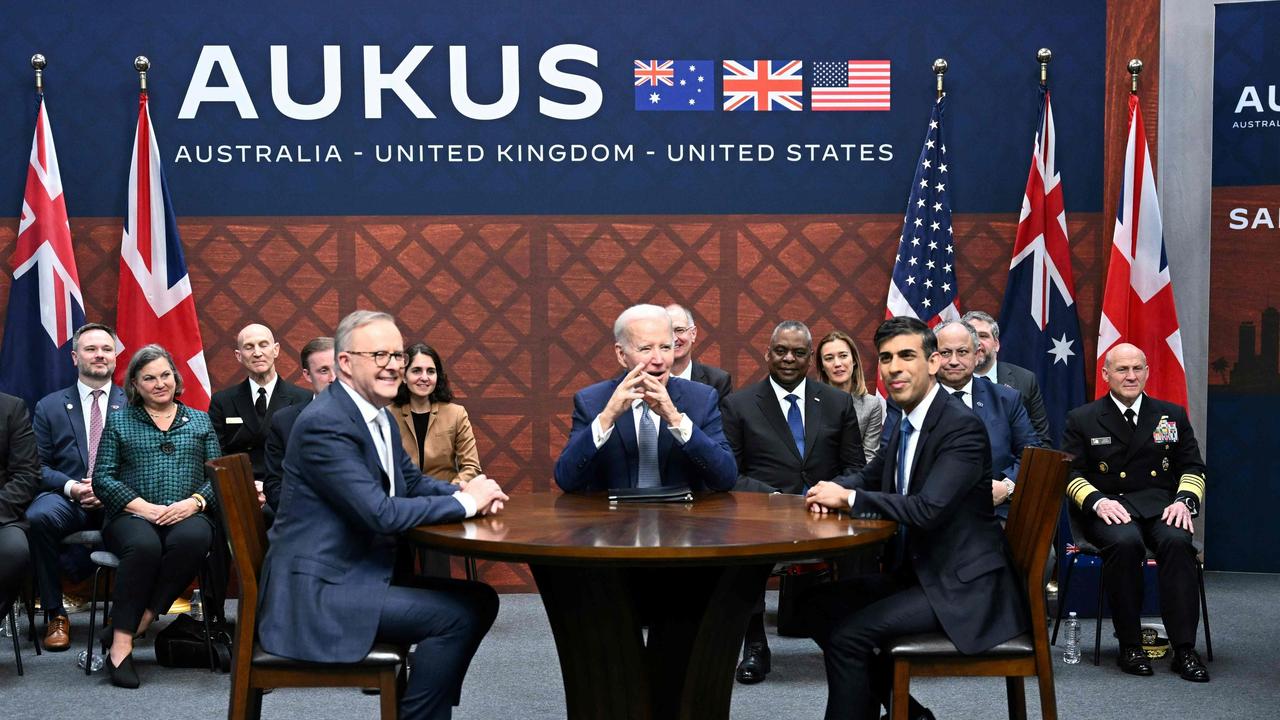
The most unifying storyline has been Washington’s military and diplomatic line. In Australia several nerves converged here: the Iran war, the AUKUS alliance and the new 2026 National Defence Strategy. Prime Minister Anthony Albanese told ABC in an interview that the United States under Trump "plays a different role" in the world, and that forces Australia and its allies to "adapt to unexpected conflicts"; he also stressed that the country is no longer "in a monogamous relationship" with the US but is "going on dates in its own region," referring to activation in Asia and the Pacific and strengthened ties with India and ASEAN countries. Those words sounded like a gentle but clear attempt to mark distance from Washington without breaking the formal alliance, and they immediately became the subject of active commentary in foreign policy analysis.
At the same time experts and former diplomats in Canberra debate whether AUKUS is turning into a "AU$368‑billion sellout" by calling the agreement that—so columnist and international relations lecturer Binoy Kampmark wrote in Independent Australia—arguing that the submarine purchases will primarily benefit the US military‑industrial complex rather than Australians’ real security, and that the new boats will effectively be integrated into the operational structure of the US Navy, leaving Canberra the "default junior partner." In another key, but with the same nerve, Nautilus Institute analysts emphasize that Australia’s involvement in US nuclear plans presents the government with an increasingly difficult task—how to explain to the public a subordinate role in the alliance while at the same time claiming a sovereign policy.
Some Australian commentators connected to the defense community, by contrast, see the latest 2026 National Defence Strategy not as an increase in dependence but as an opportunity for "joint restructuring" of the defense‑industrial base and strengthening of domestic industrial autonomy. Outlets like The Strategist stress that the new document shifts the emphasis from the abstract "global role" of Australia to a concrete task—a strategy of "denying access" in its own region, relying on three pillars: the alliance with the US, American military presence in the Indo‑Pacific and Australia’s own ability to block hostile forces in its near environment. This camp believes that by deepening ties with the US Australia simultaneously strengthens its bargaining position in Washington.
In France the US military line is viewed through a European lens: not so much as a question of a bilateral alliance as a symptom of a broader transformation of the Western security system. Analytical pieces cited by French and Francophone authors advance the idea that the "dark era of American unilateral militarism" under Trump may push other Western countries to seek new configurations and "exit the American security umbrella," albeit without abrupt rupture. In this logic Donald Trump is not merely an unpredictable leader but a catalyst of a long process during which Europe rhetorically rejects the "law of the strongest" and "vassalization" (phrases Emmanuel Macron has regularly used when speaking of strategic autonomy), yet in practice continues to rely on the American defense framework.
South Africa views the same events through the prism of the Global South, decolonization and historical memory. In academic and expert circles, as well as in parts of the anglophone and francophone South African media, reactions to the Iran war and the wider US military footprint are connected with a recent UN General Assembly vote on a resolution about the transatlantic slave trade. Washington, which voted against language implying legal reparations, justified this by saying that at the time the crimes were committed they were not considered illegal under the then‑existing international law and that there cannot be a "hierarchy" of crimes against humanity. For South African authors such arguments continue an old line: America, while acknowledging moral responsibility, consistently blocks any mechanisms of concrete compensation and fears creating a precedent that could be used by other groups of victims. This fits into a discourse popular in South Africa about "asymmetric law," where the Global North dictates the terms of recognition and apology but itself avoids legal responsibility.
US trade and economic policy has become another shared nerve, though it sounds different in each of the three countries. In South Africa the traditional issue of market access to the US through the AGOA program was joined by a sharp conflict in 2025–2026: the United States imposed up to 30% import tariffs on South African goods, citing "reciprocal measures" and national security considerations. In analytical briefs and columns on the subject South African officials and experts calculate losses—from GDP decline to tens of thousands of jobs in the automotive sector and agriculture—and view Washington’s decision as part of a broader trend: abandoning the role of an "open" market in favor of instrumental, transactional trade where political loyalty becomes an asset as valuable as product competitiveness. Against this backdrop, talks of diversifying partners toward China, India and Gulf states sound less like an ideological choice and more like a forced insurance against American unpredictability.
In Australia the economic bloc around the US splits the expert community. On the one hand, America is still seen as a key investor and technology partner, especially in defense and high tech. On the other, White House tariff decisions made in 2025 and only partly reversed after a US Supreme Court ruling in February 2026 signaled that even closest allies are not immune to the president’s "twitter" trade policy. Economists in professional publications analyze how temporary 10% tariffs on Australian goods affected exports and what motivated them: an attempt to extract concessions on American pharma companies’ access to the Australian market, criticized in Washington for strict price regulation under the national pharmaceutical reimbursement scheme. This dispute shows that for many Australians the US today is a security ally but a tough economic competitor unwilling to make concessions even to those who support it in military campaigns.
The French discussion of America's economic dimension follows a different line—the search for an exit from dependence on the dollar and American regulatory power. In analytical journals on the future of the global economy the theme of "de‑dollarization" increasingly appears as a long‑term trend in which both European and Global South actors actively participate. America is portrayed as a country that, on the one hand, benefits from the dollar’s status and the extraterritorial reach of its laws, and on the other risks that abusive use of sanctioning tools will push partners to accelerate alternative payment systems and currency unions. For a French audience this continues the debate on strategic autonomy—not only in military but also in financial spheres.
Particular attention in May 2026 was paid to a symbolic scene: King Charles III’s visit to the US and his address to Congress. In the anglophone and francophone press the episode was often used as an occasion to talk less about the British monarchy and more about the state of the transatlantic world. One senior Buckingham Palace official called the trip "a risk and a challenge, but also an opportunity" that the king "fully seized," emphasizing an attempt to ease strained relations between London and Washington and to remind audiences of shared values—from NATO and support for Ukraine to the climate agenda. In Australia, where the head of state formally remains the British monarch, local commentators noted Albanese’s "glowing review" of Charles’s speech—another example of how Canberra tries to build a complex triangle "US–Britain–regional Asia‑Pacific," refusing none of the directions yet unwilling to be an appendage of the Anglo‑Saxon core.
In France reception of the address was more ironic and restrained. Liberal and left‑liberal outlets treated the king’s visit as "a ritual meant to patch up the flag of Western unity," with the caveat that the real fault line now runs not between London and Washington but between the collective West and a growing world beyond it. Yet even skeptics acknowledged that the fact a British monarch actively champions climate protection and multipolar cooperation in the American Congress indicates that space for value‑based dialogue with the US still exists—even under Trump.
Finally, at the intersection of domestic and foreign dimensions of the US lies another theme that regularly surfaces in French and South African discourse: American protests and the struggle for minority rights. In France the chronicle of mass demonstrations by the No Kings movement against Trump’s policies—with tens of millions participating—is read as confirmation that Americans themselves are actively resisting authoritarian and neoliberal trends, meaning "America is not reducible to its president." In social media and forums popular with French readers this line—separating society from the state—becomes a way to relieve tension: one can criticize US foreign policy without demonizing Americans themselves.
In South Africa internal American conflicts over racial justice and historical memory intertwine with the country’s own post‑apartheid experience. Discussions of American debates over reparations for slavery and police violence are often accompanied by comparisons with South Africa’s Truth and Reconciliation Commission: some argue that the US needs its own "Desmond Tutu," others that without material compensation and institutional reform all symbolic steps are mere gestures. Against this backdrop any Washington decision on human rights in international affairs is perceived through the lens of "double standards": how can a country that has not fully come to terms with its own history claim the role of chief judge?
A striking common thought repeats across all three countries—despite differences in experience and interests: the US remains indispensable but increasingly unreliable. In Canberra this is phrased in the language of strategic doctrines and budgets; in Pretoria—in terms of global justice and economic sovereignty; in Paris—in the vocabulary of "autonomy" and "balancing blocs." At one pole is the recognition that without American military, technological and financial power the old world order would collapse more rapidly; at the other is the understanding that preserving the old dependency carries too high a price for each of these societies.
Between these poles more nuanced and sometimes unexpected local perspectives emerge. Australian discourse teaches that even the closest alliance allows room for maneuver; South African discourse reminds us that memory and reparations are not peripheral but part of grand geopolitics; French discourse shows how cultural and intellectual skepticism of the "American age" coexists with security pragmatism. Together they form a portrait of a world in which one can speak of the United States only in the plural: not of one America, but of many Americas with which other countries are learning to live in an era of instability.