In recent days, U.S. policy has sparked not just one but several interconnected debates in Turkey, India and China. The most prominent issue is Washington’s new campaign of economic pressure on Iran, announced on August 24, which threatens secondary sanctions against countries, banks and companies that maintain trade ties with Tehran. But local commentators do not see this as an isolated Iranian story. For Ankara, it is a question of gas, cross-border trade and the ability to resist unilateral diktat; for New Delhi, it is a test of “strategic autonomy” and a threat to Indian exports; for Beijing, it is another episode in the U.S. struggle to claim the sole right to set the rules of global trade. The common conclusion in all three countries is becoming increasingly clear: Washington is trying to turn access to the dollar system and the American market into an instrument of geopolitical coercion, but the cost of this strategy is also rising for the United States itself.
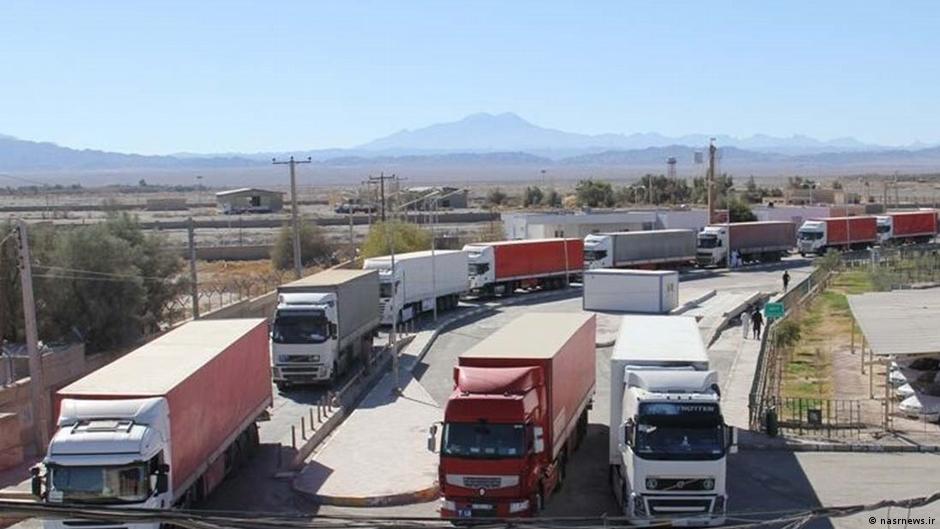
The issue of Iran has become particularly acute. U.S. Treasury Secretary Scott Bessent warned that countries continuing economic ties with Tehran could be cut off from the dollar-based financial system. In Turkey’s debate, this formula is viewed not as an abstract threat but as a direct blow to the national economy. A DW Türkçe article emphasizes that secondary sanctions affect not only oil trade but also banks, transportation, technology, gold and digital assets. Turkish-Iranian trade reached $5.5 billion in 2025, while energy dependence, although reduced, remains politically sensitive—particularly for the country’s eastern regions, which have historically relied on the pipeline from Iran.
Turkey’s response, however, is not limited to anti-American rhetoric. It reflects a pragmatic fear that the sanctions campaign will deprive Ankara of room for maneuver at a time when its previous long-term gas contract with Iran is ending, while logistics, insurance and energy costs are rising. Euronews Türkiye notes that the agreement covering supplies along the Tabriz–Ankara route expired on July 29, 2026, and that no new long-term contract has been publicly announced. As a result, the U.S. restrictions are seen not only as a foreign-policy problem but also as a risk to inflation, the currency and industrial competitiveness.
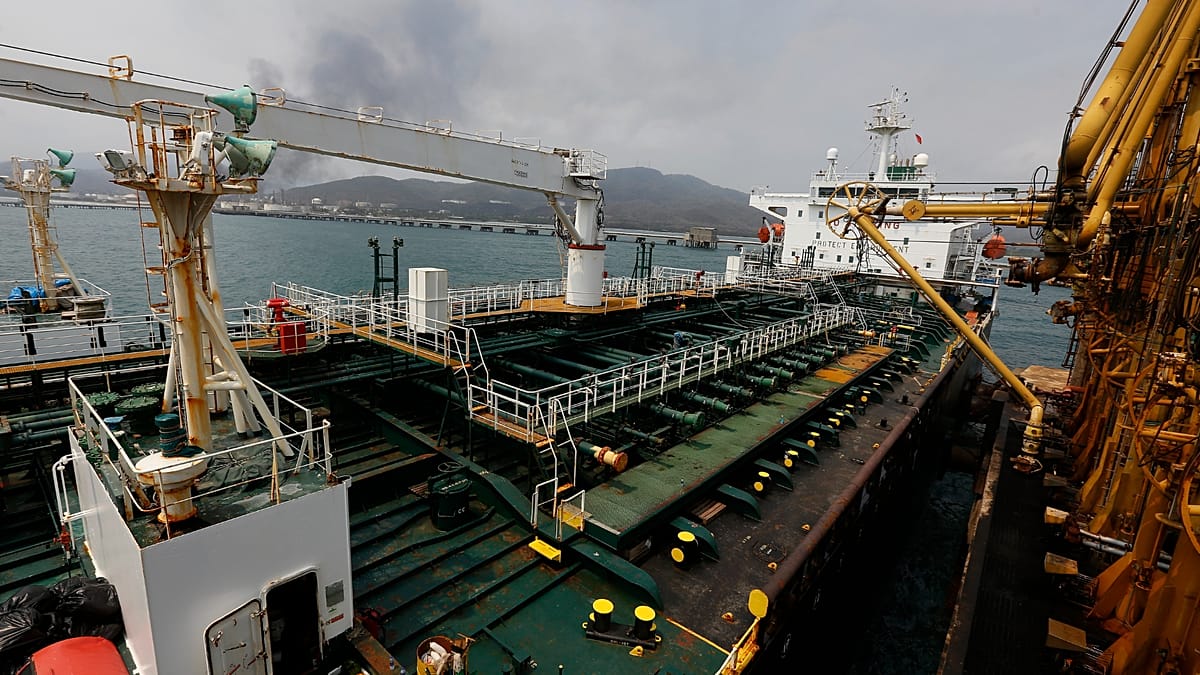
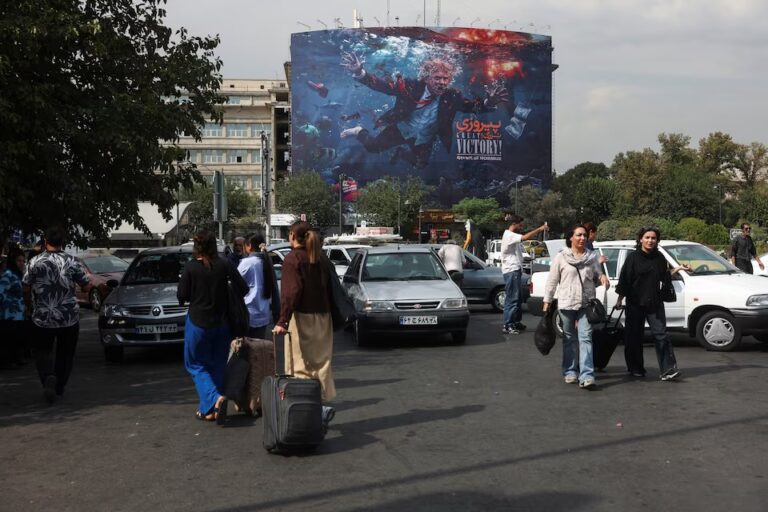
At the same time, Turkish analysts are increasingly assessing the U.S. and Israeli campaign against Iran in terms of its strategic effectiveness. On Medyascope, the war that began six months ago is described as a conflict that has failed to achieve its stated goals and has become a political problem for Donald Trump ahead of the November midterm elections. Earlier, political scientist Gönül Tol told the same outlet that the ceasefire had effectively already been violated: “the conflict is still continuing.” From the Turkish perspective, the main paradox is that the United States sought to reduce Iran’s role in the region, but the prolonged war has given Tehran new levers—from threats to shipping in the Strait of Hormuz to the ability to raise the price of any diplomatic compromise. A Medyascope analysis puts it even more bluntly: Washington has become interested in reopening the Strait of Hormuz as soon as possible and is therefore forced to reckon with Iran’s control over the pace of de-escalation.
In India, the reaction is less emotional but no less cautious. The Indian press is focusing primarily on the consequences of secondary sanctions for trade with Iran, food and medicine supplies, and future transport projects. Mint Hindi notes that, formally, the new U.S. measures have not yet placed Indian companies on sanctions lists. However, the very risk of punishment for transactions with Iran is already influencing the decisions of banks and exporters. This is an important detail: Indian concerns are linked less to an immediate ban than to a “chilling effect,” in which businesses abandon deals on their own for fear of losing access to the U.S. market and financing.
India’s debate therefore revolves around the principle New Delhi calls strategic autonomy: India does not want to choose between the United States, Iran, China and Russia according to someone else’s timetable. In a Xinhua publication, Indian international trade law specialist Shatanu Singh points to a key legal argument: without a mandate from the UN Security Council, the United States cannot turn its own sanctions into a universal obligation for the entire world; they are binding on U.S. entities, but not automatically on third countries. This argument matters not because it guarantees India protection, but because it reveals how the conflict is perceived locally: the issue is seen not as a dispute over Iran, but as an attempt to extend U.S. jurisdiction far beyond the United States.
The second Indian line of debate concerns trade. New Delhi is simultaneously discussing U.S. pressure over the alleged re-export of Chinese goods through India and Indian manufacturers’ dependence on Chinese components. Aaj Tak cites a figure that explains the duality of India’s position: despite tariff threats and political tensions, the United States accounts for around 20% of India’s merchandise exports. Indian commentators are therefore not calling for a break with Washington. Rather, they warn that the U.S. campaign against Chinese “transshipment” could punish precisely the production chains India has been building under the Make in India initiative. For New Delhi, this is almost a trap: the United States urges manufacturers to move production from China to India, but then suspects Indian companies of using Chinese intermediate goods.
China’s response is the most systematic. Beijing links sanctions against Iran, tariff measures, export controls and restrictions on Chinese companies into a single architecture of American pressure. China’s Ministry of Commerce has already responded to U.S. measures against Chinese entities with a series of countermeasures, including export controls on drones and their critical components. In a statement published by People’s Daily, the U.S. steps were described as violations of agreements reached by the leaders and of China’s legitimate interests. Ministry spokesman He Yadong, commenting on a U.S. report about alleged “shadow transshipment networks,” said that Washington was portraying normal international trade and investment as a fraudulent scheme, creating a “false narrative” to contain Chinese products. This position was outlined in a People.cn article.
In the Chinese interpretation, Iran is merely the latest test of whether America is truly prepared to punish major economies for refusing to follow its sanctions. Chinese media make no secret of the fact that Beijing will be at the center of U.S. pressure as Iran’s largest trading partner and an important buyer of its oil. But they also emphasize the limits of this strategy. Xinhua writes that military pressure failed to force Iran to capitulate, which is why the United States is once again relying on sanctions. To Chinese readers, this looks like an admission not of strength but of the absence of a functioning political strategy: if, after war and blockade, the only remaining option is to expand economic punishment, then the original goal has not been achieved.
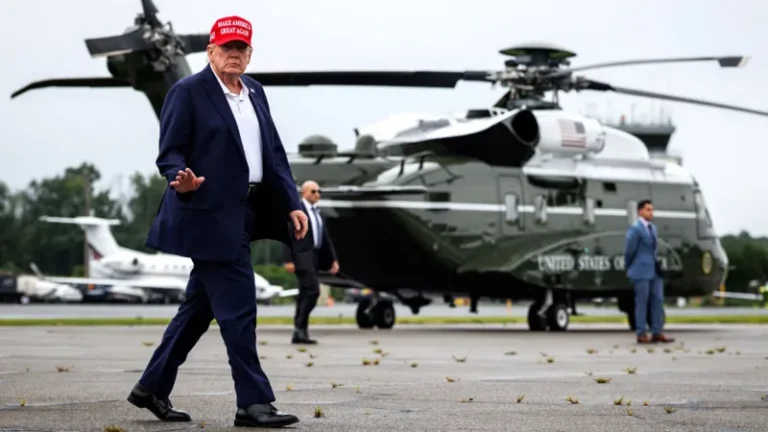
Notably, in China this debate quickly shifts to the question of America’s domestic resilience. Caixin and China Radio International discuss in detail Trump’s decline in approval to 33% and link it not only to the war but also to inflation, voter anxiety and uncertainty ahead of the November 3 elections. The Chinese conclusion is politically calculated: U.S. external pressure may intensify precisely because the White House needs to demonstrate resolve at home. At the same time, this dependence on domestic electoral logic makes America’s course less predictable for both partners and adversaries.
Across all three countries, there is widespread mistrust of the assumption that sanctions automatically change states’ behavior. Turkey views them through the price of gas, transit and the regional balance; India through the right to pursue an independent economic policy and preserve access to the U.S. export market; China through the struggle over the rules of global trade and the rejection of extraterritorial jurisdiction. Their interests differ, but they share the sense that Washington is offering the world an excessively stark choice: either maintain economic ties with Iran and China, or retain secure access to the dollar and the American market.
The most unexpected local idea is that American pressure is no longer necessarily seen as evidence of unquestioned superiority. In Ankara, it is read as a risk to be circumvented; in New Delhi, as a reason to diversify trade without breaking ties with the United States; in Beijing, as an incentive to accelerate the creation of alternative financial and production networks. Thus, the new U.S. campaign centered on Iran may produce the opposite of its stated result: rather than isolating individual rivals, it may bring closer together countries that, for different reasons, are unwilling to give Washington the right to decide whom they may trade with.