The main American issue to trigger an immediate reaction in Paris, New Delhi, and Tokyo was neither an election nor another diplomatic gesture from Washington, but trade policy. On November 25, 2026, the Office of the U.S. Trade Representative proposed new measures under Section 301 of the Trade Act of 1974 against 14 economies, including the European Union, Japan, and India. Formally, Washington accuses them of creating “structural excess capacity” through industrial policies, subsidies, financial incentives, and access to resources from non-market economies. In practice, this is an attempt to put the tariff regime on a more durable legal footing after the previous tariff framework was challenged in U.S. courts. Comments are being accepted until January 5, 2027, and hearings are scheduled for January 25. The measures are therefore still only a proposal, but in all three countries they are already being treated as a political fact. The USTR’s official announcement shows that the United States is proposing a tariff cap of 15% for the EU and Japan, and up to 25% for India, with the rate potentially falling to 17% if a bilateral agreement is reached.
In France, the debate quickly moved beyond the question of percentages. The French reaction is above all a dispute over the reliability of the transatlantic relationship itself. The European Commission has firmly rejected the American claim that Europe is a source of chronic overcapacity. Its spokesperson, Olof Gill, pointed out that the EU is more likely to suffer from excess capacity—particularly as a result of China’s industrial expansion—than to create it. But another detail is especially significant: Brussels is not promising an immediate trade war; instead, it insists that the new U.S. framework honor the previously agreed 15% ceiling. This position reflects a familiar European ambivalence: the United States is seen both as a political ally and as a country capable of unilaterally rewriting the terms of a deal. In a statement reported by Agence Europe, the European Commission is effectively urging Washington not to escalate in return, but to resume joint efforts to tackle China’s excess production capacity.
French media and business circles, however, see a more troubling problem: even if the rate stays within the 15% limit, the constant shifting of legal grounds turns tariffs into a tool of political pressure. In its analysis, Le Monde describes the Trump administration’s latest move less as a response to a specific import imbalance than as a search for a reliable legal framework for a policy it has already chosen. This matters to France because it weathered the previous restrictions relatively better than many of its European neighbors: French exports to the United States rose 5% year on year in the third quarter of 2026, helped by aviation, perfumes, cosmetics, and beverages. But those figures are no comfort to businesses: aviation masks weakness elsewhere, and exports outside the aerospace sector had previously declined. The French Customs Service explicitly notes that France’s resilience rests on the particular composition of its exports, not on an absence of tariff risk. The French view of the United States today can therefore be summed up as follows: the problem is not just the tariff, but the fact that any agreement with Washington looks like a temporary reprieve before the next American initiative.
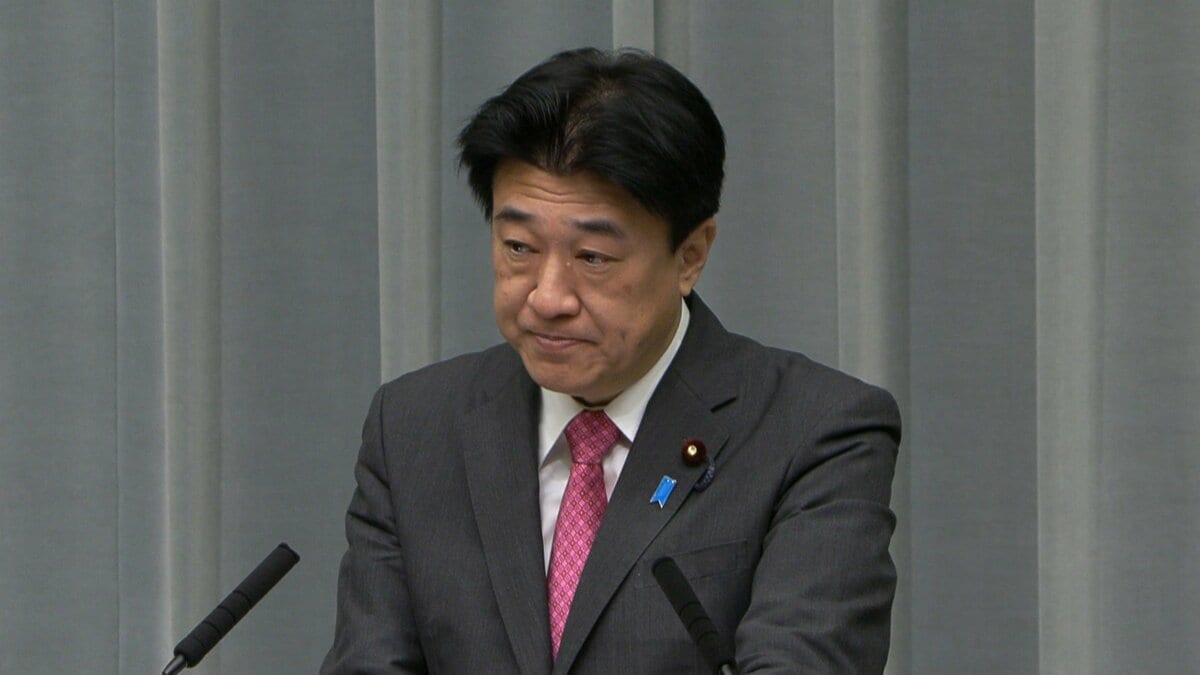
In Japan, the tone is more restrained, but the irritation is no less intense. Chief Cabinet Secretary Minoru Kihara called the American plan “extremely regrettable” and said Japan has neither non-market practices nor structural overcapacity. The wording of the protest itself is significant: Tokyo does not dispute the need to address the global glut of Chinese goods, but rejects being lumped together with the targets of Washington’s systemic criticism. An FNN report captures precisely this diplomatic calculation: the Japanese government stresses that the process is not yet final, but has already lodged a protest with the United States.
Japanese analysts, meanwhile, distinguish symbolic damage from immediate economic impact. Nobuhiko Kiuchi of the Nomura Research Institute notes in his analysis that the proposed 15% ceiling largely restores the terms of the previous U.S.-Japan agreement rather than creating an entirely new trade disaster. But that is precisely what makes Tokyo’s response especially revealing: Japan is not so much worried about the rate itself rising as about the United States’ ability to declare Japan’s industrial model—including support for the automotive, steel, and semiconductor industries—a problem for the United States. For a country that is both Washington’s key military ally in Asia and one of the largest investors in U.S. manufacturing, the accusation serves as a reminder that, in trade policy, allied status does not guarantee an exemption.
This gives Japan a distinctive perspective. In Europe, tariffs are tied to the question of the EU’s strategic autonomy; in India, to bargaining over market access. In Japan, they raise the question of whether two goals can be reconciled: supporting America’s industrial and technological base through investment while protecting Japan’s own export economy from U.S. protectionism. The USTR explicitly lists Japanese support for the automotive, steel, semiconductor, and fiber-optic industries among its grievances against Tokyo. The U.S. rationale seems almost paradoxical to the Japanese: Washington expects its ally to help contain China technologically, while at the same time suspecting Japan’s own industrial policies of distorting the market.
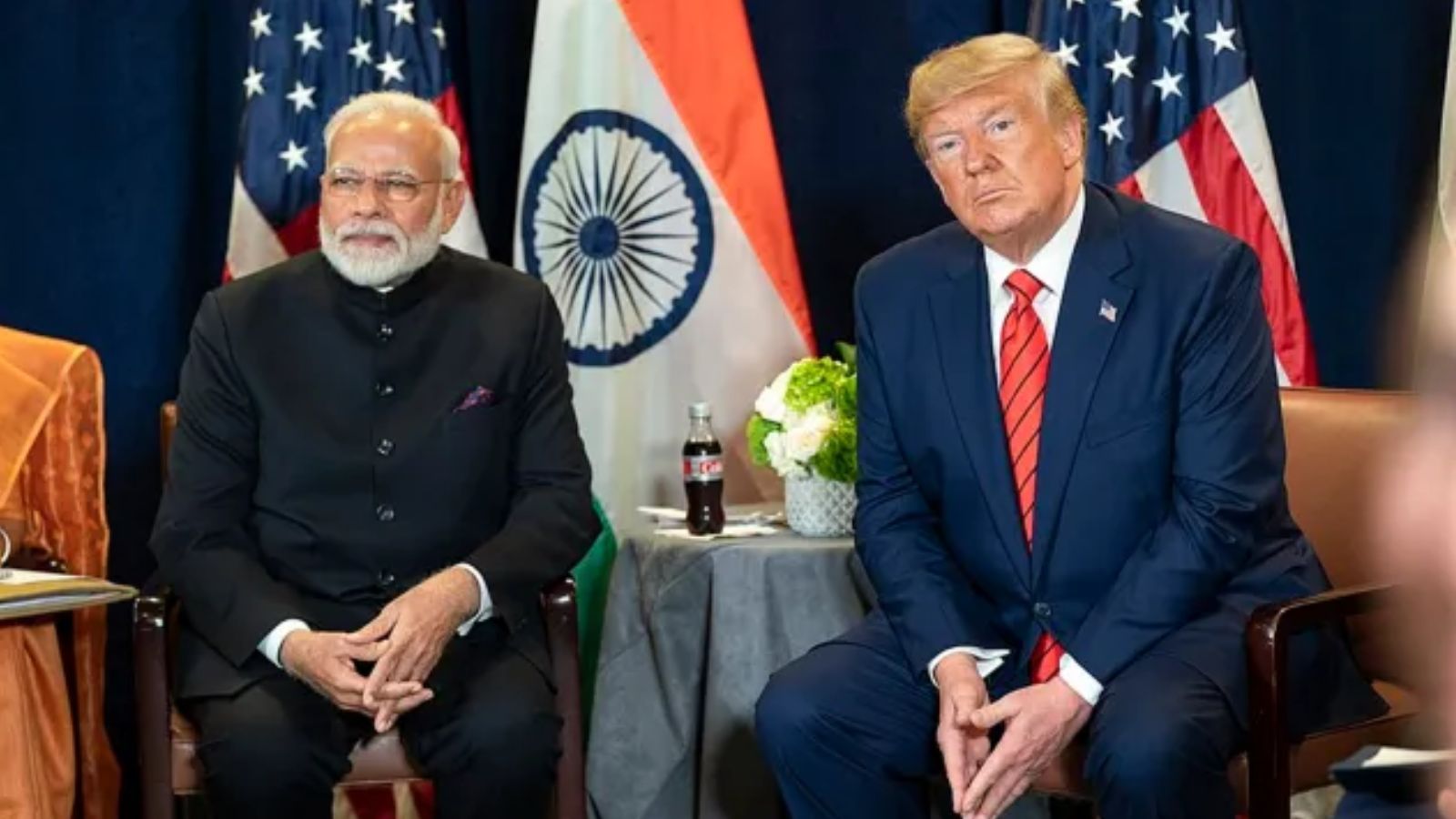
India’s response is noticeably more pragmatic and, perhaps for that reason, the most revealing. Narendra Modi’s government has officially rejected the claim of structural excess capacity, saying that trade disputes should be resolved through negotiations on a bilateral agreement, not through unilateral tariffs. The Indian Ministry of Commerce statement deliberately avoids emotional confrontation: New Delhi is “examining” the U.S. notice and reiterates its desire to conclude a bilateral deal as soon as possible. This is not weakness, but a clear-eyed assessment of the balance of power. For India, a rate of 17% under a deal is worse than the 15% offered to Europe and Japan, but better than the terms facing many of its Asian competitors.
Indian businesses therefore read the tariff ultimatum as an unfavorable but potentially useful negotiating signal. S. S. Ralhan, president of the Federation of Indian Export Organisations, has urged the government to conclude an agreement with the United States as soon as possible: he says U.S. orders are already coming in, and a lower tariff than those imposed on competitors could strengthen the position of Indian suppliers. Business Standard reports that leather and footwear manufacturers also view 17% as the “best option” for India, since Vietnam and China would be at a disadvantage. This highlights an important difference from the French response. Paris sees the American tariff logic as a destruction of rules; New Delhi, while rejecting its legitimacy, is trying to turn the new tariff scale into a relative advantage over its neighbors.
But this pragmatism has limits. The American grievances target precisely the measures intended to expand Indian manufacturing: industrial support policies, and markets for medical products, steel, solar energy, and ICT. In other words, Washington is putting pressure on the very elements of the “Make in India” strategy that New Delhi regards as the foundation of economic growth and reduced dependence on China. Indian policymakers face an uncomfortable question: can the country become an alternative manufacturing base for the West if the United States simultaneously urges it to expand industry and suspects that expansion of creating “excess capacity”? An Indian Express analysis notes that labor-intensive sectors are especially vulnerable in India—including textiles, clothing, jewelry, seafood, carpets, and solar products—while smartphones and generic drugs are largely exempt from the new measures.
The overall conclusion from the French, Japanese, and Indian reactions is that America is no longer simply a market whose access is regulated by tariffs. It is becoming an arbiter of its partners’ industrial policies. France is calling for predictable rules and European solidarity; Japan is protesting as an ally that does not want to be equated with strategic rivals; India is trying to secure a relative advantage through a deal without publicly abandoning its own industrialization drive. All three countries disagree with the American diagnosis, but each is being forced to consider not whether it is fair, but what price it will have to pay to be excluded from it.