In several points around the world at once — from Jerusalem to Beijing and Berlin — the conversation about America has again become part of domestic agendas. But the talk is not about “the US in general,” but about very specific things: Washington’s style of foreign policy, how the new American administration behaves in the Middle East, the strategic rivalry between the US and China, and how reliable American security guarantees still are for Europe. Against this backdrop each country is forming its own particular image of America: somewhere as an indispensable but increasingly nervous ally, somewhere as the main source of risk to global trade, and somewhere as a partner without whom no serious regional conflict can be resolved, yet whose priorities can no longer be taken on faith.
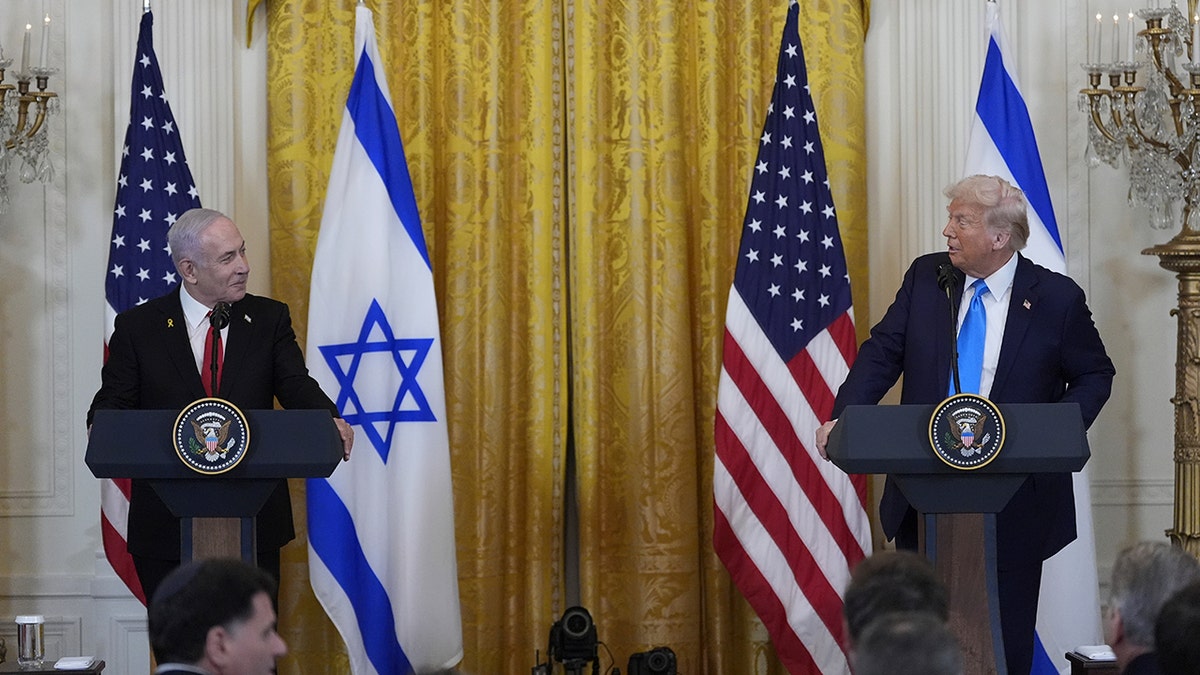
One center of today’s debate about America is the Middle East. In Israel the discussion of the US traditionally proceeds through the prism of security and the country’s standing in Washington. Every signal from the White House related to support for Israel, arms deliveries, its position on the Palestinian issue and the Iranian nuclear program is read especially closely here. Every gesture by the new administration toward the region — from wording in State Department statements to nuances in UN Security Council resolutions — becomes a test of the depth of the strategic partnership. Local commentators note a growing divergence in American politics between the rhetoric of “unwavering support” and cautious practice, where the White House must balance internal pressure from the progressive wing of the Democrats and the need not to undermine the status quo in relations with an important ally.
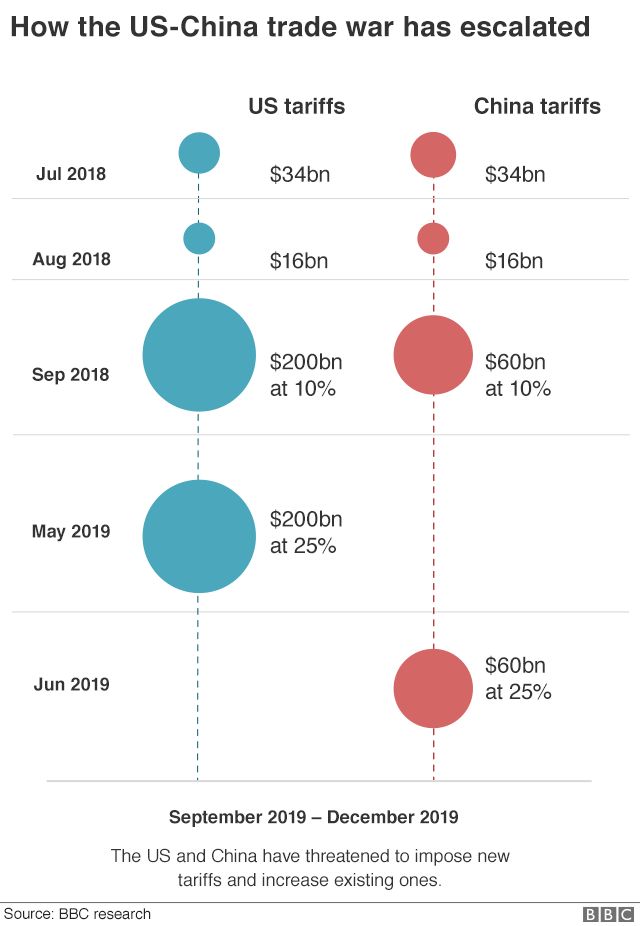
At the other end of Eurasia, in China, the theme of America sounds entirely different today. The focus here is not on whether “Washington loves us or not,” but on how American policy is changing the global rules of the game and creating risks and opportunities for China. In Chinese foreign policy and economic publications America is often referred to today as a “global source of risk,” primarily because of tariff and sanctions policies. One characteristic piece in an official foreign policy journal describes American duties as a “multifunctional weapon,” at once an instrument of pressure in negotiations, a means to stimulate “reindustrialization,” and an additional source of revenue for the budget. The author concludes that such an approach destroys the foundations of the multilateral trading system, forcing others — from Canada and the EU to China — to build their own countermeasures and seek “more reliable partners” instead of a unilaterally acting US. In a Canadian newspaper cited in the same text, Washington’s trade line is already called the start of an “unnecessary trade war that cuts America off from its allies.”
Particular irritation in Beijing is caused by how the US wraps economic and technological pressure in ideological language. In analysis of the “comprehensive strategic competition between the US and China,” Chinese authors identify four strands of American policy: an attempt to “decouple” economies, the reproduction of Cold War logic, the activation of a militarized security model, and “diplomacy of values” meant to rally allies on an anti‑China platform. From these authors’ point of view, the “distorted perception of China” in Washington leads to erroneous decisions, and the mobilization of partners under the slogan of a “systemic rival” turns the US into the architect of new lines of division rather than stability.
However, the Chinese conversation about America today is not limited to criticism. In a notable piece in Xinhua about why Washington is spending tens of millions of dollars on large‑scale translation of Chinese documents and research into English, the Chinese author essentially explains to a domestic audience how seriously the US takes strategic competition: “After the dismantling of human agent networks and the reduction in visits to China, ‘translating China’ has become for American elites a key channel for obtaining the information needed to make policy.” This turn is interpreted in Beijing in two ways: on one hand, as an acknowledgment that China can no longer be ignored; on the other, as confirmation of deep mistrust. The article’s author, originally published in the journal Contemporary American Studies, writes outright that in the American system “toughness toward China trickles down to local politics” — meaning anti‑China rhetoric becomes a useful resource not only for federal but also for state and municipal politicians.
If at the structural level relations remain tense in tone, recent contacts in Beijing between American and Chinese sides show an attempt to put at least part of the agenda on a more predictable footing. At meetings in Beijing the parties declared a desire for “strategic stability,” but, as an analysis prepared for the Council on Foreign Relations notes, even this shared term is understood differently in Washington and Beijing. For the US it is primarily related to nuclear deterrence and transparency in the military sphere, while Chinese experts emphasize the economic and technological components and insist that “strategic stability” is impossible as long as Washington regards sanctions and export controls as acceptable routine tools.
Meanwhile, on the domestic political level, the US itself becomes the subject of criticism in the eyes of the Chinese audience — but through assessments voiced within the United States. One notable example is a sharp statement by the Senate Foreign Relations Committee after a recent meeting in Beijing between the American president and the PRC chairman. As Chinese‑language portals reported, senators accused the president of playing “a solo game” in foreign policy, not coordinating with allies, and sacrificing national interests and weakening the US position in competition with China for dubious and reversible concessions. An important point: Chinese media emphasized that the criticism came not from Beijing but from the American political establishment — this fits a consistent Chinese line: to show that “the White House’s actions raise questions even within its own institutions,” thereby justifying Beijing’s caution and toughness.
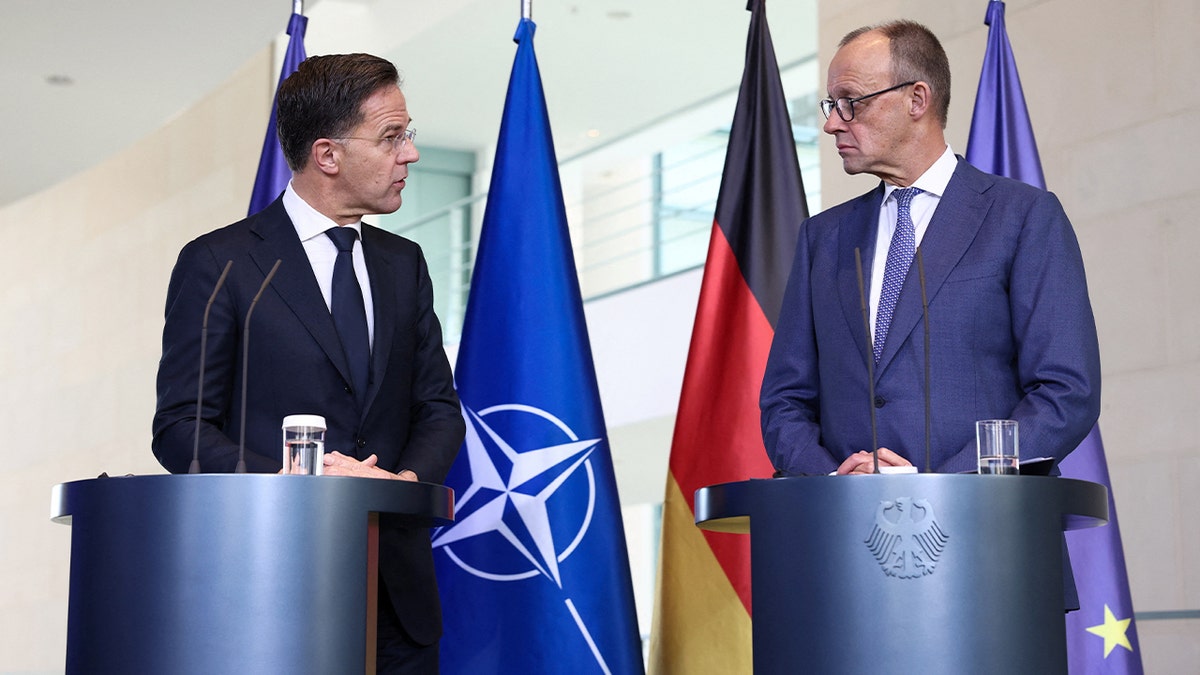
Germany, unlike China, looks at the US not as a rival but as an allegedly indispensable military and political partner. But precisely for that reason Washington’s recent steps to adjust its military presence in Europe provoke an emotional response there. The German newspaper Die Zeit, analyzing US plans to reduce or redeploy the contingent in Germany, writes about a “serious threat to NATO and bilateral relations.” The article focuses not only on the quantitative aspect — how many battalions are leaving and where — but also on the symbolic: American troops on German soil are viewed as the physical embodiment of security promises made during the Cold War.
Interestingly, commentators in Berlin criticize not only Washington in this story but their own leadership as well. One author in Die Zeit recalls how the head of the German government recently spoke sharply about American operations, prompting a painful reaction from the US president. In the author’s view, the problem is not the criticism itself: “It was largely justified,” — but that German politicians still have not learned to speak to America in the language of principled yet constructive disagreement. Any complaint either sounds too timid or turns into a public slap, after which Washington responds with a flare of irritation rather than substantive dialogue. This line — about “the inability of German politics to criticize the US without offending” — is picked up by other commentators as a symptom of deeply asymmetrical relations, where Germany still asks and justifies more than it formulates an independent agenda.
If China accuses the US of undermining the trading order, then in German discourse the concern more often relates to strategic predictability. The problem is not only tariff wars and extraterritorial sanctions, although they strike painfully at the export model of the German economy. Far more acutely perceived are American decisions that change the balance of power on the European continent: from demands on defense spending to sudden statements about troop relocations. Two lines intersect here: on the one hand, Germany is concerned about Russian aggression and objectively depends on the American military umbrella; on the other, it can no longer fully ignore that Washington increasingly uses security as leverage in economic and technological disputes, including with Europeans.
Against this background German analytical and expert circles are discussing the need for “European strategic autonomy” — not as a replacement for NATO, but as insurance against abrupt political turns in Washington. The change of administrations in the US over recent years has not removed this question: on the contrary, many observers note that domestic political polarization in America makes European security hostage to the struggle between parties. For Brussels and Berlin this is no longer an abstract theoretical threat but a real planning factor.
An interesting point of convergence between Beijing and Berlin is the perception of American policy through the lens of “unilateralism,” albeit in different registers. Chinese authors accuse the US of replacing international institutions with coalitions of interest and “clubs of democracies,” within which decisions are made effectively without the participation of the countries that are then strongly affected by them. German analysts are much milder in formulation, but in essence say the same: alliances are increasingly presented with facts of decisions already made in Washington, and the role of consultations is reduced to the subsequent “selling” of those decisions to public opinion.
There is another crosscutting motif: internal contradictions within American politics become an element of argumentation both in China and in Europe. For the Chinese audience voices from the US that point out the costs of sanctions, tariffs and military spending are actively cited to show that “even in the US they understand the destructiveness of this line.” In Europe, conversely, it is common to refer to American intellectuals and former officials who call for strengthening alliances and not weakening support for partners; this is used in debate with those in Washington who are inclined toward more isolationist or transactional foreign policies.
Almost none of this is visible if one follows the US only through American media. Inside America the conversation about foreign reactions usually boils down to familiar storylines: “allies are worried,” “China is unhappy,” “NATO assures unity.” But looking from Beijing or Berlin the picture is much more layered. For China the US is simultaneously the main competitor, a key market, a source of technology, and a mirror in which Chinese elites measure their own status in the world. For Germany America is a security guarantor, a political orientation, and an economic partner, but also an unpredictable player whose domestic struggle can at any moment change external course. For Israel, whose discussion today is closely tied to questions of war and peace, the US remains the main external factor determining the space of the possible — from military support to diplomatic cover.
As a result, the image of America in these three countries increasingly resembles not a black‑and‑white poster but a complex, contradictory figure. And perhaps that is the main conclusion of today’s international conversation about the US: it is no longer a question of whether a given country is “for” or “against” America, but of how well other players can adapt to an America that itself looks less like a stable “anchor” of the world system and more like a source of both opportunities and risks.