Today's conversations about the U.S. in Riyadh, New Delhi and Moscow bear surprisingly little resemblance to the debates familiar to an American reader about elections, intra‑party struggles or politicians' approval ratings. For these three countries, America in early 2026 is simultaneously a source of security and instability, a strategic partner and a risk factor, a market of opportunity and a symbol of systemic crisis. Local press and expert columns show less interest in the nuances of the American electorate and much more — in how Washington's course affects oil, war and peace, the internal resilience of the United States and the architecture of global power.
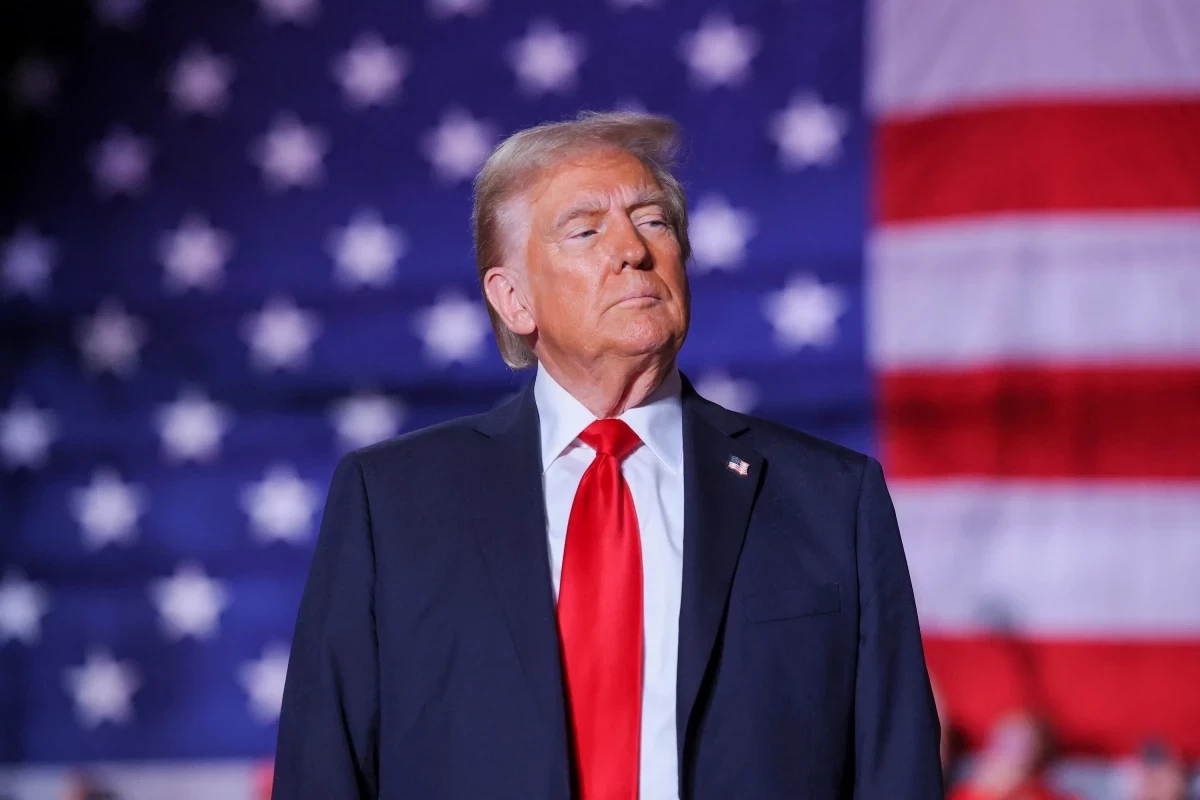
Saudi commentators in recent days have been actively discussing two stories from Washington that at first glance seem “tabloid” but are in fact symptomatic. The first is the criminal case against former FBI director James Comey, whom American media and social networks accused of a veiled threat to Donald Trump via a numeric “code” online. Saudi Okaz saw in this not merely a curiosity but an indicator of how political polarization and legal warfare in the U.S. have moved beyond routine institutional conflict: digital hints are being interpreted as a “murder cipher,” and the Department of Justice becomes embroiled in a struggle of symbols and signals understood primarily by a domestic audience. (okaz.com.sa) The second episode is plans to issue a limited series of American passports for the 250th anniversary of independence featuring a large portrait and signature of Trump. In Okaz’s interpretation this is not just a souvenir but a demonstrative fusion of a politician’s personal brand with a state symbol: “the passport as a leader’s business card,” which in the Middle East is inevitably read through the region’s own experience of personalization of power. (okaz.com.sa)
These specific stories overlay a long‑standing regional question: can a country that is expanding its military presence abroad while enduring shocks at home remain a reliable pillar for its allies? In Al Jazeera’s popular Arabic program “From Washington,” commentators discussed how simultaneous escalation with Iran and growing social and racial conflicts in states like Minnesota call into question Washington’s ability to balance the slogan “America First” with the reality of internal division. The program’s authors directly ask whether the U.S. is paying for its external show of strength with a loss of governability at home, and what that would mean for countries that traditionally rely on American security guarantees. (aljazeera.net) For a Saudi audience this is a practical, not academic, concern: if the shield weakens, should they accelerate diversification of guarantees — via China, Russia, or regional formats?
The Indian debate about the U.S. is structured very differently: in New Delhi the focus is less on America’s decline or triumph and more on India’s position between Washington and Moscow and its role in a changing world order. In analytical materials prepared by exam coaching centers and foreign‑policy think tanks, the U.S. almost always appears alongside Russia, China and the EU as one of the “global centers of power” with which India must build multi‑level relations — from defense to high technology. (sanskritiias.com) The term “strategic autonomy” is entrenched in Indian political language: the country deliberately avoids choosing a camp, seeking at once to deepen economic and technological partnership with the U.S. while preserving military‑technical ties with Russia. One recent Indian analysis emphasizes: New Delhi’s policy is not to “take sides” but to “dehyphenate” relations — that is, to stop viewing “India—U.S.” and “India—Russia” ties as mutually exclusive. (drishtiias.com)
In this logic, the American agenda in Indian eyes is highly pragmatic. Discussions focus on tariffs, market access, the reconfiguration of global supply chains, Western “decoupling” from China and the resulting “windows of opportunity” for India — from semiconductors to green energy. One Hindi analytical review on an interim trade agreement between India and the U.S. stresses that tariff reductions and strengthened energy cooperation are seen as steps toward restructuring global chains with greater resilience and diversification, not as an ideological rapprochement with Washington. (visionias.in) Even when the U.S. is discussed as a military partner, Indian materials emphasize the instrumental nature of cooperation — interoperability of arms, intelligence sharing, access to technology — but they maintain as an axiom that strategic decisions are made based on Indian interests, not American scenarios.
At the same time, in India’s public and political discourse American hegemony and especially U.S. interventions in the Middle East and the Global South are often criticized as sources of instability. In more radical Indian outlets and agitational texts, the U.S. still figures as an “imperialist power” whose policies, particularly regarding wars in the Middle East, “lay the groundwork for a third world war.” (bordernewsmirror.com) This dual perception — partner in technology and education but a systemic risk to global stability — helps explain why the Indian elite insist so strongly on multipolarity and reform of the UN Security Council, where the U.S. is one of five veto holders and, in New Delhi’s view, a key obstacle to expanding the permanent membership.
The Russian debate about the U.S. is framed around other storylines. First, almost all serious conversations about America go through the prism of wars on the perimeter of the post‑Soviet space and the “great confrontation” between Russia and the West. Second, the media space has seen an increase in pieces that treat U.S. internal polarization and institutional crises as signs of long‑term decline. Russian publications regularly cite American and Western authors who speculate about possible “defederalization” or even the “breakup of the U.S.” Analyzing the works of Patrick Buchanan, Stephen Cohen and Paul Starobin, Russian writers emphasize that “the prerequisites for the breakup of the U.S. have accumulated for decades” and that an intensifying centralized “autocracy of Washington” could provoke a search for a model of alliances among autonomous regional republics. (ru.wikipedia.org) For a Russian audience this is not mere futurology: such a narrative contrasts with Western accounts of potential “disintegration of Russia” and is used as a mirrored warning — “an imperial center can crack anywhere, not only in Moscow.”
At the same time Russian experts closely track shifts in the balance within the Western camp itself, and the U.S. again appears as the “first among allies.” In a piece from the Azerbaijani outlet Vesti, widely cited in the Russian segment, an international relations expert discusses how King Charles III’s state visit to the U.S., his speech to Congress and calls to consolidate the West around support for Ukraine revived debates over London’s real influence on Washington. The author argues that despite its status as a “junior partner,” Britain still wields influence far exceeding its bare economic and military parameters and effectively shapes part of the narrative of American foreign policy, especially in the post‑Soviet space. (vesti.az) For the Russian audience this confirms an old idea: even if the U.S. appears as the main actor, behind it operate complex networks of old alliances in which London and other European capitals embed their interests in American strategy, and therefore Moscow must consider not only the White House but a whole configuration of Western elites.
It is noteworthy that in Saudi Arabia, Russia and India attention to American domestic politics is almost always tied to external consequences. Saudi commentators, analyzing, for example, tougher policies toward migrants and increased security practices in the U.S., ask whether the dehumanization of migration discourse could lead to even harsher deportation regimes and restrictions for residents of Muslim countries, including those allied to Washington. (aljazeera.net) Russian analysts, discussing the split between “globalists” and “isolationists” in Washington, assess whether the rise of more isolationist forces would truly reduce U.S. involvement in conflicts in the post‑Soviet space or whether it would be merely a rhetorical shift while institutional pressure remains. Indian experts closely watch how divisions around immigration, racial justice and social inequality might affect the resilience of the American labor market and, consequently, opportunities for Indian specialists, students and IT companies.
Against this background unique local emphases emerge. Saudi press conveys an obvious perception of the U.S. as a country where political struggle increasingly moves into the symbolic and media space and more often takes legal form. The story about a “digital cipher” in Comey’s tweet, which Okaz presents as an “international criminal case,” shows how closely the kingdom reads signals of politicization of American law enforcement. For a state where the security apparatus has traditionally been a pillar of the regime, such “juridification of politics” in the U.S. looks both familiar and alarming: if in Washington, where courts and the press are strong, law becomes a weapon, what guarantees exist that similar practices won’t become a global standard? (okaz.com.sa)
The Indian perspective offers another unexpected angle: for a significant part of India’s political and expert public the U.S. is primarily a case study in constitutionalism, federalism and comparative politics. In textbooks and international relations courses the United States is described as one of the model examples of federal structure, checks and balances, and an independent judiciary whose decisions take precedence over state laws. (vidyauniversitypress.com) This “academic America” coexists peacefully with criticism of U.S. foreign policy: students can study the principle of the supremacy of the U.S. Constitution and at the same time debate how the same country uses its veto power in the UN Security Council to block decisions contrary to its interests, for example on Palestine or Council reform. (sanskritiias.com)
The Russian lens, by contrast, constantly compares the U.S. with its own country as two “failed empires” undergoing, in the view of Russian authors, prolonged crises. In popular historical‑political essays American debates about federalism and the role of the center are reinterpreted through Russian experience: some Russian publicists cite American folklorists and regionalists who argue that even if the old government disappears, ties between regions could revive as new social contracts; others stress that the U.S. “melting pot” is held together mainly by financial factors and could crack under severe economic shocks. (ru.wikipedia.org) As a result, for the Russian audience America functions not only as an adversary but also as a mirror of their own fears: everything Western analysts say about potential “Balkanization of Russia” is reflected back onto the U.S. as a warning that no imperial center is immune to centrifugal forces.
If one attempts to reconcile these disparate threads into a single picture, it looks roughly like this. In Saudi Arabia the U.S. is seen today as a country whose internal turbulence and personalization of power increasingly shift the balance between institutional rules and media‑symbolic struggle. For a kingdom dependent on American military and technological support, this is a reason to speed up the search for alternatives and to intensify maneuvering among Washington, Beijing and Moscow. In India the U.S. remains a crucial partner, but specifically as one of several poles: the Indian elite seeks to maximize gains from economic and technological rapprochement without taking on the constraints of a military alliance and insists on reforming global institutions where Washington retains disproportionate influence. In Russia America is increasingly depicted not only as a geopolitical opponent but also as a system whose internal contradictions make it less predictable and, in some perspectives, less capable of global leadership.
This shift of focus — from the question “who will win the U.S. elections” to the question “how is America’s own capacity to govern itself and the world changing” — is the main thing that distinguishes current discussions about the U.S. in Riyadh, New Delhi and Moscow from the news cycle familiar to an American reader. In these three capitals observers look closely at the fissures in the American system not out of curiosity but out of calculation: where those fissures lead will determine the next world order and the place these countries will occupy within it.