In recent weeks America has again found itself at the center of animated debates in Seoul, Riyadh and Brasília. But this is no longer the old conversation about the “leader of the free world”: the tone is noticeably more pragmatic, at times irritated, and somewhere — openly instrumental. South Korean newspapers discuss how to leverage the escalation of US‑China confrontation to strengthen their own nuclear and naval capabilities. Saudi opinion pieces argue over how to extract the maximum from America’s need for a regional partner while distancing themselves from the Israel file. In Brazil commentators view Washington simultaneously as an example of a democracy in crisis and as an still indispensable financial and technological hub from which one cannot fully disconnect.
On the surface these stories look disparate: somewhere they debate the fate of a civilian nuclear deal for Saudi Arabia involving the US, elsewhere the prospects for South Korean nuclear submarines under an American “umbrella,” and somewhere else Brazilian fears of a repeat of a “Capitol riot” in their own country. But looking through the prism of local columns and commentaries, several common themes emerge: distrust of American idealism, a willingness to bargain hard with Washington and a targeted — almost cynical — use of American power for national goals.
One key nerve is the transformation of a security system in which the US was the unquestioned center.
In South Korea this theme becomes almost technical: the media perceives American power as a resource to be converted into domestic security as efficiently as possible. Indicative is the tone of publications around the contacts between the new South Korean leadership and the Trump–Vance administration: reports of Prime Minister Kim Minseon’s meeting with Vice President JD Vance are presented primarily through the lens of “accelerating implementation” of agreements on nuclear submarines and expanded civil nuclear cooperation. Kim speaks openly about the need for “even higher‑level” relations in which the US and Korea become “mutually indispensable” — and this formula in Korean outlets sounds not as a compliment to Washington but as a reminder: the alliance is bilateral, and Seoul wants real technological and military dividends, not just declarations. (mk.co.kr)
Columnists in South Korean political outlets also soberly assess internal US instability — rising isolationism, the struggle between Congress and the White House, a “fatigue” with overseas commitments. Hence the idea of “preemptively locking in” benefits: since one cannot be certain that in five to ten years Washington will maintain its current level of engagement in the peninsula’s defense, it is necessary now to maximize access to technologies, joint‑base infrastructure and formal guarantees. In Korean discourse this is hardly presented as an ideological quarrel with America — rather as cold calculation by a medium‑sized power caught between China and the US.
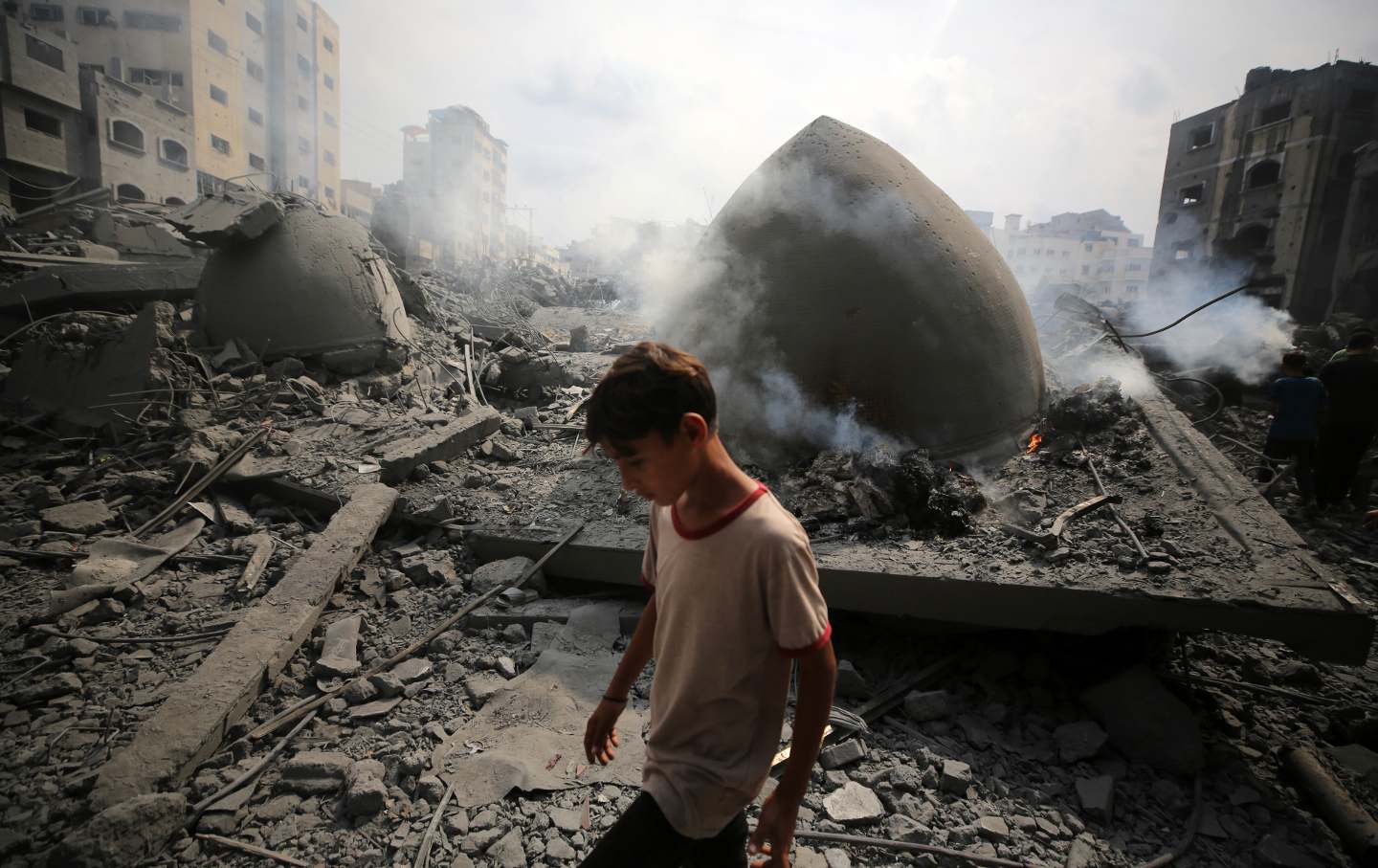
In Saudi Arabia the discussion concerns American security, but no longer as something that automatically projects onto the region; instead it is a resource Riyadh can switch on and off. One notable motif in the Arab press is the debate over prospects for civilian nuclear cooperation with the US without linking it to rapid normalization with Israel. According to leaks analyzed by local commentators, Washington no longer insists on normalization with Tel Aviv as a strict precondition for a nuclear deal, a shift they tie to Arab anger over the war in Gaza and how toxic the Israel issue has become for public opinion. (al-ain.com)
This shift provokes a dual reaction in Saudi columns. On one hand, authors close to the pragmatic wing of the elite stress that the US is “learning to listen to the region,” abandoning attempts to push simultaneously for normalization, oil concessions and a nuclear package. On the other hand, conservative voices see confirmation in this: for Washington the value of Saudi Arabia is primarily functional — as an oil supplier, arms purchaser and potential “nuclear showcase” against Iran. Therefore, they argue, the kingdom must build its own strategic autonomy, balancing not only with China and Russia but also within the American political scene itself, where attitudes toward Riyadh range from “a necessary evil” to direct accusations of human‑rights violations.
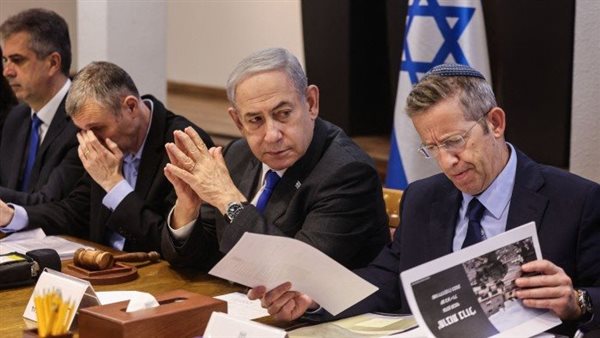
Curiously, it is precisely Saudi and broader Arab commentary on the US–Israel alliance that most often speaks of “cracks” in that partnership. According to a number of Arab reviews, some citing Western investigations, conflicts of interest are growing between the White House and Israel’s military and political leadership: Washington is irritated by Israel expanding the front to Lebanon and Syria because this risks dragging the US into a full‑scale war with Iran and complicates its global calculations. For some Arab analysts this is a sign that the “organic” US–Israel alliance is gradually becoming a link in which each side manipulates the other for its own domestic political survival. (albawabhnews.com)
In Brazil the debate over America’s role in security is framed through a completely different storyline — American democracy as a source and model of political radicalism. After the Capitol riot and subsequent events in Washington, Brazilian liberal commentators have often written about the “export” of the American style of the far right — from leaders’ aesthetics to the use of social networks, fake news and pressure on the electoral system. Recent Brazilian texts on internal US crises frequently draw direct parallels with attempts to delegitimize elections in Brazil itself, arguing that the country “mirrors the worst American practices,” even as official diplomacy tries to distance itself from Washington on issues like climate or Ukraine. In this sense America functions as both model and anti‑model: the collapse of the party center, polarization and “cult of personality” are seen as things Brazil should avoid, despite close economic and cultural ties.
A second major theme linking the three countries is how they bargain with Washington, using its strategic fears and ambitions.
Saudi Arabia is, in effect, running a complex auction around the US. Arab commentaries emphasize that refusing to tie the civilian nuclear package directly to immediate normalization with Israel shows that the kingdom consciously raises its “asking price.” If earlier Washington believed it could “buy” the Saudi signature on an agreement with Israel by simultaneously offering security guarantees and access to nuclear technology, now — after horrific footage from Gaza and unprecedented public outrage — the political cost of such a move for the Saudi domestic audience has risen so high that the US must consider separate tracks of cooperation. (al-ain.com)
Local analysts read this as an indicator that the Russia‑China factor has become significant for Washington: the White House fears that too hard‑line conditions on cooperation could push Riyadh toward alternative suppliers of nuclear technology and arms. At the same time Saudi texts rarely invoke trust in American “values” — instead they speak of cold geopolitics, where all sides are cynical and the kingdom’s task is not to become “another Ukraine or Iraq” but to turn itself into an “indispensable node” of energy, finance and security for any future architectures.
In South Korea similar bargaining looks less dramatic but is essentially equally pragmatic. Discussion of agreements on nuclear submarines and expanded civil nuclear cooperation with the US is woven into a broader discourse that Seoul should seek status not only as a “client” of American security but as a full partner with a technological voice. The prime minister’s meeting with JD Vance, as described in the Korean press, is presented as a test of whether the new US administration is ready to go beyond customary formulas and hand Seoul tools that will, for decades to come, lock American strategies into dependence on Korean infrastructure and capabilities. (mk.co.kr)
Brazil, lacking such a military dimension, bargains with Washington on other fields — climate, green technologies, access to markets. In centrist and center‑left Brazilian media the conversation revolves around how to use America’s need for “green leadership” and containing China to secure better terms for investments in the Amazon, infrastructure and industrial policy. Many columns also remind readers that the US historically used discourse around democracy and human rights to pressure Latin America, and urge not to repeat dependency from the “Washington Consensus” era. This creates a particular tone: you must speak to the US “in the language of interests,” using their own internal conflicts — between the climate agenda and hydrocarbon lobbies, between industrial policy and free trade.
A third common thread is deep skepticism about the US’s ability to impose its values and interpretations of conflicts, especially in the Middle East.
In the Arab information space the war in Gaza and the broader US–Israel course have become litmus tests. One prominent piece, widely discussed in the region, analyzes how the ongoing conflict undermines Israel’s influence among young American right‑wing voters and creates rifts within the Republican Party over the scale of military aid to Tel Aviv. The authors emphasize: if even in the US, where the Israel lobby traditionally held enormous sway, zones of fatigue and doubt are appearing, then beyond the West rhetoric about a “democratic bulwark” is perceived as openly cynical. (cairo24.com)
Two conclusions are drawn from this. First, that the US’s “moral capital” after Iraq, Afghanistan and Gaza is so depleted that any new initiatives under the banner of “liberal interventionism” are bound to be met with suspicion. Second, that Arab regimes aligning with American policy against Iran risk facing social and political upheaval: left‑leaning experts already write about an “inevitable future confrontation between the masses and the regimes” provoked by a feeling of betrayal on the Palestinian issue in exchange for deals with Washington. (thenation.com)
In South Korea anti‑American rhetoric does not dominate, but there too commentary increasingly voices doubts about the universality of the American narrative of a “democracy vs. authoritarianism” struggle. The experience of Ukraine, wars in the Middle East and the unpredictability of American elections pushes some experts to think that Seoul should not tie its identity solely to the role of a “democratic outpost” against China and North Korea. For the pragmatic wing of the Korean elite America is primarily an instrument of balance of power, not a moral compass, and this seeps into popular outlets more as nuanced critical remarks than as an open turn away from Washington.
Brazilian analysts are even more straightforward: their texts frequently reference the destructive impact of the American “war on terror,” financial crises exported from Wall Street, and double standards on human rights. Against this backdrop domestic American disputes over racism, police violence and inequality are used as an argument: the United States itself remains far from resolving its own “structural sins” and therefore cannot claim the role of supreme judge for other democracies. Nevertheless, for those same commentators American universities, research centers and technology companies remain exemplars with which Brazil wants and should engage. This creates a dual attitude: criticism of America as an empire — and recognition of it as a source of knowledge and innovation.
All three societies also contain unique, sometimes unexpected local notes that are barely visible from Washington.
In Saudi discussions of US–Saudi nuclear cooperation the motif of “nuclear dignity” appears: it is not only or primarily about kWh and reactors but about the symbol that the kingdom has entered the club of states possessing the most advanced peaceful technologies, and thus demands to be treated not as a “client regime” but as a full strategic actor. In this context the US is seen as a “necessary but not sole” partner — and this is perhaps one of the strongest differences from the era when American approval was perceived almost as a condition for the regime’s survival. (al-ain.com)
In South Korea the tone describing the Trump–Vance administration is notable: Korean media focus much less on cultural and ethical disputes around Trump than American outlets do, and far more on how ready the new team is to be consistent on confronting China and expanding dual‑use technologies. For some Korean analysts American policy chaos is not only a risk but an opportunity: in periods when Washington is torn between ideological and transactional approaches, Seoul has a chance to “win” preferences that would be unthinkable under a more structured and ideologically vigilant establishment.
In the Brazilian field one curious storyline concerns attitude to American media and their coverage of the global South. Columns in outlets such as Folha de S. Paulo or O Globo regularly express dissatisfaction with how the US and Europe tell their publics about Brazil: through a prism of exoticism, crime or the Amazon as “humanity’s heritage.” Brazilian authors point to asymmetry: when American democracy falters, it is framed as the “difficulties of a great nation,” whereas any political crisis in Latin America is immediately labeled a sign of its “perpetual immaturity.” They stress that this difference in optics shapes how American society perceives Brazilian partnership initiatives — from climate to industrial projects.
If one tries to assemble all these fragments into a single picture, the result is a multipolar but by no means “post‑American” world. South Korea, Saudi Arabia and Brazil depend on the US in different ways — economically, technologically, militarily. None is seriously crafting a strategy of total rupture. But they are increasingly unwilling to see Washington as the source of norms and values and more inclined to treat it as one of the great powers with which one can and must bargain, balance and occasionally say “no.”
In that sense, perhaps the most important thing heard from Seoul, Riyadh and São Paulo is not anti‑Americanism but maturation: a readiness to view the US without illusions, to see it not as a teacher but as a powerful yet vulnerable partner, and to build relations with it based not on historic gratitude or fear but on a cool calculation of their own interests. For Washington, accustomed to a more hierarchical picture, this may prove to be the most painful lesson of the coming years.
![Prime Minister Kim Minseon shakes hands with US Vice President JD Vance at the White House in Washington DC on the 12th (local time). [Provided by the Embassy of the Republic of Korea in the US] · Yonhap News](https://wimg.mk.co.kr/news/cms/202603/13/rcv.YNA.20260313.PYH2026031301510001300_P1.jpg)
![Prime Minister Kim Minseon meets with Senator Andy Kim at the Conrad Hotel in Washington DC on the 12th (local time). [Prime Minister's Office] · Yonhap News](https://wimg.mk.co.kr/news/cms/202603/13/rcv.YNA.20260313.PYH2026031310010001300_P1.jpg)