In early May 2026, talk of America in Seoul, Pretoria and Ankara almost always comes down to one thing: that Washington is once again actively and harshly remaking the world to suit itself. But it’s not only the raw power of the US that matters — what’s more interesting is how three very different countries perceive that power through their own experiences and vulnerabilities. South Korean columnists view Trump through the prism of war with Iran, oil prices and chipmakers’ exchange rates; South African analysts assess him through the lens of the war on drug cartels and the kidnapping of Maduro, layering all of that over a history of imperialism and a domestic crisis of trust in authority; Turkish commentators see the new “America First” as a mixture of the Monroe Doctrine, energy geopolitics and the perennial painful question: where is the line between “democracy” and neocolonial intervention?
The first major knot tying all three countries together is the US–Iran war and its long tail. South Korean press describes the conflict in highly pragmatic terms: as both a risk and an opportunity for the economy. Newspapers and TV channels write of “60 days of war without resolution,” that Donald Trump has ordered preparations for a prolonged maritime blockade of Iran, and that the crisis could turn into a new form of “Cold War” in the Persian Gulf. In analyses such as “US–Iran war 60 days… Trump orders long-term blockade, fears of a ‘cold’ ending grow,” South Korean experts explicitly say that a prolonged standoff threatens the global economy with a “conflict without a winner” and endangers energy-importing countries, including Korea. (hani.co.kr)
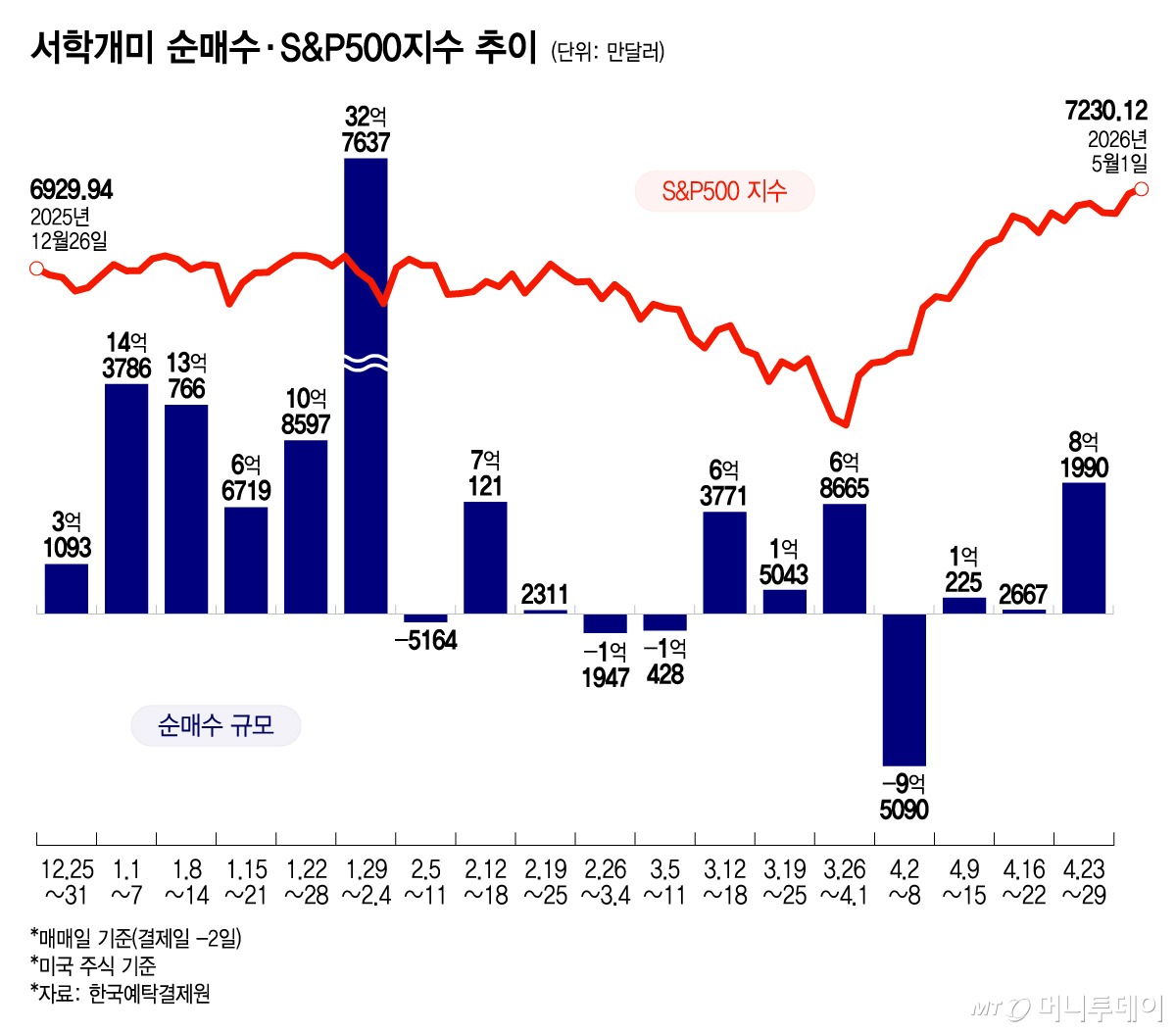
But in the same outlets a parallel line runs: the financial world has already “digested” the war and begun to play on the assumption that it will eventually end. South Korean business media closely analyze statements by the US Treasury Secretary, who assures that after the conflict ends oil will “collapse below the levels of the start of the year” and that futures prices for three, six and nine months are already pricing in cheaper oil. (asiae.co.kr) For Seoul this is less a geopolitical drama than a question of how the war and America’s “economic wrath” against Tehran will affect inflation, the won exchange rate and prospects for electronics exports. Columnists link the record KOSPI rally to the idea that “the worst of the war is already behind us,” which is why local investors are returning to American stocks, especially in the AI sector, while also increasing bets on growth of Korean semiconductor giants whose fate is tightly intertwined with Wall Street. (mt.co.kr)
The South African conversation about the same war sounds very different. In a recent analytical report by the parliamentary budget office the United States is shown not as a pillar of international order but as a factor “deepening the crisis of trust” — the document explicitly states that US government actions, including mass data collection and manipulation of public opinion, undermine the legitimacy of democratic systems. (parliament.gov.za) Against this background any new military campaign, whether against Iran or under the banner of the war on drugs, is perceived not as protection of “international law” but as a continuation of the logic of exceptionalism. South African analysts recall that the African Union in February openly condemned the kidnapping of Venezuelan president Nicolás Maduro by American forces, stressing that the UN Charter “does not permit external military intervention in the internal affairs of a sovereign state.” (en.wikipedia.org) For a society with still-fresh memories of the struggle against apartheid and support for anti-colonial movements, the language of “precision strikes” and “regime change” in US policy toward Latin America and the Middle East resonates with a much longer history.
The Turkish lens on the US–Iran war is at once emotional and rational. Turkish press and expert circles widely cite assessments from the Quincy Institute, which argues that limited US ground operations on Iranian islands “will not change the balance of the war” and that Iran has already shown the ability to withstand massive bombings without making nuclear concessions. (asiae.co.kr) Turkish commentators use this argument to criticize the illusion of “instant victory” by force: they recall Iraq and Afghanistan, where regime change did not bring stability, and warn that another American use of force in a Muslim region may only deepen antagonism. At the same time, in Turkish political talk shows and popular forums the rhetoric becomes street-level: one can encounter phrases like “America in this conflict observes no humanitarian limits… they kill whomever they want, wherever they want, and then talk about human rights” — an anger directed both at Washington and at domestic elites accused of double standards. (reddit.com)
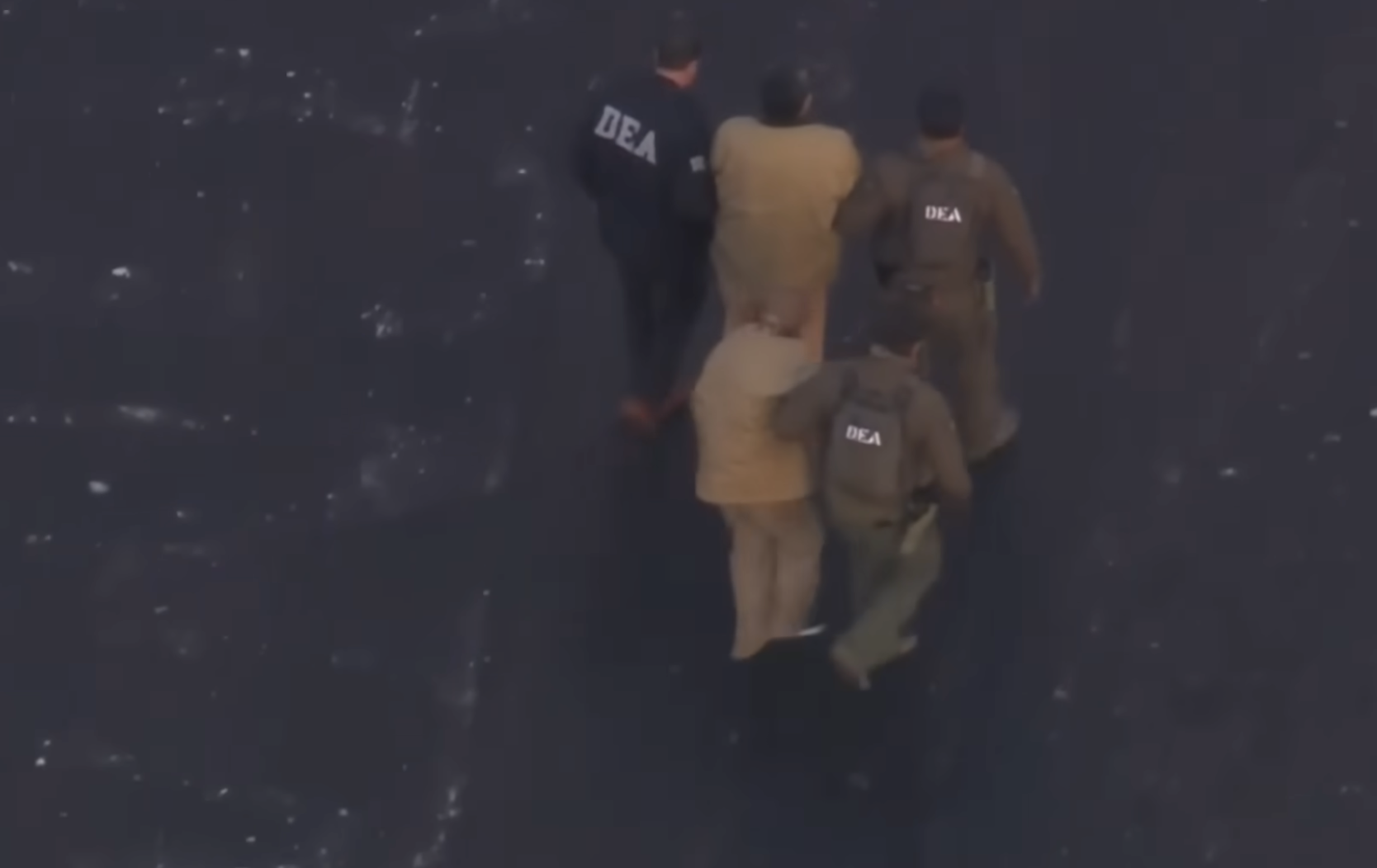
The second major knot linking the three countries is the US operation against Venezuela and the capture of Nicolás Maduro. In Turkey this is perhaps one of the most discussed foreign-policy stories of the last six months. As early as January, well-known analyst Murat Yetkin wrote in his column “Maduro operasyonu: Trump’ın güç gösterisi ve küresel etkileri” that publicly delivering Maduro in front of DEA cameras is not so much “a fight against drugs and restoration of democracy” as a demonstrative return to the logic of the Monroe Doctrine: America is showing that the Western Hemisphere remains its “backyard,” where strengthening of China or other external players is unacceptable. He reminds readers that earlier similar operations in Iraq and Afghanistan proved that capturing a leader alone does not create a successful post-war order and at best opens a long period of instability. (yetkinreport.com)
Other Turkish outlets link the “Maduro operation” even more sharply to energy and rivalry with China. In the piece “ABD’nin Venezuela hamlesi: Petrol ve Çin rekabeti” it is explicitly argued that beneath official rhetoric about drugs and democracy lies a far more pragmatic calculation: to bring huge Venezuelan oil reserves back to Western markets, weaken China’s growing financial influence in Latin America and thereby bolster the resilience of the American economy, which is under pressure from domestic social spending and migration. (gzt.com) Turkish commentators draw a historical line from the original Monroe formulation to today and speak of a “neo-imperial era” in which great powers again “redraw borders according to their needs rather than international law.”
South Africa, as already mentioned, sees the same operation through the prism of international law and its own memory of great-power interventions. Official documents put the position very dryly: resolutions and statements emphasize that the kidnapping of a sitting leader and a series of strikes as part of Operation Southern Spear violate the UN Charter and only “heighten instability.” (en.wikipedia.org) But in South African expert circles the position is unpacked much more broadly. Analysts from the parliamentary budget office, describing the overall state of the world economy to parliament, depict the Venezuelan campaign and the related war on drug cartels as an example of a “military response to structural social problems” that is expensive and achieves little; they link rising US military spending to tightening global financial conditions, which immediately impacts the debt burden of Global South countries, including South Africa itself. (parliament.gov.za)
There is another sensitive dimension: migration. Western media widely discussed the Trump administration’s policy, which since 2025 began taking almost exclusively white South Africans under a refugee program. This has sparked a multi-layered debate within South Africa: on the one hand, white farmers and their supporters on the right see the US as a refuge from crime and alleged “reverse racism”; on the other hand, many on the left and center argue that Washington is dramatizing South African realities for its domestic political agenda and incorporating them into a narrative of “Western civilization under siege.” (en.wikipedia.org) South African commentaries on the topic often express the view that America chooses whose suffering is deemed worthy of asylum and whose is not, demonstrating double standards toward migrants from Africa and Latin America.
For South Korea the whole Venezuelan episode is much more distant, but it is read through the economy here as well. Financial columnists in Seoul consider the capture of Maduro and rising tensions in Latin America primarily as factors of commodity market volatility and global capital flows. Turkish pieces claiming that a “victory over Maduro” intensified a flight to “safe havens” — gold and the dollar — are actively cited in Korean business press as part of the overall picture: the more aggressively the US behaves, the higher the risk premium on emerging markets, which include Korea, and therefore the more cautious Korean monetary policy must be. (paratic.com)
The third major motif uniting the three countries is the perception of Donald Trump himself and a “new version” of the America First doctrine. In Turkey one of the recent opinion pieces begins bluntly that after Trump’s 2024 election victory the world is witnessing “a much tougher and uncompromising version of the ‘America First’ doctrine.” The author describes how Trump treats NATO allies more as “clients” who enjoy US protection but are unwilling to pay for it, and how this logic pushes Europe toward autonomy through ideas of its own army and strategic independence. (haberanaliz.net) Turkish experts emphasize that the same logic also permeates Washington’s relations with Ankara: from disputes over arms purchases to competition in the South Caucasus and the Eastern Mediterranean.
South Korea views Trump less ideologically but no less attentively. In Korean economic and political reviews the US president appears in the context of several nerve points: threats to allies to raise defense spending, pressure on China over “Iranian oil,” and, of course, the appointment of a new Fed chair with unorthodox views. Russian and Turkish financial communities are already actively discussing candidate Kevin Warsh as someone who could lead to a new wave of easing for long-term investments in AI and space technologies; similar discussions are closely watched in Seoul because any Fed policy shift means a redistribution of global liquidity and a new round of tests for Asian currencies and stock markets. (reddit.com) Against this background Korean commentators note that for Seoul Trump is both a risk (trade conflicts, pressure on defense spending) and a driver (a surge in the American tech race that fuels demand for Korean chips).
South African discourse on Trump remains tied to themes of democratic decay and uneven morality. The aforementioned analytical report for parliament emphasizes that actions by the US administration — from mass digital surveillance to unilateral military operations in Latin America — reinforce the sense that international norms are written by the powerful to suit themselves. (parliament.gov.za) This is especially sensitive for South Africa, which not long ago itself faced international sanctions and now aspires to be a voice of the Global South. Thus South African commentaries on American policy often say: “we see in the US not only a democracy but also an empire,” and that shapes their caution in dealings with Washington — from votes at the UN to participation in security operations.
Finally, there is a theme that resonates particularly strongly in Turkey but indirectly affects the other two countries as well: a mix of fear and admiration toward American power. Two nearly opposing narratives coexist in the Turkish public sphere. One, more common in pro-Western and business-oriented circles, acknowledges that US intervention, however harsh, sometimes creates a “window of opportunity” — be it for replacing discredited regimes or restarting energy projects. Thus some Turkish experts openly say that Maduro’s removal, however unlawful the method, frees space for new energy deals in which Turkish companies might participate. (gzt.com)
The other narrative, prevalent among more nationalist and leftist circles, views each such US step as another link in a long chain of humiliations and threats. It is no coincidence that fantasies about war between Turkey and Israel or the US, or about “maps of the future” where parts of Turkish territory are allegedly ceded to neighbors, gain traction on Turkish forums; participants in these discussions, even when admitting the absurdity of conspiracies, treat them as a symptom of a “post-truth” era in which fear of American power lives its own life, regardless of the actual military situation. (reddit.com)
The common conclusion from all these disparate voices is this: the United States remains the main source of foreign-policy gravity for South Korea, South Africa and Turkey, but each of these countries “translates” America into its own language. For Seoul, Washington is both a military umbrella and the principal factor in oil prices, Fed rates and semiconductor quotes; the Korean press views Trump through the lens of stock cycles and energy balance. For Pretoria, the US is an example of a democracy that has itself become hostage to its power, and an empire whose unilateral campaigns from Venezuela to Iran undermine international law and complicate life for Global South countries. For Ankara, America is both an inevitable partner and an eternal competitor — simultaneously a market, a source of technology and a symbol of humiliating interventions.
What unites all these perspectives is growing distrust of American moral arguments and an increasingly cold, instrumental view of the US as a source of risks and opportunities. War with Iran, the operation against Venezuela, a new version of America First and controversial migration programs: each of these themes in its own way exposes old wounds and new fears. And as long as Washington continues to build policy on power and exceptionalism, these local readings — Korean, South African and Turkish — will determine how the world responds to American moves: not with slogans about the “free world,” but with meticulous calculations of costs and benefits.