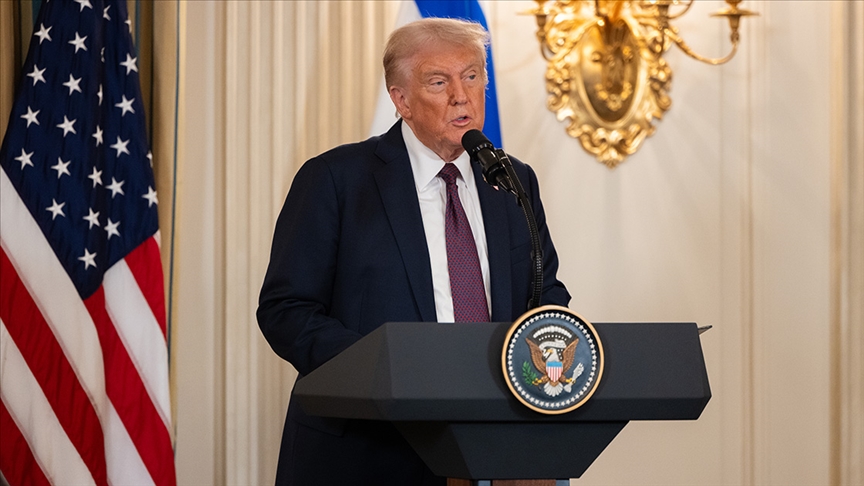
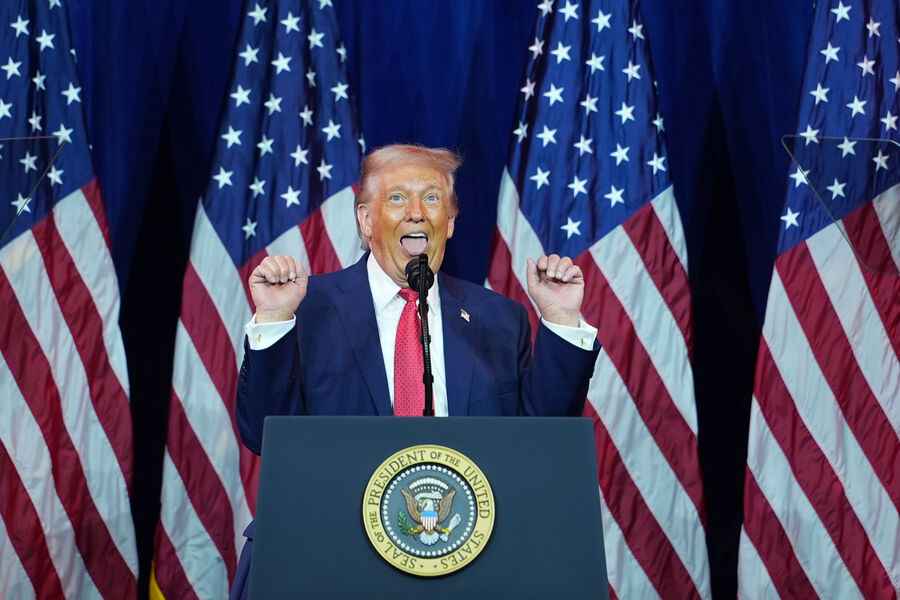
At the beginning of 2026, the United States again occupies a central place in foreign columns and analysis, but almost nowhere as the familiar "leader of the free world." Under Donald Trump's second term, US foreign policy is perceived in Ankara, Pretoria and Moscow as a mix of economic pressure, dismantling of old institutions and an attempt to rewrite the very architecture of global security. Several themes come to the fore at once: Washington's new foreign policy doctrine and its refusal of the "world policeman" role; trade wars and tariffs; the fate of global arms-control regimes and international organizations; and the humanitarian consequences of a sharp rollback in American aid.
Looking at three very different countries — Turkey, South Africa and Russia — it becomes clear that almost all are arguing about the same things, but from different positions. Turkish writers worry about how to fit into the new "Trumpist" architecture without losing autonomy; South African commentators see the US alternately as a donor cynical about human lives and as still an indispensable partner; Russian experts discuss how to exploit the American turn inward to accelerate the redistribution of the global order.
The central throughline is Trump’s reaffirmation of an updated "America First" formula, now presented as the official 2025 National Security Strategy and accompanied by a US retreat from multilateral commitments. Turkish and Russian-language outlets analyze this document in detail, stressing that it explicitly states: "the days when the US upheld the world order are behind us," and that allies, primarily Europe, must pay more for their own security. (aa.com.tr)
The first major knot of debate is the new US foreign policy doctrine and the abandonment of the old hegemonic role. In Turkey this is described as a painful but objective stage in a system change. In an opinion piece "ABD, gerçekleri nasıl kabullenecek" in the newspaper Aydınlık, Şule Perinçek dissects Trump's November national security document and sees in it not merely an inward turn but a forced recognition that the unipolar world order is collapsing. In her formulation, the US can no longer sustain a "single pole" and therefore must adapt to a new multipolarity in which the roles of Turkey, China, Russia and Global South countries are growing. (aydinlik.com.tr)
Turkish analysts draw an interesting distinction: despite all the rhetoric of "realism" and "principledness," the new strategy, in their view, still serves to preserve Western dominance—only without the costs of acting as the "gendarme." One academic study on US Middle East policy says Washington consistently used the region as a proving ground for force after the Cold War, and now seeks to do it more cheaply and instrumentally, relying more on economic and technological levers of pressure. (dergipark.org.tr)
In Russia the same document is read differently— as an ideological formalization of a long-observed US rejection of multilateralism. The Russian-language analysis by Anadolu Ajansı explicitly emphasizes that Trump in the new document entrenches a course toward "pragmatic but not multilateral" foreign policy, where allies must pay for their own protection and the US withdraws from the role of "rules architect." (aa.com.tr) Russian state media, including RIA Novosti in "Global Policy Trends under Trump," link this to a broad tendency toward the "self-liquidation" of American leadership and an opening space for BRICS. (ria.ru)
South African commentators, by contrast, are much less interested in the document’s ideology and more in its practical consequences for Africa. For them "America First" is not an abstract rejection of multilateralism but the closure of HIV clinics, the firing of nurses and threats to lose trade preferences under AGOA. News and analytical pieces widely quote Africanists who call Trump's second presidency "a turn to predatory hegemony": the US remains the most powerful, but instead of public goods it now sells access to its market and aid as a private service. (washingtonpost.com)
The second main block of debate is economic pressure, tariffs and the humanitarian price of US foreign policy. Here South Africa becomes one of the emblematic cases. It was there in 2025 that simultaneous US steps hit public opinion especially hard: the re-imposition of tariffs on South African exports, the sharp cuts to PEPFAR and USAID programs, followed by a forced partial retreat with a "transitional" aid package.
South African media extensively quoted Health Minister Aaron Motsoaledi, who said that due to cuts in American funding more than 8,000 health workers lost their jobs and twelve specialized clinics for key populations—from gay men to sex workers—closed. He said that within months after the funding halt viral load testing fell by 21%, and the UN warned of the risk of rising new infections. (apnews.com) Later, when Washington agreed to a temporary "bridge" package of $115 million, South African officials both thanked the US and stressed that the diplomatic dispute was far from resolved. (apnews.com)
Against this backdrop, voices in Pretoria increasingly say that America is turning from a "development partner" into an unpredictable donor capable of cutting programs on which millions depend, depending on its domestic political cycle. South African health experts explicitly say Washington's financial "pendulum" will push African countries to deepen ties with China and possibly with BRICS as a whole, where South Africa already plays a key role. (apnews.com)
The trade agenda complements this picture. South Africa publicly disputes with the White House over Trump's "unfair balance" thesis, under which 30% tariffs on South African goods were reimposed in 2025. President Cyril Ramaphosa, commenting on these steps, argued that American calculations ignore the structure of bilateral trade and the real tax burden, and pledged to seek a tariff review by diplomatic means. (en.wikipedia.org) At the same time the future of AGOA was discussed; Trump ultimately extended it only through the end of 2026, signaling an intention to "rewrite" the mechanism in the spirit of his reciprocity policy. (apnews.com)
In Turkey the economic aspect of American policy also dominates, but in a different key. There they pay close attention to how the White House uses tariffs and sanctions as geopolitical weapons. A Turkish analytical report by Gedik Yatırım in February 2026, assessing global market risks, highlights increased US tariff pressure not only on China but also on allies—from Canada to South Korea—and warns that trade wars could enter a new phase coinciding with rising tensions around Iran. (gedik.com)
At the same time, Turkish foreign policy columnists analyze how Trump's calls to raise the required NATO defense spending to 5% of GDP would affect Ankara. One such column notes that Turkey will be forced both to increase its military budget and to further develop its own defense industry, and that re-engagement with the F-35 program could be used as a tool to balance between Washington and Moscow. (ekonomim.com)
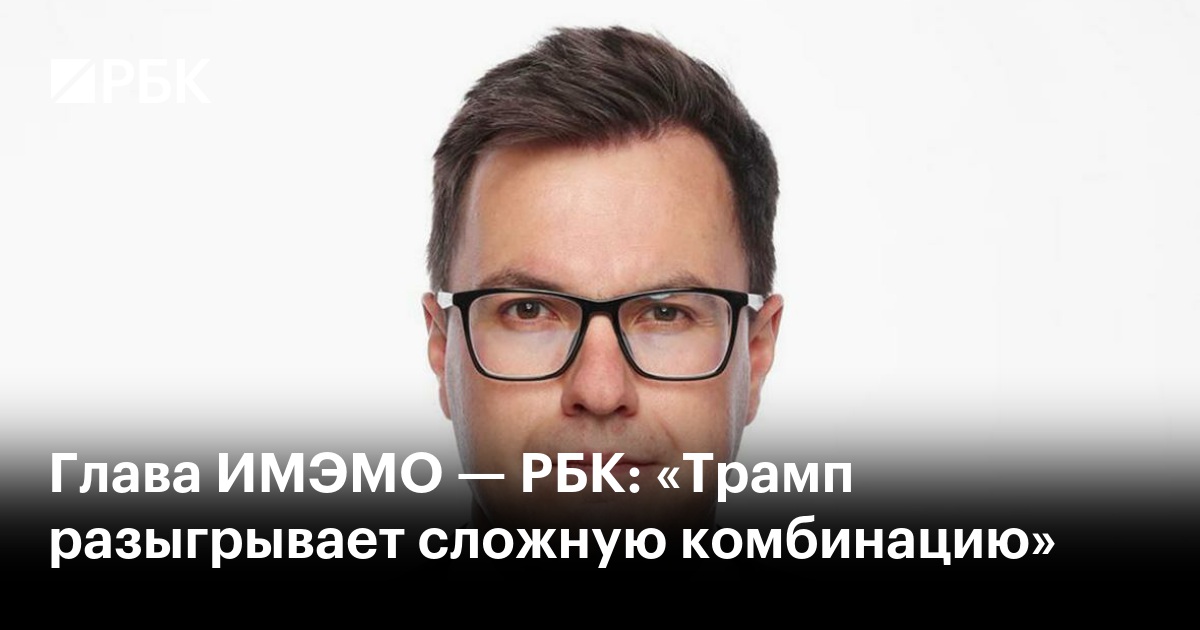
In Russia tariff wars and US sanction activity are perceived more as background to a more important phenomenon — the strategic shift of power centers. Russian experts, such as the director of IMEMO RAS, told RBC that Trump "is playing a complex hand," using tariffs, technology restrictions and export controls not only against China but also to impose Washington-favorable rules in key sectors—from semiconductors to telecom infrastructure. (rbc.ru) US trade nationalism is seen here not as a deviation but as the new normal, to which Russia must adapt by hastily building alternative supply chains.
The third major theme, where the perspectives of the three countries especially resonate, is the US-led dismantling or reconfiguration of the architecture of international security and institutions. A symbolic milestone here is the expiration on February 5, 2026 of the New START treaty, the last major US–Russian nuclear arms accord, which was not renewed. (ru.wikipedia.org)
In Russia this is presented as the culmination of a long process of treaty erosion blamed on the US. Russian political scientists in analyses for RBC and other outlets explain to their audiences that Washington seeks to "free its hands" to build up capabilities and, at the same time, use arms-control issues as another bargaining chip—now not only with Moscow but also with Beijing. (rbc.ru)
Turkish commentators, for their part, see in this primarily a threat to Europe and NATO’s eastern flank. For them the disappearance of formal limits on strategic arsenals increases the value of regional players — Turkey, Iran, Israel — and raises the stakes in any crisis from the Black Sea to the Eastern Mediterranean. In a Turkish review "Trump Doktrini: Jeopolitik Hesaplar ve Yeni Dünya Düzeni," author Sinem Ünaldılar draws an explicit parallel with the Monroe Doctrine, arguing that the US is trying to close the "backyard" in Latin America to China and Russia while weakening institutional frameworks in other regions, including the Middle East. (globalpanorama.org)
The South African perspective on security and institutions is more mediated but no less telling. Here the focus is not New START but the fate of international organizations and multilateral agreements where the US traditionally played a key role. African analysts fear that the Trump administration's decision to withdraw from dozens of international structures at once and to substantially cut funding to the UN and related agencies will turn the global system of aid and governance into a "mosaic" of private initiatives and regional blocs. (ru.wikipedia.org) For Global South countries this means increased dependency on a few major players — China, the EU, possibly BRICS — instead of a more balanced, albeit asymmetric, US role.
Finally, a special place in foreign reactions is occupied by the topic of Trump’s personal style and motivation. In Russia they readily quote Western analysts who describe the current White House’s foreign policy as a tool for "redirecting money and status" toward the president and his circle. In a piece recounted by the portal Gazeta.press, political scientists Stacy Goddard and Abraham Newman in the New York Times argue that under Trump US national interests are increasingly being supplanted by the interests of a narrow elite, and that a willingness to cut deals with rivals for short-term gains is becoming the norm. (gazeta.press) Russian experts, like Rafael Ordukhanyan, add that such a style makes US foreign policy "one of the most turbulent and unpredictable" in recent history, which, in their view, creates both risks and windows of opportunity for Moscow. (gazeta.ru)
In Turkish and South African texts the image of Trump is less demonized but also far from heroic. In Turkey he is often described as "gerçekçi" — a realist who merely articulates an already occurring shift in power, while at the same time increasing instability around flashpoints like Iran or Latin America. (aa.com.tr) In South Africa he more often appears as a tough businessman for whom tariffs, visa restrictions and humanitarian aid are all elements of one bargain, where the human cost of decisions is a secondary factor. (apnews.com)
What unites the three countries, despite differences in their agendas, is one important intuition: the current US course is not perceived as a temporary "anomaly" but rather as a potential new standard of American power. In Ankara this leads to the conclusion that Turkey must more insistently strengthen its autonomy and play on multiple fields at once — from NATO to BRICS-like formats. In Pretoria there is talk of the need to rebuild health and trade systems so that no single donor, even as powerful as the US, can with a stroke of a pen undo decades of progress. In Moscow they see confirmation of a long-held axiom: the unipolar moment is over, and Russia's task is not simply to survive America's turn inward, but to use it to consolidate its own spheres of influence and rewrite the rules of the game.
Thus a new, often contradictory image of the US is taking shape in the global mind: not an "empire of good" nor merely a "global policeman," but a large, powerful, increasingly self-centered actor to be feared, exploited and, where possible, constrained. And it is precisely on this duality — dependence on the American market and technologies alongside growing distrust of American promises — that many strategic calculations in Turkey, South Africa, Russia and far beyond are being built today.