In recent days—from August 25 to 28, 2026—three interconnected themes have stood out in Ukrainian, French and Turkish discussions of the United States: America’s protracted war and sanctions campaign against Iran, Washington’s shifting of increasing responsibility for Ukraine onto Europe, and the domestic weakening of the Donald Trump administration. Local reactions do not boil down to the familiar argument “for” or “against” America. In Kyiv, Paris and Ankara, the United States is increasingly seen as a still indispensable but less predictable power whose domestic political needs are beginning to shape its international strategy.
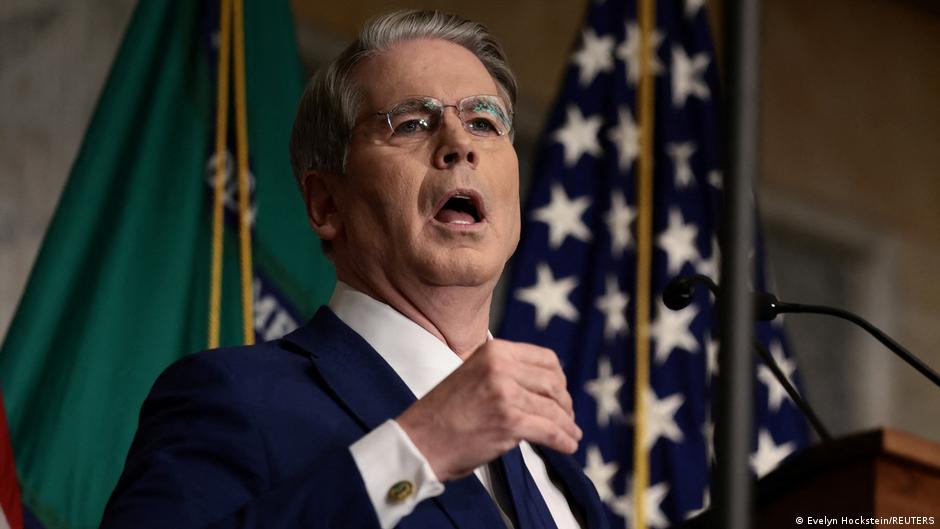
The most painful common issue is Ukraine and Washington’s de facto proposal that Europe assume the main burden of the war. On August 27, U.S. Deputy Secretary of Defense Elbridge Colby said plainly at NATO headquarters that the United States expects Europeans to take the leading role both in their own conventional defense and in supporting Ukraine. At the same time, he stressed that Europe remains a “critical interest” for the United States, even as America’s priority shifts to the Western Hemisphere. This is not the language of an alliance rupture, but of a redistribution of roles: America is not promising to disappear, but is warning that it no longer intends to be the main provider of European security. Ukrainska Pravda reported this. (pravda.com.ua)
In France, this statement reinforces an already established conviction: European strategic autonomy is ceasing to be a French intellectual ambition and becoming a necessary form of insurance. An editorial in Le Monde calls on Europe to accelerate aid to Kyiv, noting Trump’s inconsistency over U.S. Patriots: at first he appeared open to licensing their production for Ukraine, then backed away. French anxiety is therefore directed less at a specific White House decision than at a new norm—assistance that depends on the fluctuations of the U.S. president and can be canceled with a single political maneuver. (lemonde.fr)
The Ukrainian perspective is noticeably more sober and कठोर. In Kyiv, no one concludes that a decline in Trump’s popularity will automatically make U.S. policy more pro-Ukrainian. Oleksandr Krayev, director of the North America program at the Ukrainian Prism center, calls Ukraine a “golden share” for Trump in an analysis for Ukrainska Pravda: success in supporting Kyiv could improve his position, but inaction would not necessarily harm him in the eyes of voters preoccupied with prices, migration and incomes. This is an important local qualification to European hopes: Ukrainian analysts see the American president not as an ally who can be persuaded by a moral argument, but as a politician who may be interested only by proof of geopolitical advantage. (pravda.com.ua)
This also explains the ambivalent reaction to CIA Director John Ratcliffe’s visit to Moscow on August 25. For Ukrainian observers, the visit itself is significant: Washington is once again speaking directly with the Kremlin and is likely attempting to deal simultaneously with Russia, Ukraine and Iran. But Ukrainska Pravda emphasizes another aspect: if the U.S. side delivered a warning about the consequences of escalation, it would be a rare instance of a signal reaching the Kremlin personally from the head of the U.S. intelligence service. Kyiv sees this not as a guaranteed diplomatic breakthrough, but as an indication that American deterrence still exists—and that it must not be allowed to dissolve into deals or fatigue. (pravda.com.ua)
The Turkish discussion of Ukraine is less emotional but no less pragmatic. For Ankara, the redistribution of roles within NATO means greater importance for Turkey itself. Against the backdrop of Russia’s war against Ukraine, Europe’s rearmament and the Middle Eastern crisis, Turkey is once again emerging not as a peripheral ally but as a country indispensable to discussions of the Black Sea, the eastern flank and mediation. In an Anadolu Ajansı analysis, this is presented almost as a diplomatic opportunity: the weakening of American exclusivity in European security gives Turkey room to demand the removal of restrictions on defense-industrial cooperation. In other words, where Kyiv fears American distance and Paris prepares to compensate for it, Ankara is seeking to turn Europe’s new dependence on regional players into practical concessions.
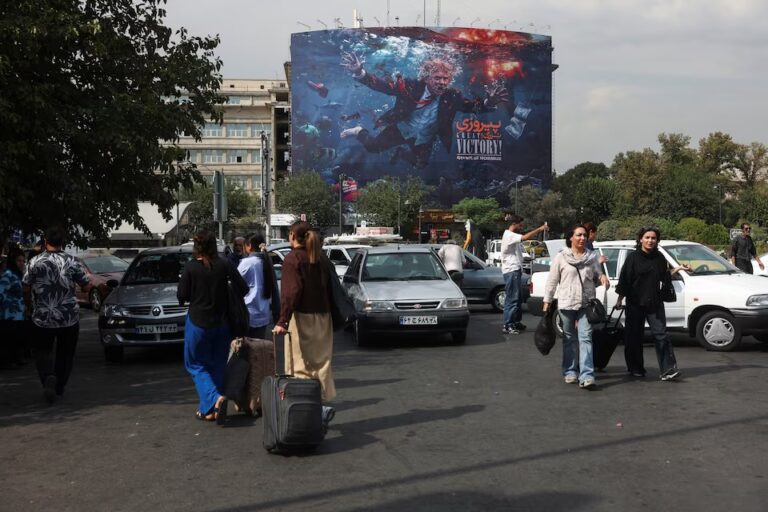
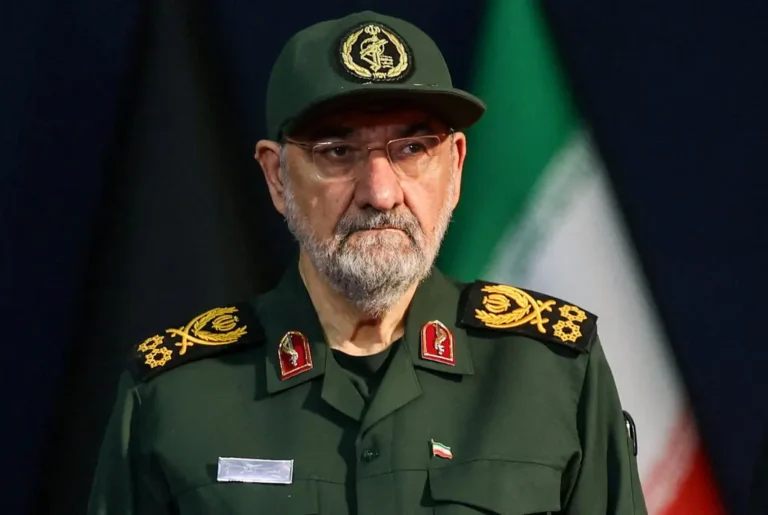
The second theme—Iran—brings the three countries even closer together, although their reasons for concern differ. French media describe the American strategy as a shift from hoping for a quick military resolution to economically strangling Tehran. A Le Monde report describes the situation as “neither war nor peace”: six months after the start of operations, the United States has achieved no decisive victory, but has also found no acceptable way out. The French interpretation is especially revealing: pressure on Iran is viewed not as a demonstration of American strength, but as a consequence of the absence of a military solution and the approach of the U.S. midterm elections in November. (lemonde.fr)
In Turkey, this same policy is perceived primarily through its cost to Iran’s neighbors. New U.S. restrictions and the threat of cutting violators off from the dollar-based financial system affect countries that continue trading with Tehran. DW Türkçe notes that Turkey remains one of Iran’s major trading partners: it exports textiles, machinery, chemicals and automobiles there, while importing gas, agricultural products, aluminum and steel. In Ankara, therefore, America’s “maximum economic” pressure does not look like an abstract punishment of the ayatollahs’ regime, but a threat to its own energy supplies, cross-border trade and Turkish businesses’ access to the global financial system. (amp.dw.com)
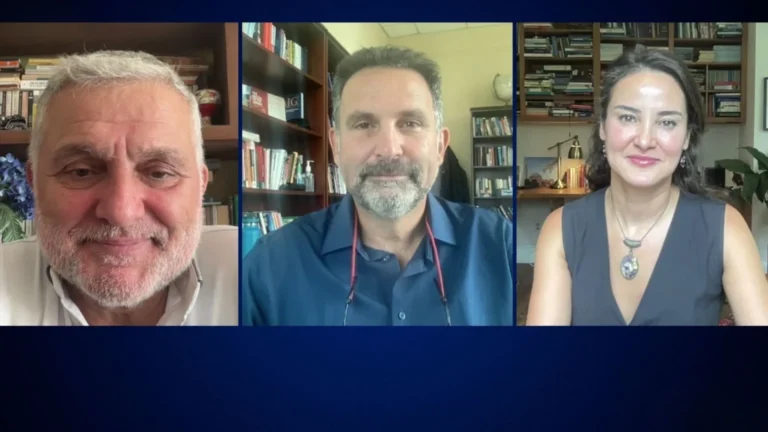
Turkish commentators add another motive, less obvious to Western audiences: Washington may be stronger militarily, but Iran has learned to turn geography and regional interdependence into instruments of pressure. In a Medyascope program, the war is described as having reached a dead end within just six months: in the authors’ assessment, further strikes are unlikely to force Tehran to yield, while the political risks for Republicans ahead of the elections are only growing. A typically Turkish interpretation is evident here: rather than choosing between American and Iranian rhetoric, it measures both sides’ ability to withstand the economic, energy and transportation costs of a prolonged confrontation. (medyascope.tv)
For Ukraine, Iran remains above all a factor dispersing American attention. In the Ukrainian analysis already mentioned, Krayev links Trump’s falling approval ratings to the consequences of the Middle Eastern adventure and the blockade of the Strait of Hormuz, which struck the global economy. But Ukrainian authors draw not the conclusion that Washington is about to turn toward Kyiv, but the opposite one: the White House has even more incentive to seek quick, high-profile and inexpensive diplomatic results rather than conduct a long, consistent campaign of support for Ukraine. (pravda.com.ua)
The third theme, currently voiced most loudly in France, is doubt about the institutional resilience of the United States itself. French financial debate is closely watching the administration’s pressure on the Federal Reserve. Le Monde warns that confidence in the country’s central bank is at risk—an institution whose decisions affect not only American but also global interest rates. For Paris, this is not merely an internal American scandal: the Fed’s independence, the stability of the dollar and the cost of servicing debt are elements of the financial infrastructure on which the European economy rests. (lemonde.fr)
This is where all three national perspectives converge. France sees an America capable of exporting financial instability; Turkey sees an America capable of changing the terms of trade with a neighbor through a single sanctions decision; Ukraine sees an America whose electoral incentives may determine the pace and scale of assistance at the front. In each country, the United States remains the principal external player, but confidence is disappearing that Washington itself sets stable rules. Its policy is increasingly perceived as a combination of power and improvisation—while its partners simultaneously try to keep America close, hedge against it and benefit from its new inconsistency.