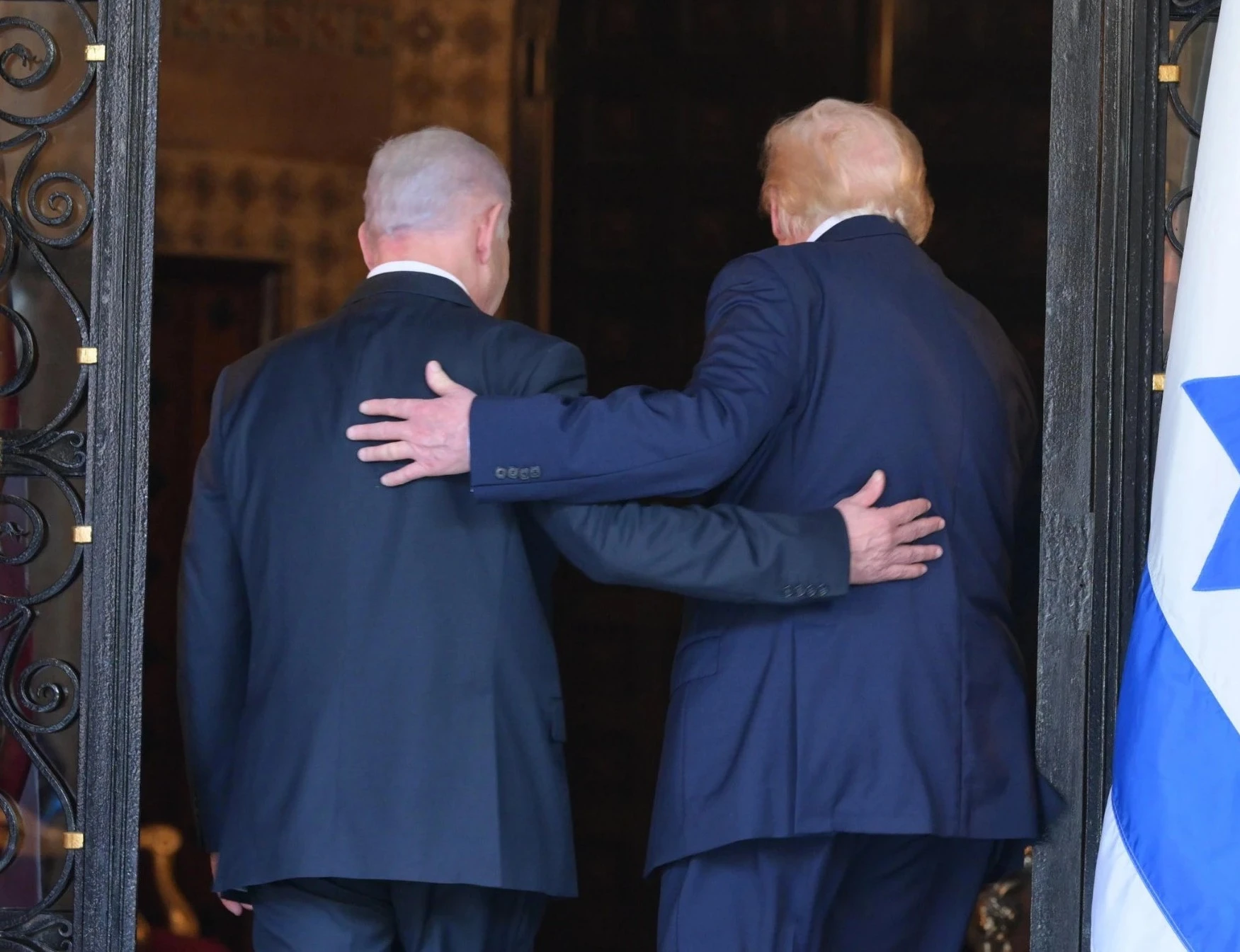
The main theme uniting Israeli, German and Chinese reactions to the United States on September 22–23, 2026, was not simply Donald Trump’s speech at the UN General Assembly, but the formula for American policy that he demonstrated: Iran is being offered either a deal or the “destruction” of the Islamic Republic. Behind this stark alternative, observers in all three countries see the same contradiction: Washington wants to appear absolutely strong while simultaneously seeking a way out of a war that has lasted nearly seven months, is putting pressure on global energy markets and increasingly tying US foreign policy to the American electoral calendar. (thepaper.cn)
In Israel, this duality is perceived primarily through the lens of immediate security. Israeli media identify two parallel developments: the White House is conducting lengthy contacts with an Iranian delegation in New York through intermediaries, while Trump is simultaneously warning of possible new strikes on the underground nuclear facility at Mount Kuh-e-Mosh and speaking of “significant momentum” toward an agreement. A report by Israel Hayom describes this as an almost three-hour diplomatic contact followed by a threat to use force. For Israeli audiences, this is not diplomatic flexibility but a source of anxiety: negotiations could reduce the risk of immediate escalation, but they could also produce an agreement that leaves Iran room to rebuild its military capabilities. (israelhayom.co.il)
This concern is clearly visible in an analysis by N12, in which former Israeli military intelligence chief Amos Yadlin warns of an “agreement trap”: in his assessment, a bad deal would turn the tactical military successes of the United States and Israel into a strategic advantage for Tehran. Significantly, the issue is not limited to Iran’s nuclear program. Israeli debate demands that any American agreement also address ballistic missiles, regional proxy groups and Iran’s ability to threaten shipping. More right-wing commentators, such as Mati Tuchfeld in Walla, by contrast, see an achievement in the fact that American demands have nearly converged with Israel’s. Yet even this optimistic view rests on one condition: the United States must not make concessions when the pressure of war and oil prices pushes Trump toward a quick political result. (mako.co.il)
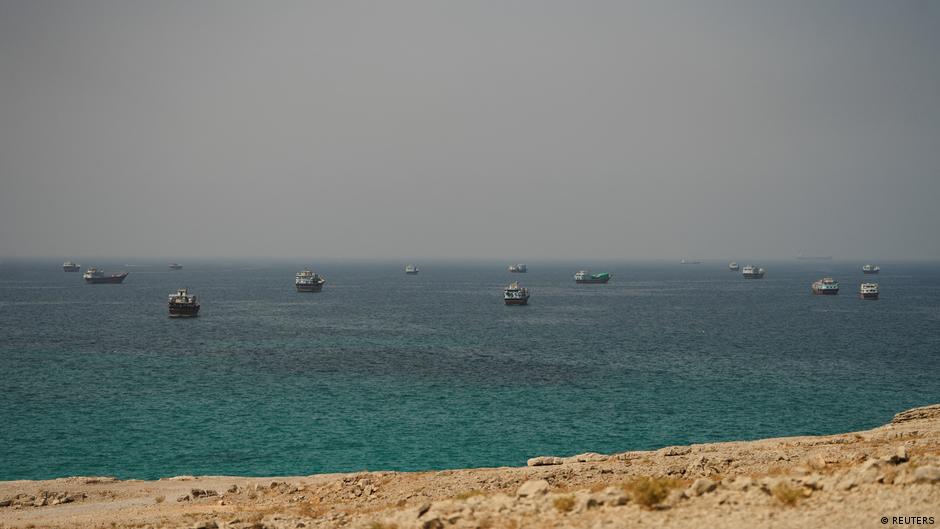
In Germany, the American dilemma is interpreted differently—not as a question of whether a deal is sufficiently tough, but as the risk of a war without a clear political conclusion. Germany’s Deutsche Welle quotes Iran expert Faten Aman, who says Trump is seeking to end the war in a way that would allow him to declare that Iran’s nuclear and military capabilities had been weakened, freedom of navigation restored and Tehran returned to the negotiating table. But the article emphasizes that Washington, Tehran and the Gulf states have different ideas about how the conflict should end. For German readers, this is particularly troubling because of maritime logistics and energy: tensions are spreading beyond the Strait of Hormuz to routes through the Red Sea, meaning the American operation is no longer a distant Middle Eastern crisis. (amp.dw.com)
German commentary on Trump’s UN speech also notes a striking change in tone. In Tagesschau, Martin Ganslmeier writes of a Trump who is “more statesmanlike and less confrontational,” but explains this restraint not as a change in convictions, but as the result of domestic pressure and a search for a way out. His key conclusion is that even a military superpower cannot resolve the crises in Gaza and the Strait of Hormuz on its own. In the German view, this is the main lesson of recent months: unilateral American pressure creates problems faster than it builds a lasting coalition to solve them. Trump’s return to the language of the UN is therefore interpreted not as a renewed faith in multilateralism, but as a forced acknowledgment of the limits of American power. (tagesschau.de)
China’s reaction links the Iran issue to a broader dispute over the kind of world order America is proposing. The Paper describes Trump’s speech as distinctly domestic and almost campaign-like: threats against Iran, attacks on the International Criminal Court and discussion of overseas conflicts are presented as a package of achievements ahead of the midterm elections. The Chinese presentation particularly highlights the contradiction between threatening to destroy another state and the principles of the UN Charter, which prohibit the threat or use of force. Chinese commentators see this less as a problem with Trump personally than as a symptom of American policy, in which international rules are considered useful only when they do not constrain Washington. (thepaper.cn)
Yet against the backdrop of this criticism, a second, more pragmatic theme is also apparent in China: Xi Jinping’s visit to the United States on September 23–25. Official and state-affiliated media are forcefully promoting the formula of “constructive strategic stability.” In a Global Times editorial, relations between the two countries are presented not as a matter of bilateral courtesy, but of global predictability: the United States and China must interact on the basis of equality, respect and mutual benefit. However, another editorial in the newspaper accompanies this aspiration with a firm caveat: dialogue does not mean accepting rules established by the United States, and American military pressure cannot force Beijing to retreat on issues China considers its core interests. (globaltimes.cn)
This is where the three countries’ unexpectedly shared mood lies. Israel wants America not to trade security for a hasty deal; Germany wants America not to turn threats into an endless war with global economic consequences; China wants America to stop confusing strategic stability with the right to dictate terms. All three reactions, in different ways, question America’s ability to combine strength, diplomacy and domestic politics. Israel fears a lack of American resolve, Germany fears an excess of it, and China fears its unilateralism. But their overall conclusion sounds similar: after Trump’s UN speech, Washington appears not as the unquestioned arbiter of the world order, but as a power simultaneously trying to end the conflict, save face and prove to its voters that it still has complete control over events.