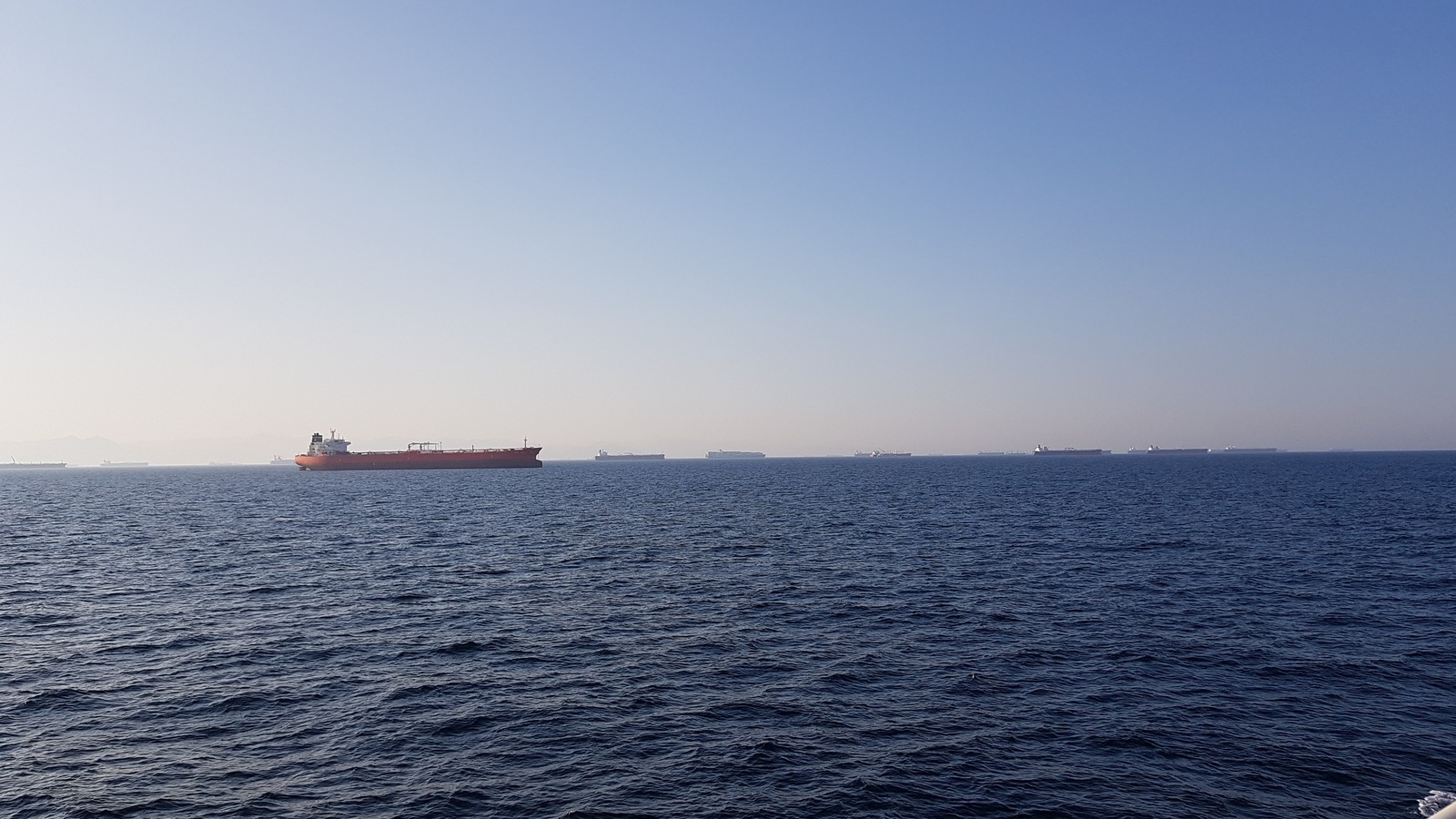
In recent days, the image of the United States in the foreign press has again been assembled like a mosaic from the Middle Eastern crisis, tanker movements through the Strait of Hormuz, missile strikes and a nervous European economy. In Turkey, Washington is discussed through the prism of a war of nerves with Iran and oil price spikes; in Saudi Arabia — through the question of maritime security and the boundaries of possible American military support; in Germany — primarily through the impact of American policy on transatlantic relations and the economy, from tariffs to recession. The common backdrop is one: the world is watching closely to see whether the new American "hardness" is turning into strategic unpredictability.
The first major node of debate is the confrontation between the US and Iran and, more broadly, with pro‑Iranian forces. In the Turkish business and analytical press the phrase “ABD ve İsrail'in saldırıları” — “attacks by the US and Israel” — and “Hürmüz Boğazı krizi” — “the Hormuz Strait crisis” — are constantly repeated. A piece in Turkish Forbes Türkiye dedicated to recent events emphasizes that against the backdrop of US and Israeli strikes on Iranian targets, Tehran managed in March to maintain exports at 1.9 million barrels per day, effectively earning about an additional $2 billion for the month while the strait closed and then partially reopened to shipping. As the author notes in that publication, “Washington appears de facto forced to ease sanctions,” since real pressure on Iranian oil proved lower than stated. For Turkish commentators this is an important detail: it shows not only the limits of American power but also that US sanctions policy increasingly fails to mesh with the real dynamics of regional crises and energy flows.
The same storyline refracts in Saudi discussions in a much harsher key through the prism of shipping security and the fear of a major Gulf war. The kingdom’s Arab English‑language media, such as Arab News, since last year’s rounds of escalation around Yemen and the Houthis have followed a line in which Washington is simultaneously seen as an indispensable military guarantor and as a source of protracted instability. In one of their articles on continuing US strikes against Yemeni Houthis it is emphasized that the Pentagon promises “to continue strikes until attacks on shipping cease,” but the same piece conveys alarm: US strikes naturally provoke threats of retaliatory escalation from Tehran and its allies, increasing risks to shipping and Gulf infrastructure. In Saudi logic this means American policy again acts “over the edge”: a local security problem becomes a long‑term hotspot drawing in the entire maritime basin.
Finally, the European — in particular German — view of the same confrontation is much more restrained and focused on secondary effects. The German debate traditionally frames Washington’s Middle East decisions within the context of transatlantic relations and energy security. On the one hand, as a NATO member Germany is automatically tied into the logical chain of the US strategy to contain Iran. On the other — Germans remember too well the spikes in gas and oil prices after 2022. Therefore any intensification of US‑Iran confrontation and maneuvers around the Strait of Hormuz is perceived primarily as a new source of price pressure and recession risk, costs that European consumers bear rather than American political headquarters.
The second major block of discussion, which brings the Turkish and Saudi agendas much closer together, is the American military economy and arms exports. The Turkish state agency Anadolu Ajansı recently published a large analytical piece with a telling headline that the map of US arms sales virtually overlaps with the map of geopolitical crises. That analysis lists recent deals in detail: from missile deliveries to Europe to the service and training packages for Saudi Arabia’s helicopter fleet approved in December 2025 worth about $1 billion. The author emphasizes that Washington consistently “monetizes” zones of tension, increasing arms shipments exactly where conflicts grow, and that this is not an exception but a stable behavioral model of the US military‑industrial complex, strengthened by Trump administration policies. This narrative line in Turkey has a double meaning: on the one hand, Ankara itself actively buys and sells weapons; on the other — Turkish commentators point to an asymmetry in which the US demands political loyalty from allies while using instability to export its own arms.
In Saudi Arabia the same reality is discussed more cautiously, but the subtext is noticeable: the kingdom remains one of the main buyers of American weapons systems, and each new package from Washington provokes a mix of relief and restrained irritation. Relief — because without American equipment and support Saudi modernization of its army and air defenses would have slowed. Irritation — because the very need for such large‑scale purchases is seen as a direct result of the same environment of unresolved conflicts and Iranian proxy threats, which many analysts regard as the product of decades of American policy in the region. Against this backdrop a common comparison often arises: Washington is essentially both the firefighter and the supplier of gasoline.
The third important theme to which America is linked everywhere is the consequences of US macroeconomic policy for the rest of the world. Turkish economic outlets promptly relay fresh US Bureau of Economic Analysis data: one recent piece reported that US economic growth in 2025 amounted to only 0.5% in real terms, while state‑level dynamics varied widely — from nearly 4% growth in North Dakota to a decline of more than 8% in the District of Columbia. Turkish commentators use these statistics to discuss the resilience of the American economy to geopolitical stress and its ability to continue a policy of high interest rates that siphon capital from emerging markets. The point is that a “weak but still positive” US growth gives Washington room to continue tight monetary policy, while Turkey and other markets are forced to pay higher borrowing costs and defend their currencies.
The German perspective on the same subject is even more sensitive. Public opinion surveys, such as ZDF‑Politbarometer, already recorded last year a deterioration in Germans’ views of US‑German relations amid the change of US president and growing skepticism about the benefits of American tax and trade initiatives. In that same study respondents voiced concern that US policies of tariffs, subsidies, and investment pull (for example in green energy and high tech) undermine the competitiveness of European industry and provoke a “subsidy race.” In today’s German commentary this is often packaged together with American foreign policy: Germany finds itself a partner increasingly hard to explain to its voters why it should unconditionally follow Washington — in military, economic, and energy dimensions alike.
The fourth common motif is skepticism about the long‑term predictability of American policy, amplified by internal polarization in the US. In the Arab press aimed at readers in Saudi Arabia and the region there are regular analyses of American domestic political battles — from changes in the Speaker of the House to attempts to reform electoral procedures. In one analytical piece on the Asharq Al‑Awsat portal, devoted to Democrats’ struggles in rural America, the article describes in detail how Republican states like Wyoming are tightening rules on party registration changes to cement partisan balances. The authors emphasize that this reflects deep structural polarization that directly affects foreign policy: a change of administration in Washington today almost automatically means a change in course on key dossiers — from Iran to trade with Europe.
Turkish commentators approach this topic from another angle: for them American unpredictability is a factor that complicates Ankara’s long‑term juggling between Washington, Moscow, Tehran and Beijing. In analytical programs on Turkish TV discussing, for example, current attempts to organize a peace process around Iran, the idea often appears that “today’s Washington” might accept Tehran’s preconditions for talks while “tomorrow’s” could reject them. One Turkish expert on A Haber recalled how US attitudes toward Israel and the Iran issue have changed over decades depending on domestic political cycles, concluding, in his words, “for us America is not a single subject but a whole set of competing centers of influence, and we are forced to pursue policy as if several foreign policies coexist in Washington.”
In Saudi Arabia US domestic tensions have become a reason for a more cautious strategy: there they clearly remember how American lines changed on issues critical to the kingdom — from relations with Iran and the Yemen war to discussions on oil production within OPEC+. Saudi commentators increasingly speak of the need for an “insurance policy” in the form of diversifying foreign relations — strengthening ties with China and Russia while not severing the strategic alliance with the US. In this discourse America is still viewed as a key partner, but no longer as the only option.
Against this backdrop it is particularly interesting what is almost invisible inside the US itself: the image of Washington as an increasingly regional actor whose policy is simultaneously strong and constrained. In Turkish texts about the Strait of Hormuz there is an underlying thought that American military power could not fully stop Iranian oil exports and that sanctions pressure proved circumventable. In Saudi and Arab commentary on the war of nerves with the Houthis there is an understanding that the US can bomb rebel positions and patrol the Red Sea, but cannot, with a single solution, erase Iranian influence networks from the equation. German analyses of NATO’s future and European defense often repeat the thesis: Washington remains indispensable, but willingness to shoulder global leadership is increasingly in question — and this requires Europe, including Germany, to painfully reassess its own illusions.
Putting together Turkish, Saudi and German voices produces an image of America‑2026 that is very far from the auto‑portrait familiar to an American reader. For Turkey the US is simultaneously a source of sanctions, military support, economic pressure and maneuvering opportunities; a force that controls oil corridors and gas prices, but one that must reckon with Iranian tradecraft. For Saudi Arabia Washington is a security guarantor whose protection always comes with fine print: strikes on enemies can lead to new threats, and a “maximum pressure” policy on Iran turns into maximal uncertainty for the region. For Germany the US remains an anchor of security and the main political partner, but increasingly also a source of economic and strategic headaches, from tariffs and subsidies to the risks of protracted conflicts, costs in which Europeans participate far more generously than American voters.
Across all three countries one common observation stands out: the US is no longer perceived as a monolithic rational actor. Turkish analysts speak of “multiple Americas” within one state; Saudis — of a partner whose support depends on its internal political storms; Germans — of an ally that must be insured by developing one’s own defense capabilities and economic instruments. From an external observer’s perspective this is perhaps the most important change: the world no longer argues about whether the United States is strong or weak; the debate now centers on how predictable that strength is — and how to make policy in the shadow of this new, nervous and contradictory America.