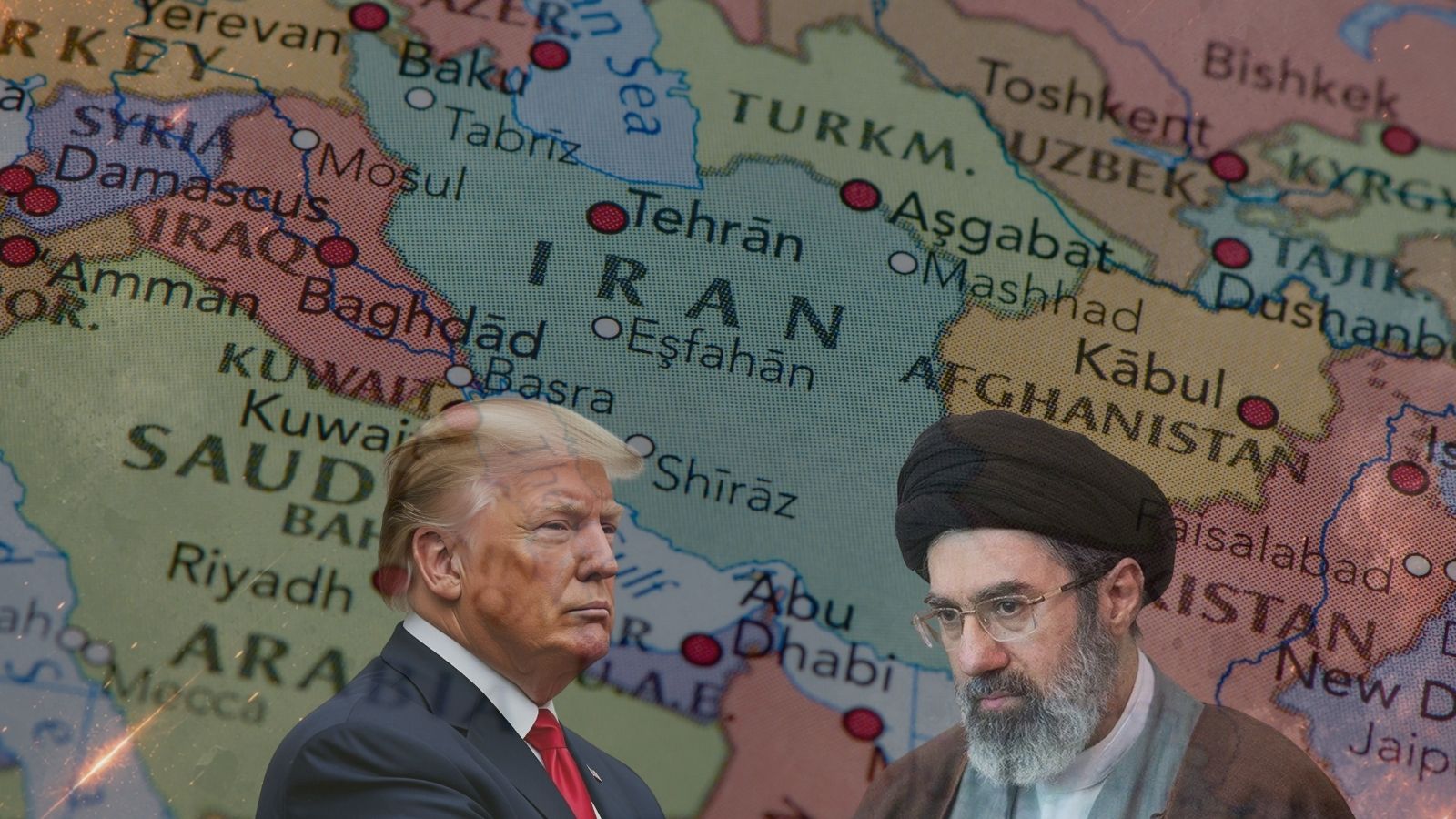
In the final days of August and the first hours of September 2026, the United States became the focus of particularly close—and sharply divergent—attention in South Korea, Russia and Israel. The immediate cause was the same: the resumption of American strikes on Iranian targets near the Strait of Hormuz. But local interpretations differ. In Israel, analysts are debating whether Donald Trump’s administration can combine military deterrence against Iran with economic coercion. In South Korea, the conflict is being read as a warning: American involvement in the Middle East is already affecting the cost of Washington’s alliance commitments in Asia. In Russia, meanwhile, the escalation in the Middle East highlights another issue—the US attempt to negotiate over the war in Ukraine while retaining its logic of pressure and deal-making.
Hormuz has become the main pressure point. Following the US strike on August 31 against IRGC units, which Washington accused of preparing to mine the strait again, the local debate shifted from the question of “who carried out the attack” to a far more significant one: can America guarantee freedom of navigation without becoming bogged down in another prolonged war? The Israeli Institute for National Security Studies states the Trump administration’s dilemma directly in its analysis: the White House must shift the center of gravity from a military campaign to economic pressure, while ensuring that Tehran does not conclude that the United States has lost its willingness to use force. The Israeli perspective is especially practical here. For Jerusalem, a one-off display of power is not enough: if Iran can periodically restore mines, anti-ship capabilities and threats to commercial shipping, every American declaration of a “secure Hormuz” will be tested by another attack.
That is why Israeli analysts view sanctions not as an alternative to war, but as its continuation by other means. INSS emphasizes that the effectiveness of a new campaign will depend not on the number of restrictions announced, but on whether Washington is prepared to impose secondary sanctions on banks, companies and states that continue trading with Iran—above all, Chinese entities. This is a revealing detail: in Israel, the debate is less about America’s right to strike Iran than about American consistency. If force is used sporadically and sanctions do not reach Tehran’s external sponsors and intermediaries, the strategy becomes an expensive effort to maintain the status quo.
Russia’s reaction to the same events is noticeably more skeptical. In a column for Kommersant, Iran expert Farhad Ibragimov describes the situation as being in a state of “neither peace nor war” and draws attention to the inconsistency of American signals: Trump simultaneously promises that the crisis will end soon, says he is in no hurry to negotiate, and portrays Hormuz as almost normalized, even though attacks and threats to shipping continue. This is not simply anti-American rhetoric. It reflects a specific observation: Moscow sees American policy as an attempt to preserve freedom of maneuver—to strike, declare the operation limited, threaten sanctions and leave the door open to a deal. From the Russian perspective, such flexibility may benefit Washington tactically, but it does not create predictable rules for its adversaries.
The South Korean debate gives Hormuz a different meaning—an economic and alliance-related one. South Korean media are reporting a new wave of concern over tanker attacks, shipping suspensions and rising oil prices; SBS directly links the renewed US-Iranian clashes to tensions along a route critical to global energy supplies. But for Seoul, this is not only about oil. The more American ships, aircraft, munitions and political attention are absorbed by the Middle East, the sharper the question becomes: could the Korean Peninsula become a bargaining chip in a broader Washington deal with its allies and rivals?
This concern intensified after Trump ordered a reduction in the scale of joint US-South Korean exercises in August, while again discussing the possibility of a personal meeting with Kim Jong Un. In an assessment by the Korea Institute for National Unification, Lee Sang-shin, director of the institute’s research division, argues that the decision could open a window for easing tensions and resuming US-North Korean dialogue. But another analysis by the same institute, prepared by senior researcher Min Tae-eun, advances a tougher argument: Trump is seeking a foreign-policy breakthrough after the Iranian track failed to produce results, while North Korea’s nuclear capabilities are now greater than during Trump’s first term and Pyongyang has fewer incentives to make concessions. The publication also contains a particularly important warning for Seoul: if the summit collapses or ends in failure, both Washington and Pyongyang may try to shift part of the blame onto South Korea.
This reveals a common theme linking South Korean and Israeli assessments: US allies are not sure that the current White House understands an alliance as a lasting commitment rather than a set of interchangeable bargaining assets. Israel wants pressure on Iran to be sustained and backed by real penalties for those evading sanctions. South Korea fears that reducing exercises or Trump’s rapprochement with Kim could be tied to questions of spending, investment or the extent of Seoul’s participation in American plans for the Middle East. Jeong Jae-sung, president of the East Asia Institute, describes this as a “package” approach in an EAI analysis: US pressure over Iran, defense spending and economic issues should not be viewed separately, but as elements of a single negotiating framework.
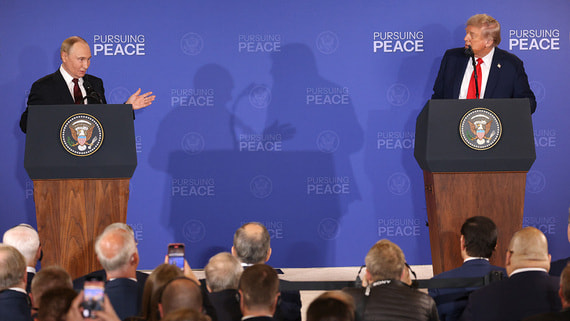
For Russia, American “package diplomacy” is most visible in the Ukrainian context. The debate here concerns not so much the possibility of contact between Moscow and Washington as its price. Vedomosti reports intensified negotiating efforts by Trump’s circle and contacts surrounding a peace settlement; at the same time, Russian commentators interpret the absence of a prompt trilateral summit as a sign that Moscow is unwilling to formalize an agreement until it receives substantive concessions. In the Russian view, negotiations matter not as a humanitarian pause, but as a mechanism for translating the military situation into a new architecture of security and economic relations with the United States.
This explains why Moscow may see a connection between Hormuz and Ukraine where Western audiences see two independent lines of crisis. The more resources and political capital America spends on containing Iran, the more limited its ability appears to dictate terms simultaneously in Europe and East Asia. This does not mean Russia expects the United States to withdraw from every region; rather, it questions Washington’s ability to sustain maximum pressure everywhere for an extended period. The Russian interpretation therefore does not boil down to hoping for “US weakness.” Instead, it assumes that the United States will bargain more actively because the cost of simultaneous confrontation in the Persian Gulf, Ukraine and the Indo-Pacific is rising.
The most unexpected conclusion from the local debates is that in Seoul, Moscow and Jerusalem, America is now viewed not as a declining power, but as a power whose strength has become more selective, personalized and transactional. Israelis are testing whether it is truly prepared to establish rules in Hormuz. South Koreans are asking whether their security could become a bargaining chip in exchange for a Trump-Kim Jong Un meeting or a new deal on burden-sharing. Russians are considering whether America’s need for a diplomatic success can be converted into more favorable terms on Ukraine and in bilateral relations.
This reputational test matters more for the United States than individual missile strikes, sanctions lists or negotiating leaks. A credible American strategy must simultaneously show Iran that freedom of navigation is not a bargaining chip; reassure allies that their security does not depend on the next presidential term; and make clear to Russia that negotiations are possible, but will not automatically mean accepting terms dictated by force. For now, however, foreign observers see in Washington’s actions not a unified doctrine, but a risky attempt to manage three crises with different instruments—strikes, sanctions, reduced military exercises and promises of personal diplomacy.