In recent days, the main subject of debate about the United States in Russia, China, and Ukraine has not been any single Washington initiative, but the tension between its two roles. On the one hand, the White House is trying to act as a mediator in ending the Russian-Ukrainian war and has shown a willingness to discuss broader European security. On the other, the United States continues to apply technological pressure on China, expanding restrictions on advanced computing and supply chains. In Shenzhen on November 19, this duality took on an almost symbolic form: a meeting of the leaders of China, Russia, and the United States was accompanied by rhetoric about preventing conflicts, but did not resolve either the strategic rivalry or the fundamental disagreements over Ukraine. (apnews.com)
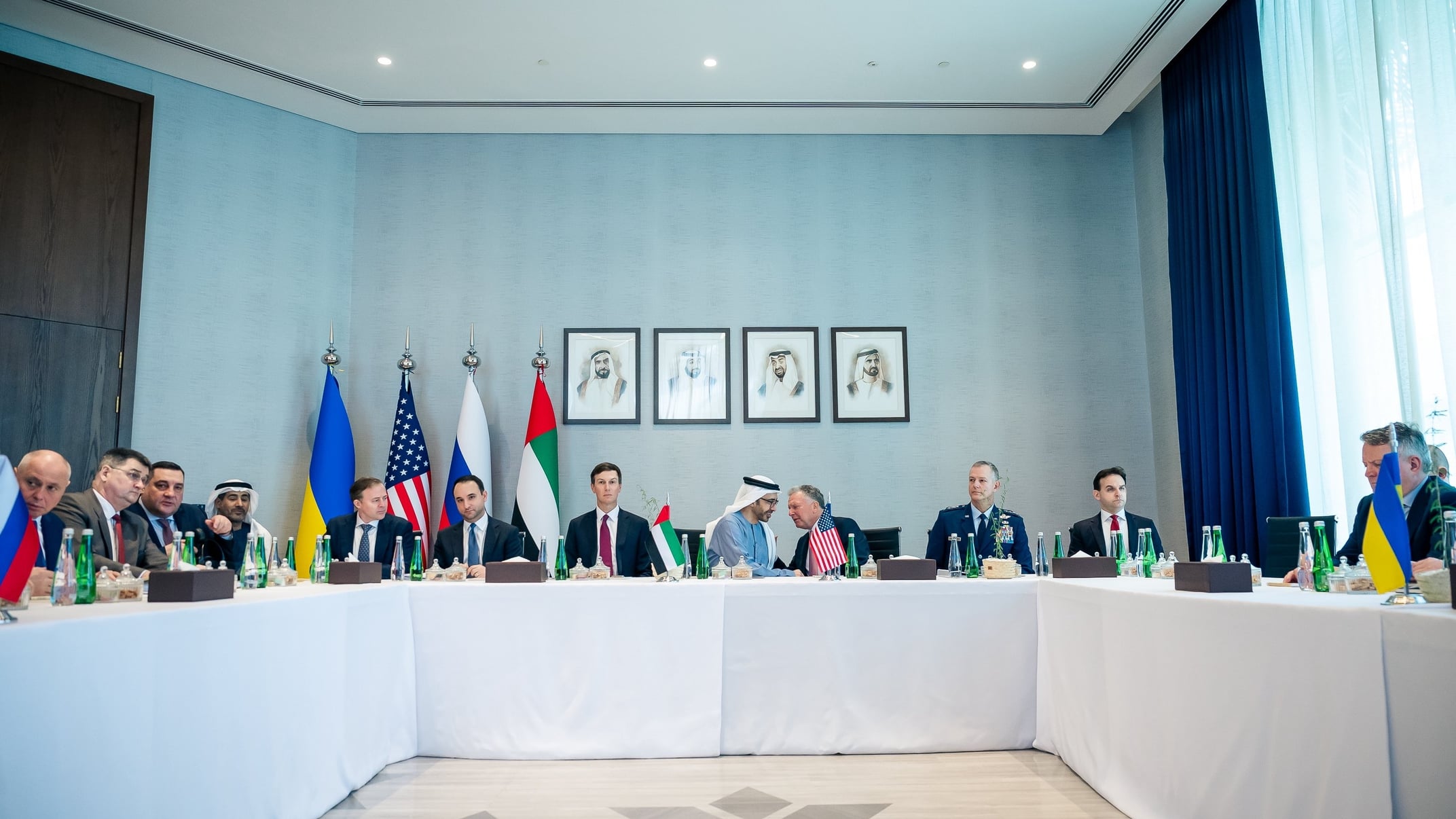
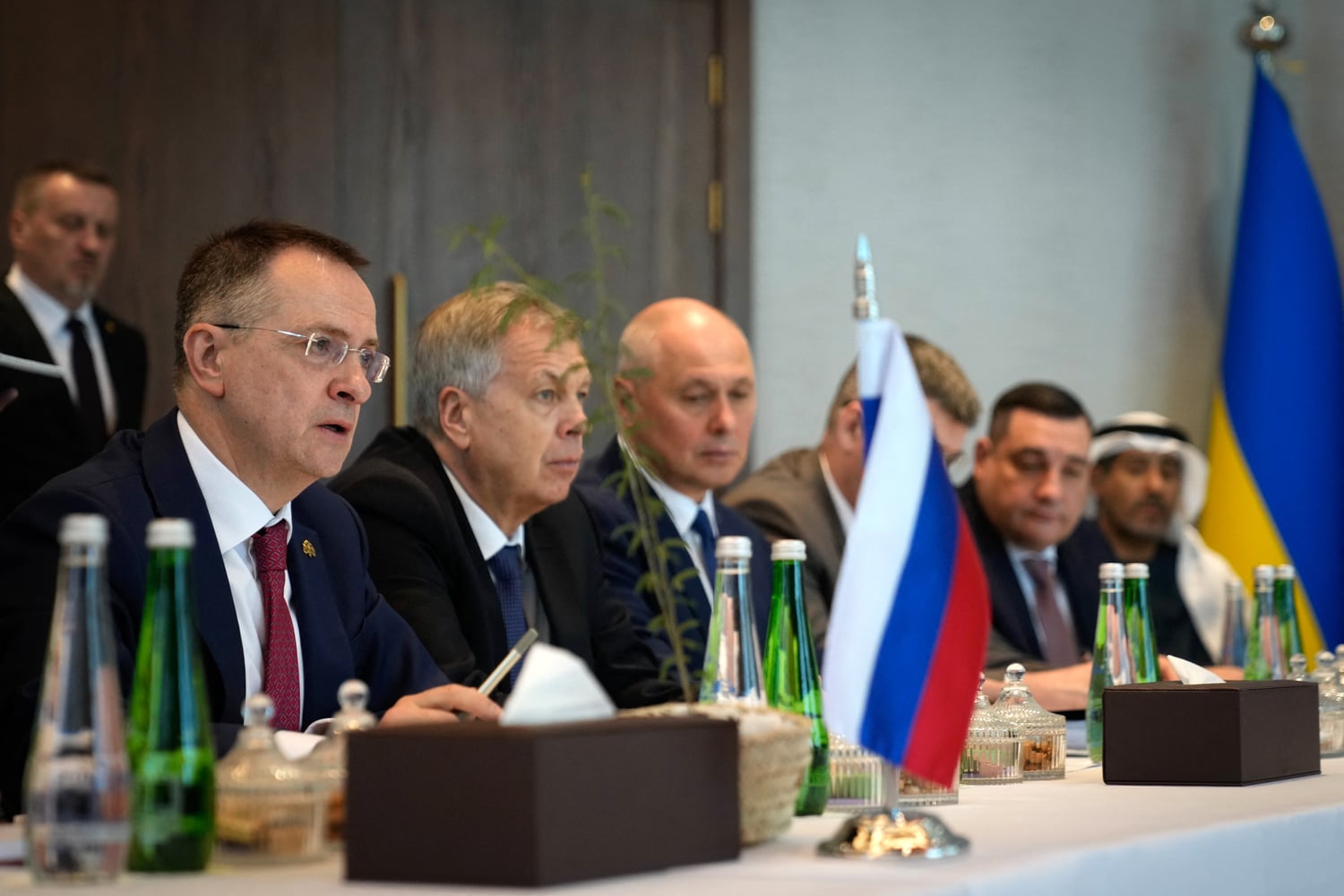
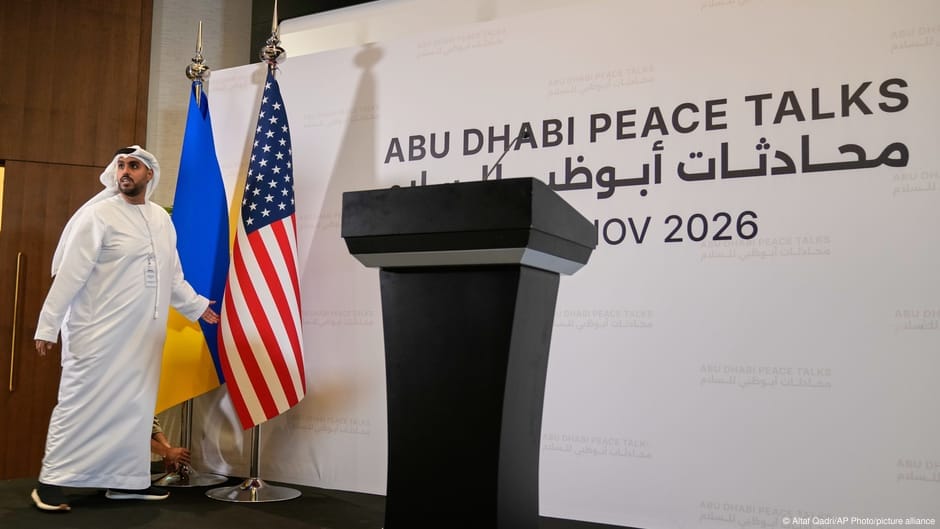
In Russian debate, American mediation is primarily seen as an opportunity to move the war from a narrowly Ukrainian framework into a discussion about a new European security architecture. In Kommersant’s analysis, the outcome of the Russia-Ukraine-U.S. talks in Abu Dhabi on November 10–11 is described not as a breakthrough toward peace, but as a step toward a “cold peace”: there is no agreement to end the war, but a large-scale prisoner exchange has been agreed, and the very logic of continued dialogue has been established. It is especially telling that the head of the Russian delegation, Vladimir Medinsky, focused not on the front line but on the future security order in Europe. For Moscow, this is a fundamental shift in the frame: the war is presented not only as a conflict with Ukraine, but as the consequence of a broader confrontation with the West, in which the United States is the only interlocutor capable of making decisions.
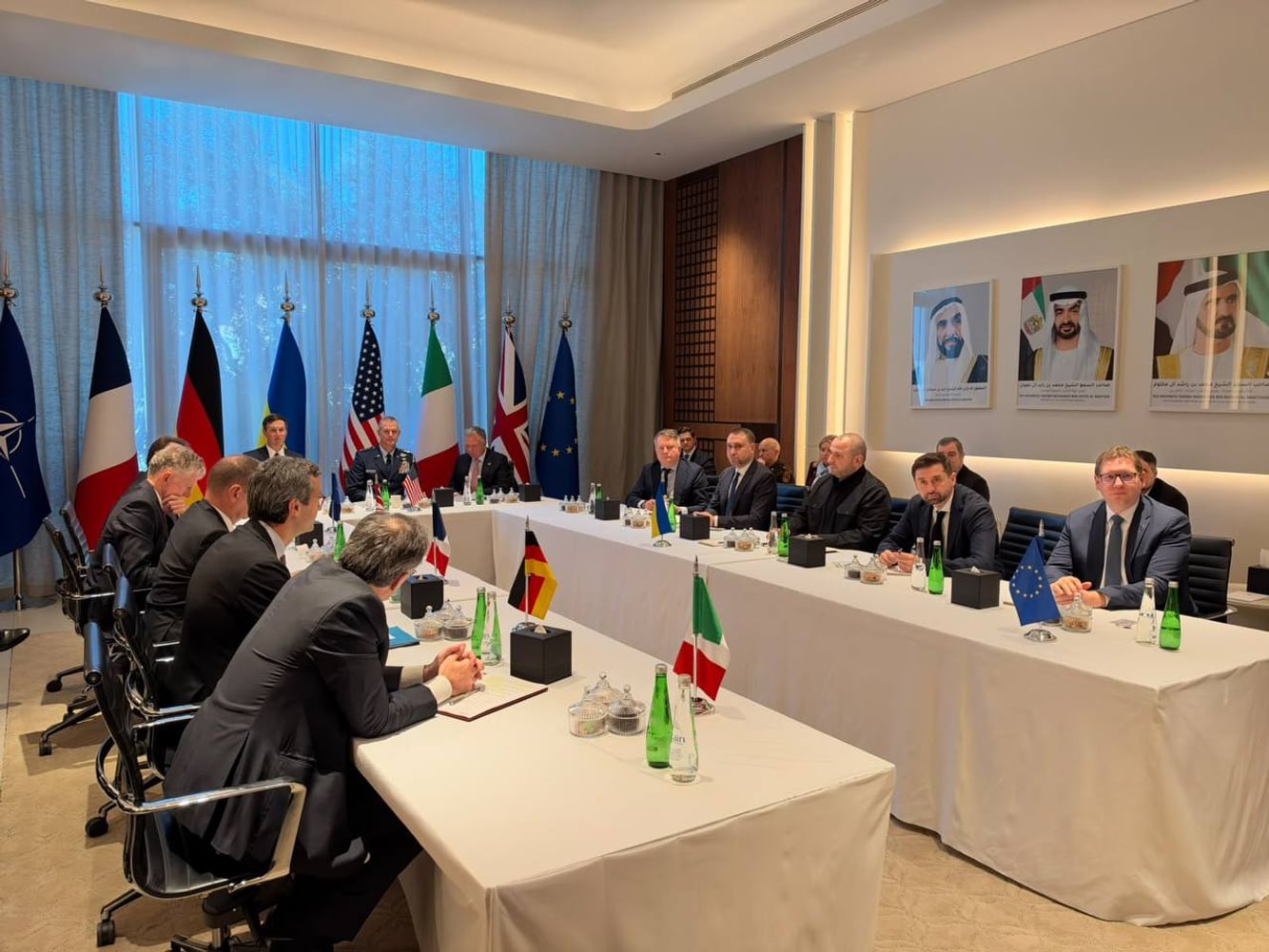
Russian media therefore view Washington’s involvement with both hope and suspicion. The hope stems from the fact that the U.S. administration has not ruled out talks on security guarantees for all sides. The suspicion is that Europe and Ukraine may limit the scope for compromise. In an article about the Berlin consultations, there is visible irritation at the fact that Kyiv’s European allies are seeking to become full participants in the negotiations and reject Russia’s interpretation of a new security system. From this perspective, the American approach is valuable precisely because it may be autonomous from Europe: if Washington is seeking a “deal,” Moscow expects it to be less constrained by its longstanding alliance commitments.
In Kyiv, the same American push for negotiations is viewed almost as a mirror image. Ukrainian analysts do not reject diplomacy, but fear that the United States’ desire to produce quick results will turn negotiations into a mechanism for pressuring the very side that is defending itself. Alina Hrytsenko, an expert at the Ukrainian Prism center, said in a Deutsche Welle interview that she was skeptical about Medinsky’s participation, noting that his appointment could mean Moscow was ready to demonstrate its involvement in the process without being prepared to negotiate on substance. This is an important Ukrainian caveat: the problem for Kyiv is not U.S. mediation itself, but the risk that Washington will take Russia’s formal participation in talks as proof of its peaceful intentions.
After Abu Dhabi, Ukraine’s assessment became somewhat more pragmatic: the humanitarian results are acknowledged as real, while the political ones are not. In an analysis by hromadske, former U.S. ambassador to Ukraine John Herbst said: “We are not aware of a single concrete step toward peace by either side.” Ukrainian public debate thus draws a clear distinction between prisoner exchanges and the return of civilians and children—areas where negotiations can save lives right now—and any agreements on territory or security, where the cost of a mistake would be strategic and long-lasting. (amp.dw.com)
The most sensitive question for Kyiv is whether the United States is willing to consider security guarantees in a form acceptable to Moscow as well. Ukrainian commentators see a logical contradiction here: a guarantee that the aggressor can veto is no longer a guarantee in the full sense of the word. Russia’s interpretation is precisely the opposite: Europe cannot be secure if its security is defined without Russia. The United States therefore faces a dilemma that all three countries recognize but explain differently: Washington wants to end the war through compromise; Moscow wants to use compromise to revise Europe’s postwar order; and Kyiv wants to prevent a ceasefire from becoming a postponement of the next war.
China’s response to U.S. policy is markedly less emotional, but no less critical. Beijing describes the current period as an attempt to stabilize relations with the United States while harboring no illusions about their durability. In an interview following the U.S. midterm elections, Wu Xinbo, a professor at Fudan University and director of its Center for American Studies, said the overall course of China-U.S. relations was unlikely to change dramatically, but that Democratic control of Congress would increase the “friction factor.” He singled out Taiwan as a variable capable of undoing even limited stabilization. This interpretation is notable: domestic political changes in the United States are seen not as a path to a change in strategy, but as a source of additional unpredictability within an already established rivalry.
Technology has become the clearest evidence of this unpredictability. While diplomats were talking about dialogue ahead of the meetings in Shenzhen, the U.S. Department of Commerce tightened restrictions on November 16 on remote access to advanced chips and computing capacity through third countries. Chinese Foreign Ministry spokesperson Guo Jiakun called this an abuse of the concept of national security and an attempt to pressure China’s high-tech industry; his remarks were reported by Guangming Daily. China’s argument here extends beyond the bilateral dispute: Beijing stresses that U.S. restrictions affect Singapore, Thailand, Malaysia, Indonesia, Brazil, and the very model of international technology trade. (m.gmw.cn)
Even more interesting is China’s view of America’s own dependence on Chinese manufacturing supply chains. China Energy News reports that Microsoft and other American companies are lobbying against a ban on imports of Chinese optical transceivers—key components for data centers and artificial intelligence infrastructure. In this account, the United States is trying to contain China, but risks slowing its own AI push in the process. For Chinese audiences, this is not merely an economic story, but confirmation of a broader idea: a policy of “decoupling” is costly not only for China, but also for the U.S. market itself. (paper.people.com.cn)
The common thread in Russian, Chinese, and Ukrainian reactions is distrust in the United States’ ability to combine strength, mediation, and domestic political struggle without contradiction. But their conclusions are diametrically opposed. In Moscow, there is an opportunity for American pragmatism that could allow for discussion of a major political bargain. In Kyiv, there is concern that this pragmatism will measure peace by the speed of a deal rather than its durability. In Beijing, the view is that diplomatic détente with the United States does not cancel out strategic containment, and that every handshake may be accompanied by a new export ban.
The most unexpected feature of this international picture is that, for all three capitals, the United States is now not only a source of pressure but also an indispensable participant in decision-making. Russia wants to talk to Washington about Europe; Ukraine wants reliable commitments from it; and China wants to stabilize relations without yielding on technological sovereignty. U.S. policy therefore inspires not so much sympathy or antipathy as a struggle over who gets to define its next role: arbiter, rival, or partner in a deal born of necessity.