In the days before the U.S. midterm elections, scheduled for November 3, 2026, attention in Turkey, Saudi Arabia and India is focused less on the American political battle itself than on what Washington will do immediately afterward. In all three countries, the main story is the convergence of the war with Iran, security threats around the Strait of Hormuz, energy prices and the increasingly visible dependence of U.S. foreign policy on the electoral calendar. Local commentators agree on one point: the United States still has enormous military and financial resources, but its partners increasingly see White House decisions not as long-term strategy, but as choices driven by short-term domestic advantage.
The most pressing issue is the possibility of a new U.S. strike on Iran after November 3. Saudi media view this risk primarily as a matter of the Gulf states’ physical security and the reliability of oil exports. The Saudi publication Arab News cites analyst Abdullah Sager’s assessment that the region’s “biggest political risk” today is “U.S. unpredictability” [translation]. In his view, the worst-case scenario would not only be another round of fighting, but also a possible U.S. withdrawal that would give Iran more room to pressure shipping routes in the Persian Gulf. This is an important local caveat: Riyadh is not calling for unconditional escalation, but it does not believe that a power vacuum will automatically bring stability.
Saudi and other Arab media close to it therefore see Hormuz not as an abstract point on the map, but as a chokepoint where U.S. election interests immediately translate into risks for the entire regional economy. An October 28 report by Asharq Al-Awsat describes regional intermediaries’ diplomatic efforts, led by Qatar, to prevent a new military campaign by restarting U.S.-Iran talks. The very fact that such mediation is under way reflects the region’s logic: Arab states are trying not to choose between Tehran and Washington, but to prevent their territory, ports and energy infrastructure from becoming the price of an American decision deferred until after the election.
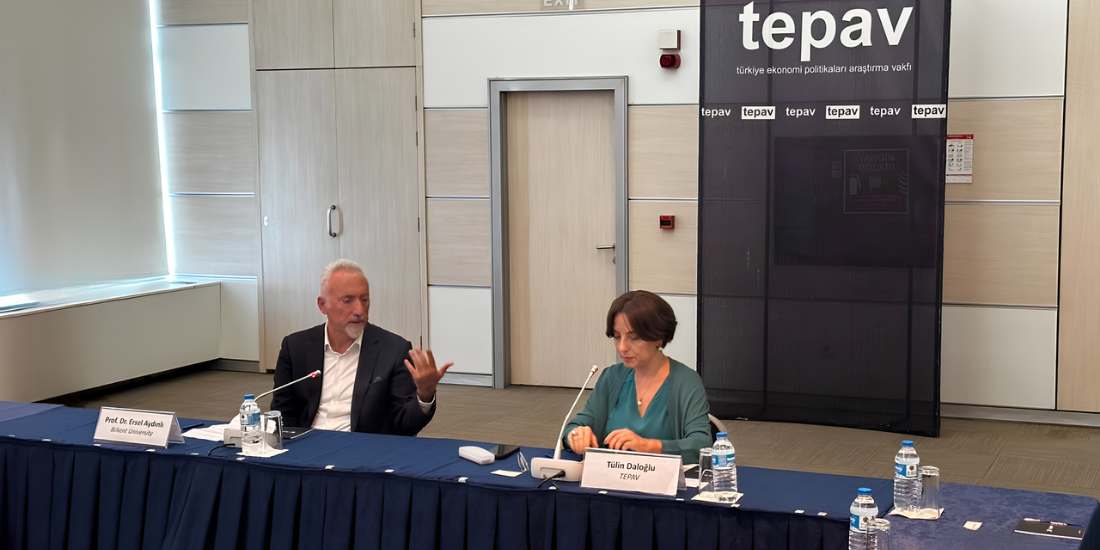
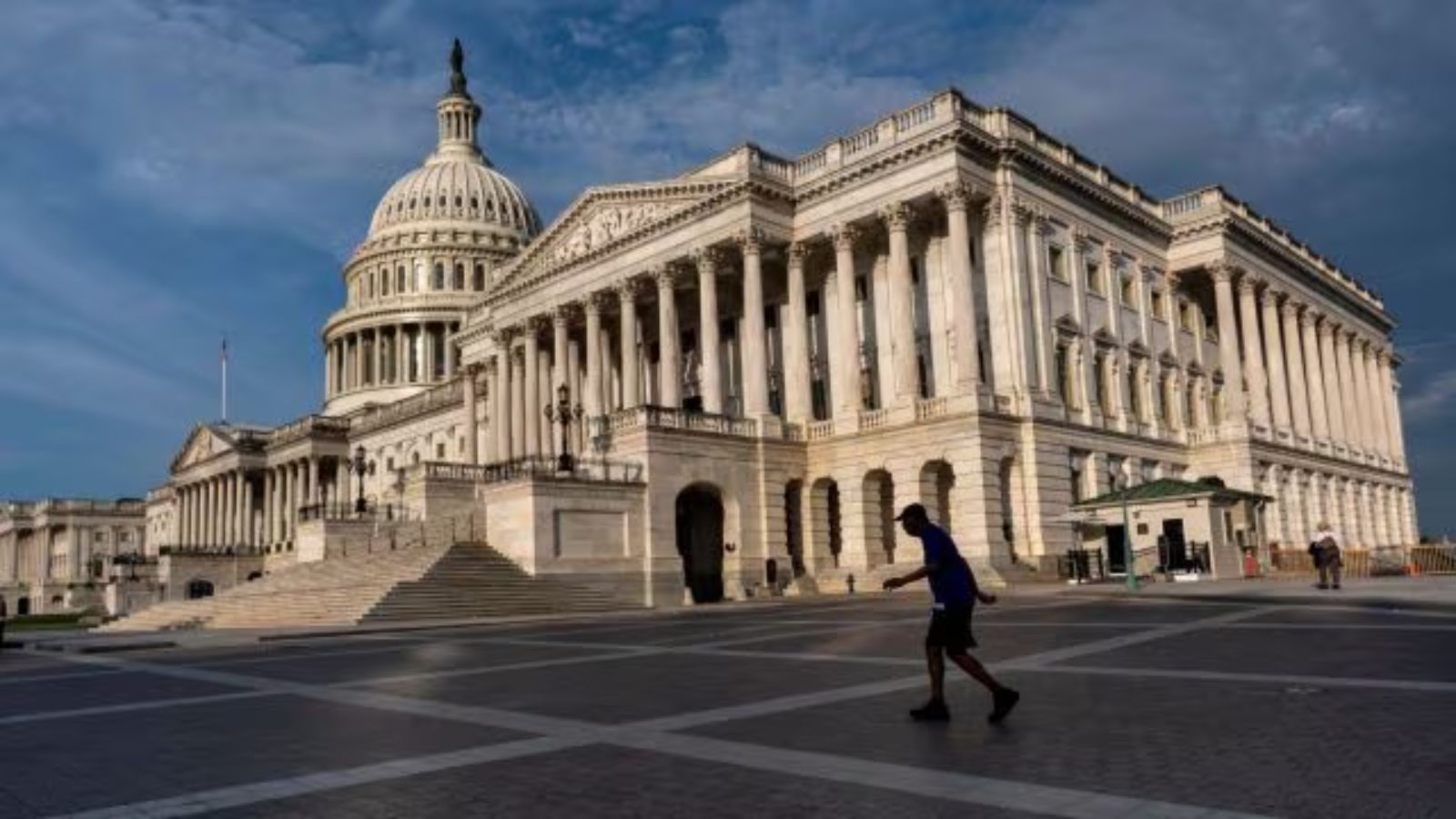
Turkey’s response is noticeably less alarmed about military risks, but much more focused on the institutional consequences of the U.S. elections. In Ankara, the question is whether a shift in the balance of power in Congress could constrain President Donald Trump’s freedom of action on Iran, sanctions, the cost of military operations and relations with allies. At a discussion hosted by the Economic Policy Research Foundation of Turkey, Professor Ersel Aydınlı stressed that a new Congress could indeed narrow the president’s room for maneuver through budgetary control and congressional oversight, but that a complete reversal in U.S. foreign policy should not be expected. This matters especially to a Turkish audience: Washington is viewed not only as a power in the Persian Gulf, but also as a partner whose decisions affect sanctions, access to defense technology, borrowing costs and the political climate around Syria.
This is where Turkey’s characteristic pragmatism comes in. An analysis by investment company GCM advises against drawing direct predictions for the Turkish lira or stock market from the U.S. election outcome, and instead recommends watching four indicators: U.S. bond yields; the dollar’s exchange rate and investors’ appetite for risk; energy costs; and U.S. trade and geopolitical decisions. This is perhaps the clearest example of the Turkish perspective: the main question is not who is morally right in the American debate over Iran, but how U.S. instability will feed through to the cost of Turkish capital, imported energy and export markets.
India’s debate, by contrast, links the war and the election to broader distrust of U.S. economic policy. The Indian Express columnist C. Raja Mohan writes that the war with Iran has turned the U.S. midterms into another front in the conflict: Tehran is trying to exploit domestic discontent in the United States, while the White House hopes that pressure will force Iran to make concessions. But India’s main lesson is different: the foreign policies of great powers are increasingly shaped by domestic political cycles, so New Delhi must rely first and foremost on its own strategic autonomy.
This point comes through even more sharply in Indian assessments of trade negotiations with Washington. In a column by Observer Research Foundation expert Soumya Bhowmick, the key problem is identified not as the size of the U.S. tariff, but as its reversibility. India, he argues, risks trading lasting concessions—lower tariffs, broader market access and purchase commitments—for temporary tariff relief that Washington can revoke by administrative decision. Another Indian analyst, Ajay Srivastava, puts it even more bluntly in a report on U.S.-India negotiations: an exemption from the threat of U.S. sanctions over purchases of Russian oil is no concession if Washington still holds that threat over India. India’s response is therefore not anti-American, but cautiously skeptical: cooperation with the United States is essential, but it cannot be built on promises whose duration is determined by U.S. domestic politics.
The common conclusion in Turkey, Saudi Arabia and India is that these countries are no longer debating whether the United States matters. They are asking a different question: how reliable are U.S. commitments when military operations, sanctions, tariffs and negotiations are tied to an election date? Saudi Arabia fears that Washington’s unpredictability could destabilize the region; Turkey is calculating how it will affect finance, energy and defense deals; India is demanding legally binding rules instead of political assurances. And this is the most important external perception of America today: not as a superpower in decline, but as a still indispensable power that countries must work with while protecting themselves against its abrupt shifts.