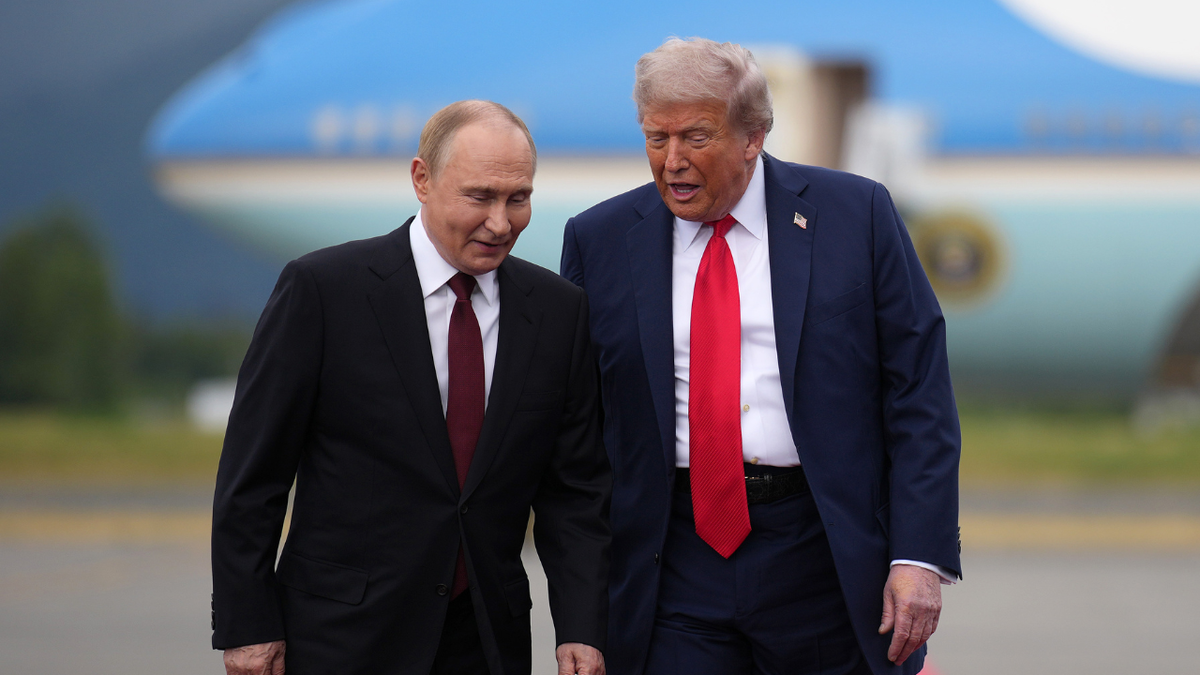
In the final days of October 2026, discussions of the United States in China, Australia and Japan unexpectedly converged not so much on Donald Trump’s ideology as on a practical question: to what extent is Washington’s foreign policy now governed by the domestic arithmetic of election season? The focus is on the US administration’s decision to temporarily ease restrictions on Russian diesel fuel, its attempt to bring down domestic fuel prices ahead of the November 3 congressional elections, and the possible consequences of a weakened presidency after the vote. For observers in all three countries, these are not isolated episodes but signs that the United States is increasingly acting like a power whose strategic commitments can be revised under pressure from prices, approval ratings and political expediency.
The Russian issue has attracted the most attention. Australia’s response has been the most emotional and morally forceful. Energy Minister Chris Bowen said Canberra “does not need or want Russian fuel,” stressing that Russia must not benefit from its war against Ukraine. In an ABC report, this position comes across not as a formal disagreement with an ally, but as a principled refusal to accept a deal in which economic relief for the United States comes at the cost of strengthening Moscow politically. (abc.net.au)
Australian commentators go beyond the official formulation. ABC columnist John Lyons calls Trump’s deal with Vladimir Putin the Kremlin’s biggest economic and propaganda victory since the start of the war, while his colleague Laura Tingle sees the main reason for Washington’s reversal as the White House’s concern over high fuel prices and the risk of a Republican defeat in the elections. Her conclusion is especially telling: in Australia, US strategy on Ukraine is no longer seen as the consistent course of a great power, but as a series of contradictory steps driven by the struggle for votes. Tingle’s analysis puts it almost bluntly: US foreign policy is sinking under the weight of its own contradictions. (abc.net.au)
In Japan, the assessment is less emotional, but the concern is more directly tied to national security. An Asahi Weekly editorial describes America’s softening stance toward Russia as a selfish approach that benefits the aggressor and undermines international solidarity. (digital.asahi-weekly.asahi.com) For Tokyo, the issue is not limited to Ukraine: if Washington can quickly retreat from its sanctions policy for domestic economic gain, Japan is bound to ask how durable US commitments in East Asia really are—from the Taiwan Strait to Japan’s southwestern islands.
Chinese publications view the same issue differently. From Beijing’s perspective, easing restrictions on Russian diesel is less a moral failure of the West than evidence of structural weakness in US policy. Guangming Daily describes the White House’s calculation as an attempt to hold on to voters, push for a ceasefire and revive negotiations all at once, but argues that all three goals may prove unattainable. (news.gmw.cn) Chinese writers identify the central contradiction: the United States is trying to use Russia to ease energy pressures at home while maintaining its claim to leadership of the anti-Russian coalition. For Chinese audiences, this confirms the familiar argument that American principles are subordinate to political expediency, while also serving as a warning: Washington’s unpredictability can create risks for everyone, including Beijing.
A second common theme is the US midterm elections as a factor in international security. Meng Weizhan, a researcher at Fudan University, argues in an analysis for Peking University that the most likely outcome is a narrow Democratic majority in the House of Representatives, with Republicans holding the Senate. He warns that even a limited thaw with China after meetings between the leaders will remain vulnerable: technological competition has already become a domestic political consensus in the United States, and Congress can raise the cost of any compromises made by the administration. (igcu.pku.edu.cn) In other words, Chinese commentators do not expect the US vote to automatically improve relations. They anticipate an even more divided Washington, where tactical agreements are possible but a lasting strategic shift is unlikely.
Japanese analysts reach a similar conclusion, but frame it in terms of the danger of political paralysis. Tomohisa Ishida, an expert at the Japan Research Institute, warns in an analysis published on October 21 that a Democratic victory could entrench a prolonged confrontation between Congress and the White House. His observation that a domestic crisis in the United States could worsen the situation in Northeast Asia is particularly important for Japan: US policy circles are already discussing the possibility of moving the defensive perimeter farther from the first island chain linking Japan, Taiwan and the Philippines. (jri.co.jp) This is an extremely sensitive issue for Tokyo. Behind it lies not simply a fear of reduced US resources, but concern that the region’s strategic map could be redrawn without sufficient regard for the interests of America’s allies.
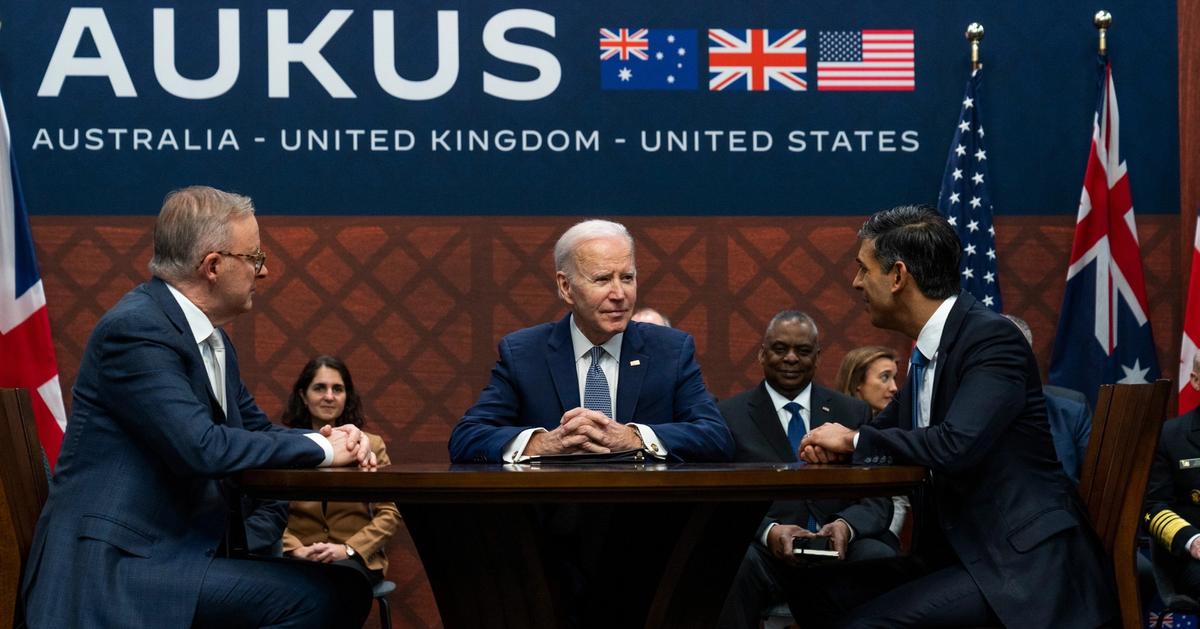
The Australian debate adds the question of dependence. In an ABC column, Laura Tingle poses an uncomfortable question for Canberra: what is the real cost of an alliance with the United States if the ally itself is becoming less predictable? (abc.net.au) The AUKUS program, under which Australia is to acquire nuclear-powered submarines, remains the official foundation of its defense strategy. That is precisely why its vulnerabilities are being discussed so intensely. The slow pace of US shipbuilding has long raised doubts about delivery timelines, while political instability in Washington turns a production problem into a question of trust. ABC notes that the key issue remains whether the United States can both meet its own naval plans and transfer submarines in such short supply to Australia. (abc.net.au)
The most important common thread in the reactions from all three countries is that none of them believes Trump’s weakening after the elections will automatically make the United States more measured. China fears that pressure from Congress will cement technological and military-political competition. Japan allows for the possibility that a weakened president might seek high-profile foreign policy initiatives, or prove unable to sustain the previous level of commitments in Asia. Australia sees the risk that a more chaotic Washington will force Canberra to choose between loyalty to its ally and avoiding entanglement in conflicts that are not its own.
Thus, Chinese, Japanese and Australian reactions differ in their assessments of US intentions but converge on the consequences. China sees the events as revealing the limits of US hegemony and creating an opportunity for a more cautious stabilization of relations with Washington. Japan sees a threat to the guarantees on which its postwar security has been built. Australia sees painful dependence on an ally whose domestic politics increasingly shape its foreign commitments. The dominant international image of the United States in late October 2026 is neither that of a confident leader nor that of a power in irreversible decline, but of a country whose decisions have become so dependent on the next electoral cycle that neither partners nor rivals can regard them as lasting.