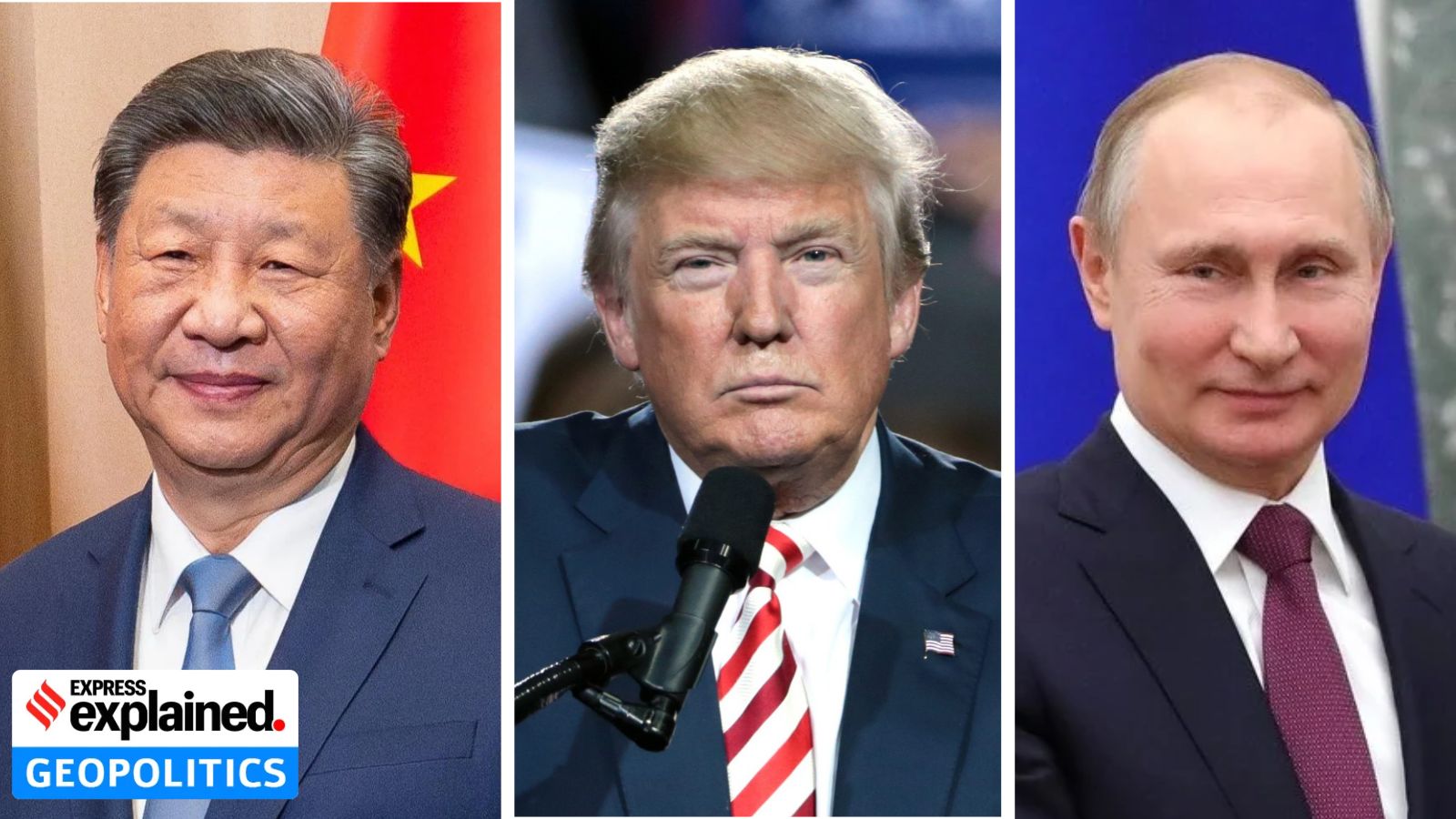
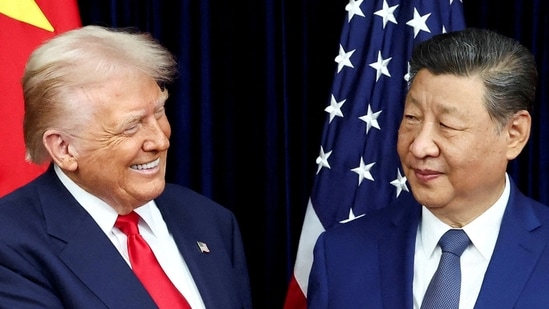
In Brazil, India and Japan, the focus in recent days has not been on any single Washington initiative, but on a new model of American foreign policy: allies are offered cooperation while also being reminded of the price of access to the U.S. market, technology and security. The occasion is Donald Trump’s Asian itinerary: a meeting of the leaders of the Quadrilateral Security Dialogue—the United States, India, Japan and Australia—in Manila on November 17, followed by an unprecedented meeting between Trump, Xi Jinping and Vladimir Putin in Shenzhen, China, planned for November 19. For the three countries watching these developments, it looks like two-speed diplomacy: Washington brings partners together to contain China, then sits down with Beijing and Moscow to discuss rules of the game that could affect everyone else. India’s Express aptly described this approach as “balancing and bargaining”: major powers build coalitions, hedge against unreliable partners and make deals with rivals at the same time. (indianexpress.com)
India’s reaction to this arrangement is especially pragmatic. For New Delhi, participation in the Manila meeting is in itself confirmation that India remains an essential part of the U.S. strategy in the Indo-Pacific. But Indian commentators do not see it as a guarantee of political loyalty to the United States. In an analysis for the Indian Express, expert C. Raja Mohan stresses that countries no longer make a once-and-for-all choice between alliance and confrontation: they strengthen ties with partners while making deals with adversaries. That is why New Delhi is watching Shenzhen closely. Indian media see a potential easing of tensions between the United States and Russia as a positive development, since it would give India more room to maneuver on purchases of Russian energy. But Trump’s rapprochement with Xi is viewed with caution: an assessment by the Hindustan Times notes that diplomatic recognition of China’s special status by the other two leaders could increase Beijing’s pressure on India along their unresolved border. (hindustantimes.com)
In Japan, the concern is even sharper, as U.S.-China dialogue is unfolding against a backdrop of deteriorating relations between Tokyo and Beijing. Japanese commentators see a risk that the country will become an object, rather than a participant, in a great-power deal. A TBS report says outright that Prime Minister Sanae Takaichi’s task at the Quadrilateral Security Dialogue meeting is to keep Trump’s attention and prevent the impression from taking hold that the United States, China and Russia can settle regional issues among themselves. This is not merely a matter of diplomatic prestige. Taiwan, the security of sea lanes, export controls and access to critical materials all depend on the substance of U.S.-China agreements. In an analysis by the Japan Research Institute, economist Naoyuki Fukuda suggests that Washington and Beijing are likely to avoid an immediate escalation while the United States diversifies its supplies of critical minerals and China accelerates semiconductor import substitution. For Japan, this means not a thaw, but prolonged competition temporarily masked by negotiations. (newsdig.tbs.co.jp)
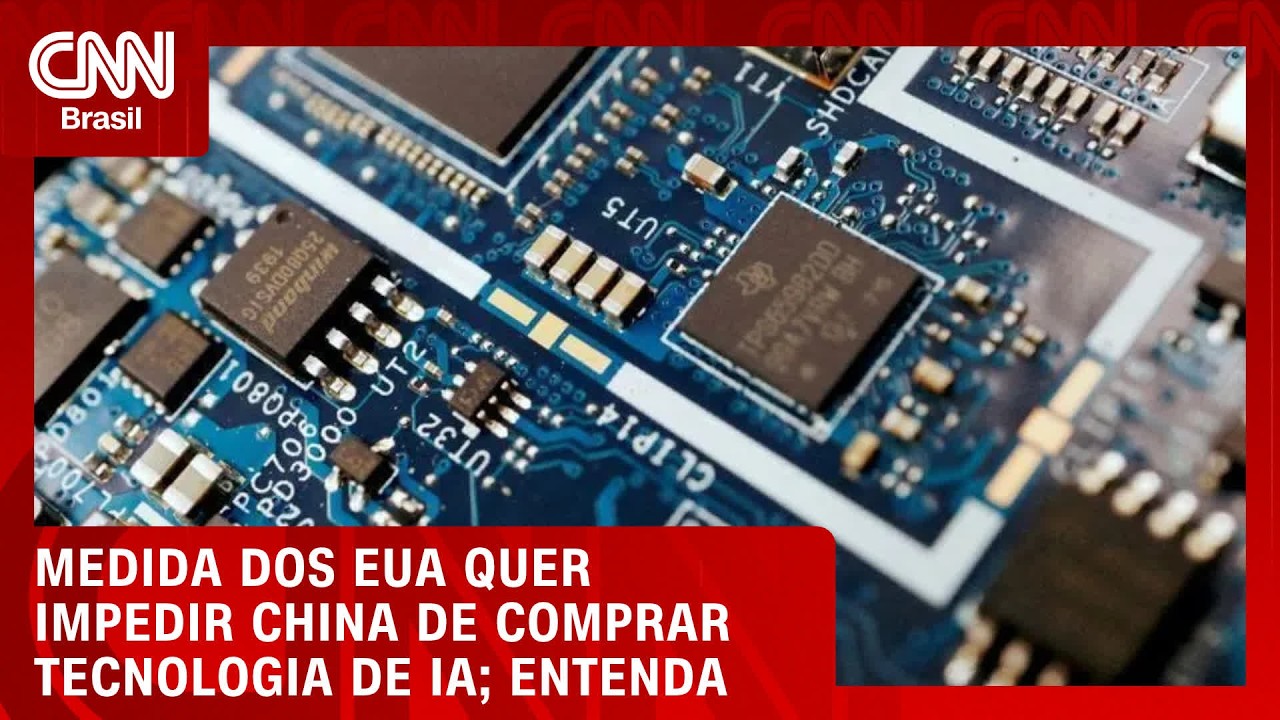
Of the three countries, Brazil has felt the new American logic most directly—through restrictions on advanced artificial intelligence chips. On November 16, the United States introduced additional licensing requirements for exports of certain high-performance chips and related equipment to Brazil, as well as Indonesia, Malaysia, Singapore and Thailand. The U.S. aim is to close potential channels through which China could remotely access computing power. But in Brazil, this is being discussed not as a technical measure aimed at Beijing, but as a downgrade in the country’s status: Brazil has been placed in a group of potential transit risks, even though Brasília does not consider itself part of a Chinese sanctions-evasion scheme. In a report by Folha de S.Paulo, a source in Lula’s government tries not to attribute a direct anti-Brazilian political motive to the decision. An editorial comment in Diário de São Paulo, however, expresses local frustration much more bluntly: in its view, the United States is effectively “punishing a country without concrete evidence” that its territory is being used to reroute technology. (c-level.folha.uol.com.br)
Behind this frustration lies a very practical fear. Brazil is trying to attract data centers, investment in cloud infrastructure and artificial intelligence projects; licensing could now mean longer timelines, higher costs and greater uncertainty for investors. An analysis by CNN Brasil focuses on the paradox: the new rules could strengthen the position of U.S. technology companies in Brazil, because they are best equipped to comply with Washington’s requirements and control supply chains. The local debate thus goes far beyond chips: dependence on American technology is becoming dependence on American permission to develop.
Indian observers see the same problem in a different form. For them, U.S.-China technological rivalry is not a reason to choose one side once and for all, but an opportunity to integrate India into new manufacturing supply chains. However, an article in the Hindustan Times concludes that frequent personal meetings between Trump and Xi may only prolong short-lived trade truces without resolving the structural conflict over semiconductors, artificial intelligence and technology standards. India wants to benefit from manufacturing shifting out of China, but does not want to become a market to which the United States offers access to technology only in exchange for political and trade compliance. (hindustantimes.com)
Trade is the second common thread running through these reactions. In India, negotiations on the first package of a bilateral trade agreement with the United States are nearing completion, but New Delhi is refusing to celebrate prematurely. On November 18, Trade Minister Rajesh Agrawal explained that the document cannot be signed until Washington clarifies its own tariff framework and concludes its investigations under Section 301 of U.S. trade law. As he said in an interview with Business Standard, “No country will want to conclude a deal while there is uncertainty surrounding it because of several investigations.” India is seeking not simply a lower tariff, but a competitive advantage over its rivals and the right to revise its own concessions if the United States imposes additional duties beyond those agreed. This is a telling description of the current attitude toward America: access to its market is valuable, but Washington’s promises are seen as temporary and in need of safeguards. (business-standard.com)
The debates in Brazil and Japan reach a similar conclusion, even though they concern different issues. Brazil is facing a situation in which access to technology depends on the U.S. assessment of political risks; Japan, one in which its security may depend on the substance of a U.S.-China conversation at which it has no seat. India, meanwhile, is finding that even a nearly completed trade agreement does not protect it from subsequent U.S. tariff decisions. In all three cases, the United States remains an indispensable partner—as a market, technology supplier or military ally—but is becoming a less predictable institution.
The most unusual local perspective comes from Japan: the best outcome of the Shenzhen meeting may not be a major agreement, but the absence of a dangerous breakthrough. Economic commentators cited by Japan’s Newsweek suggest that a U.S.-China rapprochement could benefit Japanese businesses by reducing the risk of new disruptions in rare-earth supplies. But the political cost of such a rapprochement could outweigh the economic benefits: if Trump shows he is willing to discuss the regional order with Xi without clearly taking Japanese interests into account, Tokyo could feel less secure even if markets improve in the short term. Brazil’s lesson is different: a digital strategy cannot be built on the assumption that commercial access to American technology is politically neutral. India’s is that partnership with the United States is essential, but must not be confused with dependence on a single center of power.
That is why America’s image in Brazil, India and Japan is now so ambivalent. It remains a country without which it is impossible to address questions of security, trade and technology. But it is no longer a country whose rules are seen as stable and universal. Trump’s America offers alliance, competition and a deal all at once—and the rest are trying to figure out which of these three roles will take precedence after the next leaders’ meeting.