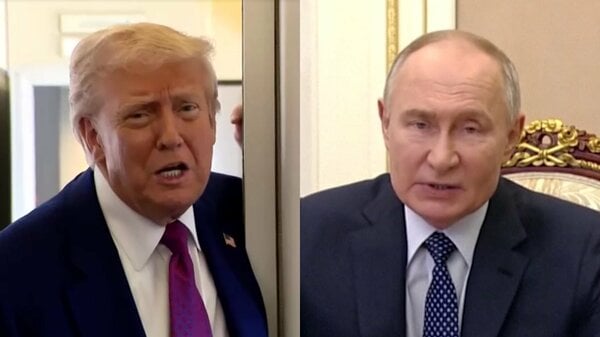
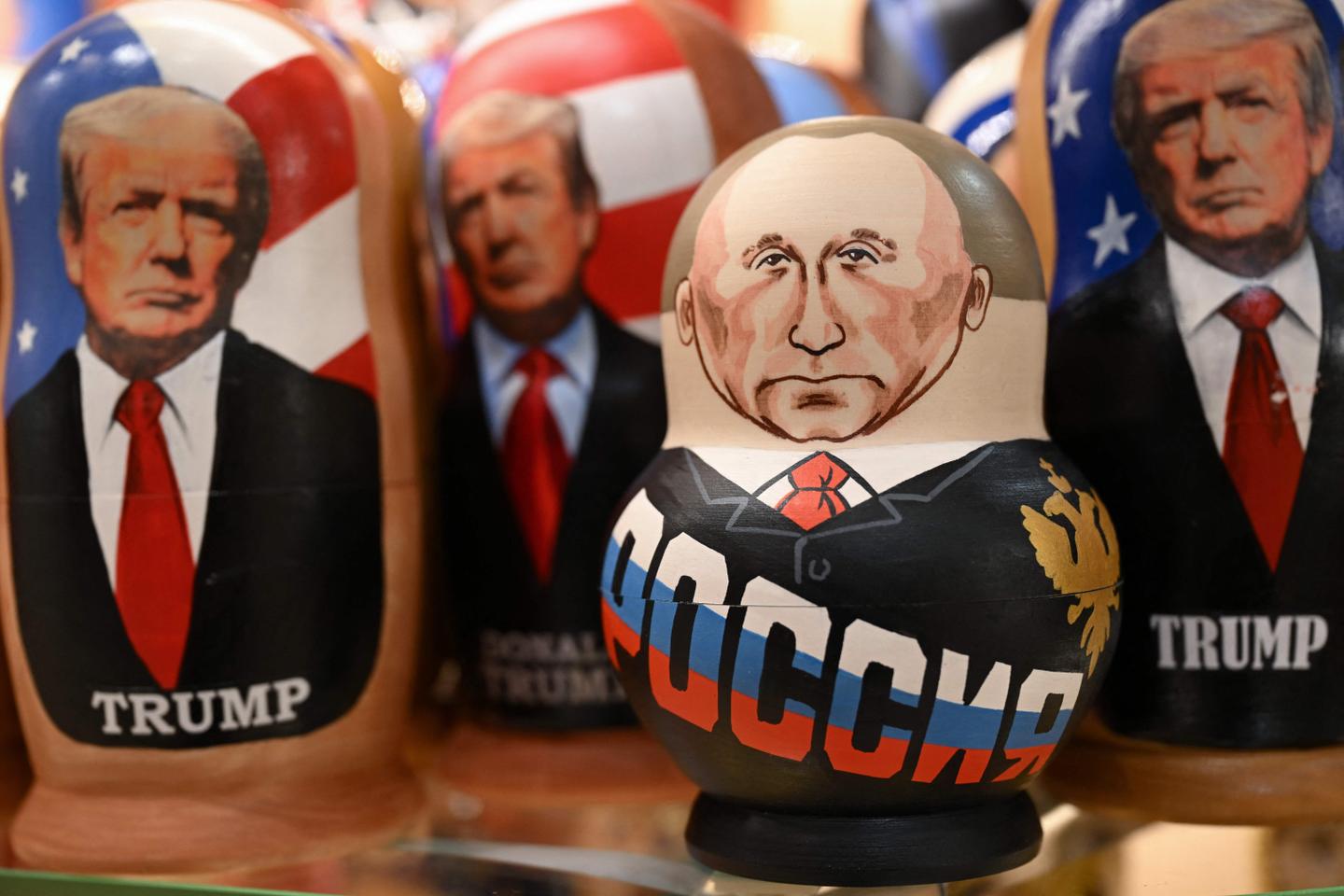
For Australia, France and Japan, the main American story in recent days has been not so much Washington’s domestic political scandals in themselves as their very tangible consequences beyond the United States. The focus is the congressional election on November 3, 2026, to which Donald Trump, in the local reading, is trying to respond simultaneously with populist payments, energy maneuvers and the conspicuous personalization of power. But the news on October 9–10 of his agreement with Vladimir Putin on supplying Russian diesel to the United States and the global market made the picture even sharper: allies see in it not simply a fight against expensive fuel, but Washington’s readiness to change its sanctions and alliance policies for a short-term electoral effect. (apnews.com)
In France, the American midterm elections are discussed above all as a test not of the president’s popularity, but of the viability of American democracy. In an editorial in Le Monde, the vote is described as a test against the backdrop of redistricting, the influence of big money and fears that Trump will not accept an unfavorable outcome. In its analysis of possible scenarios, the French Institute for International and Strategic Affairs reaches a similar conclusion: a Republican defeat could trigger new allegations that the election was “stolen,” further corroding America’s political culture regardless of the formal result. (lemonde.fr)
The Australian debate sounds less academic and more personal. Joe Hockey, Australia’s former ambassador to the United States and former treasurer, said on ABC that there is a “very gray area” between ordinary government procedures and corruption in Washington. He is particularly troubled by the blending of power, personal enrichment and partisan struggle—something viewed in Australia as a departure from far stricter standards of public service. In this respect, the Australian view overlaps with the French one: the problem is seen not as a single White House decision, but as the disappearance of institutional restraints. (abc.net.au)
Japanese commentators approach the same election more pragmatically. Their main question is whether a weakened president will be less dangerous for allies or, on the contrary, will rely even more heavily on unilateral deals and pressure. In an analysis by the Japan Research Institute, experts explicitly warn that after the election Washington could increase pressure on other countries not only over investment in the United States, but also across a broader range of international economic issues. Japan’s concern is linked to its experience of tariff conflicts and Tokyo’s dependence on the American strategy of deterring China: for Japan, the unpredictability of the U.S. president is not an abstract democratic problem, but a risk that security, trade and currency policy will become subjects of improvised bargaining. (jri.co.jp)
That is precisely why the diesel story proved so revealing. In late September, France and Germany faced an American demand to release emergency fuel reserves, while Washington threatened to restrict exports of U.S. diesel. The European Commission publicly rejected the very logic of such a move: at a briefing on October 2, a Commission spokesperson stressed that the EU was categorically opposed to an export ban and ready to coordinate action on reserves, but would not accept blackmail as the norm in relations between partners. The French response was therefore twofold: Paris agreed to a coordinated release of reserves within the G7 framework, but secured a public formula stating that there would be no export restrictions between members of the Group of Seven. (audiovisual.ec.europa.eu)
However, Trump’s subsequent deal with Putin changed the meaning of the compromise. Washington effectively eased restrictions on Russian diesel supplies until April 7, 2027, even though American policy had until recently been based on limiting Moscow’s oil and gas revenues. (fnn.jp) From the French perspective, this is particularly painful: even before the deal, Le Monde had assigned responsibility for the energy crisis simultaneously to Moscow and Washington, linking fuel shortages to the war, attacks on infrastructure and America’s willingness to turn diesel exports into leverage ahead of the election. Paris now sees the risk that sanctions are not a common rule of the Western coalition, but an instrument the White House can temporarily suspend for the sake of domestic fuel prices. (lemonde.fr)
In Australia, the reaction is even more direct, since diesel is the lifeblood of the country’s transport, mining and agricultural economies. Energy Minister Chris Bowen said that Australia “does not need or want Russian fuel,” adding that Russia must not be rewarded for its illegal and immoral invasion of Ukraine. (reddit.com) Behind this formulation lies a broader Australian fear: the alliance with the United States remains the foundation of the country’s security and the AUKUS project, but domestic political panic in America can turn allied energy supply chains into hostages within a matter of days. Australian analysts have already warned that a hypothetical ban on U.S. diesel exports could sharply raise domestic prices and threaten the rationing of supplies. (reddit.com)
Japan views the same crisis through the prism of energy vulnerability and relations with China. Japanese discussions link the midterm elections to inflation, wars and the yen’s exchange rate; financial analysts are developing separate scenarios for every possible combination of control over the House of Representatives and the Senate, because American political instability can already move the dollar more sharply than ordinary differences in interest rates. Nomura recalls that the 2025 tariff shock and Trump’s January campaign over Greenland had already led to a noticeable weakening of the dollar. (nomura.co.jp) For Tokyo, the Russian diesel deal is not necessarily a signal of an immediate change in Japanese policy, but it does indicate that the previous American logic—sanctions against Russia, alliance discipline and stable global markets—can be sacrificed for the sake of a single political date.
This is the common conclusion reached by Australia, France and Japan. They assess Trump differently: the French speak of democratic degradation and Europe’s strategic autonomy, the Australians of corruption and the reliability of their closest ally, and the Japanese of risks to trade, the currency and the balance of power in Asia. But all three countries agree on the central point: the United States is no longer simply a source of decisions to which its allies adapt. It has become a source of sharp volatility against which they must hedge—politically, energetically and diplomatically.


![On November 3, American voters will go to the polls for the “midterm” elections. All 435 seats in the House of Representatives and 35 of the Senate’s 100 seats are at stake, along with numerous local offices. Both the Republicans’ very narrow majority in the House and their somewhat more comfortable Senate majority are under threat. Judging by the available indicators, the Democrats appear well positioned to perform strongly. It is not unusual for the president’s party to suffer a setback in these elections, but polls are particularly unfavorable to Republicans for the 2026 contest. The president himself has historically low approval ratings—recent polls place his approval at around 38%—and the prospects of most Republican congressional candidates are closely tied to Trump’s political fate. The administration’s unpopular military campaign in Iran, along with cost-of-living concerns, has left American voters particularly dissatisfied in recent months. In “generic” polls, Democrats lead Republicans by 8 points or more, well beyond the margin of error. Even more revealing, Republicans are devoting increasing resources to defending seats in districts that Trump won by wide margins in 2024. In states such as Texas, Iowa, Ohio and Alaska, where Republicans have dominated in recent years, the president’s party is now on the defensive. Democrats have difficulties of their own, and the party’s image is far from excellent among many voters, but they should nevertheless perform well. The Democrats’ chances of retaking the House of Representatives are very good. They need only to […]](https://www.iris-france.org/wp-content/uploads/2026/10/capitol-drapeau-etats-unis-scaled.jpg)