Almost simultaneously three storylines involving the United States pushed America onto the front pages in Israel, Germany and India. These are the US and Israeli war with Iran and the reshaping of power in the Middle East, the threat of a blockade of the Strait of Hormuz and an oil shock, and the rise of domestic turbulence inside the United States — from a nationwide strike to a shooting near the White House. It is along these three lines that today’s global optics on Washington are formed: ally and guarantor, arsonist and unpredictable factor at the same time.
The main nerve of international discussions is the war of the US and Israel with Iran, which began after the failure of negotiations and escalated into large-scale strikes on Iranian territory at the end of February 2026. Israeli and American attacks on Iranian facilities, and in response — Iranian missile strikes on American bases in the Middle East, create the sense that the region has entered a new, far more dangerous phase of conflict. (ru.wikipedia.org)
The Israeli press views events with an exceedingly down-to-earth, almost accountancy-like survival lens. Newsfeeds are filled with reports about those wounded in attacks by Iran and Hezbollah, about US–Iran negotiations involving the Gulf Arab states, and about the fact that Washington’s position affects both Israeli security and freedom of navigation through the Strait of Hormuz. In a review on the Israeli Russian-language portal IL.vesti it is emphasized that the UAE demand firm guarantees from the US to secure passage through Hormuz, while Israel is suffering heavy losses from missile strikes and is preparing for a prolonged confrontation. (il.vesti.news)
Against this backdrop another US-linked story appears almost silently in the country: the participation of 14-year-old granddaughter of the US president, Arabella Trump, in a concert program for Israel’s Independence Day, where she will perform alongside pop star Noa Kirel. Israeli Channel 9 presents this as a sign of close human ties and political alliance: America here is not only aircraft carriers and missiles, but also family, the stage, soft power. (9tv.co.il) In these two storylines — blood and show — the fundamental Israeli attitude toward the US appears: it is a source of vital military and political support, woven into everyday life and culture so deeply that even during a war with Iran America remains both a shield and part of “our own.”
But it is precisely such a war and such dependence that evoke completely different emotions in Germany and, more broadly, continental Europe. The German debate largely proceeds through international sections and analytical pieces in major media, which cite assessments by European and Russian experts: in them, American strategy in the Middle East is described as cynical, governed by the logic of energy blackmail. In a characteristic column published on the Russian-language but widely cited in German discussions portal EADaily, a political scientist asserts that the US and Israel began military actions precisely against the backdrop of negotiations when Iran was making concessions on its nuclear program, and that the goal of the operation is not military triumph but panic in the oil and gas market and rising prices, beneficial to Washington. (eadaily.com)
For part of the German audience, especially the left‑liberal segment, this fits well with a long-standing skepticism toward American foreign policy: the wars in Iraq, Afghanistan, now Iran. At the same time, conservative and Atlanticist commentators remind readers that strikes on American bases and Tehran’s threats to close the Strait of Hormuz create a danger to global oil supplies and risk a worldwide recession, and in that logic a forceful US response is the lesser of two evils. Overlaying this is another signal: the UK is convening a London meeting on the Middle East with 40 countries without the US — a move that the Russian outlet Fontanka describes as a symbol that even closest allies seek to discuss settlement separately from Washington, while in Washington itself talks of impeaching the head of the Pentagon for miscalculations in this war are already being heard. (fontanka.ru) From the German perspective this looks like a symptom of “America fatigue”: dependence on the US in security remains, but trust in the White House’s political course is noticeably eroding.
The Indian view, unlike the European one, is far more pragmatic. Major Hindi‑ and English‑language Indian outlets discuss the Iran–US–Israel conflict through the prism of oil, transport corridors and the overall architecture of the global economy. In a video segment about the crisis in the Middle East on Dailymotion, Indian commentators stress that a clash between the US and Iran could have “महत्वपूर्ण प्रभाव” — serious consequences — for the global economy, and therefore for Indian growth, which still critically depends on energy imports. (dailymotion.com)
At the same time India is closely watching the behavior of the Gulf countries, primarily the UAE, which in talks with Washington and Tehran are demanding written guarantees of free passage through the Strait of Hormuz. (il.vesti.news) For New Delhi this is an important signal: if the US cannot or will not guarantee stability in Hormuz, India will have to accelerate a multi-vector energy strategy and reliance on its own transport corridors, from North–South to agreements with Russia and Iran bypassing vulnerable sea routes.
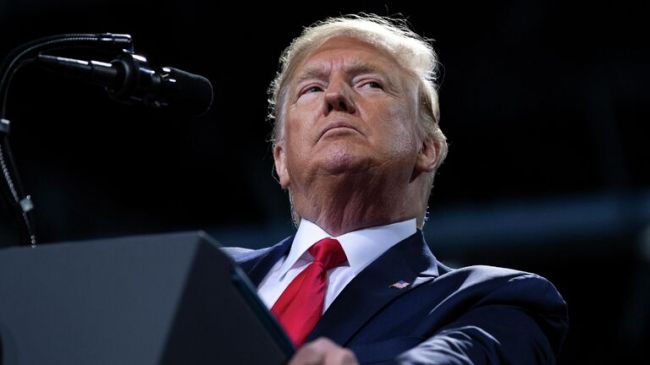
The second major block of international reactions is about how, beyond the US, observers view the logic of American power in this new war. The EADaily column with the intentionally provocative headline about Trump’s “irrationality or strategy” paints a picture where the president’s chaotic tweets and crude threats toward Iran are merely a façade of a carefully calculated game to reboot global energy and redistribute roles among the US, China, Russia and the EU. (eadaily.com) The author asserts that Washington deliberately uses the escalation as a tool to restructure the world order so that America once again becomes the indispensable center of decision-making for allies frightened by price spikes and the risks of new conflicts.
This line is echoed by Russian and some Middle Eastern commentaries that reach audiences in Israel and Germany. On the air of radio “Sputnik in Crimea” expert Igor Shatrov says that “there will be no peace on American terms,” and that the escalation in the Middle East is an attempt by the US to intervene in an ongoing regional reshuffle without being willing to take real responsibility. In his view, Iran and Palestinian forces have already shown they are not ready to capitulate to American diktat, and to end the Arab–Israeli conflict it will be necessary to put the question of the “true instigator” — Israel and its place in the world — on the agenda. (crimea.ria.ru) For German and Indian readers, such comments serve as a reminder: in a region where America considers itself the architect of security, many see it not as an arbiter but as one of the parties to the conflict, sometimes — the principal arsonist.
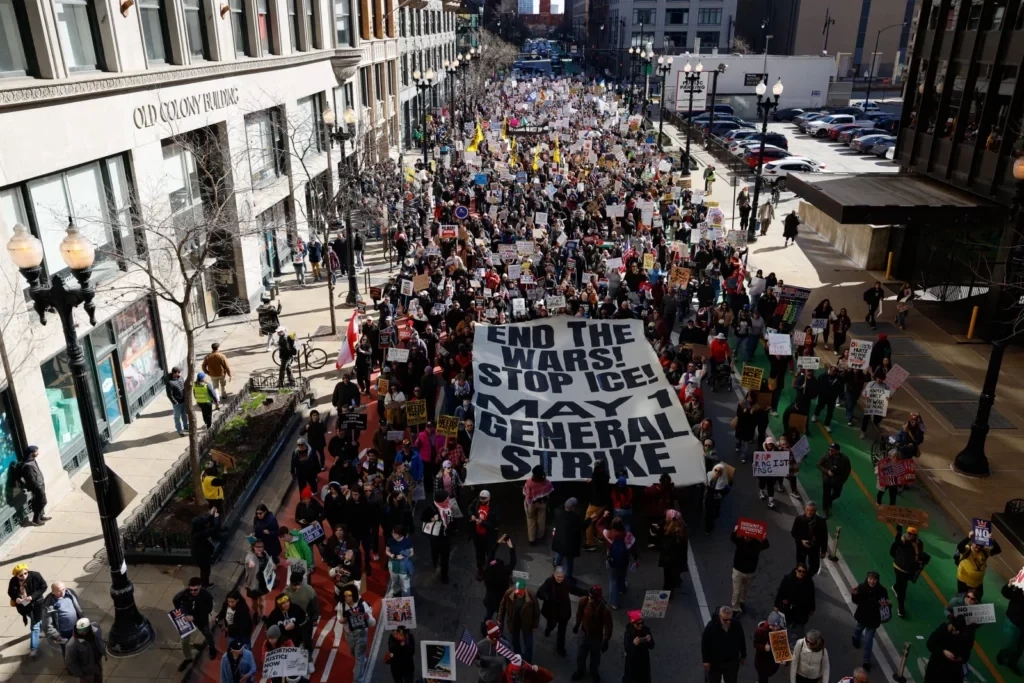
The third storyline putting the US under the international microscope is domestic instability. Indian news platforms dissect in detail the nationwide strike announced for April 5 in the US, “General Strike 2026” or “Strike26.” In an analytical piece on Dailyhunt the strike is portrayed as a large-scale grassroots movement aimed at creating serious economic disruption, demonstrating public dissatisfaction with the authorities and achieving social and political reforms. (m.dailyhunt.in) Indian commentators draw parallels with their own nationwide strikes and bandhs, noting that America, which for decades lectured others about stability and predictability, is beginning to resemble countries with chronically protest-prone politics.
Against this background the report of a shooting near the White House, which made the Hindi-language roundup of top news on AajTak, looks like another stroke in the portrait of America in deep internal strain. (aajtak.in) For the Indian audience this is not just a crime item: it illustrates how domestic political passions in the US increasingly spill beyond parliamentary procedures and court battles, affecting Washington’s ability to conduct long-term foreign policy.
Interestingly, in Israel the US’s internal crises are discussed with far less emotion. Against the backdrop of Hezbollah missile strikes, civilian evacuations and emergency government meetings, the main American-related question remains: will Washington continue arms supplies, preserve diplomatic cover on international platforms, and how will Trump — under an unrelenting wave of criticism for the escalation with Iran — behave? Israeli commentators closely follow the Congressional debate over limits on the president’s military powers and possible attempts to restrain the White House via the War Powers Act; Western press reports and “Wikipedia” summaries emphasize that even influential Republican congressmen fear Trump is dragging the US into a protracted war without a clear exit strategy. (ru.wikipedia.org)
The Israeli expert community adds its own concern: if new rounds of domestic political warfare over Iran begin in Washington, Israel risks being “alone” facing Tehran and Hezbollah. In an analytical piece by the Israeli center Dor Moriah on Syria and the US published even before the current escalation, it was emphasized that the usual reliance on American presence in the region is increasingly unreliable: polls showed Washington ready to withdraw troops even if that leads to an explosive rise in activity by radical groups. (dor-moriah.org.il) Now, amid the war with Iran, this motif — America as an unreliable, wavering ally — sounds even louder in Israel.
The general tenor of German and broader European reaction is an attempt to distance themselves from American logic without severing allied ties. The report of the UK convening a meeting of 40 countries on Middle East settlement without US participation, cited by Fontanka, is interpreted as an experiment: is it possible at all to discuss the security architecture in the Middle East without Washington at the table — at least at the level of consultations and “soft” coordination? (fontanka.ru) Cautious expert comments appear in the German press noting that the EU has already tried similar formats in the Ukrainian and Balkan contexts, and that the current crisis with Iran could push Europe toward a very different role: not the junior partner to the US, but an independent mediator between Tehran, Jerusalem and Arab capitals.
Finally, in Indian discussions about the US there is another, less conspicuous but telling motif: America as both a mirror and a negative example. Discussing “Strike26,” Indian commentators note that the radicalization of public moods and polarization in the US echo India’s own disputes — from agrarian protests to communal politics — while stressing the difference: in the US such movements are directly tied to global markets, the dollar’s exchange rate and world security. America’s internal crisis automatically becomes an external shock for everyone else.
If one gathers these disparate reactions together, a paradoxical image of the United States at the start of 2026 emerges. For Israel it remains the main security guarantor and vital ally, albeit increasingly anxious and unpredictable. For Germany and much of Europe it is simultaneously an indispensable military partner and a source of strategic instability that hits energy supplies and pushes for alternative formats without Washington. For India it is a critical element of the global economic system whose foreign-policy moves and internal crises directly affect Indian growth, but is not perceived as a moral or political guide.
The war with Iran and the struggle for Hormuz have become a convenient lens through which everything is visible: how Trump and American elites understand global power, how allies in Israel and Europe balance dependence and mistrust, and how countries like India learn to live in a world where the United States remains the strongest player but long ceased to be the sole director of the global stage.