At the center of current international debates about America three threads converge: the war of the US and Israel with Iran, the redistribution of American military presence in Europe, and Washington’s attempts both to dictate terms in the war between Russia and Ukraine and to distance itself from overly burdensome commitments. Germany, Russia and Ukraine view these processes as participants in the same conflict of interests, but each from its own side of the front.
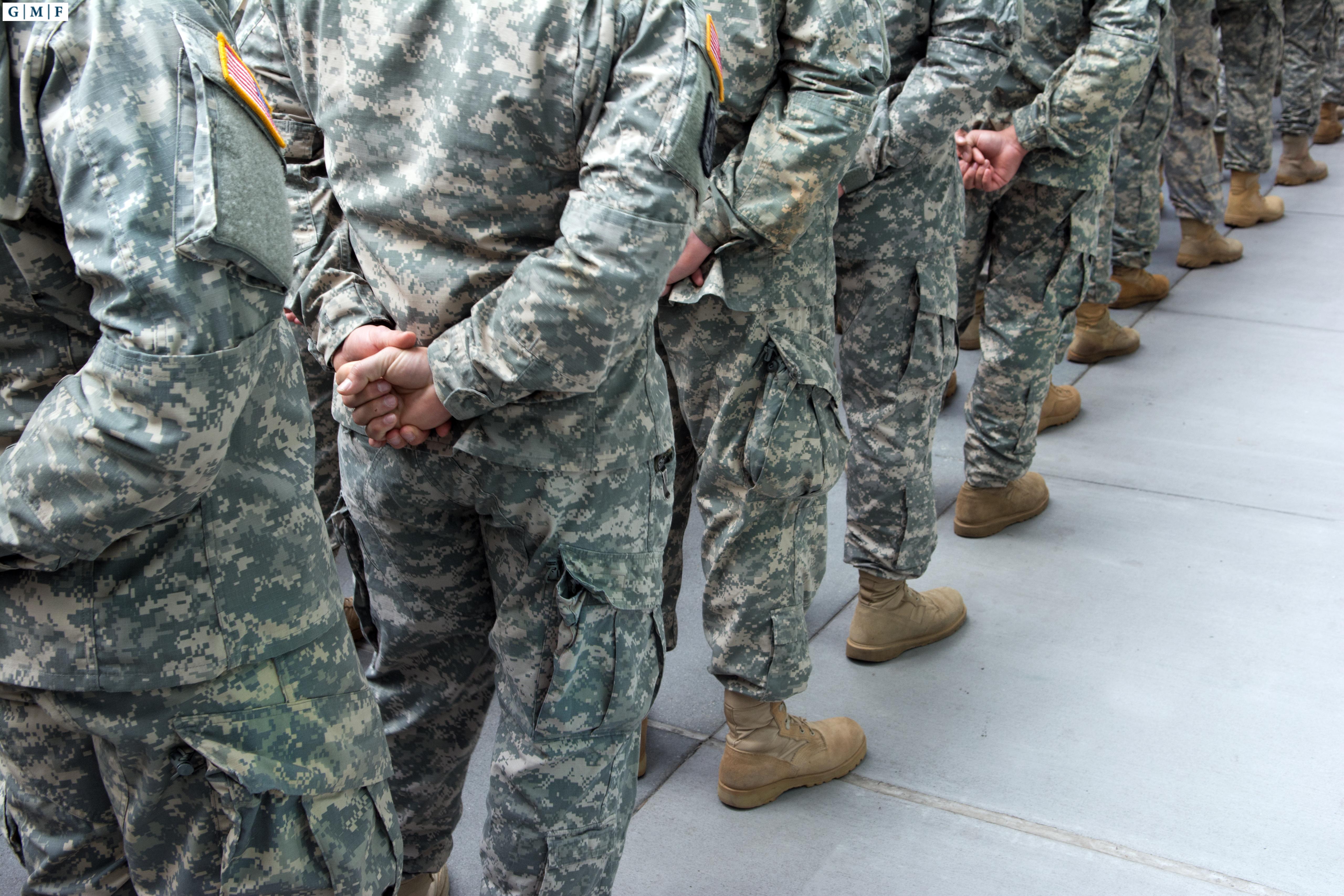
For European audiences, primarily German, the starting point was Washington’s decision to withdraw about 5,000 US service members from Germany, to forgo deploying a division of long-range missiles, and to cancel the rotation of 4,000 troops to Poland. Analysts in Berlin and Brussels interpret this as a consistent rollback of the classic US role as NATO’s "anchor" in Europe. A recent analytical review by the German Marshall Fund emphasizes that these steps inflict "serious damage to NATO’s deterrent potential" and undermine confidence in the predictability of American policy in the region.(gmfus.org) In the German debate a recurring motif is emerging: Washington is turning from guarantor of stability into a source of strategic uncertainty, and the European Union must plan how to live in a world where America can "leave" at any moment.
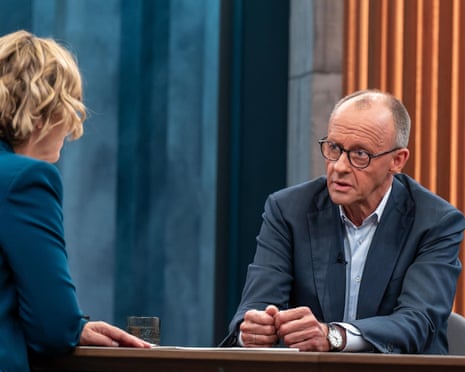
The political backdrop intensified after Donald Trump announced 25 percent tariffs on European car imports and tied them to criticism of Germany’s stance on the war with Iran. German commentators see this as a return to the logic of transatlantic bargaining from Trump’s first administration, but on a new, more dangerous level: the stakes have been raised not only in economics but in security. Reuters reports that Chancellor Friedrich Merz has entered into open conflict with the White House, and that his year in office has been marked by the "largest crisis with Washington in decades."(wtaq.com)
At the same time, Berlin’s official tone remains cautiously pleading: at the Munich Security Conference Merz effectively appealed to the US to "restore and revive transatlantic trust."(thelocal.de) German outlets quote his formula that "the train has not yet left" and that Europe does not intend to "give up" in efforts to reach an agreement with Trump, even after he cut military presence and engaged in a sharp dispute over the Iranian campaign.(theguardian.com) Public reaction is mixed: some experts see Merz’s course as inevitable realism — Germany still needs the American "nuclear umbrella" and NATO logistics; others call it strategic naiveté, since the US is demonstratively relegating Europe to a secondary theater.
The same reduction in US military presence and their focus on the war with Iran are interpreted very differently in Moscow. Russian state and pro-state media use the American turn as proof that the "era of unipolarity" is over and that Washington is no longer capable of holding multiple fronts at once. In a recent broadcast on the left-patriotic channel "Krasnaya liniya," political scientists close to the Kremlin argued that Europe, in their terms, "prevents the US from putting Kyiv in its place," and that Russia is entering a period of "very harsh confrontation" with the united West, where the United States can no longer unconditionally dictate the line to its allies.(rline.tv)
A similar motif appears in more academic Russian publications: US foreign policy is described as increasingly "isolationist" after decisions to withdraw from dozens of international organizations and agreements, which, authors argue, undermines America's "normative" leadership and opens room for maneuver for Russia and China.(ru.wikipedia.org) Here America appears not so much as a warring superpower as an overburdened hegemon forced to cut obligations. In the Russian narrative this is a window of opportunity: in Europe, where reductions in US contingents are interpreted as the "crumbling of NATO," and in the Middle East, where the war with Iran is presented to the Russian public as a new "trap" for Washington.
But while in the German and Russian discourses the driving question becomes: how reliable is America as a partner or, conversely, as an adversary — in the Ukrainian field the discussion is primarily about how the changing US course affects the chances of the state's survival. In analysis by the Ukrainian Institute for Politics the recent US and Israeli war with Iran is described as a factor that could radically change the dynamics around Ukraine. The authors write explicitly that in Kyiv there is a calculation: a swift and "victorious" American war in the Middle East would reduce the likelihood that Washington will compromise with Moscow over Ukraine.(uiamp.org) In other words, some Ukrainian analysts hope that a demonstration of force in Iran will cement the image of the US as a state that prefers victory "at any cost" rather than a conciliatory peace.
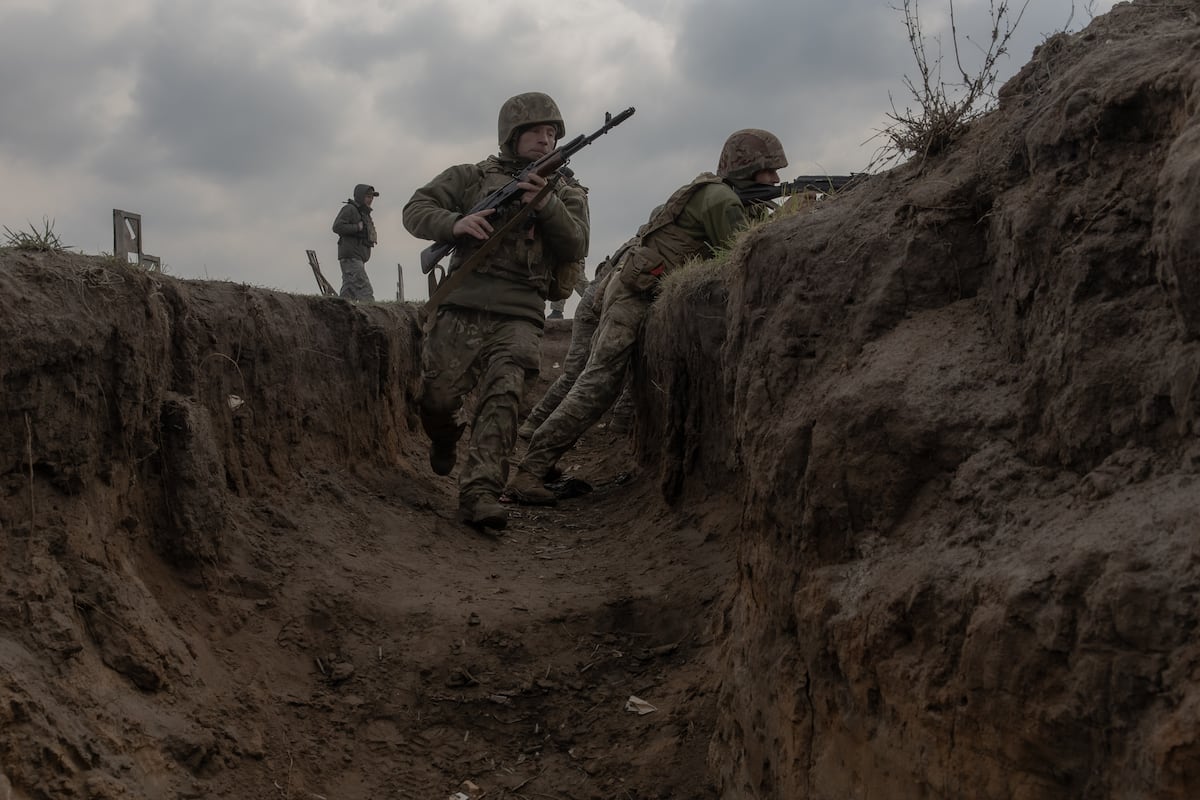
At the same time Ukraine keenly feels the wavering of American will. For Kyiv, the troop reductions discussed in Europe — in Germany and Poland — are not an abstract question of "balance in NATO," but a signal of possible weakening of the entire supply system through which arms and logistics flow. Ukrainian experts emphasize in their reviews that the European package of 90 billion euros and more than 60 billion dollars of military aid promised by NATO countries "effectively covers" Ukraine’s main critical needs for the next two years.(uiamp.org) But behind this optimism there is a hidden concern: if Washington at any moment can reallocate resources in favor of the Iranian theater or domestic projects, European allies will have to carry more, and their political societies are not always prepared for that.
Particular attention in the discussion was given to Donald Trump’s initiative for a three-day ceasefire between Russia and Ukraine in early May, accompanied by a proposal for a large-scale prisoner exchange.(defensenews.com) For Ukrainian commentators this is a double signal: on the one hand, any pauses in fighting and the release of prisoners are seen as tactical respite and a humanitarian necessity; on the other hand — many view "Trump’s ceasefires" as a dangerous logic of a top-down imposed peace in which Washington seeks to freeze the frontline without meeting Ukraine’s demands for restoration of territorial integrity. This is especially sensitive against the backdrop of Moscow’s stated conditions for ending the war — effectively capitulatory for Kyiv.
Russian state media, by contrast, present the same Trump initiatives as an example that even the US is "forced to recognize" frontline realities and seek a way to allow Ukraine to save face through temporary pauses and exchanges. Pro-Kremlin columnists advance the thesis: "America is tired of the war in Ukraine," and therefore sooner or later it will try to "force Kyiv to accept reality."(rline.tv) For a significant part of the Russian audience Trump remains a "less hostile" figure than his Democratic predecessors: as Russian commentators regularly remind, he initiated the current war in Iran and at the same time reduces US participation in multilateral institutions, which is perceived as the destruction of the "liberal order" Moscow has long criticized.
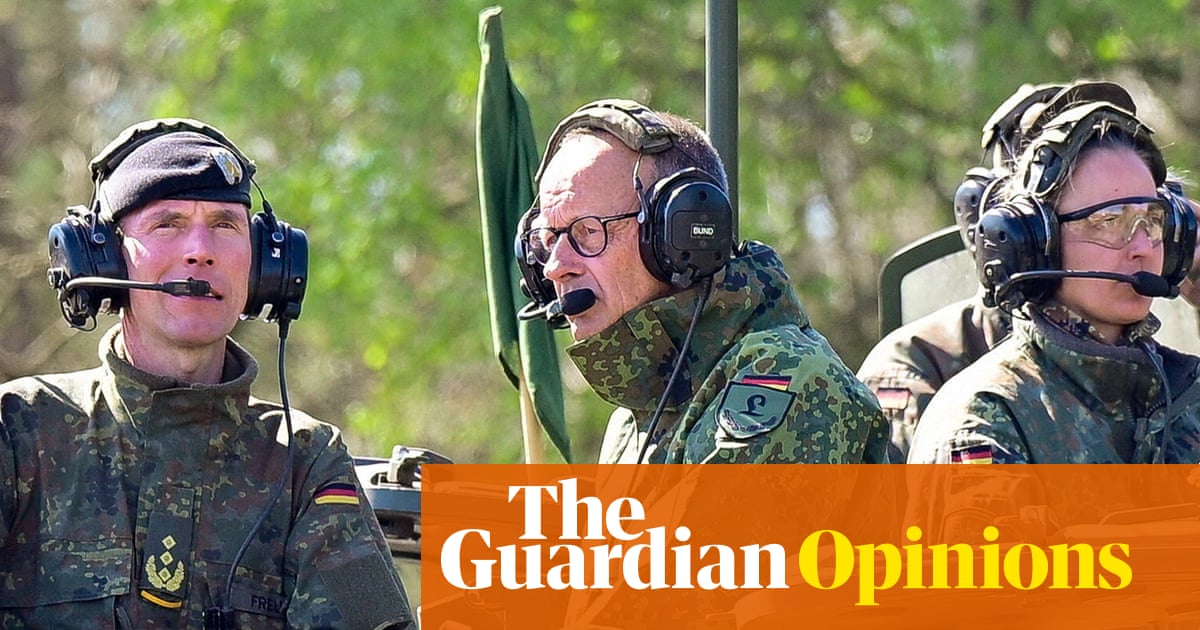
An interesting slice of the German debate concerns what Europe should do amid growing US unpredictability. In commentary across major German media, from public broadcasters to the international press, the argument is gaining strength that Germany must become a full-fledged military power, "but tightly embedded in European structures." In a column, a British newspaper, analyzing Merz’s appearances at Bundeswehr exercises, notes that the current buildup of German military power occurs against the backdrop of a weakening American presence and disagreements with Trump over Iran, and therefore Germany is forced to prove simultaneously to Washington and to its neighbors that it will not act alone.(theguardian.com) For part of the German public this is a painful metamorphosis: the postwar myth of Germany as a "civil power" ("Zivilmacht") is eroding, and in this process America unexpectedly acts as an external catalyst.
In Ukraine such debates are viewed through the lens of concrete expectations: can Europe, even with a weakened US role, provide critically important military support. When German experts talk about a "decline in the credibility of American guarantees," Ukrainian analysts are forced to operate in harsher categories — survival, resource exhaustion, depleted arsenals. Ukrainian reviews stress that European aid and loans are not charity but an element of a common Western strategy of containing Russia, in which the US, despite its wavering, still plays the role of main architect.(uiamp.org)
Against this background, the US and Israeli war with Iran has become a kind of litmus test of American power for the three countries considered. In the German mainstream there is strong anxiety: the war in the Persian Gulf, as European think tanks note, distracts Washington even more from the European theater and heightens the risk of "two-front overstretch."(investing.com) For many Germans it is also an emotionally painful déjà vu: the Middle East is again the arena of American power projection, but this time at a moment when Europe feels far less protected.
In Russia the Iranian campaign is presented as another proof of the "aggressive nature" of the US. Russian newspapers and officials emphasize the suffering of the civilian population, quote criticism of Trump even inside the US, and recall how some American politicians and activists called the conflict "the Epstein war," hinting at an attempt to distract attention from domestic scandals.(ru.wikipedia.org) This domestic political subtext in the US is actively propagated in the Russian information space: Russia seeks to highlight not only the brutality but also the cynicism of American policy — both in the Middle East and in Europe.
The Ukrainian perspective on the war in Iran is much more pragmatic and largely free of moral rhetoric. Kyiv’s analysts discuss how many resources the Pentagon and the US defense industry can sustain across two wars simultaneously, how this will affect supplies of ammunition and precision weapons, and whether a protracted Iranian campaign might lead the White House to seek a "quick deal" on Ukraine.(uiamp.org) In this sense for Ukraine America is not an abstract bearer of values but a concrete supplier of arms and a political broker whose decisions determine the frontline.
Interestingly, despite differences in position, Germany, Russia and Ukraine share a common feeling: the US is in a phase of internal polarization, and foreign policy increasingly is driven not by long-term strategies but by the short-term gestures of a specific president. Russian researchers, analyzing Washington’s current strategy, directly link foreign policy to domestic political struggle and the legal cases surrounding Trump.(we.hse.ru) German institutes, including party foundations, issue reports on how US trade policy is becoming an instrument of pressure on allies ahead of elections and internal constitutional disputes.(kas.de) In the Ukrainian discourse American domestic political turbulence is read as a chronic risk: any shift of mood in Washington can lead to a freeze in assistance or an attempt to coerce Kyiv into negotiations on terms far from Ukrainian goals.
The result is a paradoxical picture. Germany, formally one of the closest US allies, increasingly talks about the need to "insure" itself against American unpredictability by building its own military power, while continuing to plead with Washington not to dismantle the transatlantic framework. Russia, calling America a "constant threat," at the same time sees the weakening and fragmentation of American policy as a chance to strengthen its own positions and expand "non-Western" centers of power.(reddit.com) Ukraine, literally between these two poles, is forced to hope that even a polarized, overstretched America engaged in wars and conflicts will remain strong and interested enough not to allow Moscow to impose its peace.
America’s role in the world, reflected in the mirrors of Berlin, Moscow and Kyiv, today looks at once hypertrophied and being eroded from within. For Germany the US remains indispensable, but no longer without alternatives; for Russia it is the main adversary, but a weary, erring, and therefore — in the Russian view — vulnerable opponent; for Ukraine it is a vital ally whose mood must be followed daily. The war in Iran, troop withdrawals from Germany, Trump’s attempts to regulate the course of the war in Ukraine with short "ceasefires" — these are all links in one chain: America remains the center of world politics, but the more actively it acts, the more insistently others try to adapt to the idea that one day it may tire of carrying it all on its shoulders.