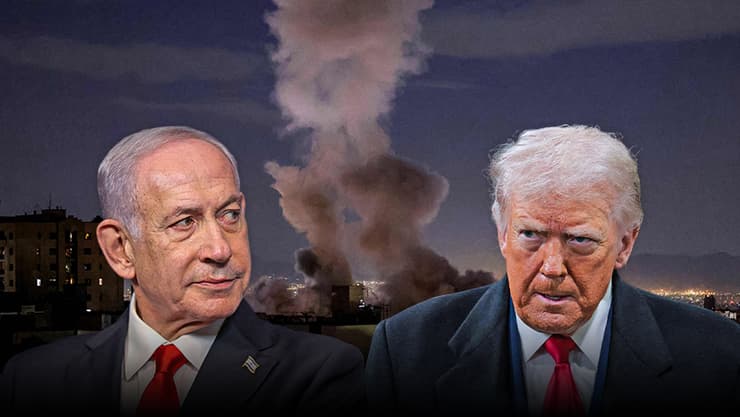
As of October 3, 2026, the main American story in Australia, Germany, and Israel is no longer a single statement by Donald Trump or yet another diplomatic gesture from Washington. In the local press, the United States appears to be a power simultaneously trying to wind down the old war in Iraq, keep its new war with Iran under control, and prevent foreign-policy chaos from completely undermining the president’s standing ahead of the November 3 midterm elections. All three countries are debating the same question: does Washington have a strategy—or is it replacing one with a cycle of threats, strikes, and negotiations?
The most prominent common theme is Iran. The Australian reaction is particularly painful because, for Canberra, the conflict ceased long ago to be a distant Middle Eastern drama. In an analysis for ABC, Laura Tingle compares the American withdrawal from Iraq with the current war against Iran and sees an almost mocking historical symmetry. Trump calls the Iraq campaign an “expensive excursion into hell,” yet he himself is waging a conflict that, in her assessment, has already entered its eighth month without a clear end goal. Australia’s concern is not only moral. High fuel prices, growing inflationary pressure, and the risk of further turmoil in energy markets turn America’s military policy into an issue for Australia’s domestic economy. In a September analysis, ABC columnist Alan Kohler directly links Trump’s war with Iran and US tariff policy to short-term inflationary shocks, calling a diplomatic exit the only realistic alternative to further escalation.
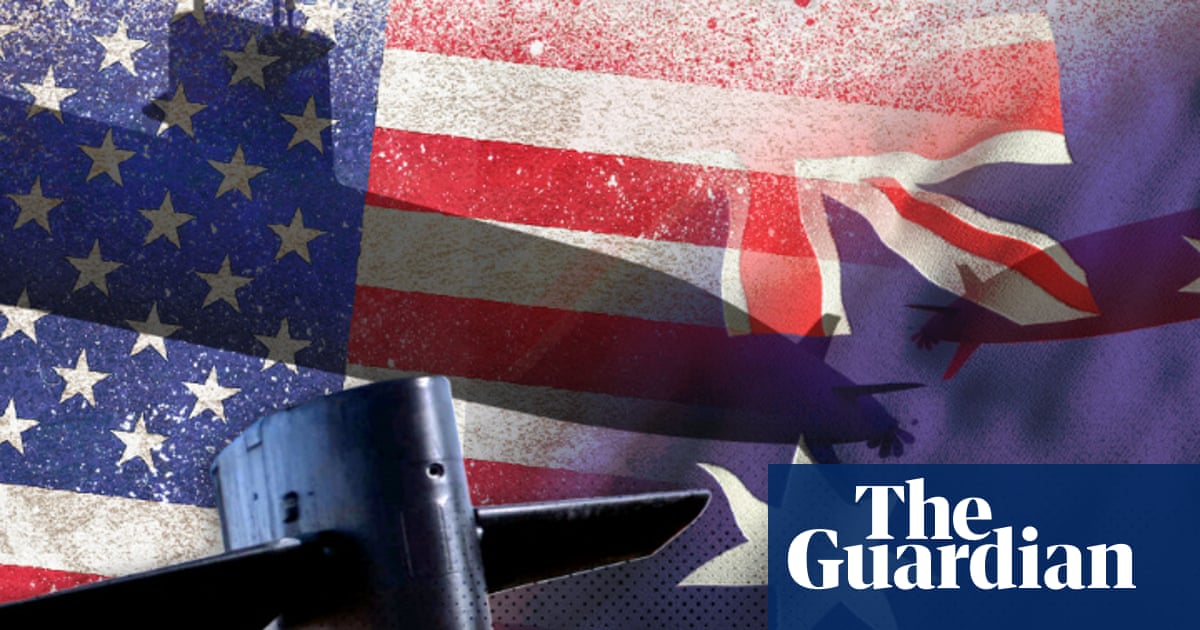
Behind this lies a deeper Australian concern: the alliance with the United States, once seen as insurance, is becoming a mechanism for entrapment. Lachlan Strahan, Australia’s former high commissioner to the United Kingdom, expressed the mood in particularly stark terms in The Guardian Australia: traditional allies are “uncomfortable” because Trump launched the war without a clearly defined destination and did not brief his partners on his plans. For Australia, this is not an abstraction. AUKUS, the US military presence, intelligence infrastructure, and deepening operational interoperability make the question not “should Australia support the United States?” but “can Canberra say ‘no’ to the United States at all?” This is what makes the Australian perspective unique: it criticizes not only the war, but also the dependence that makes disagreement with Washington politically and militarily almost impractical.
In Germany, the tone is different, but the diagnosis is similar. German commentators are far less concerned with Berlin’s direct involvement and much more with the collapse of predictability in American policy. The war with Iran is seen as a test for the international order on which Germany depends more than many other countries: for a middle power, rules, institutions, and law are not rhetorical embellishments but compensation for its own limited strength. That is why German discussion is particularly irritated by the difficulty of separating Trump’s military and negotiating tracks. When the president rejects an Iranian proposal, leaves open the possibility of new bombings after the elections, and at the same time speaks of a possible deal, it looks less like flexible diplomacy than the absence of a consistent political objective.
Germany is also closely watching how the war with Iran is returning to American domestic politics. Tagesschau writes about Republican candidates who are beginning to distance themselves from Trump a month before the election. In the German reading, the midterms are becoming not merely a vote on prices and US social policy, but a referendum on the president’s model of power. In a Deutschlandfunk commentary, journalist Anne Reidt calls the very idea of turning the campaign into a plebiscite on Trump risky: the president is not formally running, but he is asking voters to cast their ballots as though his name were on them. For Berlin, this is an important signal: a weakened Trump after the election may be less able to impose his will on allies, but also more inclined toward sharp, demonstrative moves in foreign policy.
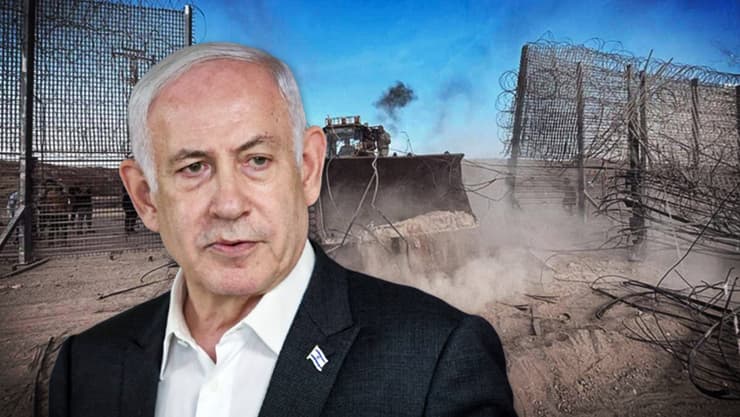
The Israeli debate differs because no one here doubts the centrality of American power—the dispute is over whose interests Trump is serving with it and what final configuration he is seeking. Israeli analysts do not automatically regard American threats against Iran as a guarantee of Israeli security. In a Ynet commentary, Eldad Shavit, a former senior member of Israel’s defense establishment, describes the White House’s approach as a combination of military pressure, economic coercion, and negotiations: Trump wants to force Tehran into a deal while avoiding an open-ended war. But Shavit emphasizes the fundamental difference in interests: ending a war does not mean eliminating a threat. For Israel, what matters is not only a ceasefire and freedom of navigation in the Strait of Hormuz, but verifiable restrictions on Iran’s nuclear, missile, and proxy infrastructure.
This explains the most characteristic skepticism in the Israeli press: Washington may regard as a victory an outcome that Israel would see as merely a pause. In another Ynet analysis, Shavit notes that the American president needs a “big,” marketable success, whereas Israel requires a much deeper change in the strategic reality. The divergence matters: the more Trump focuses on the domestic political effect ahead of the election, the greater the risk of an agreement that can be presented to American voters as peace but that Jerusalem would regard as incomplete and potentially dangerous.
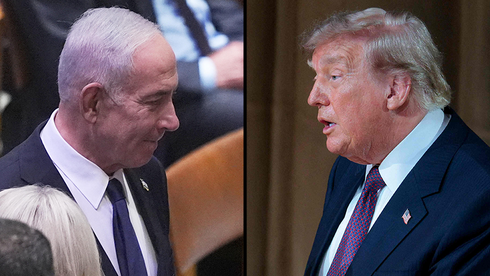
The second Israeli story is equally revealing: Trump’s unusual restraint toward Benjamin Netanyahu ahead of Israel’s October 27 election. In a Ynet report on Trump’s interview with Time, the president declined to publicly endorse Netanyahu, saying that he does not interfere in Israeli politics. In a country where the American president has traditionally been capable of becoming almost a domestic political factor, this is perceived as more than a neutral formality. It is a reminder that the alliance with the United States under Trump is personalized but not guaranteed: close relations between leaders do not change the fact that the White House acts primarily according to its own electoral and negotiating timetable.
The withdrawal of American troops from Iraq adds another paradox to the picture. The Australian press sees it as a warning: the United States can declare the end of a “quagmire” without resolving the consequences of its own presence. Germany reads it as a symptom of American weariness with long-term commitments. Israel, meanwhile, views it through the prism of Iran’s allies in Iraq and the possibility of a security vacuum. Trump himself is trying to present the troop withdrawal as proof of strength and as a correction of the mistakes of previous administrations, but placing this decision alongside the deployment of additional forces to the Middle East undermines the image of consistent isolationism. America is not leaving the region; it is changing the form of its presence—from a long-term mission to more abrupt, less predictable, and more politically theatrical interventions.
This produces a common Australian-German-Israeli conclusion, although each country reaches it for its own reasons. In Canberra, there is fear of losing sovereign choice within an alliance that has become too close. In Berlin, there is concern that American improvisation is weakening the order on which Europe’s security rests. In Israel, there is concern that America’s search for a quick political result will not align with the need for the long-term containment of Iran. The United States remains an indispensable player for all three countries, but it no longer appears to be a predictable leader. This duality—the necessity of America and growing distrust of the way it applies its power—is today the main international response to Washington.