In the final days of September 2026, the United States became more than just a foreign-policy factor for Russia, Ukraine and South Korea—it became a source of one shared concern: how durable are Washington’s commitments if American policy is increasingly subordinated to short-term deals, fuel prices, investment and the domestic political calendar? Local discussions revolve around different issues—the attempt by Donald Trump to launch a limited “energy truce” in the Russian-Ukrainian war, his willingness to scale back exercises with Seoul in exchange for contact with Kim Jong Un, and demands that South Korea accelerate multibillion-dollar investments in the U.S. economy. Yet in all three countries, America is perceived above all as a power that translates security into the language of benefits, production capacity and electoral expediency.
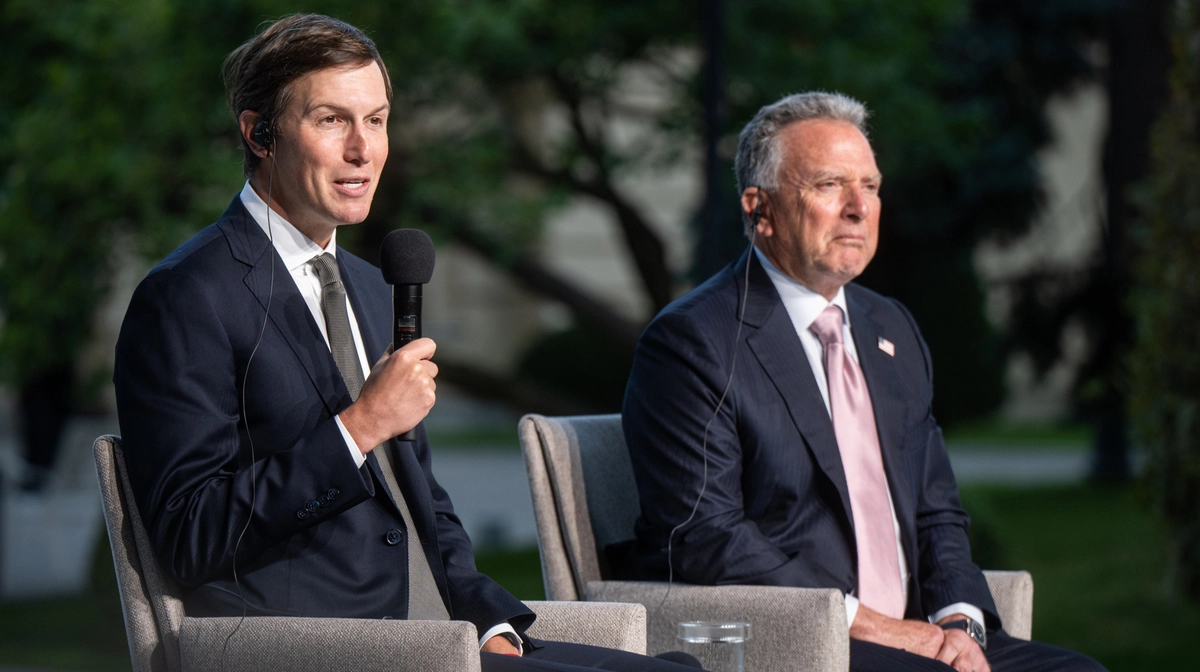
The most acute issue is U.S. mediation over Ukraine. In the Russian interpretation, it looks like Washington’s return to shuttle diplomacy, but not like a rejection of Russia’s basic demands. Russian commentators and official sources emphasize that after the September visits by Steve Witkoff and Jared Kushner to Moscow and Kyiv, the negotiating process once again became trilateral in form. Moscow, however, still links a settlement to territorial conditions, Ukraine’s neutral status and the absence of NATO forces on its territory. A RBC analysis stated this directly: America’s return to mediation does not cancel Russia’s previous negotiating position. (rbc.ru)
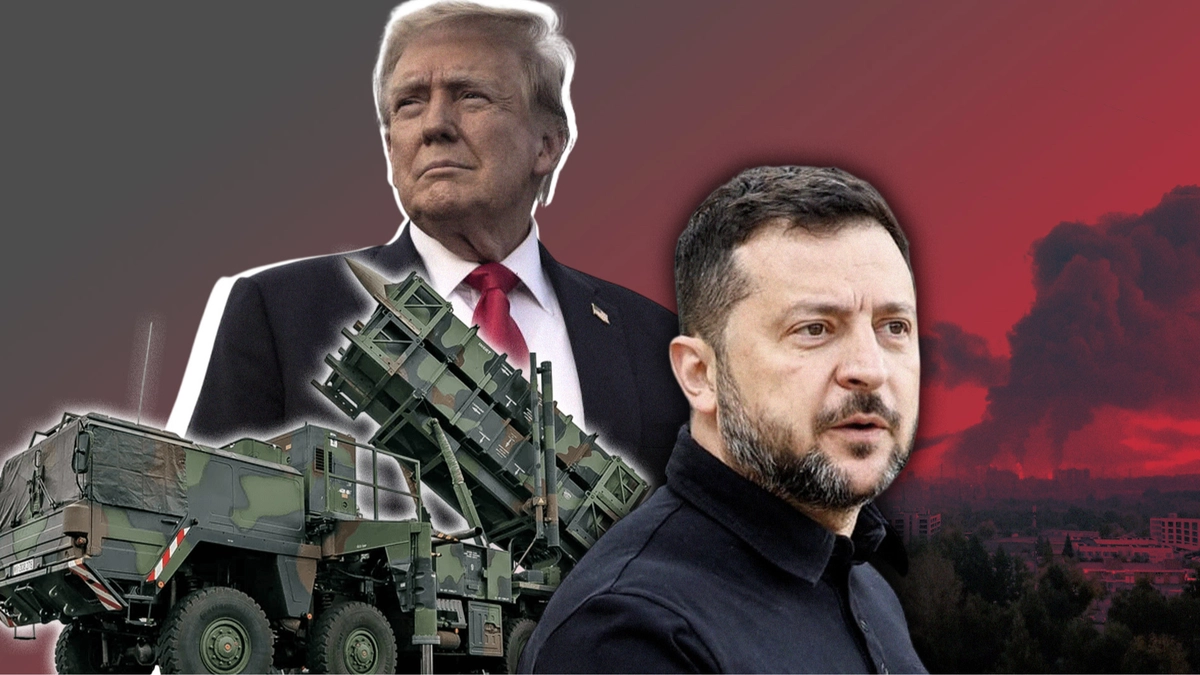
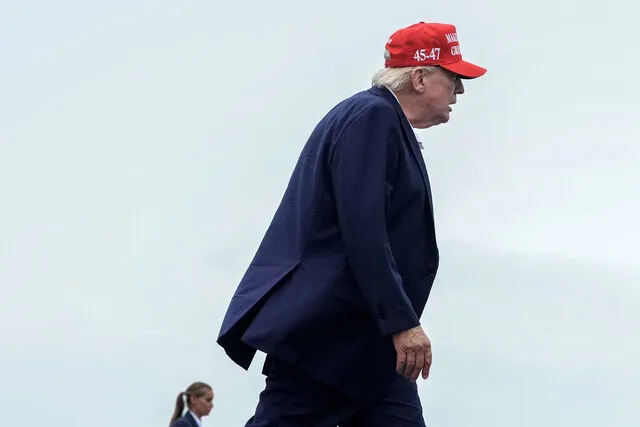
Particular attention in Russia focused on Trump’s public demand that Kyiv stop striking Russian oil-refining facilities, linking the issue to rising diesel prices. The Kremlin welcomed this framing: the Russian press described it as a rare instance in which the American president had effectively acknowledged the vulnerability of Russia’s fuel infrastructure while also making its protection part of his own domestic political interests. Reports of an alleged mutual agreement not to strike energy facilities were viewed in Russia less as a humanitarian initiative than as an attempt by Washington to stabilize the fuel market ahead of the U.S. midterm elections. (rbc.ru) In this logic, American mediation is useful to Moscow only as long as it limits Ukrainian strikes and does not demand political concessions from Russia.
In Ukraine, the same American activity is interpreted almost as a mirror image—as diplomacy in which Kyiv risks becoming the object of a deal. Ukrainska Pravda called the September 22 meeting between Zelenskyy and Trump “empty,” linking the White House’s interest in an energy truce primarily to American fuel prices rather than to Ukraine’s security needs. (pravda.com.ua) Kushner’s statement that an agreement would already exist if Ukraine agreed to surrender the territories demanded by Moscow was particularly painful in Kyiv. For Ukrainian audiences, this was not merely an unfortunate formulation by a negotiator, but evidence that in Washington peace may still be understood as an exchange of Ukrainian territory for a U.S. foreign-policy success. (pravda.com.ua)
The Ukrainian debate, however, is not limited to disappointment. It also reflects an attempt to adapt to Trump’s transactional style: Ukraine is being urged to become not a petitioner, but an American military-industrial partner. American political strategist Yuri Vanetik, in a column for Ukrainska Pravda, advises Kyiv to “read the law, not the handshakes”—to focus not on the warm tone of meetings, but on concrete decisions, including promised licenses to produce Patriot missiles and congressional pressure on the administration. (pravda.com.ua) This marks an important change in the Ukrainian view of the United States: Washington’s value is now measured not by promises of “support,” but by access to technology, contracts and joint production. Under this model, Ukraine may be useful to America as a holder of unique combat experience and drone technologies, but that usefulness does not yet amount to guaranteed protection. (pravda.com.ua)
South Korea’s response centers on the same problem of predictability, but in a more direct form: can an ally demand money, reduce joint exercises and seek a separate deal with North Korea at the same time? Trump’s decision in August to sharply scale back the Ulchi Freedom Shield exercises, explained by his “very good relationship” with Kim Jong Un, was perceived in Seoul as an unmistakable signal of his desire to resume direct U.S.-North Korean dialogue. Hankyoreh stressed that the instruction was issued immediately before the drills began, placing a political gesture above the alliance’s established military procedures. (hani.co.kr)
South Korean expert Andrei Lankov, in a column for Maeil Business Newspaper, warns that a possible Trump-Kim meeting could be driven by the U.S. president’s personal ambitions and his pre-election need for a striking foreign-policy result. His main fear is that Washington could offer Pyongyang too much—for example, easing pressure or further reducing exercises—without receiving genuine nuclear disarmament in return. (mk.co.kr) This perspective is especially revealing: for Seoul, the very fact of American dialogue with North Korea is not the problem. The problem is a negotiating style in which the interests of the main ally may become secondary to a spectacular bilateral deal.
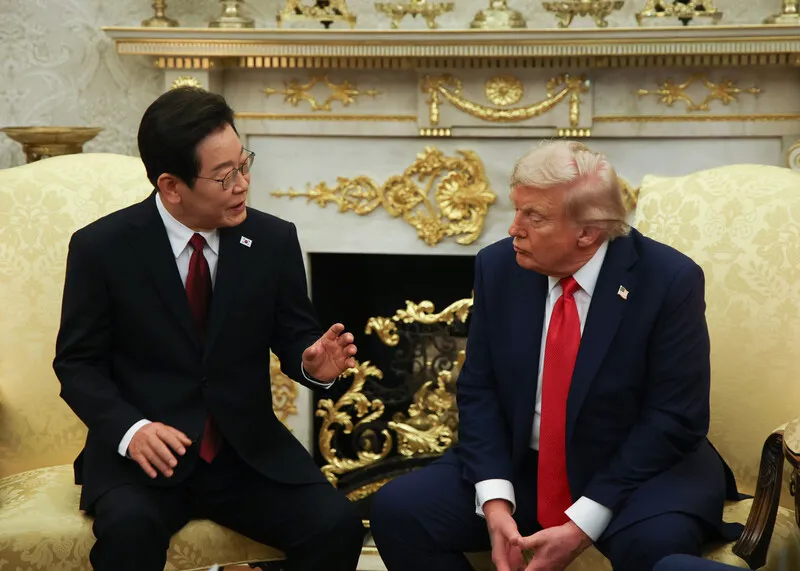
At the same time, the South Korean press is increasingly linking military dependence on the United States to economic dependence. In September, it became known that Washington was seeking tougher terms for Seoul’s investments in the U.S. economy: Hankyoreh reported that the United States had revised one of the mechanisms protecting the return of funds under a $200 billion investment agreement. (hani.co.kr) As a result, Presidents Lee Jae Myung and Trump’s talks in New York on a nuclear submarine fleet, nuclear-fuel reprocessing, shipbuilding and the transfer of operational control were perceived in Korea not as a collection of unrelated topics, but as a single bargain: investment and industrial cooperation in exchange for greater strategic autonomy and more reliable guarantees. (mk.co.kr)
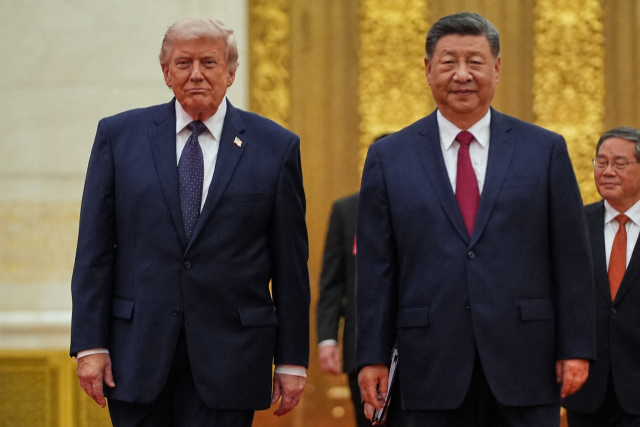
Unexpectedly, it is the South Korean debate that formulates most precisely the broader conclusion relevant to both Moscow and Kyiv. Professor Won Dong-wook, in an article for Pressian, proposes that Korea stop asking who will win the U.S.-China rivalry and instead determine what choices remain available to Korea itself in the new order of great powers. (pressian.com) The same applies to Russia’s war against Ukraine. Russia seeks to use America’s appetite for a quick deal to entrench its conditions; Ukraine is trying to turn its defense industry into an argument that cannot be ignored; and South Korea is looking for a way not to pay for the alliance through endless investments and unilateral concessions.
The principal international image of the United States today is not that of a declining superpower, but of a superpower that is increasingly open about putting a price on its involvement. For Russia, this creates an opportunity for negotiations in which American economic interests may limit pressure on Moscow. For Ukraine, it creates the risk of a peace measured by a map of territorial concessions, but also an opportunity to establish a foothold in the American defense industry. For South Korea, it is a reminder that even a longstanding military alliance does not eliminate the need to constantly prove its commercial and strategic value to Washington.