As of September 3, 2026, discussions about America in Seoul, Pretoria, and Kyiv are united not by a single event, but by a new sense of US unpredictability. Washington is simultaneously offering negotiations with adversaries, tying access to its market to investment inside the country, and scaling back its customary forms of international engagement. Yet in all three countries, this is provoking not an identical anti-American reaction, but a far more complicated question: how can they cooperate with a power on which their own security or economy still critically depends when that power is increasingly acting like a tough bilateral negotiator?
In South Korea, the most heated debate concerns the transformation of the alliance into an economic transaction. New US plans for tariffs on semiconductors are seen as more than a trade dispute: at stake is the foundation of Korea’s export model—Samsung and SK hynix, electronics supply chains, and investment in memory-chip production. As noted in an analysis by Ajou Economy, US Commerce Secretary Howard Lutnick stated the principle with utmost clarity: locate production in the United States and receive tariff relief; do not, and pay for access to the largest market. The Korean interpretation of this policy is that Washington is using not ordinary protectionism, but a “tax on the geography of production”: an ally is offered continued market access only at the price of moving part of its industrial base to America. (ajunews.com)
This explains Seoul’s unease over the Alaska LNG project, to which President Trump is once again inviting South Korea and Japan. In the local press, this is being read as package pressure: tariffs, investment in US plants, and participation in costly energy infrastructure are being placed in a single political basket. Professor Kim Sung-hyo, the author of an analysis in Weekly Donga, describes the situation as “all-out pressure” on Seoul: the threat now concerns not individual sectors, but the Korean stock market as a whole. In his account, Washington first secured promises of major investment in the United States in exchange for a lower tariff, and then gained additional leverage when implementation of those promises slowed. (weekly.donga.com)
For Korea, however, economic anxiety is inseparable from security. Trump’s attempts to renew direct dialogue with Kim Jong Un and the scaling back of some Ulchi Freedom Shield exercises are prompting a mixed reaction. On the one hand, easing tensions on the peninsula could support markets and open a path to diplomacy. On the other, Seoul fears that the US president could strike a symbolically impressive deal with Pyongyang without safeguarding Korean interests. Professor Park Won-gon of Ewha Womans University warns in a Yonhap article that without “ironclad” US–South Korean coordination, negotiations with the North could lead to Seoul’s effective exclusion from the process. This is the local meaning of the phrase Korea passing: not a rupture in the alliance, but the risk that decisions about Korea will be made without Korea. (yna.co.kr)
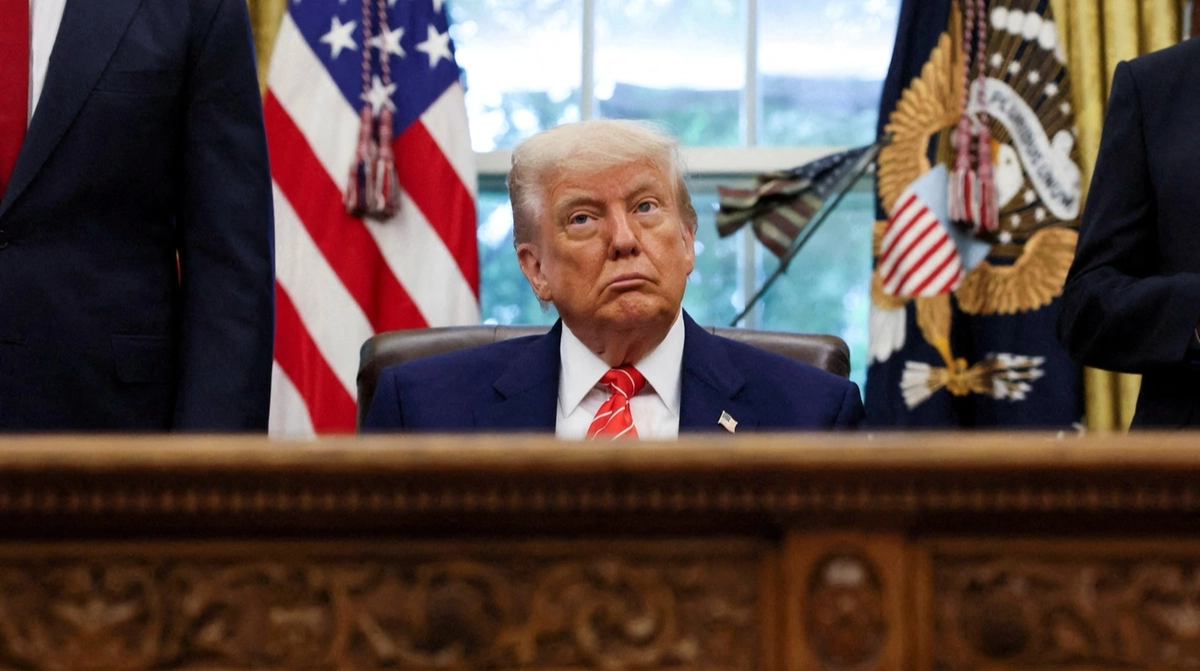
Ukraine’s reaction to America looks almost like a mirror image of Korea’s. Kyiv likewise fears diplomacy in which its fate is decided by great powers, but for Ukraine the cost of a mistake is measured not in investment and exports, but in territory, lives, and the stability of the front. Ukrainian media are interpreting Trump’s September 3 statement that he is ready to meet Vladimir Putin only when Putin is prepared to sign an agreement ending the war as a potentially tougher signal to the Kremlin. But there is little optimism in it: the same Ukrainska Pravda report emphasizes that on August 31, Volodymyr Zelenskyy cited intelligence indicating that Putin had no intention of ending the war. (pravda.com.ua)
Ukrainian public debate has therefore long developed a kind of immunity to Washington’s peacemaking rhetoric. Local analysts do not reject negotiations, but assess them by a practical criterion: do they lead to pressure on Russia, or to pressure on Ukraine for the sake of a quick deal? In a ZN.ua analysis, the cautious thaw between Trump and Zelenskyy is explained not by a change of mood, but by the fact that Russia’s intransigence and Ukraine’s military resilience have altered the White House’s political calculations. The main Ukrainian conclusion is almost cynical: America’s goodwill is not a constant; it must be reinforced by Ukraine’s own agency, battlefield results, and ability to offer the United States a workable strategy. (zn.ua)
South Africa views the same American transformation through a different lens—dignity, multipolarity, and the consequences of the United States abandoning its former role in the world. In Pretoria, irritation is caused not only by Washington’s tariff and diplomatic toughness, but also by the very logic through which it turns humanitarian aid, market access, and political recognition into instruments of punishment or reward. The winding down of US funding for HIV programs is especially painful: civil-society organizations warn that young women and girls are the first to be affected, while most programs are expected to end by late September. (apnews.com)
South African criticism, however, does not boil down to the slogan “America must pay.” Political philosopher Sarah Setlaelo formulates a deeper grievance in a Daily Maverick column: there is a shift “from cooperation to competition, from development to resource extraction, from multilateralism to transactionalism.” For a country that sees itself as a voice of the Global South and relies on BRICS, this is not merely a diplomatic change, but a test of its ability to act without paternalistic dependence on the West. (dailymaverick.co.za)
At the same time, South Africa’s reaction is noticeably more pragmatic than its sharp rhetoric. The new ambassador, Roelf Meyer, a veteran of the negotiations that ended apartheid, arrived in Washington not for an ideological confrontation, but with the task of rebuilding trust and expanding trade and investment. In an interview with Daily Maverick, he says that Pretoria still has friends among both Republicans and Democrats. This is an important local qualification to the widespread perception of South Africa as an unequivocally anti-American country: Pretoria’s elite is not seeking a break, but a more equal way to remain engaged with America. (dailymaverick.co.za)
The common thread among all three countries is not so much fear of American power as distrust of its inconsistency. For Ukraine, the United States remains an indispensable source of military and diplomatic support, but every American initiative is assessed for the risk of an imposed compromise with Moscow. For South Korea, the US alliance remains the foundation of deterrence against North Korea, yet it no longer guarantees protection from trade pressure and does not rule out Seoul being “bypassed” in negotiations with Pyongyang. For South Africa, America is still an important market, investor, and healthcare partner, but it is no longer seen as a reliable guardian of multilateral rules.
The most unexpected common feature of these reactions is the determination not to choose between submission and rupture. Kyiv is seeking influence over US strategy through its own resilience; Seoul is trying to turn dependence into coordination, without allowing trade concessions to replace security; Pretoria wants to respond to pressure by expanding ties with other centers of power rather than through isolation. In all three societies, America remains too powerful to ignore, but is now too transactional to simply trust.
![US President Donald Trump [Photo: UPI·Yonhap News]](https://image.ajunews.com/content/image/2026/09/03/20260903162236299934.jpg)