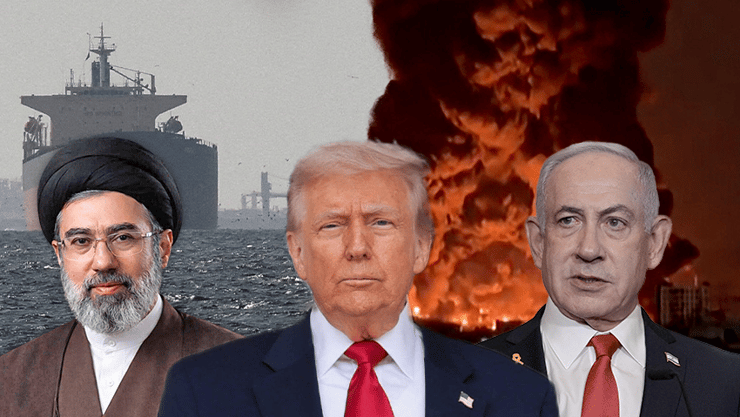
In recent weeks, the United States has been discussed in Saudi Arabia, China and Israel primarily not as an abstract superpower, but as the source of three interconnected risks: war involving Iran and the Strait of Hormuz, unpredictable diplomatic deals, and trade and sanctions pressure. The prevailing tone of local discussions is noteworthy: the three countries assess American objectives differently, but almost everywhere there are doubts that Washington can impose its terms, preserve regional deterrence and avoid paying too high an economic price at the same time.
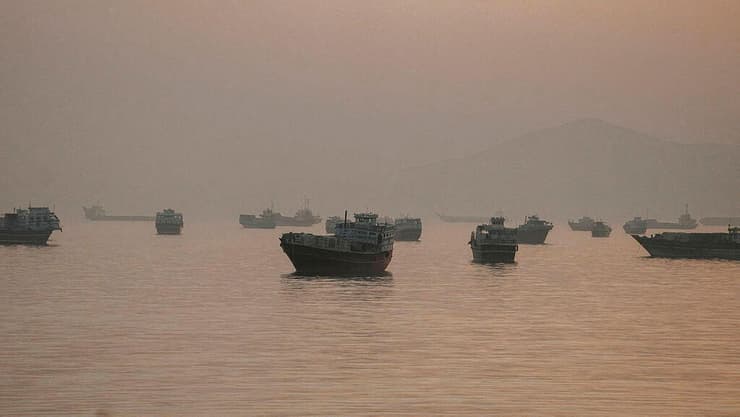
The main issue for Riyadh and Israel is the U.S.–Iran war, interrupted by negotiations, agreements and new clashes. Saudi Arabia’s response is based on a principle far more pragmatic than the familiar formula of an alliance with the United States: the kingdom’s security and freedom of navigation matter more than who is able to declare themselves the winner. In June, Saudi Arabia’s Foreign Ministry welcomed the U.S.–Iran agreement to halt military operations and launch 60 days of talks, separately emphasizing the need to restore navigational security in the Strait of Hormuz to the level that existed before February 28. Riyadh’s statement was particularly revealing in its demand that the “security interests of the countries of the region” be taken into account—in other words, that Washington and Tehran not be allowed to decide the fate of the Gulf bilaterally. This was reported by the Saudi newspaper Okaz.
In the Saudi press, however, this diplomatic hope was quickly replaced by a more anxious assessment. Political analyst Faiz al-Shahri, writing in a column for Al Riyadh, summed up the local view: American military superiority did not lead to Iran’s political submission, while Iran’s ability to restrict traffic in the Strait of Hormuz did not become a strategic victory for Tehran. His conclusion is particularly important: the United States has gained “deterrence without resolution,” Iran has achieved “survival without capitulation,” while the Gulf countries and energy markets remain hostage to the fluctuating decisions of two adversaries. After the June memorandum collapsed, Saudi publications spoke no longer of a breakthrough but of a new war of attrition: Washington cannot use force to ensure the strait remains open, while Tehran cannot keep it under threat indefinitely without also damaging its own economic interests. Okaz described this logic in detail in a July analysis.
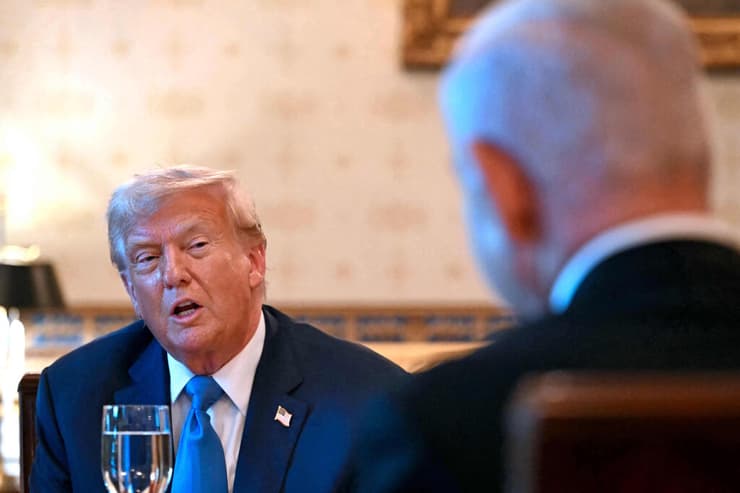
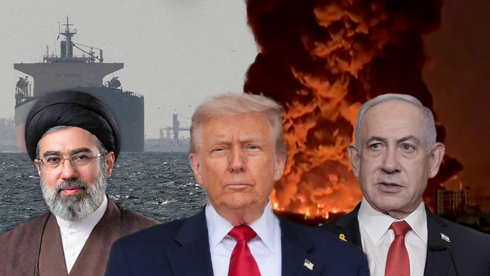
Israel sees the same U.S.–Iran dynamic through an entirely different trauma: the fear that the United States is prepared to strike a deal that reduces its own costs while leaving Israel alone with Iranian missiles, proxy networks and Tehran’s restored economic potential. In the Israeli debate, the strongest concern is not simply dissatisfaction with the terms of a possible agreement, but doubt about the reliability of American support itself. Journalist Itamar Eichner, in a commentary for Ynet, called Benjamin Netanyahu’s decade-long bet on Donald Trump a loss at “roulette”: in his assessment, Israel is facing not only external adversaries but also the gradual erosion of what was once solid American support. For part of Israel’s political establishment, the presumed American compromise with Iran looks in practice like a reward for Tehran—access to unfrozen assets, investment and postwar reconstruction—in exchange for commitments that have yet to be tested.
But Israel also has a less emotional, more military-pragmatic school of thought. Military correspondent Ron Ben-Yishai wrote in Ynet that the U.S.–Iran memorandum was a “bad deal,” but not a final verdict: negotiations could give Israel time, open a path toward an arrangement on the Lebanese front and expose internal divisions within Iran itself. This is an important split in Israel’s response. Some see the very fact of American negotiations as evidence that Washington is abandoning its ally; others believe Israel would benefit more from using American diplomacy as a pause rather than trying to derail it at any cost. In both cases, however, the starting premise is the same: Israel’s ultimate security cannot depend solely on American guarantees.
China’s interpretation of the same story is far less connected to an immediate fear of Iran and much more to the argument that America’s ability to manage the world order is diminishing. Chinese authors are not merely noting that Washington entered negotiations after applying military pressure; they interpret this as evidence of a structural weakening of American hegemony in the Middle East. Expert Liu Zhongmin, in an analysis for The Paper, argues that the agreement with Iran demonstrated a shift by the United States from “hard coercion” to an urgent compromise, while the course of the conflict reflects not an isolated failure but a shift in the regional balance of power. Another Chinese analysis in The Paper describes the current model as a new standard—“fighting and talking,” “talking and fighting”: official channels remain open, but low-intensity clashes continue because neither side can impose a lasting solution.
In Beijing, this picture has a dual meaning. On the one hand, an unstable Strait of Hormuz threatens China’s energy supplies and global trade, so China has an objective interest in de-escalation. On the other, America’s inability to turn military power into a political outcome reinforces China’s criticism of unilateral sanctions, coercive diplomacy and bloc-based thinking. The Saudi press also notes this feature of China’s position, though without illusions: in an Okaz article, Beijing is described as a “cold-balancing” player for whom Iran is important as part of an energy and geopolitical framework, but not as an ally for whose sake China is prepared to enter into direct confrontation with the United States. This is a rare point of agreement between Saudi and Chinese interpretations: neither side expects an external great power to defend someone else’s interests for free.
The second major line of discussion is U.S. trade policy. China is at the center of the conflict, but its implications are being closely followed in Riyadh and Israel as well. On July 28, China’s Ministry of Commerce stated that the United States had imposed additional 12.5 percent tariffs under Section 301 on China and dozens of other economies, even though the American side had previously promised during bilateral consultations not to raise substitute tariffs above 20 percent. In the ministry’s official response, Beijing characterized the measures as Washington’s retreat from its commitments. China’s response is therefore based not only on an accusation of protectionism: it portrays the United States as a country that first changes the legal instrument used for tariffs and then attempts to preserve the previous level of pressure under a new legal label.
For Chinese audiences, the connection between tariffs and the Middle East crisis is obvious: Washington simultaneously wants to preserve its technological and trade advantage over China, control the Persian Gulf’s energy artery and force Iran to make concessions. But Chinese commentators see this not as strategic coherence but as an overextension of American policy. Back in July, Professor Zhao Suisheng, speaking at a forum at Fudan University and publishing on Guancha, warned that America’s “overreaction” to China would have long-term negative consequences. His central point was that Washington had already developed a bipartisan consensus viewing China as a strategic competitor, but that this consensus was pushing the United States toward a policy of protracted crisis rather than managed coexistence.
The Saudi perspective adds a commercial dimension. Riyadh does not want to choose between Washington and Beijing: military cooperation with the United States, along with American technology and investment, is essential to the kingdom, while China remains a critical trade and energy partner. For Saudi Arabia, therefore, American pressure on China or Iran is dangerous not in ideological but in practical terms: it could turn investment routes, oil prices, shipping insurance and technology supply chains into tools of a rivalry between others. Israel, for its part, views the American trade and technology policy differently—as evidence that the United States is increasingly concentrating resources on global competition with China and is becoming less willing to finance open-ended conflicts in the Middle East indefinitely.
This is where a common, though not always explicitly stated, conclusion emerges across the three countries. Saudi Arabia wants predictability and protection of shipping from America, but demands recognition of its own interests. Israel wants firmness from America against Iran, but is increasingly unsure that personal relationships between leaders can substitute for institutional guarantees. China wants American restrictions and military campaigns to demonstrate the decline of American leadership, yet it also fears the chaos that harms energy supplies and global trade. America remains an indispensable power for all three; but it is no longer seen as a power capable of setting the rules alone and without consequences.