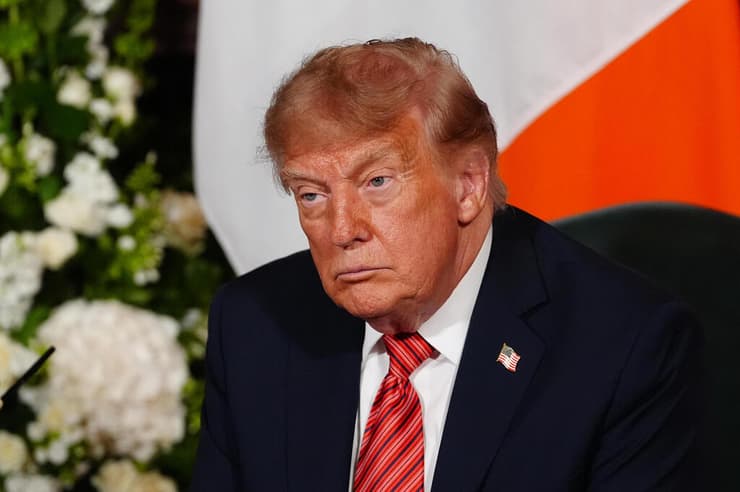
In the first days of October 2026, the United States is being discussed in France, Israel and Germany not as a distant superpower, but as a direct source of strategic uncertainty. At the center of attention are Donald Trump’s attempts to find a way out of the war with Iran, his increasingly selective attitude toward allies, pressure on Europe over Greenland and tariffs, and the noticeable intrusion of American politics into partners’ domestic campaigns. The common thread of these debates is simple: Washington remains indispensable, but is no longer seen as a predictable guarantor of order.
The most painful issue for all three countries is the Middle East, although the nature of their concerns differs. In Germany, the main focus is the risk of Europe being drawn into a war that Washington began with maximalist rhetoric but is now trying to end without a clear political result. In a Tagesschau commentary, ARD correspondent Martin Ganslmaier argued that Trump’s more restrained September speech at the UN reflected not diplomatic maturity, but pressure from American voters angered by the war with Iran, rising energy prices and the White House’s foreign-policy chaos. His description of the president as seeking a way out of a “dead end” precisely captures the German perception: the danger lies not only in escalation, but also in the possibility that the United States has no convincing plan for ending the conflict. (tagesschau.de)
In France, the criticism is more normative. Paris is irritated that American policy combines the use of force with disregard for international institutions, while leaving allies to deal with the consequences. French sensitivity is especially evident on the Palestinian issue. In a joint statement with the United Kingdom and Canada on September 8, the Élysée Palace called the expansion of Israeli settlements and settler violence a direct threat to a two-state solution, and announced plans to restrict imports from settlements and impose targeted sanctions. This is not merely a dispute with Israel; it is also a demonstration of an independent policy line against the backdrop of American diplomacy, which, in the French view, sometimes shields Israel and at other times abruptly distances itself from it, depending on Trump’s latest deal. (elysee.fr)
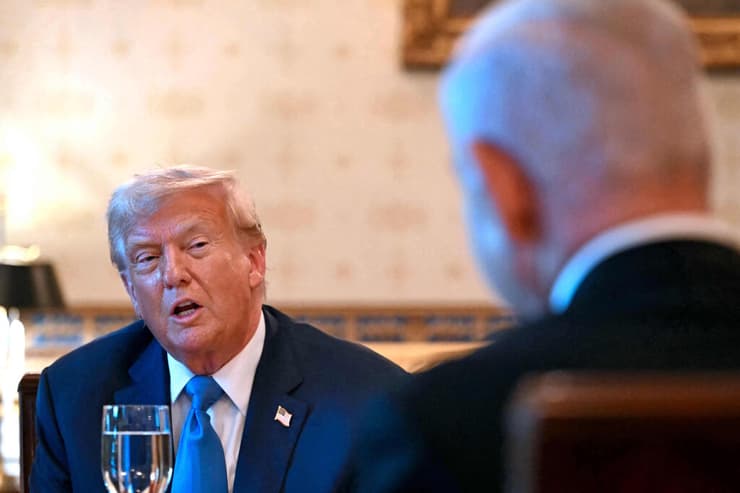
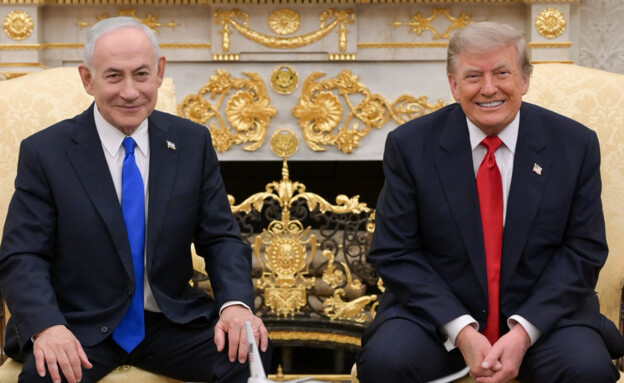
The Israeli reaction is the most paradoxical. Israeli commentators have no doubt that American military and political support remains critically important; what they question is whether a national strategy can be built on the personal closeness between Benjamin Netanyahu and Trump. In a column for Ynet, this calculation is described almost as a roulette loss: Netanyahu, the author argues, placed everything on Trump for too long and discovered that the US president might prefer a compromise with Iran to Israel’s expectation of Tehran’s complete defeat. The most important Israeli conclusion is this: the problem is not the disappearance of the US-Israeli alliance, but its transformation from a stable institution into a variable dependent on one person’s mood and priorities. (ynet.co.il)
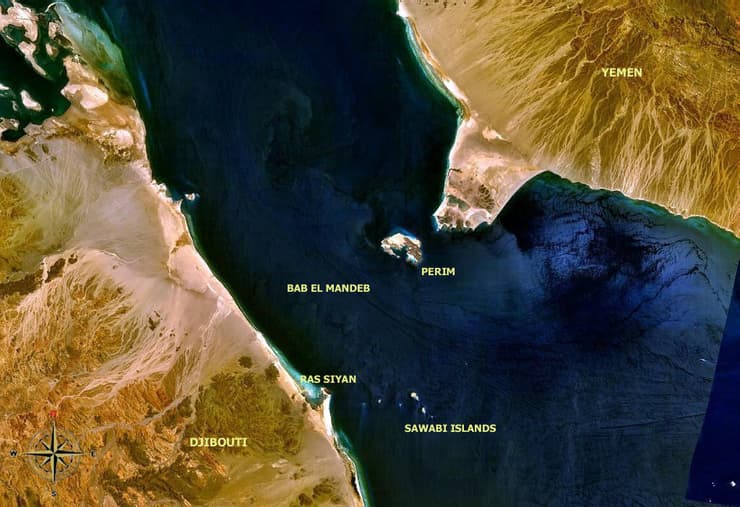
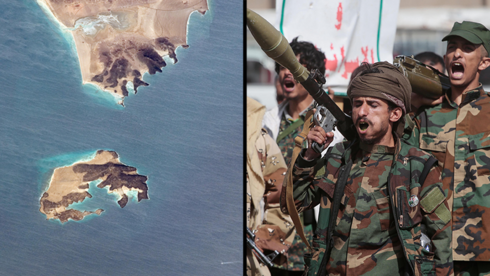
This concern is intensified by the situation in the Red Sea. In the Israeli press, American restraint toward the Houthis is being read not as an isolated episode in the war in Yemen, but as a test of the reliability of the entire regional deterrence system. Ynet writes of the risk that the Houthis, by controlling the Bab el-Mandeb Strait, could turn it into leverage against both Israel and global trade. Israel is therefore debating more than missiles or shipping routes: it is trying to determine whether America is truly prepared to defend the established regional order—or whether it prefers to negotiate with those it promised to deter only yesterday. (ynet.co.il)
The second common thread is disappointment with the American alliance as a system of rules. This issue is especially close to the French and Germans because of the January crisis over Greenland, when Trump linked territorial claims with tariff pressure on Europeans. Even after the September agreement between the United States, Denmark and Greenland, the concern has not disappeared: the American side spoke of permanent control over the island’s security, while Copenhagen and Nuuk emphasized the preservation of sovereignty and Greenlanders’ right to self-determination. For Berlin, this became not an exotic North Atlantic story, but a lesson that NATO no longer guarantees an automatic convergence of interests on both sides of the Atlantic. (amp.dw.com)
German debates are therefore increasingly framed not around the traditional question of “how to preserve transatlantic unity,” but around a much tougher one: how to reduce Germany’s vulnerability to American economic and political coercion. In a January analysis for Die Zeit, tariffs against Germany were directly linked to the Greenland dispute; the automotive, engineering and chemical industries were identified as particularly vulnerable. A later assessment by Tagesschau was more measured: some German companies adapted by localizing production in the United States. But that is precisely the unpleasant political result for Berlin: even if an export catastrophe did not occur, American tariffs still force German businesses to move decisions, investments and supply chains wherever Washington directs. (zeit.de)
The French reaction is more emotional and political. Paris sees today’s America not simply as a partner with different interests, but as a power prepared to punish even close allies for publicly disagreeing with it. The story of the French ambassador in Washington became symbolic. As Le Monde reported, the United States delayed the appointment of a new French envoy after a critical French message about Washington’s vote on the mandate of the UN High Commissioner for Human Rights. Paris had to issue what was effectively a conciliatory statement. To the French elite, this is humiliating not because diplomats are incapable of smoothing over conflicts, but because Washington used a routine personnel matter to discipline an ally. (lemonde.fr)
This is where the French and German emphases diverge. In Germany, pragmatic concern prevails: America cannot be replaced quickly, so Europe needs stronger defenses, a unified trade policy and the ability to avoid panicking in response to every American impulse. In France, the language of political dignity and “strategic autonomy” is heard much more often. Former French Foreign Minister Dominique de Villepin, in an assessment cited by Le Monde, framed this as a need for clarity: Europe risks losing its very political essence if it accepts the new American “grammar” of force and coercion. (lemonde.fr)
The third theme is the transformation of American domestic politics into a factor in the domestic politics of its allies. In France, Trump has become not only a foreign-policy problem, but also a mirror for the upcoming 2027 presidential campaign. In a February column for Le Monde, journalist Solenn de Royer noted that his policies—tariff blackmail, claims on Greenland and tough immigration measures—are forcing French parties to take positions not in an abstract debate about “Trumpism,” but on the rule of law, migration and attitudes toward state power. The American example functions in France both as a temptation for some on the right and as a warning to centrists and the left. (lemonde.fr)
In Israel, American influence is even more direct: it is woven into the election campaign ahead of the Knesset elections on October 27, 2026. Trump recently refused to publicly support Netanyahu, saying that he did not know whom he would find it easier to work with, and separately rejected claims that the Israeli prime minister had received advance warning of the Hamas attack on October 7, 2023. In the Israeli reading, this is not neutrality, but a signal: the White House does not want to tie itself unconditionally to a candidate whose political future has become uncertain. (mako.co.il)
The most unexpected local observation comes from Israel itself. A poll by the Israel Democracy Institute shows that only 41% of Jewish respondents believe Israel’s security is an important consideration for Trump, compared with 64% in March. This does not mean that sympathy toward the United States has disappeared; it means that the belief that even a friendly president will necessarily act primarily in Israel’s interests is eroding. (idi.org.il)
A new international picture is taking shape. France responds to America in the language of sovereignty and law, Germany in the language of reducing dependence and institutional safeguards, and Israel in the language of existential necessity mixed with bitter distrust of personal diplomacy. But all three countries agree on the essential point: Trump’s United States remains too powerful to ignore and too unpredictable to rely on unconditionally.