By October 8, 2026, the debate about America in Australia, Türkiye and Brazil had become less and less about assessing Donald Trump’s personality. In three very different countries, the United States is primarily seen as a power that simultaneously demands loyalty, uses economic pressure and is prepared to revise previous commitments when doing so serves its short-term interests. But local conclusions differ: in Australia, the debate centers on the price of an almost unconditional alliance; in Türkiye, there is a rare diplomatic window for restoring the military partnership, although its fragility is not forgotten; in Brazil, US tariffs are increasingly interpreted as interference not only in trade, but also in the country’s sovereign right to set its own rules.
The most common theme is Washington’s unpredictability. ABC commentator Laura Tingle captured the core of the local debate particularly precisely in her analysis: over the past year and a half, the main question in world politics has no longer been simply whether the United States is a reliable ally, but the “cost” of such an alliance. For Canberra, this is particularly painful because of AUKUS, the agreement with the United States and the United Kingdom on nuclear-powered submarines and technological cooperation, which has become a central element of Australia’s defense strategy. Australian critics are not calling for a break with America—China remains the main strategic challenge—but they are demanding that dependence no longer be presented as independent policy. (abc.net.au)
This concern is heightened by the fact that US military commitments now coexist with trade pressure. After a temporary tariff expired, Washington imposed a 12.5 percent tariff on Australian exports, linking it to complaints about compliance with the ban on goods produced using forced labor. In an ABC report, this is described not only as a commercial nuisance but also as a source of strategic uncertainty: the country Australia relies on most for its defense is simultaneously prepared to punish it economically. (abc.net.au) This is why the Australian reaction contains an almost paradoxical consensus: the alliance is necessary, but conspicuous closeness to Trump is politically toxic at home. According to data cited in Patricia Karvelas’s analysis, approval of Trump’s actions among Australians had fallen to 27 percent, while 66 percent disapproved. (abc.net.au)
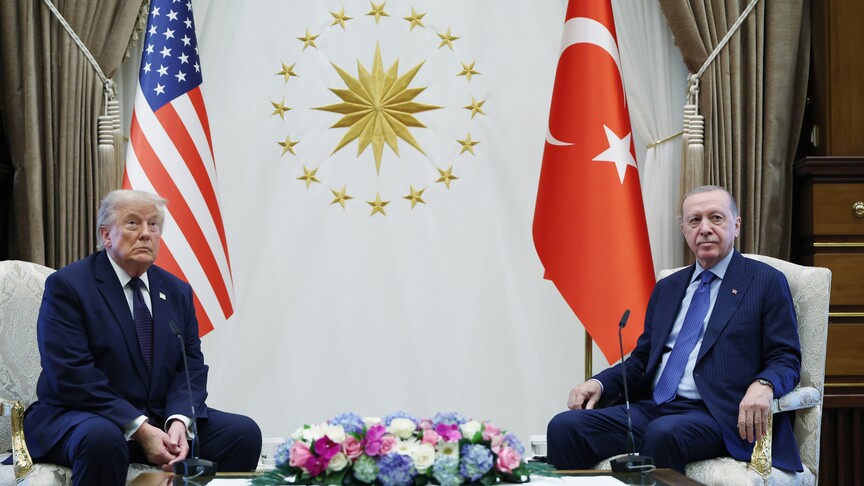
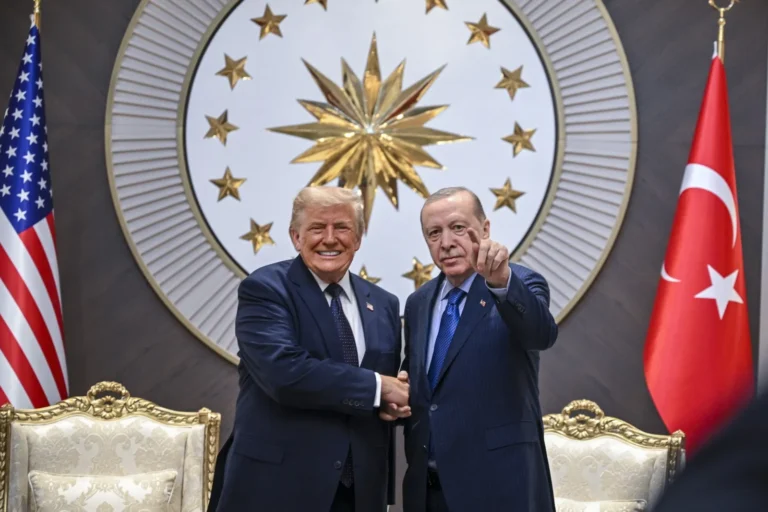
In Türkiye, the same transactional approach by the United States is viewed much more pragmatically. Ankara saw in it an opportunity to restore what had been frozen because of its purchase of Russian S-400 systems: the lifting of CAATSA sanctions and, potentially, access to F-35 fighter jets. During the July NATO summit in Ankara, Trump promised to lift the sanctions, saying that the United States should not punish “friends,” and allowed for the restoration of F-35 sales; Erdoğan, in turn, said he had received a promise concerning five aircraft. Anadolu presented this as a significant turning point in relations between the two countries. (aa.com.tr)
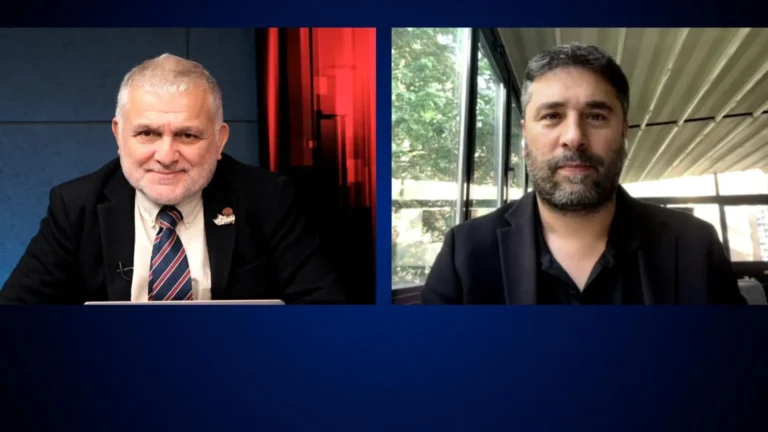
Outside the official rhetoric, however, caution rather than euphoria prevails in Türkiye. In a Medyascope discussion, political analysts Gönül Tol and Ömer Taşpınar emphasized that the sanctions and the S-400 issue do not disappear because of personal rapport between presidents: there are US laws, Congress and NATO’s technical concerns. (medyascope.tv) In a broader Medyascope article about a new geopolitical era, the rapprochement between Trump and Erdoğan is explained not by friendship as such, but by changing US calculations: Washington, having grown cooler toward its European allies, needs Türkiye as a regional counterweight in Syria, around Iran and on NATO’s southern flank. (medyascope.tv) This is an important Turkish perspective: America may give Ankara room to maneuver, but only as long as their interests coincide. The promise of F-35s is therefore seen more as a bargaining asset than as restored trust.
In Brazil, US policy is discussed even more harshly, because here the pressure is expressed directly through tariffs. Washington imposed a 25 percent tariff on a significant portion of Brazilian imports and then added a 12.5 percent tariff linked to US allegations that Brazil was not doing enough to counter imports of goods produced using forced labor. In a report by Agência Brasil, Lula’s government called the measures unjustified; the US side linked its complaints, among other things, to Pix—the national instant-payment system—as well as access to the ethanol market and digital regulations. (agenciabrasil.ebc.com.br)
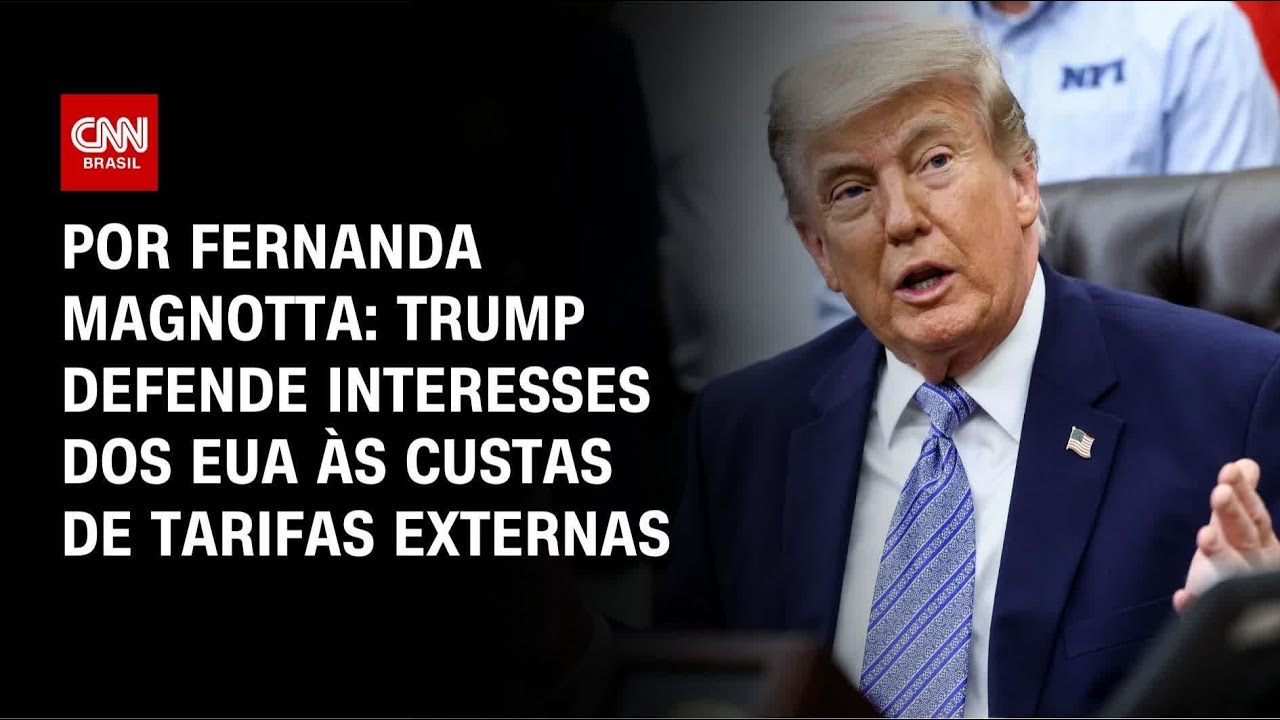
Pix has become a symbol of Brazil’s reaction. To the US Commerce Department, it is part of a disputed digital policy; to many Brazilians, it is convenient national infrastructure whose success irritates US payment and technology corporations. In an analysis by CNN Brasil, the tariffs are described as an instrument of US reindustrialization at the expense of external partners, while the accusations against Brazil are portrayed as politically charged and at times contradictory. (cnnbrasil.com.br) Brazilian criticism therefore goes beyond the usual dispute over rates: it concerns an attempt by Washington to determine which technological, environmental and anti-corruption standards are acceptable in another sovereign democracy.
At the same time, Brasília does not want to turn resistance into a trade war. In a Folha de S.Paulo report, government sources described the August talks as a cautious continuation of dialogue without inflated expectations. (www1.folha.uol.com.br) This approach reflects an important local dilemma: public and political sentiment demands a response to US pressure, but exporters fear that reciprocal measures could pull the country into a spiral of sanctions in which America’s financial and technological leverage would prove stronger. In a column for Correio Braziliense, this logic is described as a mixture of electoral calculations and the interests of Trump’s circle, rather than a neutral defense of free trade. (correiobraziliense.com.br)
Comparing these reactions reveals the main point: America remains indispensable, but no longer seems predictable. Australia fears that dependence on the United States will limit its freedom precisely when an independent decision is needed; Türkiye is trying to use Trump’s personal diplomacy without forgetting that its results may be overturned by Congress or by another shift in US priorities; Brazil is defending its sovereignty but is forced to reckon with the asymmetry of economic power. The most unexpected common conclusion among local commentators is that the problem for US allies and partners is no longer whether to support Washington, but how to support it without becoming a bargaining chip in its next deal.