In recent days, the image of the United States in Japanese, Brazilian and Russian debates has taken shape not around a single news story, but around a shared impression: Washington is simultaneously demonstrating its power, demanding loyalty from its partners and increasingly changing the rules unilaterally. The most discussed developments have been the sharp reduction in U.S.–South Korean exercises, the U.S. war with Iran and the dispute over the Strait of Hormuz; for Brazil, there has also been direct political and economic pressure from Donald Trump’s administration on the eve of the presidential election. In each of the three countries, these events are viewed through the lens of their own vulnerabilities, but the overall conclusion is similar: American policy is becoming more transactional, while alliances and international norms are becoming less reliable sources of support.
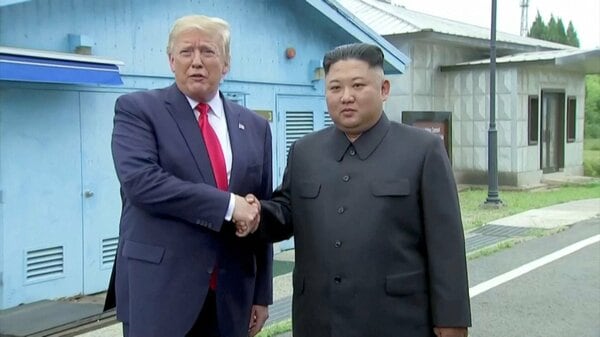
This was particularly evident in Trump’s August 16 decision to sharply reduce U.S. participation in the Ulchi Freedom Shield exercises with South Korea. The president explained the move by citing his “excellent” personal relationship with Kim Jong Un, the high cost of the drills and the fact that they supposedly sent Pyongyang a “hostile signal.” In Japan, the move was seen not as a narrowly Korean episode, but as an alarming signal for the entire deterrence architecture of Northeast Asia. An FNN analysis states directly that the U.S. war with Iran has already begun producing “unexpected consequences” for Asian security: the diversion of American resources and the political decision to scale back the exercises are giving China an opportunity to demonstrate its military strength more actively near Japan, the Philippines and Indonesia. For Tokyo, where any scenario involving a crisis around Taiwan automatically affects Okinawa, the southwestern islands and U.S. bases, the problem is not the five days by which the exercises were shortened, but the precedent: an ally’s defense readiness can be reconsidered in a single post by the American president. (fnn.jp)
Brazil’s reaction to the same Trump decision is even more blunt and almost entirely free of illusions about the diplomatic value of personal relationships. Igor Gielow, a columnist for Folha de S.Paulo, argues in the article “Trump Flirts with Kim and Risks Seeing a Nuclear South Korea” that Washington is effectively pushing Seoul toward considering its own bomb: if the American guarantee depends on the current deal, Trump’s mood or demands to participate in another war, dependence on the United States becomes a risk. This is an important Brazilian reading of American policy: the issue is not only North Korea, but also the fact that allied commitments increasingly look like a commercial contract with a changing price. Brazilian commentators see this as a model of Washington’s behavior that could apply equally to Latin America, Europe and Asia. (www1.folha.uol.com.br)
In Russia, the same development is viewed less through the fate of the U.S.–South Korean alliance and more through the weakening of America’s ability to handle several crises at once. Russian debate is particularly focused on Iran. After the 60-day deadline for reaching an agreement between the United States and Tehran expired on August 17, Kommersant summed up international assessments with the formulation that Trump had “not so many levers for achieving the goals set at the beginning of the war.” The Russian interpretation here is twofold. On the one hand, American pressure is described as a failed attempt to quickly force Iran to capitulate. On the other, the practical cost of the war is emphasized: the United States has to take into account the depletion of its stocks of precision weapons and interceptor missiles, while the Persian Gulf states are seeking new air-defense systems. In this picture, Washington is not merely waging war against Iran: it is using up resources that could support its military presence in other regions, including Asia. (kommersant.ru)
Japan views the Iranian crisis primarily not as a geopolitical contest, but as a threat to its own economic security. According to data cited by JETRO, Japan receives 91% of its imported oil from countries dependent on the Strait of Hormuz, while the total volume of such imports had already fallen by 64% in April. As a result, Japan’s discussion of the U.S. war with Iran is notably down-to-earth: it is not about who will win, but how much oil will cost, whether LNG supplies will continue and how long industry can function amid disruptions. There is a particularly revealing local insight here: for island nation Japan, Trump’s dispute with Tehran over the strait is not a distant Middle Eastern drama, but a potential blow to prices, production and the country’s energy sovereignty. (jetro.go.jp)
Brazilian commentators view Hormuz through a different lens—that of the law of the strong. When Trump began talking about the possibility of declaring the strait American territory, Brazilian media focused less on the technical feasibility of such a statement than on its exposure of the underlying foreign-policy approach. In a CNN Brasil report, experts stress that actual control over the strait is far more complicated than presidential declarations: shipping remains under threat, the naval blockade of Iran has not been lifted, and Trump is caught between the risk of losing influence if he backs down and domestic pressure to reduce the cost of living ahead of important elections. The Brazilian perspective is notable because it links foreign expansion not to an abstract “American strategy,” but to U.S. domestic politics: loud threats and demonstrations of control over sea routes are understood as an extension of the electoral struggle in Washington. (cnnbrasil.com.br)
That is why Brazil’s reaction to the United States is currently the most politically charged. In Brasília, pressure from Washington is seen not as an ordinary trade dispute, but as an attempt to influence the country’s domestic choice. In a Folha de S.Paulo column, Trump’s policy in the Western Hemisphere is described as a return to the worst practices of American intervention: tariffs against Brazil, diplomatic démarches and military rhetoric combine into multilayered pressure on Lula’s government. The State Department’s formula that “American dominance in the Western Hemisphere will never again be questioned” has become almost a symbol of the new course in Brazilian commentary. Celso Amorim, former head of the presidential palace’s special foreign-policy service, called it an encroachment on Brazil’s sovereignty; the U.S. administration, for its part, said it would respect the results of Brazil’s election if they were “free and fair.” (www1.folha.uol.com.br)
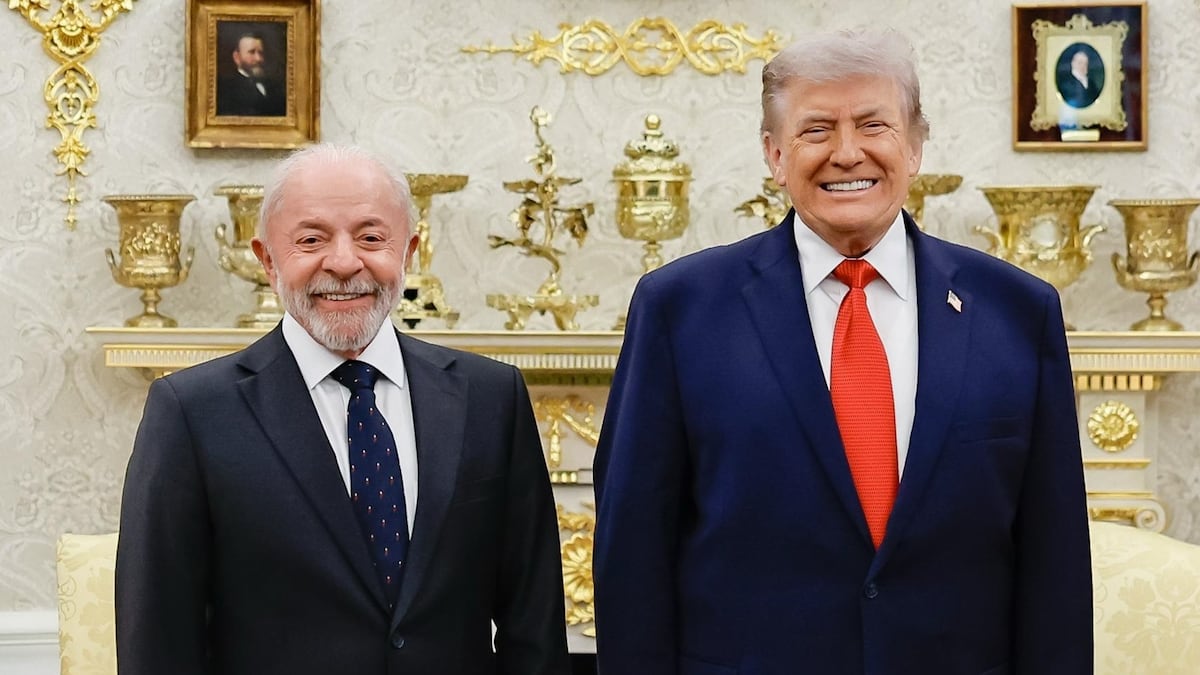
The paradox is that Lula and Trump nevertheless held a roughly 80-minute phone call on August 21, discussing tariffs, the fight against organized crime, Ukraine and the Middle East. But in the Brazilian interpretation, this contact does not yet resolve the main problem: the dialogue is taking place after a series of sanctions-related, trade and diplomatic signals, rather than instead of them. As El País notes, the need for such a conversation arose amid a new tariff blow from Washington and a sharp deterioration in relations. For Brazil, this means that Trump’s America can offer negotiations while retaining instruments of coercion. (elpais.com)
The most unusual common thread audible in Tokyo, Brasília and Moscow is that this is no longer simply about a “tough America.” Japan fears that the United States may trade the predictability of its alliance system for personal diplomacy with Kim Jong Un and short-term savings. Brazil sees Washington as a power returning to the language of spheres of influence and pressure on its neighbors. Russia interprets the Iranian impasse as evidence of the limits of American power, while closely watching how far the United States is prepared to go in the Strait of Hormuz. Their political sympathies and interests differ, but the central point is shared: Trump’s actions are perceived as a policy in which international commitments, military displays and trade measures are increasingly becoming parts of the same deal. For other countries, that means they must prepare not only for American power, but also for American unpredictability.