By September 25, the main American story provoking not merely interest but an anxious local debate in Paris, Berlin and Israel was no longer another declaration from Washington, but the consequences of the protracted US-Israeli war with Iran. The issue is no longer limited to Tehran’s nuclear program. Three interconnected questions have moved to the forefront: can Donald Trump actually bring the war he started to an end; how reliable are US military guarantees and supplies; and is America prepared to turn its own domestic political deadlines—above all, the November 3 congressional elections—into a timetable for international security?
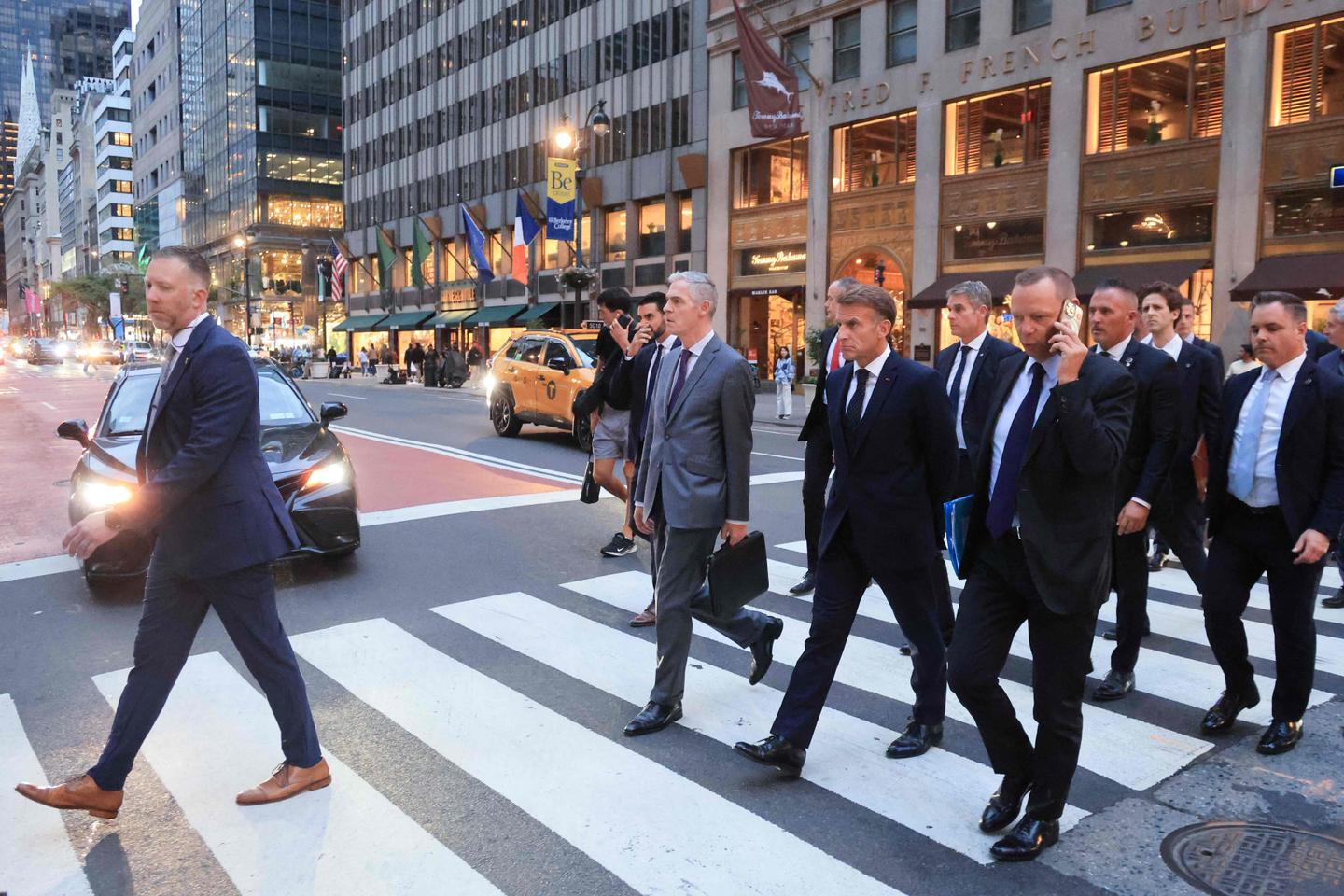
The immediate catalyst was Trump’s September 22 speech at the UN. He said he expected to reach a deal with Iran immediately after the midterm elections, while at the same time leaving open the threat of a new and destructive escalation. In a Tagesschau analysis, this sounds almost like a formula for the current American approach: negotiations are under way, but their political meaning is being deferred until a convenient moment at home. This logic is particularly irritating for France. Paris sees the war as a direct source of energy and trade instability: the de facto blockade of the Strait of Hormuz has already hit maritime shipping and fuel prices. At a meeting with Trump in New York, Emmanuel Macron explicitly reminded him that he had considered the strikes on Iran a mistake from the outset. As Le Monde reports, the French president is simultaneously demanding results on Hormuz and promoting a UN Security Council resolution on freedom of navigation.
This is an important French distinction: Paris does not reduce the problem to the question of whether “the US will defeat Iran.” French debate views the war as an example of how military force without a clear political objective can produce the opposite result. A Le Monde analysis emphasizes that, rather than weakening the Islamic Republic as expected, the war has strengthened its hard-line core and expanded the scope for domestic repression. In a September article, the newspaper records an even more troubling conclusion for the West: Tehran is using American economic pressure and the approaching US elections as an incentive to intensify the pressure, believing that time is on its side. This assessment differs radically from the White House rhetoric of controlled success. The French view is not pacifist in any simplistic sense: Paris is prepared to defend energy infrastructure and shipping, but pointedly does not want to become a party to a new regional war. It is relying on international rules as a way to restrain the logic of mutual coercion between the US and Iran.
In Germany, the tone is different, but the diagnosis is similar: the key phrase here is strategic unpredictability. Berlin depends on the United States for the deterrence of Russia while being forced to watch that same America spend ammunition and political attention in the Middle East. Political scientist Sasha Lomann of the Berlin-based SWP foundation called Trump’s Iran policy “devoid of strategy”—a sharp characterization cited in a Tagesschau interview. German commentators link this not only to Trump’s contradictory statements but also to material consequences. When Defense Minister Boris Pistorius traveled to Washington to discuss expanding defense cooperation, it emerged that an independent US oversight body had identified a serious shortage of weapons and ammunition—including Patriot and Tomahawk missiles—caused by the war with Iran. Tagesschau reports on this in detail.
For Germany, this is almost a perfect illustration of a painful contradiction. Berlin wants to purchase American Tomahawks and has already committed to the F-35, but at the same time it is receiving proof that the US arsenal is not limitless and that Washington’s priorities can change quickly. In other words, the German reaction is not a rejection of the alliance, but an accelerated demand that Europe produce more of its own weapons. In the German view, the war with Iran is ceasing to be a “distant conflict”: it affects the availability of air-defense systems for Europe, support for Ukraine, energy prices and trust in US commitments. Hence the broader drive toward strategic autonomy—not as a break with America, but as insurance against its impulsiveness.
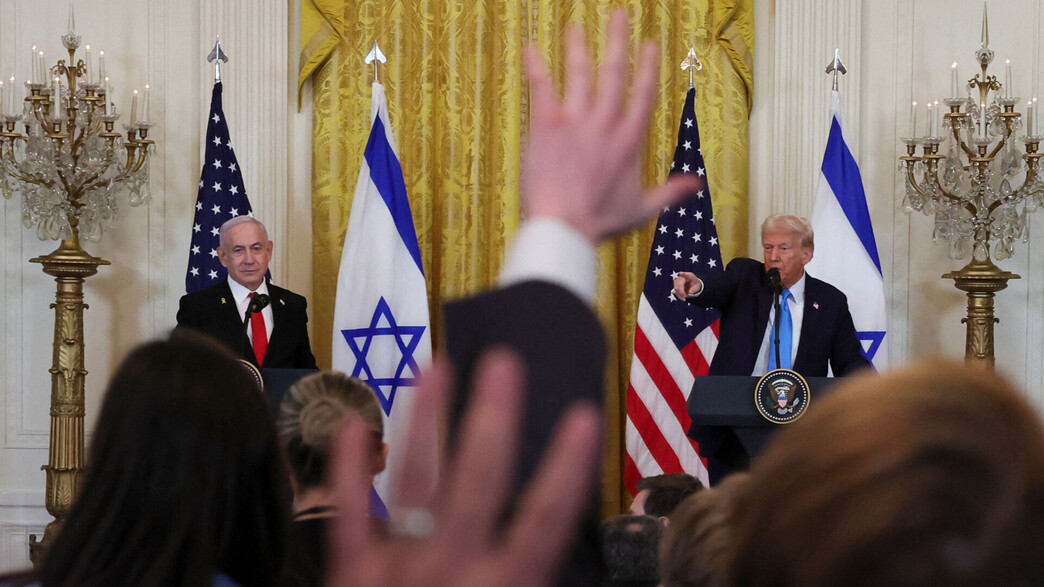
In Israel, the debate is the most paradoxical. The United States remains an indispensable ally, and the recent news of a major American delivery—“60,000 bombs on their way to Israel”, as Globes put it—is seen as confirmation of the depth of the military partnership. Yet it is also in Israel that the risk is being discussed most intensely that Trump could agree to a deal allowing him to declare victory without eliminating the long-term threat to Israel. Part of the Israeli expert community sees possible agreements with Tehran as a dangerous respite: Iran could gain time and resources to rebuild without abandoning its key military capabilities.
At the same time, it is telling that a significant part of the Israeli debate tries to explain American restraint not as “betrayal.” Eyal Tzir Cohen, former head of the Mossad’s International Relations Division, offers a more sober reading in a column for N12: Israel is thinking about how to push the Iranian threat as far into the future as possible, while the United States is asking whether it will then have to manage the consequences of the collapse of the Iranian regime for the next 20 years. This gap bears the imprint of Iraq and Afghanistan, competition with China and America’s fear of another endless war. “The problem has not been solved,” but Washington, according to this logic, is seeking not to defeat Iran definitively, but to prevent Iran from consuming America’s strategy.
This is where the French, German and Israeli reactions converge. France fears that the military campaign is destroying diplomacy and the global order; Germany fears that it is draining resources and making alliance commitments unreliable; Israel fears that America’s desire to leave the war will leave it alone with a revived threat. Yet all three societies are increasingly less inclined to see the United States as a power capable of simply imposing an outcome. America remains the center of power, a source of weapons, sanctions and diplomatic decisions. But its partners are seeing another America ever more clearly: a country whose foreign policy is tied to gasoline prices, Patriot stockpiles, voter sentiment and the president’s personal desire to quickly label any outcome a victory.