By October 16, 2026, the United States had simultaneously become the subject of three very different, yet remarkably similar, discussions in India, Russia and Saudi Arabia. In New Delhi, the focus is less on the size of American tariffs than on the unreliability of any terms reached with Washington; in Moscow, it is the unexpected lifting of restrictions on Russian diesel fuel and how this changes the context of the conflict in Ukraine; in Riyadh, it is the United States’ willingness to help against the Houthis, but without a firm guarantee of direct military involvement. The common conclusion of local commentators is simple: American policy is increasingly perceived not as a system of stable alliance commitments, but as a set of deals that can be revised depending on energy prices, the electoral calendar and the current balance of power.
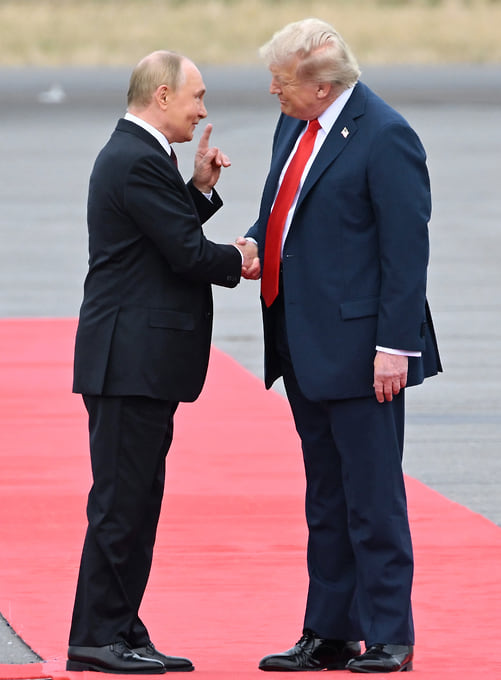
The clearest symbol of this shift was the diesel agreement between Moscow and Washington. Following a telephone conversation between Vladimir Putin and Donald Trump on October 9, the United States exempted transactions involving Russian diesel from sanctions until April 7, 2027. The deal covered more than 300,000 tonnes of supplies in October, 500,000 tonnes in November, another one million tonnes later, as well as a potential additional three million tonnes. Kommersant also highlights the political symbolism of the moment: the American president announced the deal precisely when his representatives were discussing proposals to end the war with Ukraine and European countries. (kommersant.ru)
In Russian discourse, this is less a reason to speak of a sudden friendship with America than evidence of the extreme instrumentality of the current US administration. Fyodor Lukyanov, chairman of the Presidium of the Council on Foreign and Defense Policy, writes in a commentary for the Russian International Affairs Council that under Trump, sanctions are becoming a mechanism that Washington switches on and off depending on its “immediate political and economic requirements.” His key point is that Moscow should not mistake this reversal for a new, permanent US policy: it is more an opportunity for maneuver than the beginning of a relationship based on trust. (russiancouncil.ru)
At the same time, Russian authors see energy as the arena in which American inconsistency becomes especially obvious. Until recently, Washington sought to restrict Russian revenues and maintain pressure on Moscow; now, the need to lower fuel prices for American consumers makes Russian diesel politically acceptable. On October 16, Trump himself called Ukrainian strikes on Russian refineries “a disgrace,” linking them to rising global oil prices and fuel shortages. Kommersant directly notes that this demand coincides with the American interest in Russian supplies. (kommersant.ru) To Russian audiences, this looks like recognition of the obvious: when US domestic economics are at stake, geopolitical principles quickly give way to pragmatism.
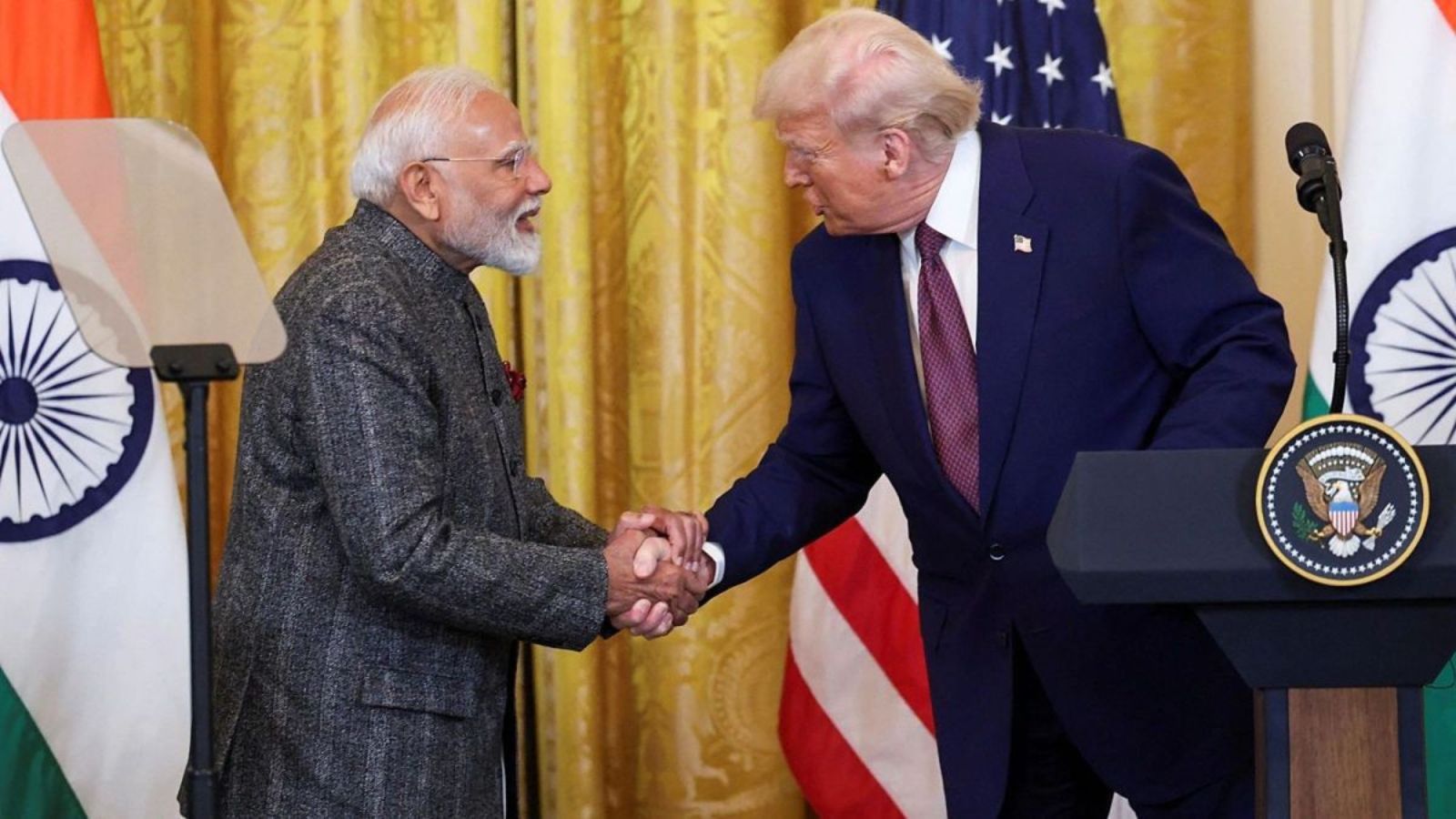
India’s reaction to the same model is much more concerned. New Delhi does not see American flexibility as an advantage for a partner; on the contrary, it views it as the risk of reaching an agreement that will lose its value tomorrow. In a column for The Indian Express, expert Saumya Bhowmick defines the problem particularly precisely: the main “tariff” in relations between India and the United States is not the rate written on paper, but uncertainty. The US Supreme Court overturned Trump’s reciprocal tariffs, talks on a trade agreement have reached an impasse for the third time, and India’s presumed advantages over its competitors could disappear following the next administrative decision in Washington. (indianexpress.com)
This leads to a characteristic Indian prescription: rather than buying a promise of low tariffs at the price of irreversible concessions on markets, procurement and regulation, India should demand legally stronger guarantees, a tariff ceiling and the right to take retaliatory measures. This is not anti-Americanism, but a lesson India is drawing from American volatility. Ishan Bakshi, senior editor of The Indian Express, goes even further in his analysis: he regards pressure over Russian oil purchases, sanctions legislation, attacks on Indian IT services and the mobility of skilled workers not as a collection of one president’s whims, but as signs of a deeper reassessment of the US attitude toward India. His conclusion sounds almost like a formula for Indian foreign policy: the country needs American technology, capital and markets; Chinese components and goods; and Russian energy and weapons. (indianexpress.com)
Saudi Arabia views American transactionalism through the lens of security. Following the October 10 attack on the passenger terminal at King Khalid International Airport in Riyadh, Brigadier General Turki al-Maliki, spokesman for the coalition in Yemen, called the Houthi strike a terrorist act and a war crime, promising a firm response within the framework of international humanitarian law. A report by Saudi newspaper Okaz noted that the victims included civilians—passengers and airport employees—who were killed or injured. (okaz.com.sa)
However, the local debate is focused not only on retaliation, but also on the question of what America is actually prepared to do. In the Saudi author’s column “When You Are Saudi Arabia’s Neighbor”, attention is drawn to the ambiguity of the American signal: Washington says it will not directly enter the war in Yemen, but will continue sharing intelligence with the coalition. The author believes the Houthis may have mistakenly interpreted this restraint as permission to intensify attacks on Saudi tankers and civilian infrastructure. At the same time, he emphasizes the desire of Riyadh and other Gulf countries not to become direct parties to a broader war involving the United States, Israel and Iran. (okaz.com.sa)
This reveals a particularly important nuance for Saudi Arabia. America’s willingness to negotiate with the Houthis for the sake of maritime security is perceived not as diplomatic subtlety, but as a dangerous signal to an armed group. In another Okaz column, talks between US representatives and the Houthis are described as exposing the group’s slogans: an organization that built its identity around hostility toward America proved willing to discuss security arrangements and guarantees for shipping with it. But for Riyadh, this also leads to another conclusion: the United States may negotiate with Saudi Arabia’s adversary if doing so serves its own maritime and energy interests. (okaz.com.sa)
The Indian, Russian and Saudi reactions converge not in their assessment of America as a friend or an adversary, but in a more sober understanding of its behavior. Russia sees an opportunity to use American pragmatism to ease sanctions pressure, but does not regard it as a guarantee of lasting détente. India wants to protect itself from American unpredictability through contractual safeguards while also diversifying its external ties. Saudi Arabia needs American intelligence, weapons and political influence, but is increasingly proceeding from the assumption that the kingdom’s security cannot be built on the expectation of inevitable US intervention.
Paradoxically, America’s main export these days is not diesel, tariffs or military support, but uncertainty. For Washington, it may be a source of tactical freedom. For three major regional powers, it is becoming an argument for greater self-reliance, risk protection and abandoning the old belief that the United States has immutable rules of the game.