As of October 16, 2026, the United States is being discussed in South Korea, Brazil and France less as the familiar center of world politics than as a state that has turned foreign policy into an instrument of domestic campaigning, pressure and immediate gain. Each country has its own trigger: in Seoul, American statements suggesting that South Korean investments in Alaska have already been agreed; in Brasília, the consequences of the tariff war; and in Paris, the increasingly direct question of whether Europe can defend itself without Washington. But local commentators in all three countries are reaching nearly the same conclusion: an agreement with today’s America is no longer the endpoint of negotiations, but merely an intermediate stage in a new round of bargaining.
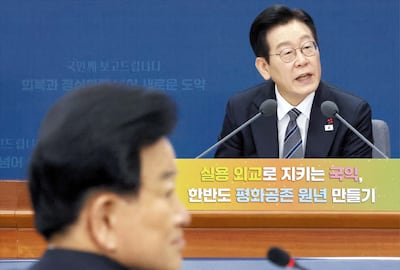
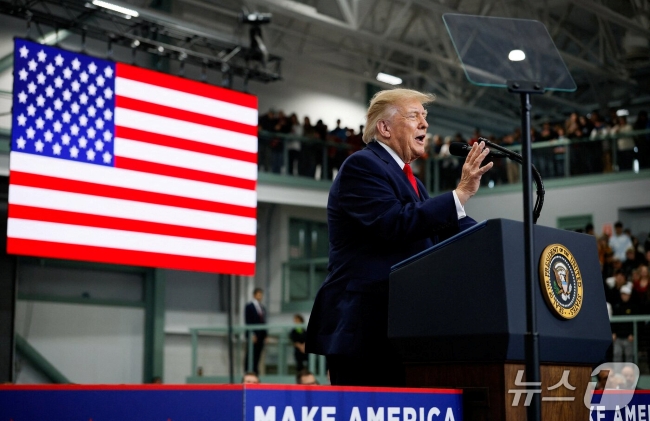
The most nervous reaction is currently coming from South Korea. Donald Trump is using the Alaska LNG project as evidence of his own economic achievements ahead of the November midterm elections in the United States, claiming that South Korea will invest around $50 billion in Alaska’s infrastructure. Seoul, however, insists that this is not an approved investment commitment, but only the beginning of an assessment of the project, provided it is commercially viable and complies with domestic law. In Korea, this difference in wording has become more important than the figures themselves. The Korean publication MTN directly links Washington’s insistence to competition in Alaska ahead of the midterms [midterm elections], while Industry Minister Kim Jung-kwan reiterates that participation is possible only if economic feasibility is demonstrated. (news.mtn.co.kr)
This reflects a distinctly Korean concern: Washington is not simply proposing a business project, but publicly presenting it as a concession already secured, thereby creating political pressure on its ally. In an editorial in Chosun Ilbo, this is described as a unilateral announcement that should be met neither with haste nor with confusion. Behind this restrained formulation lies a sharper idea: alliance commitments must not be turned into a form of payment for lower tariffs or for the goodwill of the White House. (chosun.com)
Seoul also has a rational argument against an emotional response. The project in Texas and the construction of nuclear facilities could potentially provide South Korean companies with contracts for equipment, engineering and operations. But Alaska LNG is a different case: the enormous pipeline, high costs and uncertain returns make it less an energy deal than a test of Korea’s ability to say “no” even to its closest military partner. The plan published by Seoul confirms the Texas gas project, a framework for eight nuclear power plants, and only a conditional assessment of the Alaskan option. (eiec.kdi.re.kr)
The debate in Brazil is even tougher, because there American economic pressure is perceived not as difficult bargaining between allies, but as interference in the country’s sovereign decisions. The tariffs imposed by the United States under Section 301 of its trade legislation affect digital trade, the payments system, access to the ethanol market, intellectual property, environmental policy and other matters that Brazil considers primarily domestic prerogatives. Brazil’s Foreign Ministry called the measures unjustified and contrary to US obligations under the WTO, and initiated consultations. (gov.br)
It is particularly telling that the local dispute has long gone beyond the question of “what tariff rate will be imposed.” In an analysis by the Observatory of Foreign Policy and Brazil’s International Insertion, the American tariffs are interpreted as an instrument of geopolitical coercion and an attempt to preserve US leadership in the Western Hemisphere amid China’s growing influence. This is an important Brazilian perspective: the conflict is seen not simply as an argument over imports, but as punishment for an overly independent foreign, digital and industrial policy. (opeb.org)
At the same time, Brasília is avoiding romantic anti-Americanism. Government statistics show that the additional US measures affected approximately 23.1% of Brazilian exports to the United States, while shipments to the US market fell by 6.5% year on year from January through September. The local approach is therefore not a symmetrical trade war at any cost, but a combination of legal resistance, negotiations and accelerated market diversification. (gov.br) In this respect, Brazil’s reaction differs noticeably from South Korea’s: Seoul is trying to clarify the terms of its deal with America, while Brazil is trying to reduce the very degree of its dependence on the American market.
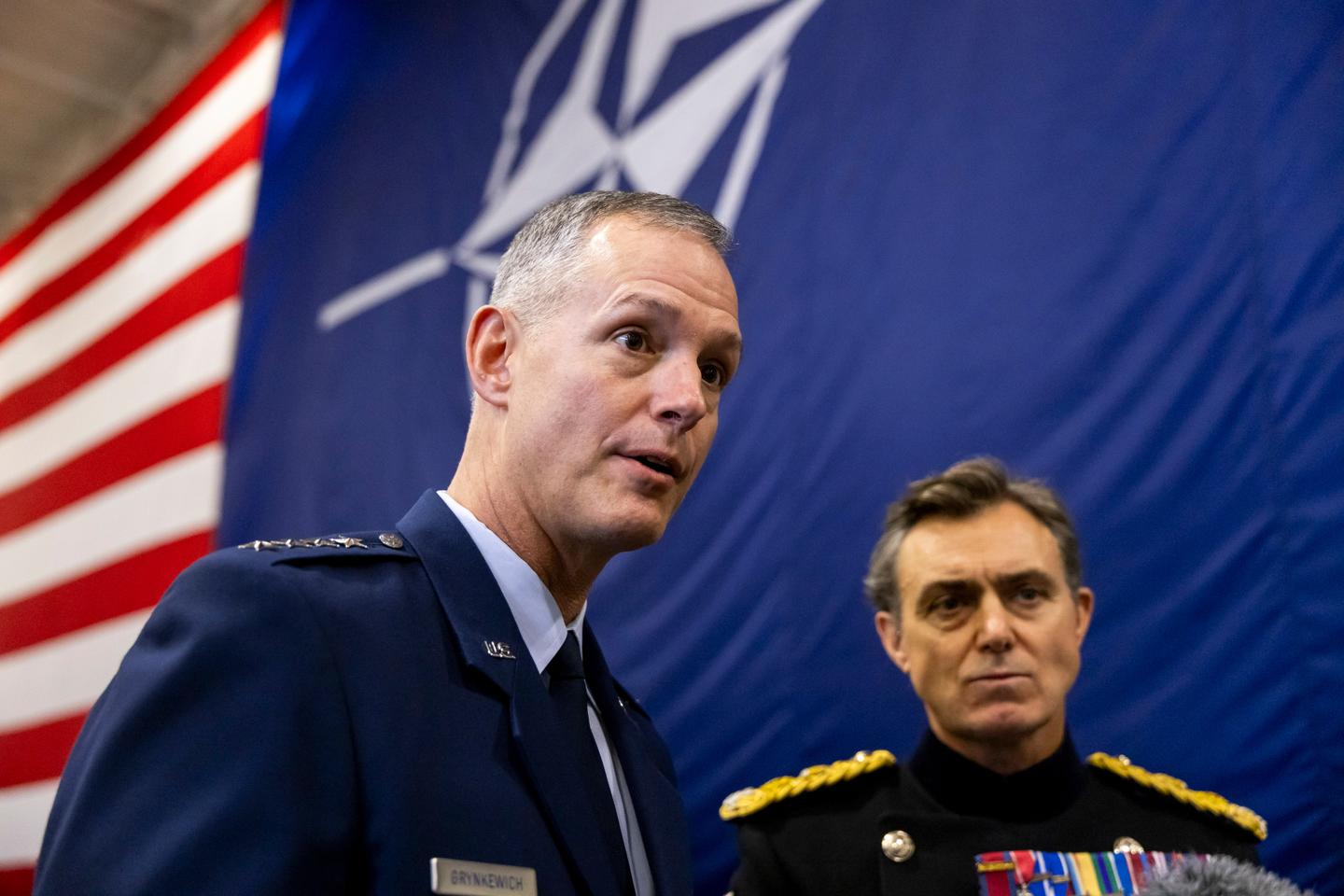
The French reaction is less focused on tariffs and much more on security. In Paris, American unpredictability is now interpreted not as the eccentricity of a single president, but as evidence of a structural rupture: the United States continues to demand that Europeans spend more on defense, while at the same time potentially weakening European consolidation, testing allies’ political loyalty and reconsidering its own military presence. Le Monde quotes Fabrice Pothier of Rasmussen Global, who says that the American administration is mixing strategic demands with ideological considerations and tests of partners’ loyalty—“an explosive cocktail” [translation]. (lemonde.fr)
French politicians are drawing from this an idea that until recently sounded almost utopian: Europe should not create an alternative to NATO, but gradually transform the alliance into an organization in which Europeans are capable of directing their own defense. A French parliamentary report proposes that the EU “take ownership” of NATO and turn it into its armed instrument—a deliberately sharp formulation that reflects the shift in Paris’s thinking. (lemonde.fr) Former European Commissioner Thierry Breton puts it even more broadly in an interview with Le Monde: Europe too often acts as a large market, but not as a power; the era when policy could be built on trust in American guarantees is over. (lemonde.fr)
This is where all three national perspectives converge. South Korea fears that security and trade will be reduced to the price of American campaign promises. Brazil sees trade instruments as a way to secure political concessions. France is concluding that even a military alliance no longer exempts it from the need to possess its own resources, technologies and industrial base. What differs is not the diagnosis, but the scale of the response: Seoul is trying to preserve the alliance while defending the boundaries of agreements; Brasília is seeking more markets and greater reliance on international law; and Paris wants to turn European dependence into European agency.
The most unusual local idea comes from Korea: the problem is not that the United States is demanding investments, but that publicly announcing an agreement that has not yet been reached becomes a method of imposing it. The most pragmatic comes from Brazil: retaliatory tariffs may primarily harm domestic consumers, so sovereignty requires not only loud gestures but also precise calculation. The French conclusion is the most long-term: America is no longer viewed as an ally that is fading away, but increasingly as a powerful partner whose interests cannot automatically be treated as one’s own.
![[Chosun Column] Only a ‘Thinking Army’ Can Survive](https://www.chosun.com/resizer/v2/OCRLCSP6FNDG7CGRCFDRGS5DCQ.png?auth=be84cfdee33eabb4baf973dcbf791a9f163b5b14e408f51fb76ed87fb71d50b3&width=500&height=280&smart=true)