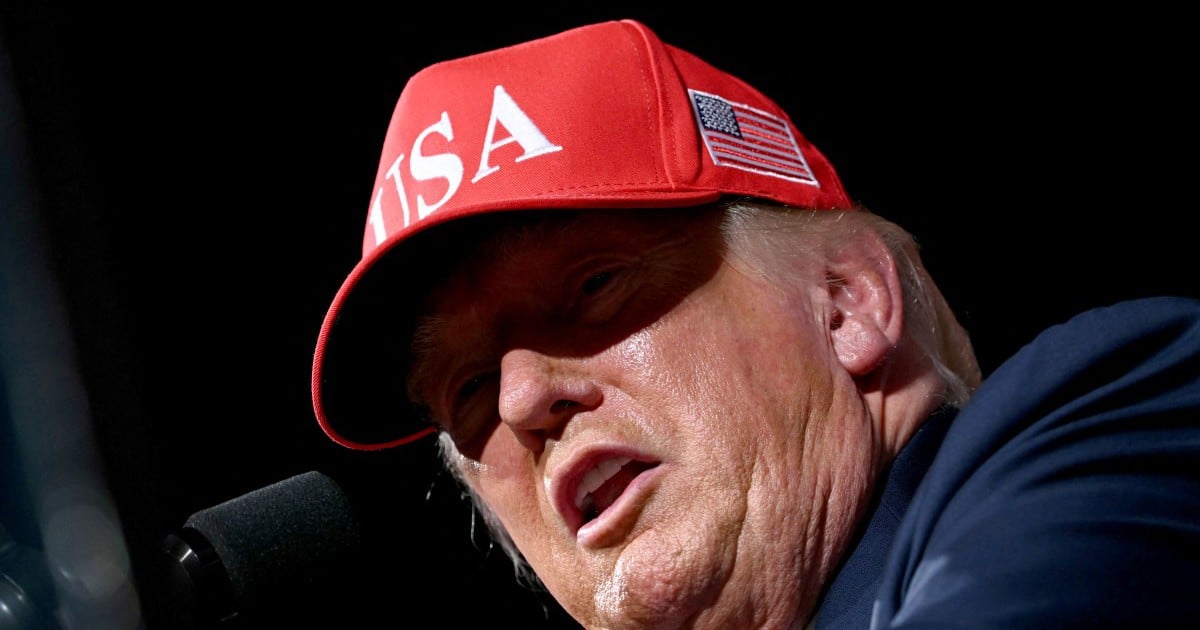
By September 20, 2026, discussion of the United States in Russia, India and South Africa had converged around one shared concern: Washington is increasingly openly combining trade barriers, visa restrictions and military force into a single set of foreign-policy tools. Several events in recent days provided the immediate impetus. On September 18, Donald Trump signed a law expanding sanctions against Russia and giving the White House the authority to impose tariffs of up to 100% on major buyers of Russian oil and gas. At the same time, the U.S. administration announced visa restrictions on South Africans it considers involved in discrimination against the white minority and the expropriation of land without compensation. Meanwhile, the ongoing U.S. campaign against Iran is keeping global oil prices at levels where every new sanctions decision becomes a matter not only of diplomacy, but also of the cost of gasoline, food and industrial production. (rbc.ru)
The sanctions law signed by Trump became the central issue in discussions in Moscow and New Delhi. In the Russian interpretation, this is not merely another round of restrictions against Russia itself, but an attempt to punish its entire foreign-trade infrastructure—banks, ships, suppliers and, above all, buyers of its energy resources. As RBC reported, the document allows for secondary tariffs of up to 100% on the largest importers of Russian oil and gas; India and China are among the obvious potential targets. Russian presidential spokesman Dmitry Peskov described such steps as “unfriendly actions” that would complicate the search for a peaceful settlement in Ukraine. This is an important detail: Russia’s response is based less on a promise of an immediate countermeasure than on the argument that the United States is declaring itself a mediator while simultaneously expanding its economic war. (rbc.ru)
In India, the issue is viewed in even more practical terms—as a threat to national energy security. An editorial in Jansatta describes the situation as pressure that forces New Delhi to choose between cheap oil, the stability of the domestic market and access for Indian goods to the U.S. market. The Indian press emphasizes that this is not yet an automatically imposed 100% tariff, but rather the transfer to Trump of the power to threaten or impose one. It is precisely this uncertainty that causes the greatest irritation: trade rules are becoming a matter of presidential discretion. (jansatta.com)
The tone of Dainik Jagran is particularly telling: the newspaper writes that an arbitrary increase in tariffs against India would be an expression of American “ego.” But the Indian view is not reducible to emotional anti-Americanism. Local economists are discussing a calculated dilemma: Russian oil provides a price cushion, but losing the U.S. market would hurt exports of mobile phones, engineering products, textiles and leather. In an editorial, Amrit Vichar suggests that the law should be seen primarily as a negotiating weapon—not necessarily as an immediate economic attack, but as an opportunity to demand concessions first and then offer a lower rate. (jagran.com)
This is where the Russian and Indian narratives unexpectedly coincide. In Moscow, secondary sanctions are viewed as an attempt to cut Russia off from its export markets. In India, they are seen as an attempt to force a third country to pay for the U.S. strategy toward Russia. In both cases, the United States appears not as a partner offering alternatives, but as a state attempting to change another country’s economic behavior by threatening to restrict access to its market. Indian expert Ajay Srivastava, founder of the Global Trade Research Initiative, stated this logic directly: the United States could first threaten a 100% rate and then offer a lower tariff as the subject of a deal. (hindi.business-standard.com)
In South Africa, however, the same American method appears differently—not through oil, but through history, race and sovereignty. Washington’s decision to restrict visas for South African officials whom the United States considers responsible for racial discrimination, a policy of expropriating land without compensation or incitement to violence triggered an especially painful reaction in Pretoria. The South African government rejected the U.S. allegations as distortions spread by fringe groups. (aljazeera.com)
South Africa’s public debate is therefore not centered on whether people in the country sympathize with the United States, but on the question: who has the right to define the meaning of post-apartheid land redistribution? In an IOL column, new measures by Secretary of State Marco Rubio are described as an attempt to impose a “racial veto” on post-apartheid restitution policies. The author sees the U.S. intervention not as the protection of minorities, but as an effort to portray any demands for historical justice as racism against whites. This sharply conflicts with the position of Afrikaner groups lobbying for their agenda in the United States, but it shows why the conflict with Washington is perceived within South Africa as a dispute over national dignity, rather than as a technical visa issue. (iol.co.za)
There is also a more pragmatic South African interpretation of events. International-affairs correspondent Peter Fabricius, writing for Eyewitness News, notes that the immediate reason for the new pressure remains unclear and suggests it may be connected to Pretoria’s relations with Tehran. This turns the dispute over the status of Afrikaners into a possible lever in a broader geopolitical deal: Washington may be using South Africa’s internal disagreements to influence its foreign-policy autonomy and its ties through BRICS. (ewn.co.za)
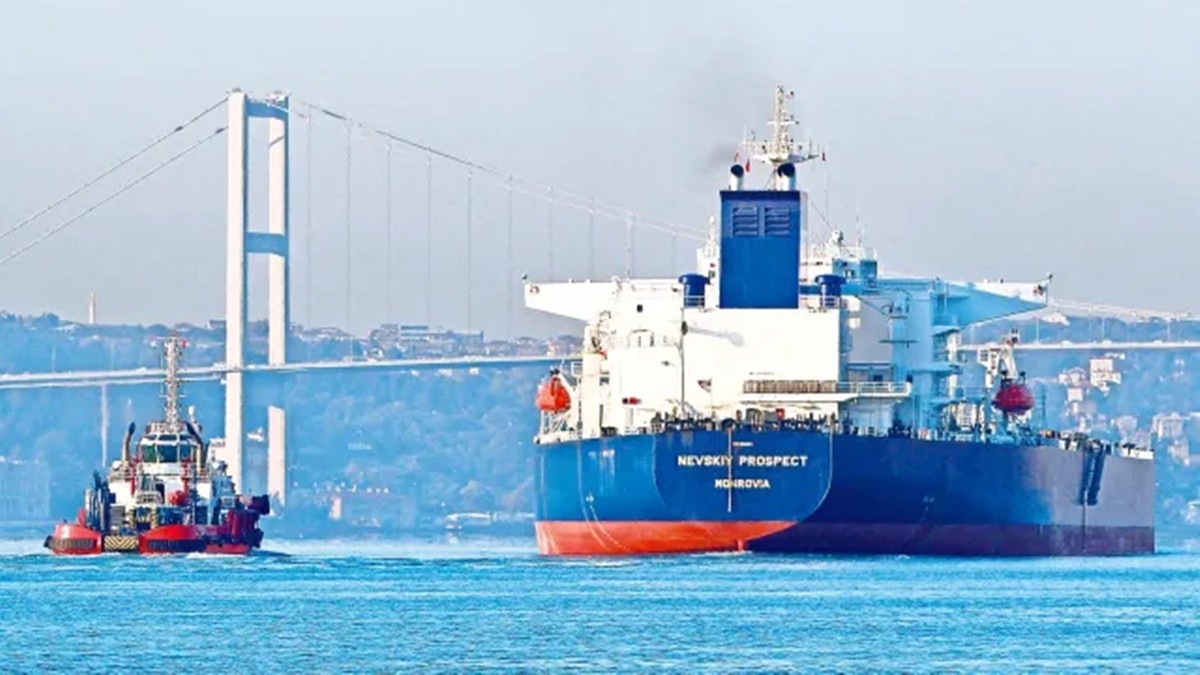
It is precisely the U.S. war with Iran that links the reactions of all three countries into a single story. For India, it means higher oil prices and risks to maritime routes through the Strait of Hormuz; for Russia, a more complicated global oil market amid sanctions pressure; and for South Africa, confirmation of concerns that international law is applied selectively. Back in March, the South African government officially condemned the U.S. and Israeli strikes on Iran as violations of the prohibition on the use of force enshrined in the UN Charter. (gov.za)
Russian commentators emphasize the inconsistency of the American approach. In Kommersant, Orientalist Farhad Ibrahimov noted that Trump initially spoke of a swift end to the Iranian conflict and then suggested that negotiations were not an urgent priority; meanwhile, the Strait of Hormuz remains a source of risk for global trade. For India, this creates an almost paradoxical problem: the United States demands that it reduce purchases of Russian oil, while its own military policy in the Middle East makes alternative supplies more expensive and less predictable. (kommersant.ru)
The main conclusion from the reactions of Russia, India and South Africa is that Trump’s U.S. policy is perceived not as a series of isolated episodes—sanctions against Moscow, tariffs against New Delhi, visa restrictions against Pretoria or an operation against Iran. It is seen as a single model: the United States uses dependence on its market, the dollar, visas and security to demand political loyalty. Only the vulnerabilities of the countries differ. Russia is defending the resilience of its exports, India the right to choose an energy supplier for 1.4 billion people, and South Africa the right to decide for itself how to address the legacy of apartheid. But the common response is becoming increasingly clear: not a break with America, but the search for such diversification of trade, energy and diplomatic ties that threats from Washington will no longer be tantamount to orders.
-1789668585736.webp)


![South African Minister for International Relations and Cooperation Ronald Lamola [File: Luba Lesolle/Gallo Images via Getty Images]](https://www.aljazeera.com/wp-content/uploads/2026/09/GettyImages-2289917250-1789645088.jpg?resize=770%2C513&quality=80)