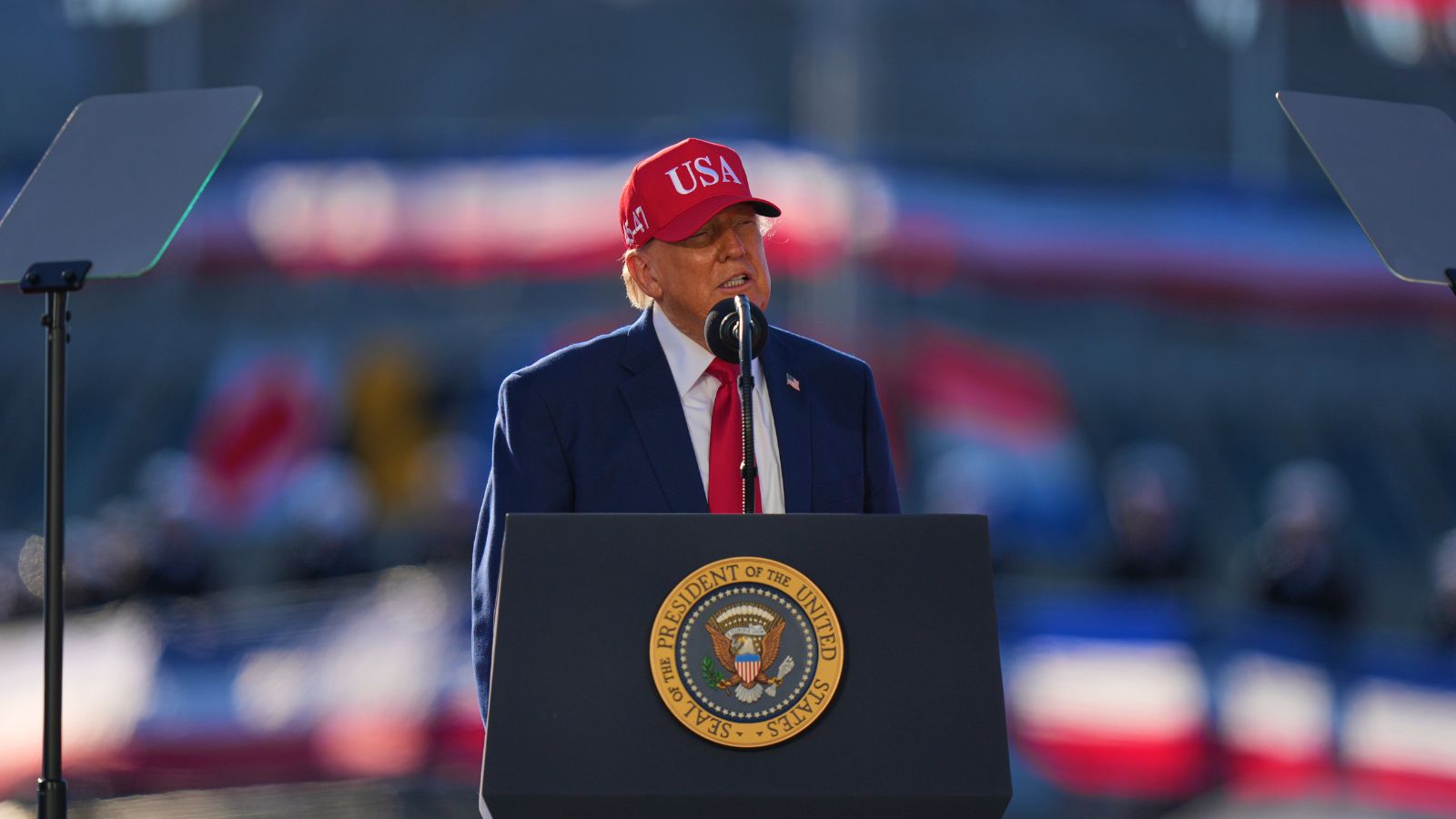
On Monday, November 2, 2026, the day before the U.S. midterm elections, Turkey, China and India are discussing America less as a distant superpower than as a source of very concrete risks: from oil prices and trade terms to the war with Iran and the future of technology supply chains. The tone differs from country to country, but the conclusion is strikingly similar: the November 3 vote could constrain Donald Trump’s room for maneuver at home, but it does not guarantee a return to predictable U.S. foreign policy. Chinese commentators see the elections as a symptom of a deep crisis in the American model; Indian commentators see them as a test of how reliably the partnership with the United States can withstand tariffs, immigration restrictions and pressure over Russian oil; Turkish commentators view them as a turning point that could affect oil, regional security and even the prospects for defense and technology agreements with Washington. China’s state news agency Xinhua frames the elections in terms of “political polarization and pressure on living standards,” directly linking voter discontent to tariffs and the war with Iran. (app.xinhuanet.com)
The main theme shared across all three countries is the transformation of U.S. foreign policy into an extension of domestic electoral politics. In political analyst Bekir İlhan’s analysis for Anadolu Ajansı, the U.S. elections are not simply a contest between parties but a struggle over the White House’s future ability to wage war, pursue energy policy and keep Congress aligned with “Trumpism.” (f.aa.com.tr) China’s view is even more hard-line: Beijing does not expect a change in strategic direction, but rather a weakened executive branch and more ad hoc swings in policy. Meng Weizhan, a professor at Peking University, warns in an analysis by the university’s Center for International and Global Cooperation that the pre-election period could increase the risk of disagreements in U.S.-China relations being amplified by domestic political competition. (igcu.pku.edu.cn) The same point is put more pragmatically in the Indian press. Dip Pal, director of the Koan Advisory Group consultancy, writes in The Indian Express that a Democratic victory in the House of Representatives could strengthen oversight of tariffs and foreign policy, but would not automatically overturn presidential decisions. New Delhi should not confuse domestic constraints on Trump with a greater willingness by the United States to make concessions. (indianexpress.com)
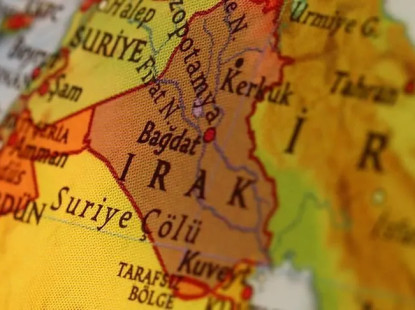
The U.S. war with Iran is the second shared theme, and the most emotionally charged. For Turkey, it is not an abstract Middle Eastern drama but a direct threat to transport routes, trade with Iran and fuel costs. Experts at the Iranian Studies Center IRAM, in an analysis dated October 6, emphasize that after the U.S. and Israeli attack on Iran on February 28, the conflict entered a phase in which military incidents near the Strait of Hormuz and Trump’s contradictory statements are undermining hopes for a swift diplomatic resolution. (iramcenter.org) Chinese authors interpret the same conflict as proof of the limits of American power. In an article from the magazine Huanqiu, published by Xinhua, military expert Cai Huatan and Chinese Academy of Social Sciences researcher Tang Zhichao discuss three maximalist U.S. objectives—denuclearizing Iran, changing its political course and weakening Tehran’s allies—implying that such a set of goals makes it especially difficult to end the war. (xinhuanet.com) Indian commentators, by contrast, focus above all on the costs: oil, shipping, inflation and vulnerable supplies. ORF strategist Vivek Mishra called the conflict Trump’s “forever war” and observed that, for U.S. partners, what matters more than who wins the elections is what happens afterward. (indianexpress.com) This is a distinctive feature of the Indian debate: the war is viewed not through moral support for either side, but through its potential to undermine energy security and economic planning in India.
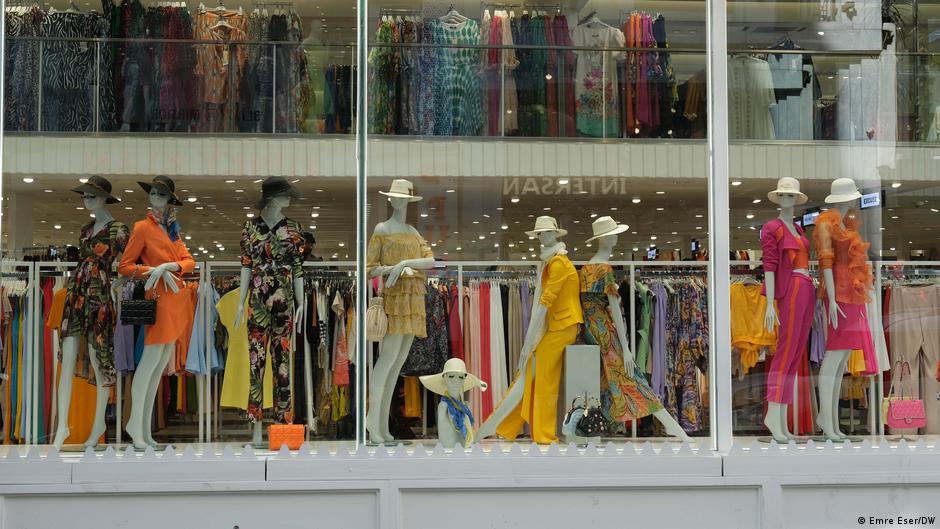
The third theme is trade as a tool of political coercion. The impact is most tangible in Turkey: exporters already see new U.S. tariffs as a blow to industries that Washington has formally promised to treat as partners. In a Turkish-language Deutsche Welle report, textile industry representatives describe the effect of the tariffs with the phrase “dost kazığı yedik” [“we got stabbed in the back by a friend”], noting that Turkey has been grouped with countries that have a much larger trade surplus with the United States. (amp.dw.com) China’s interpretation is more systemic: tariffs are seen as evidence that Washington is using domestic economic anxieties to exert pressure abroad. A Chinese assessment of tariff policy notes that, after legal constraints were placed on earlier sweeping tariffs, the Trump administration has been seeking new legal grounds for duties, including temporary measures and investigations under Section 301 of the Trade Act. (m.thepaper.cn) The issue is more delicate for India: it is pursuing a trade deal with the United States while refusing to accept one at any cost. Hindustan Times editor-in-chief Shishir Gupta put New Delhi’s position plainly in his analysis: “India is not going to sign a trade deal in a hurry.” (hindustantimes.com) The remark reflects a shift in India’s attitude toward the United States: from hopes for a special strategic partnership to demands for reciprocity, predictable tariffs and respect for its energy policy.
Energy is what ties all three national debates together. India is particularly sensitive to U.S. attempts to link trade concessions to cuts in purchases of Russian oil, especially at a time when the war in the Middle East is itself disrupting global supplies. Pal notes that New Delhi views energy security not as a matter of ideological loyalty but as a condition of strategic autonomy. (indianexpress.com) Chinese market assessments add the risks to commodity and industrial supply chains: the election result could affect U.S. tariffs, fiscal expansion, the dollar’s exchange rate and the prices of copper and oil, but the decisive factor is not the party label—it is actual U.S. policy toward Iran, sanctions and the Strait of Hormuz. (reportify.cn) Turkish analysts take a similar view. A local financial report by GCM Yatırım advises readers to watch not the symbolic question of “whether Trump won,” but the yield on U.S. 10-year bonds, the dollar’s exchange rate, oil costs and Washington’s specific trade and geopolitical moves. (gcmyatirim.com.tr)
The most unexpected shared conclusion from Turkish, Chinese and Indian reactions is that almost no one expects a simple answer from the U.S. elections. In China, a possible Democratic victory is seen as an opportunity to place stronger restraints on Trump, but not as an end to the bipartisan rivalry with Beijing. In India, it could open the way to investigations into the administration’s ties with Pakistan and closer scrutiny of the war with Iran, but it would not resolve disagreements over immigration, tariffs and Russian oil. In Turkey, a weakened White House could make promises on F-35s and sanctions harder to keep: expert Yasemin Çubukçuoğlu warns that if Democrats dominate Congress, it will be much harder for Trump to deliver on agreements with Ankara. (ankaramasasi.com.tr) That is why, beyond the United States, November 3 is seen not as a vote on the fate of a single administration but as a test of whether America can stop exporting its own polarization—through wars, tariffs, sanctions and abrupt changes in the rules—to other countries’ economies and security systems.