At the turn of September and October 2026, the United States is being discussed outside its own borders not so much as the familiar guarantor of the Western order, but as a power simultaneously waging war on Iran, bargaining over Ukraine’s future, and redefining the limits of what is acceptable within NATO. In Russian, Ukrainian and French commentary, the subjects differ in their immediate importance, but they share one perception: Washington’s decisions have become less predictable, and the cost of that unpredictability now falls on allies, opponents and global markets.
The broadest common theme is the American campaign against Iran and the blockade around the Strait of Hormuz. In France, it is described above all as a strategic impasse for the United States. In a Le Monde analysis, Trump’s policy is reduced to a formula of “neither war nor peace”: Washington has achieved neither regime change nor a clear agreement, but is shifting the conflict into the economic sphere—sanctions, pressure on trade and threats to energy markets. The French perspective is characteristic here: what matters is not only Iran, but also the erosion of rules. The Paris press sees American power unsupported by a diplomatic objective not as a solution to the problem, but as a mechanism for perpetuating it.
This is particularly evident in assessments of American public rhetoric. An editorial analysis by Le Monde of Trump’s first 100 days of statements records a constant shifting of goals—from destroying Iran’s nuclear program to hints of regime change and then back to negotiations. Columnist Gilles Paris speaks of “an element of improvisation” masking strategic dead ends. French concern, therefore, is not reducible to pacifism: it is the concern of an ally for whom American leadership is becoming synonymous with political risk. It is no coincidence that France is simultaneously joining the United States, Britain and Germany in pressuring Iran through the IAEA, while French commentators doubt that Washington’s military and sanctions policy can produce a lasting result.
In the Russian-speaking expert community, the same war generates an almost opposite, but no less skeptical, calculation. In Nikita Smagin’s commentary for Carnegie Politika, the US strike on Iran is interpreted as a demonstration of “might makes right,” which at the same time destroys the Kremlin’s hopes for a fundamentally different, more negotiable Trump world. In practical terms, however, Moscow benefits from prolonged uncertainty: high oil prices support the budget, Western attention is diverted from Ukraine, and an isolated Tehran becomes even more dependent on Russia. In a later assessment, Smagin explicitly calls the smoldering US-Iranian conflict the optimal scenario for the Kremlin: a full peace would lower oil prices and weaken Russian influence in Iran, while a major war would carry too many risks. This duality is one of the important Russian perspectives rarely visible in the American debate: Moscow benefits neither from an Iranian victory nor from a US defeat, but from a manageable crisis between them.
For Ukraine, the Iran issue matters in a different way. Kyiv does not view it as a separate Middle Eastern drama: it is another test of whether the United States can avoid dispersing its resources and political attention at a time when the war in Ukraine remains unresolved. That is why Ukrainian reactions to American foreign policy in recent weeks have focused not on Trump’s grand statements, but on concrete guarantees—air defense, weapons production and diplomatic pressure on Russia. Following talks between Zelensky and Trump in New York, Kyiv officially emphasized work on launching production of Patriot interceptor missiles in Ukraine, as stated in a statement from the Office of the President of Ukraine. The choice of emphasis is telling: the Ukrainian side measures the quality of its relationship with Washington not by declarations about peace, but by whether protection for its cities will be available before winter.
Ukrainian commentators assess the current “warming” of relations with cautious optimism. European Pravda writes that the meeting gave Kyiv a diplomatic advantage: Trump did not announce new restrictions on strikes against Russian infrastructure, and the tone of the American administration became less hostile. However, this has not turned into trust. Behind the outward improvement in relations lies an uncomfortable fact for Ukraine: the White House continues to view the war as a problem to be settled between leaders, while Kyiv demands a peace that rules out a repeat of Russia’s attack. The Ukrainian perspective is the most down-to-earth of the three: not “what world order is Trump building?” but “will his desire for a quick deal create a pause followed by another war?”
French commentators, by contrast, link the Ukrainian issue to a broader critique of Trump’s personal diplomacy. In Alain Frachon’s column, the paradox is formulated as follows: the US president treats traditional allies more harshly than authoritarian leaders whom he calls friends. For a French audience, this is not merely a psychological portrait of Trump. It explains why Europeans have to rely on their own strategic agency: Washington’s personal closeness with Moscow means neither peace in Ukraine nor greater security for Europe.
A third line, especially visible in Russia and France, concerns Greenland and the Arctic. The agreement signed by the United States, Denmark and Greenland on September 22 removed the immediate threat of an open conflict within NATO, but did not resolve the question of what price an ally may pay to pursue strategic control. In France, this is viewed as a troubling precedent. Le Monde notes that the agreement was concluded through a more traditional diplomatic process, but French authors warn that Greenland’s ability to choose industrial and financial partners now depends to a considerable extent on Washington’s consent. In other words, abandoning direct annexation does not mean abandoning asymmetric control.
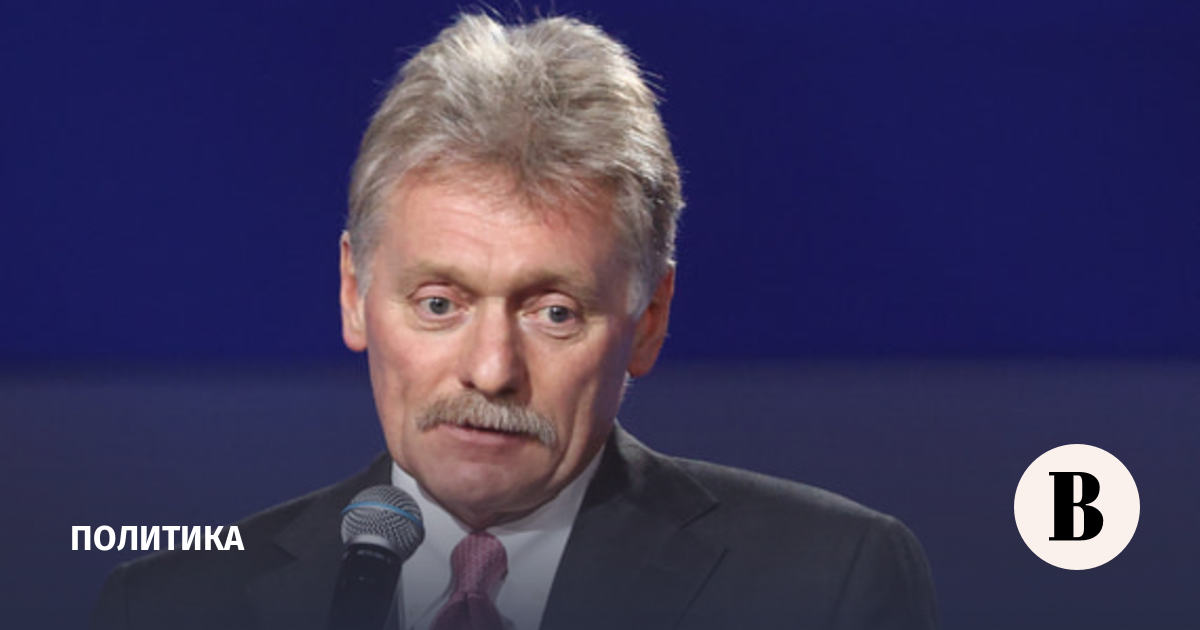
Russia’s official reaction has been demonstrably more restrained. Dmitry Peskov said that interaction between Russia and the United States in the Arctic was not on the agenda, as reported by Vedomosti. Russian analytical texts, however, interpret the agreement as an expansion of American military and intelligence capabilities near Russia’s northern borders. Here Moscow faces an uncomfortable reality: publicly, it can portray the dispute over Greenland as evidence of a split in the West, but the practical result is a denser American presence in the Arctic and the closure of the island to military infrastructure belonging to countries outside NATO.
An unusual international picture is thus taking shape. France sees the United States as an ally undermining confidence in its own alliances; Ukraine sees it as an indispensable partner whose promises must be turned into Patriot missiles and genuine commitments; Russian observers see both tactical benefits and a long-term threat in America’s crises. The common conclusion is not that America is “withdrawing” from the world. On the contrary, it is too actively present in it—but increasingly through pressure, personal deals and abrupt shifts. That is why Paris speaks of the need for European autonomy, Kyiv demands verifiable guarantees, and Moscow prefers American conflicts to continue long enough to yield benefits, but not so long that they slip out of control.