By the end of September 2026, the United States had become in Turkey, Brazil and Japan not merely a subject of foreign-policy reporting, but a factor forcing them to recalculate their own risks. Three parallel storylines are driving this: the war and sanctions pressure surrounding Iran, Washington’s conspicuously tough line in the Western Hemisphere, and Donald Trump’s meeting with Xi Jinping, from which Tokyo expects an answer to the key question: will Taiwan become a bargaining chip in a deal between the two superpowers? In all three countries, the United States is no longer seen as a predictable guarantor of order, but as a power whose decisions increasingly depend on short-term bargaining, the president’s personal diplomacy, and a willingness to use economic or military coercion.
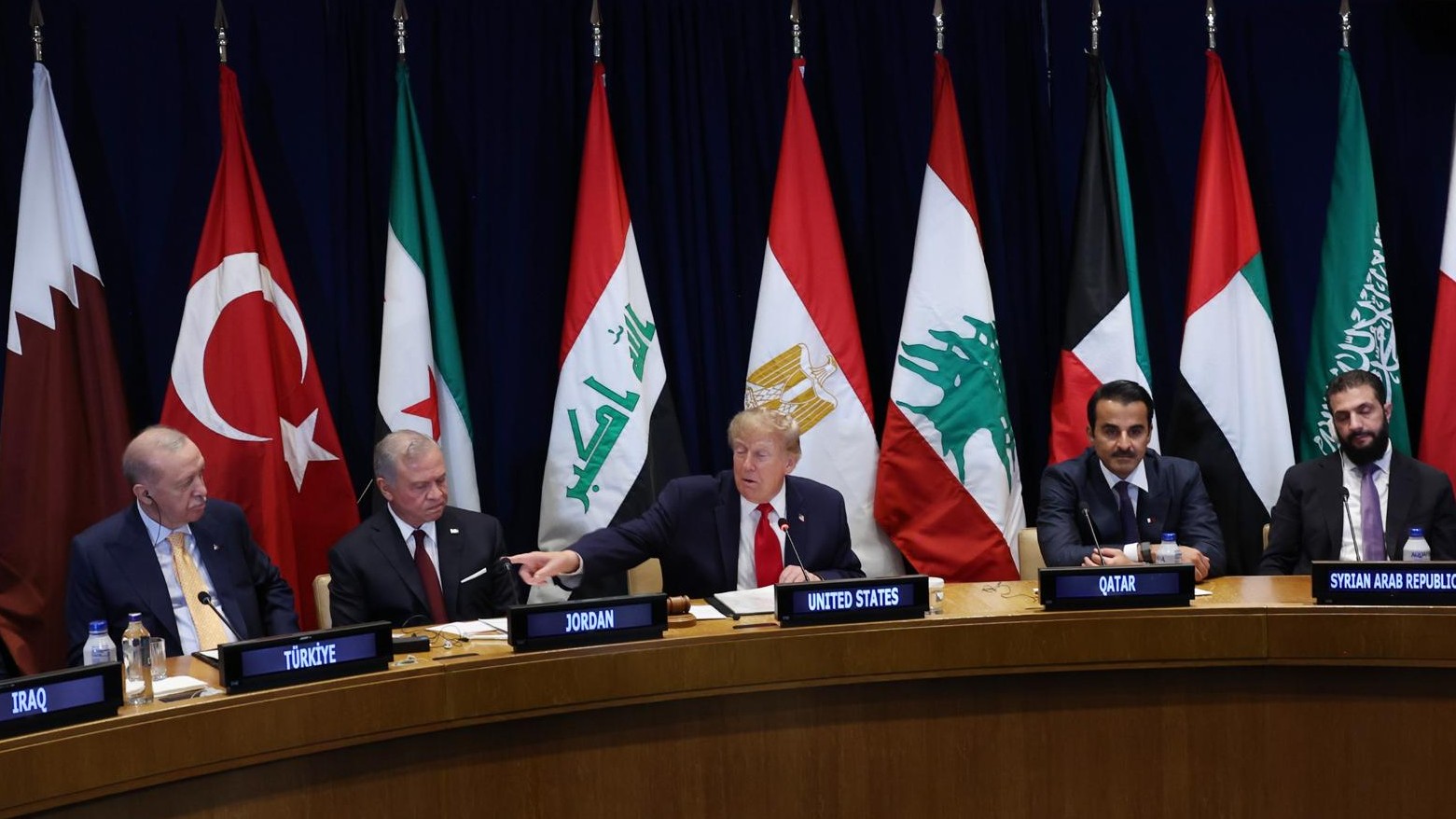
In Turkey, the most painful issue remains American policy toward Iran. For Ankara, this is not an abstract rivalry between Washington and Tehran: it is linked to energy supplies, border security, Syria, Iraq and the threat of a new wave of regional destabilization. In Murat Yetkin’s analysis, the disappointment that an expected one-on-one meeting between Recep Tayyip Erdoğan and Trump on the sidelines of the UN General Assembly never took place is especially telling. The symbolic lack of contact mattered precisely at a moment when Turkey had begun implementing sanctions restrictions against Iran. Yetkin ironically interprets the duality of the American attitude: Trump calls Erdoğan a “tough man,” while simultaneously emphasizing his personal fondness for him—in other words, sanctions and personal diplomacy are proceeding hand in hand. (yetkinreport.com)
The Turkish debate, however, is not limited to anti-American rhetoric. Expert Bilgehan Alagöz, in an analysis for Anadolu Ajansı, describes the current phase as “controlled escalation”: in his assessment, neither the United States nor Iran is seeking an unlimited war, but the very logic of retaliatory strikes could easily undermine that calculation. For Turkish observers, the idea that Washington combines military actions with diplomatic signals—and thus keeps its partners in a state of constant uncertainty—is particularly important. (aa.com.tr) The paradox of the local reaction is that Turkey wants neither a rupture with the United States nor to become a conduit for American pressure on neighboring Iran. Hence the increasingly prominent language of “strategic autonomy”: not a rejection of NATO, but an attempt to prevent an American crisis from becoming a Turkish crisis.
In Brazil, the American issue is even more direct—as a dispute over sovereignty and the permissible limits of interference. Trump’s speech at the UN, in which he discussed the possible use of force in pursuit of US interests in Latin America and justified American actions against Venezuela, was understood not only through the lens of Venezuela or Cuba. (tvbrasil.ebc.com.br) Brazilian commentators saw in it Washington’s claim to return to a “backyard” policy. In a Correio Braziliense analysis, the clash between the two speeches at the UN is described as an exchange of deliberately calibrated messages: Lula stated that “Brazil does not fit into anyone’s backyard,” while Trump emphasized the United States’ readiness to defend its interests in the Western Hemisphere by force. (correiobraziliense.com.br)
This sensitivity has been heightened by Brasilia’s specific grievances over American pressure. According to Folha de S.Paulo, during negotiations over 50 percent US tariffs, the Trump administration demanded that unnamed “political dissidents” be allowed to participate in Brazil’s 2026 presidential election. In Brazil, this was read as interference in the electoral process and as a continuation of American political support for Bolsonaro’s circle. (www1.folha.uol.com.br) Even Trump’s statement about combating the Brazilian criminal groups PCC and Comando Vermelho provoked irritation in the official response: the Justice Ministry pointed to tens of thousands of operations and a national program to combat organized crime, rejecting the American portrayal of Brazil as incapable of controlling its own security. (agenciabrasil.ebc.com.br) The local conclusion here is unusually harsh: trade tariffs, sanctions, talk of criminality and support for “dissidents” are perceived not as separate policy directions, but as a single set of instruments of pressure.
In Japan, the focus of the debate is different: Tokyo fears not a conflict with Washington, but that its interests may become secondary in a US-China deal. Following Prime Minister Sanae Takaichi’s meeting with Trump on September 22, the Japanese government emphasized the success of coordination on economic security and the Indo-Pacific. Foreign Minister Motegi called it especially important that the conversation took place immediately before the US-China summit and made it possible to reaffirm the strength of the alliance. The JETRO report records precisely this official line: Japan is seeking to incorporate issues involving technology, supply chains and regional security into its bilateral alliance with the United States. (jetro.go.jp)
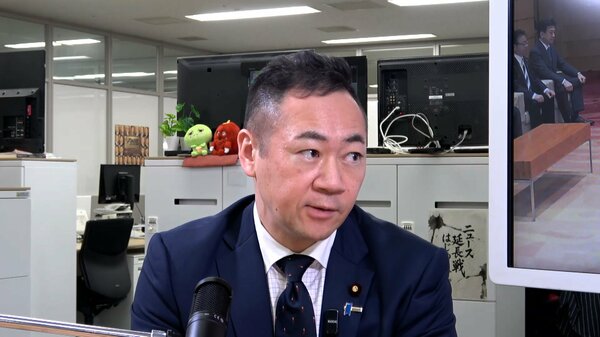
At the same time, however, concern is growing in the Japanese media that Trump could trade strategic positions for immediate economic concessions from Beijing. On TV Asahi, the Japanese concern was stated directly: the US president could halt arms sales to Taiwan in exchange for economic compensation from China. (news.tv-asahi.co.jp) Former Justice Minister Keisuke Suzuki, by contrast, considers the Takaichi–Trump meeting a successful attempt to navigate a “very narrow path”: keeping the United States engaged in Asia while not giving China an unnecessary pretext for escalation. (fnn.jp) This is Japan’s dilemma: the alliance with America remains indispensable, but the alliance’s reliability is now measured not by treaty formulas, but by how personally interested Trump is at any given moment in taking Tokyo’s interests into account.
The common thread in the Turkish, Brazilian and Japanese reactions is not so much rejection of America as distrust of its new way of acting. Ankara fears being drawn into an Iranian war and sanctions regime; Brasilia resists turning domestic politics into an object of American control; Tokyo worries that security around Taiwan could become a bargaining chip in US-China negotiations. The United States remains too powerful to ignore, but increasingly unpredictable to simply follow. That is why one practical idea is gaining strength in three very different countries: ties with Washington must be maintained, while room for independent maneuver must be expanded—in regional diplomacy, trade, defense and relations with China.