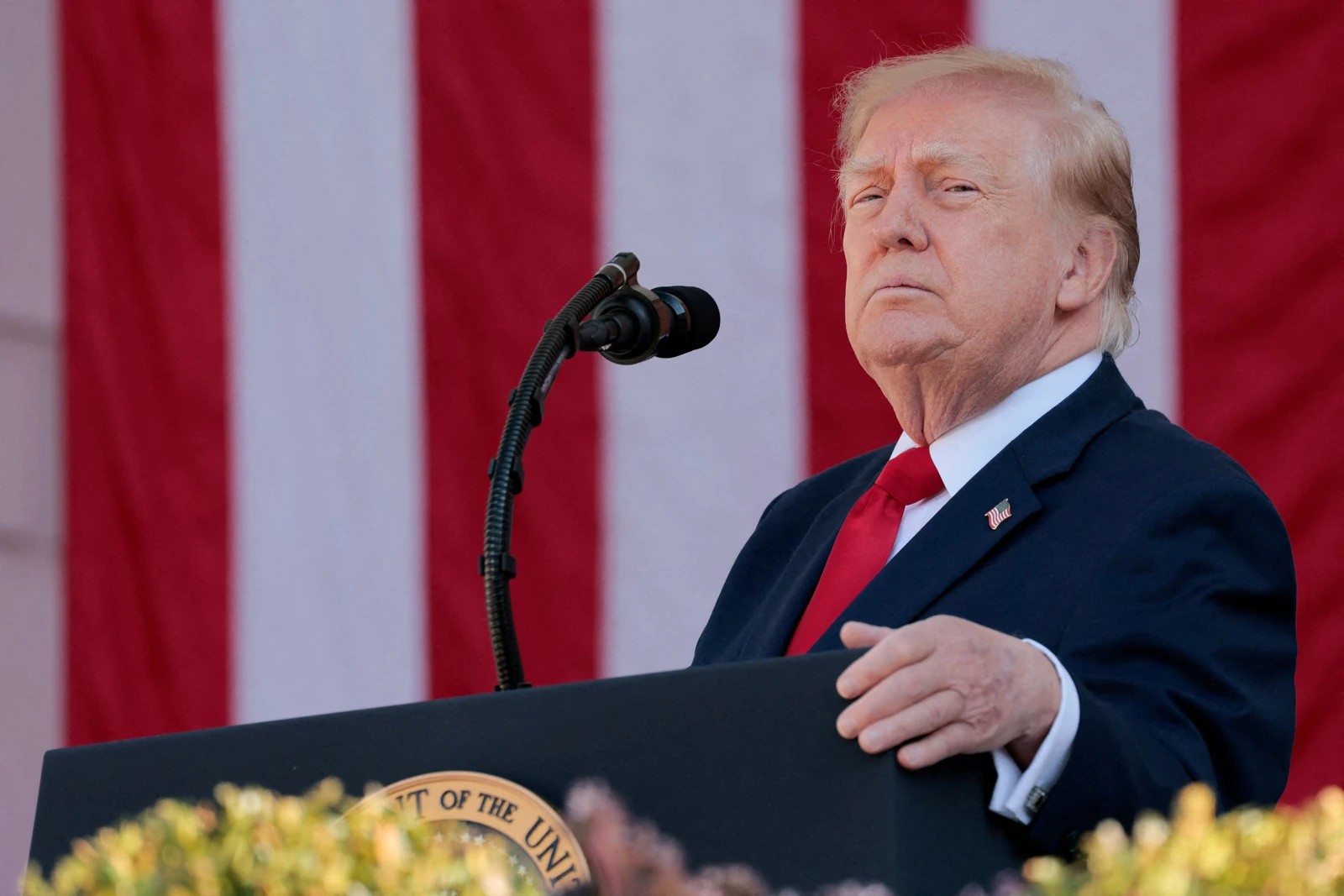
As of November 20, 2026, the United States was at the center of three distinct but closely connected debates in South Korea, Saudi Arabia and Turkey. In Seoul, people are discussing the risk that Washington may once again decide matters vital to the Korean Peninsula in a small club of great powers. In Riyadh, the main concern is Donald Trump’s wavering strategy in the war with Iran and its potential cost to oil infrastructure, shipping and regional stability. In Ankara, officials are trying to assess whether Trump’s personal rapport with Recep Tayyip Erdoğan can shield Turkey from renewed pressure from Congress, sanctions and US trade and defense conditions. The common conclusion among local commentators is stark: US policy is now seen not as a reliable system of alliances, but as a variable shaped by the president’s domestic political standing, the strength of Congress and his willingness to strike major deals.
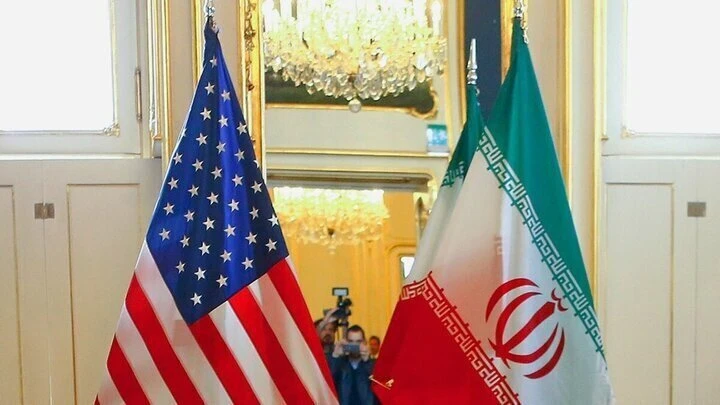
The most troubling issue shared by all three countries is Iran. The debate in Saudi Arabia is particularly telling: the concern there is not so much US weakness as its inconsistency. Washington alternates between allowing for another round of strikes and signaling a pause. Trump has said further attacks are unlikely if negotiations make progress, but later said he would “see what happens” after January 1. For Gulf states, this rhetoric does not mean more room to maneuver; it means they must prepare for the worst-case scenario: attacks on energy facilities, threats to shipping in the Strait of Hormuz and an expansion of the conflict into the Red Sea. An Arab News report notes that both Saudi Arabia and Turkey urged Trump not to resume large-scale strikes. This is significant: two regional powers with different relationships with Tehran agree on one thing—another US escalation could bring them more risks than benefits. (arabnews.com)
The Saudi view, however, is not simply to wait passively for a decision from the White House. In his column for Arab News, Abdulaziz Aluwaisheg, secretary-general of the Saudi-US Trade Group, urges the countries of the Gulf Cooperation Council to take a more active role in defending their own priorities. His point is that the conflict should not be left solely to US-Iran negotiations: Gulf states should maintain diplomatic channels while also ensuring the security of maritime routes. In other words, Saudi Arabia’s response to the United States is no longer a traditional plea for protection, but a demand that Washington recognize its allies’ own limits on how much war they are willing to tolerate. (arabnews.com)
In Turkey, the same issue is viewed through the lens of strategic autonomy. Ankara does not want to be a party to a US-Iran war, but neither can it ignore the consequences for trade, energy supplies, Syria, Iraq and the Black Sea. Turkish commentators therefore see US policy as a source of cascading risks: the greater the pressure the United States puts on Iran, the greater the likelihood of new migration flows, energy disruptions and intensifying rivalries in regions bordering Turkey. An analysis by the TRT Research Centre argues that US involvement in the Middle East forces Turkey to choose between cooperation with Washington and retaining freedom of action in its relations with regional players. For Ankara, the problem is not that the United States is present in the region, but that its goals and timelines change too quickly.
In South Korea, America is discussed above all as a power that can both provide security guarantees and risk politically excluding an ally. The first-ever summit between Trump, Xi Jinping and Vladimir Putin, held in the Chinese city of Shenzhen on November 19, prompted comparisons in the Korean press to a new “Yalta”—not because the meeting produced concrete decisions on Korea, but because the format of a deal among three great powers painfully recalls the peninsula’s historical experience. An editorial in Seoul Shinmun urges Seoul to strengthen its diplomatic capabilities in the face of a “new landscape” in nuclear security and ensure that future discussions about Korea do not take place without the Koreans themselves. (seoul.co.kr)
Korean concerns are especially evident in the reaction to North Korea’s absence from the summit’s final statements. In an E-Daily analysis, Victor Cha, a former senior official on the US National Security Council, notes: “The fact that Iran and Ukraine were not included in the declaration means there was no agreement; the absence of any mention of North Korea is also surprising” [translation]. For Seoul, this is a mixed signal. On the one hand, the lack of agreement reduces the risk of an immediate deal being made behind South Korea’s back. On the other, it shows that the major nuclear powers have yet to develop even a common approach to East Asia’s most dangerous problem. (v2.www.edaily.co.kr)
Turkish reactions to the Shenzhen summit are noticeably less emotional, but no less wary. In an analysis for Anadolu Ajansı, expert Vusal Guliyev writes that the meeting between Trump, Xi and Putin resolved neither the war in Ukraine nor the war with Iran, and that its lasting significance will depend on whether discussions about reducing nuclear risks become an ongoing process. For Turkey, the nuclear issue is not the only concern: in his assessment, growing US-China rivalry threatens to bring pressure in technology, sanctions enforcement, supply chains and access to critical raw materials. (mobil.aa.com.tr)
In the Arab debate, the same summit is seen as a sign of a shift toward a world of agreements among centers of power, in which the Middle East risks becoming an issue for discussion rather than a participant. In an Arabic-language analysis for Al Jazeera, Ali Hammoud argues that any US-China-Russia agreements on energy, sanctions or regional security have immediate repercussions for Arab countries. Notably, this view does not portray the United States as the region’s sole master: Trump’s talks with Xi and Putin in China are interpreted as evidence of a more multipolar system in which Washington can no longer set the rules on its own. (aljazeera.net)
The third shared theme is the impact of the Republicans’ defeat in the November 3 midterm elections. South Korean experts are under no illusion that a Democratic victory will automatically ease tariff pressure. A report by the Korea Institute for International Economic Policy, published on November 20, says uncertainty over US tariff policy remains significant, with Korean automakers, metals and high-tech industries particularly vulnerable. Seoul’s reasoning is straightforward: Congress can constrain Trump on budgetary and legislative matters, but the president still has considerable trade policy tools at his disposal. (kiep.go.kr)
Turkish analysts draw a similar but more political conclusion. Professor Tarık Oğuzlu warns in an analysis for Anadolu Ajansı that relations between Erdoğan and Trump alone cannot guarantee stability: “The future of Turkish-American relations will be determined not only by the closeness between Trump and Erdoğan, but also by the institutional balance of power in Washington” [translation]. This applies in particular to CAATSA sanctions, arms sales, the F-35 issue, Syria and Turkey’s ties with Russia. After the elections, the White House remains an important channel for Ankara, but Congress is once again an independent source of constraints. (aa.com.tr)
Together, these developments add up to a surprisingly unified picture. South Korea fears that the United States will discuss its security without it; Saudi Arabia fears that American military unpredictability will once again turn the region into a battlefield; and Turkey fears that personal diplomacy with Trump will not withstand a clash with US institutions. Yet none of the three countries concludes that it should break with Washington. On the contrary, they are looking for ways to maintain ties with America while reducing their dependence on its impulsive decisions. That is the main international effect of current US policy: America’s allies and partners are arguing less about whether they need the United States, and increasingly about how to weather America’s next turn.