In Germany, Brazil and Ukraine, discussion of America in recent days has increasingly come to resemble less and less the customary debate about an ally or the world’s largest market. The focus is on the United States as a country whose domestic politics and Donald Trump’s personal style immediately translate into external risks: for European security, Brazil’s election campaign and the very possibility of ending the war in Ukraine. The common emotion here is not anti-Americanism, but a wary acknowledgment: dealing with Washington remains essential, yet relying on the stability of its course has become much more difficult.
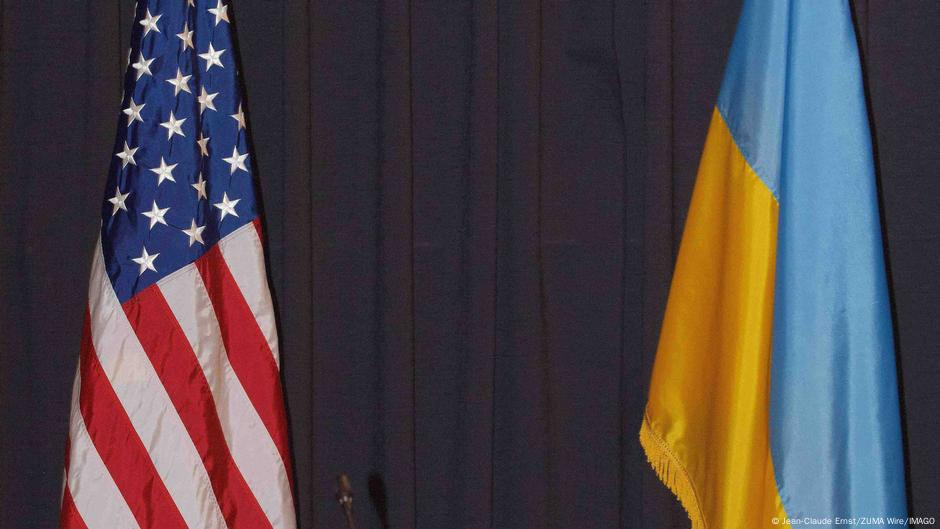
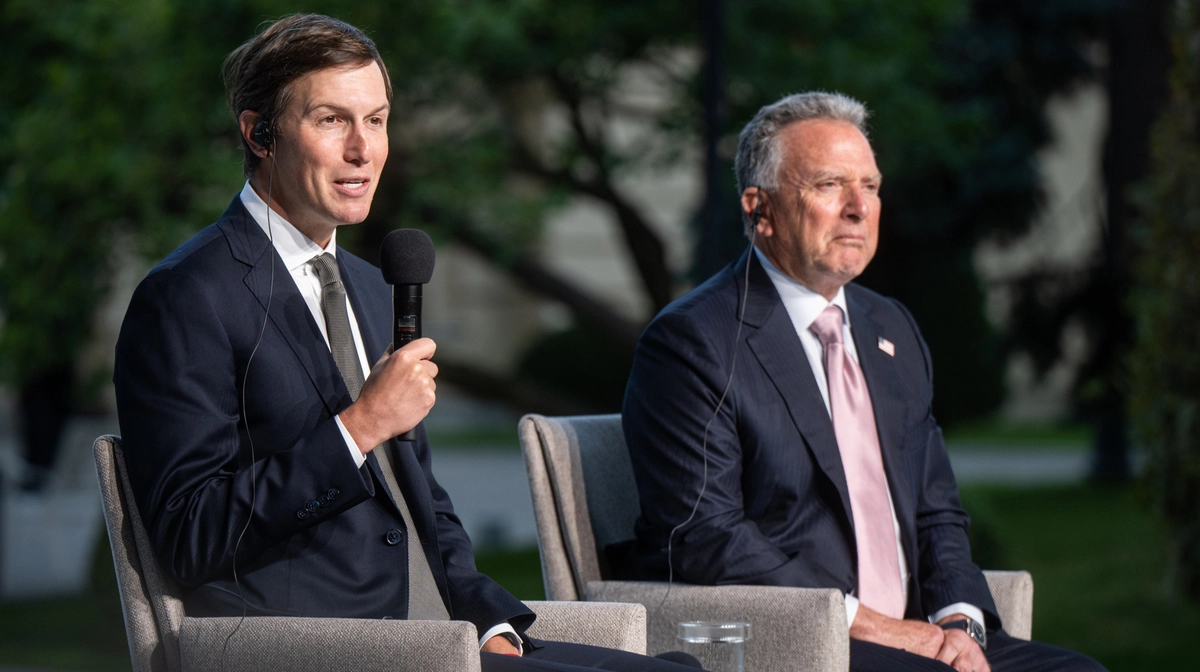
For Kyiv, the main American issue is the meeting scheduled for October 9 between a Ukrainian delegation and Trump envoys Steve Witkoff and Jared Kushner. The issue is a new comprehensive peace initiative which, according to Ukrainian and international sources, is expected to address all aspects of the war. But Ukraine’s response is not centered on hope generated by the mere fact of negotiations; it centers on the question of the price of peace. Volodymyr Zelensky is sending a high-level delegation to the United States while simultaneously stressing the need to increase pressure specifically on Moscow, rather than seek a formula under which Kyiv would legally or politically formalize the consequences of Russia’s occupation. (amp.dw.com)
This caution has a very specific cause. In September, Kushner publicly articulated a logic perceived in Ukraine as an alarming signal: in his version of events, an agreement could already exist if Kyiv agreed to surrender the territories demanded by Vladimir Putin. Ukrainian media are focusing not only on the substance of this statement, but also on the language of American mediation itself: when the aggressor and the defending country are described as two symmetrical sides in a conflict, the question of Russia’s responsibility for the war disappears. In the Ukrainska Pravda report, Kushner’s formula appears not as neutral diplomacy, but as a test of Ukraine’s readiness to accept an imposed deal. (pravda.com.ua)
This is precisely where the Ukrainian perspective diverges most sharply from the American impulse to “close the issue.” For Kyiv, a ceasefire without verifiable security guarantees is not the end of the war, but a pause during which Russia will rebuild its strength. Therefore, in Ukraine’s debate, the United States remains an indispensable partner, but no longer an unquestioned arbiter: Washington must prove that its desire for a speedy agreement is not more important than Ukrainian sovereignty. This is not a rejection of negotiations, but a demand to change their framework—from pressuring the victim to pressuring the aggressor.
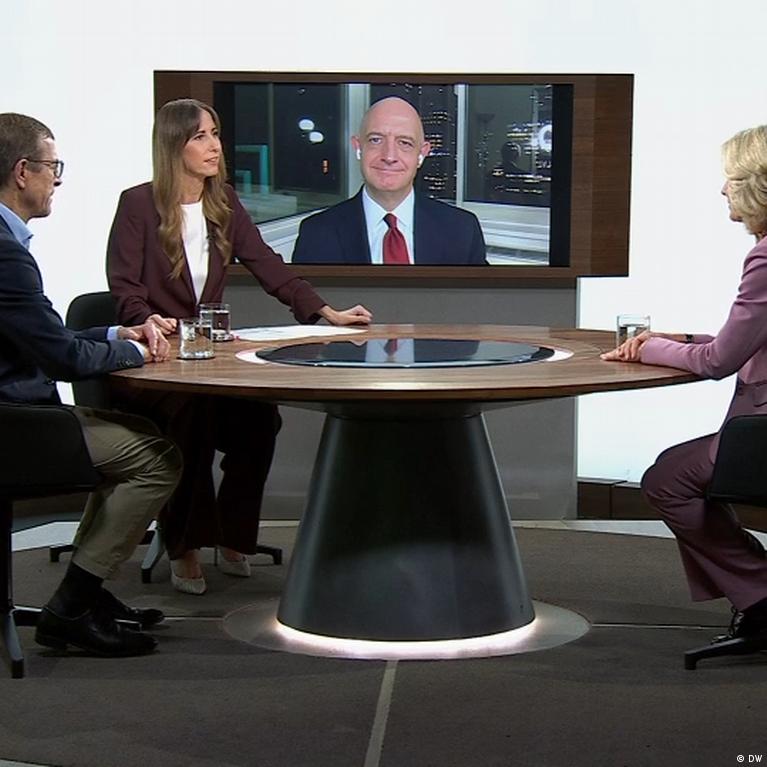
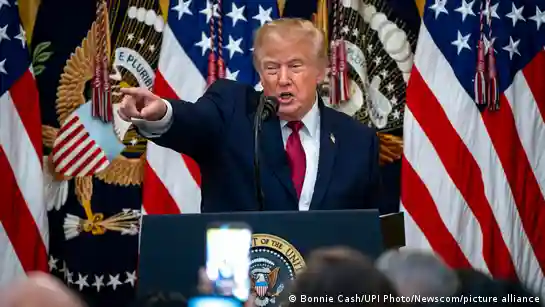
In Germany, the same problem manifests itself differently. Here, American policy is discussed through a painful collision between two dependencies: Europe wants greater strategic autonomy, but at the same time cannot quickly replace America’s military capabilities. Ahead of the U.S. midterm elections, German observers are paying particular attention to Trump’s weakening position against the backdrop of the war with Iran, rising prices and dissatisfaction with the cost of living. In the Deutsche Welle discussion on October 8, American domestic instability is directly linked to the Republicans’ prospects. For Berlin, this matters not out of curiosity about another country’s electoral drama, but because every political turn in Washington can alter U.S. commitments to Europe. (amp.dw.com)
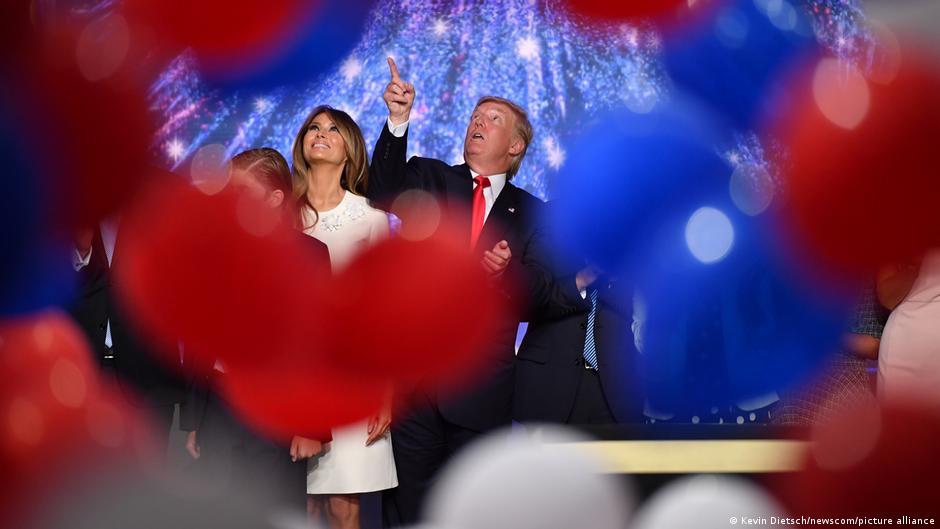
German concern goes deeper than the question of Trump’s popularity. Earlier, political scientist Sasha Lohmann of the Berlin-based German Institute for International and Security Affairs characterized the style of the president’s speeches as resembling an almost “stream of consciousness”: in such a model, policy is determined not by a consistent strategy, but by the leader’s immediate political needs. A DW analysis of the Republican convention shows that the war with Iran is becoming an uncomfortable subject even for the administration itself. In Germany, this leads to a broader conclusion: Europe’s security cannot be built on the assumption that American decisions will always be predictable. (amp.dw.com)
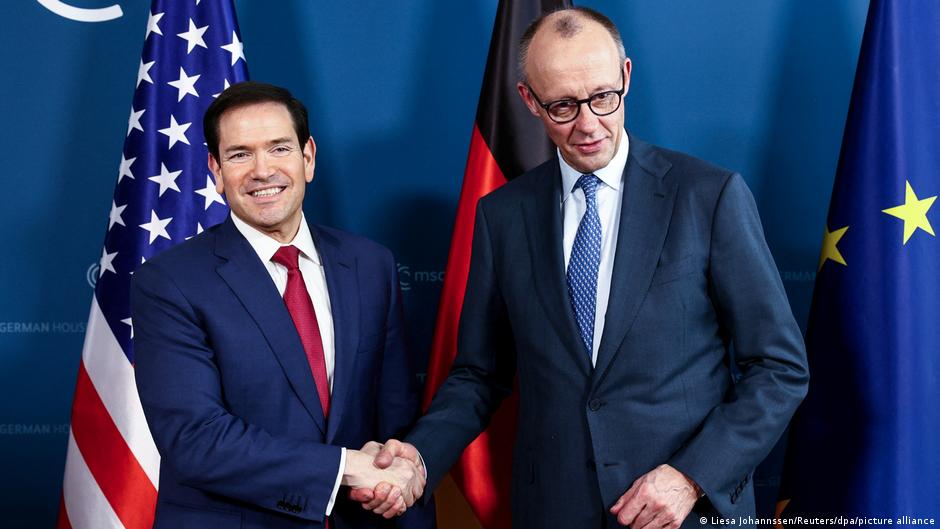
Hence Germany’s paradox. Berlin is not proposing a break with the United States—the role of American infrastructure, intelligence and nuclear deterrence is too great. But the idea is becoming increasingly prominent that the transatlantic alliance must evolve from a relationship of dependence into a partnership with a stronger Europe. This position was also expressed in Friedrich Merz’s speech at the Munich Security Conference: he distanced himself from MAGA’s cultural politics, protectionism and tariff logic, but urged that the alliance with the United States not be written off, but “re-founded” on more equal terms. (amp.dw.com)
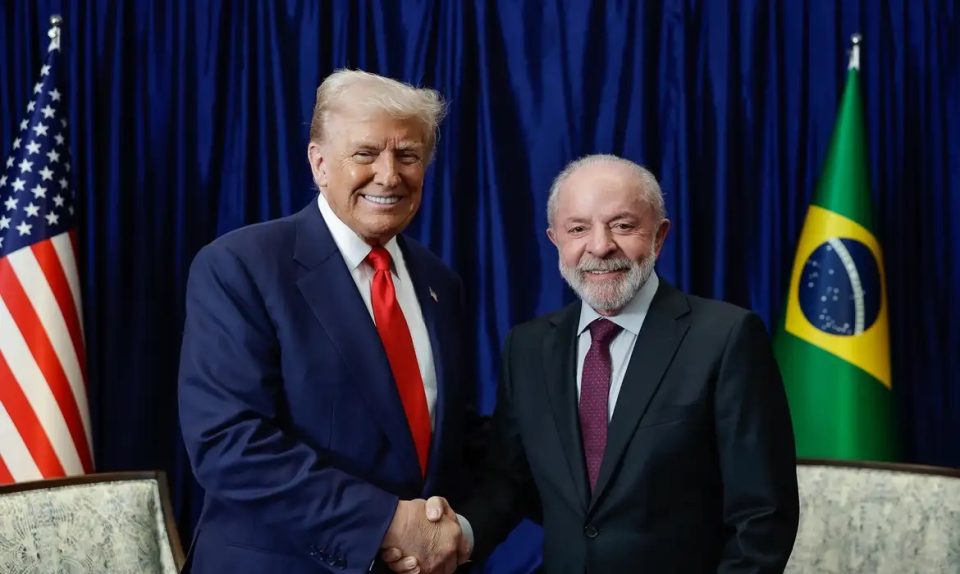
Brazil views America primarily through the lens of economic sovereignty—but in October, this issue is inseparable from the presidential campaign. Following U.S. tariff decisions, the trade dispute has become part of the domestic political struggle: negotiations with Washington, attitudes toward Trump and the Bolsonaro camp’s ties to the American right-wing movement have become political markers. At the end of September, Brazil and the United States established a working group on a trade agreement, but this did not remove the main source of irritation: the tariffs have already changed the competitive conditions for Brazilian producers. (www1.folha.uol.com.br)
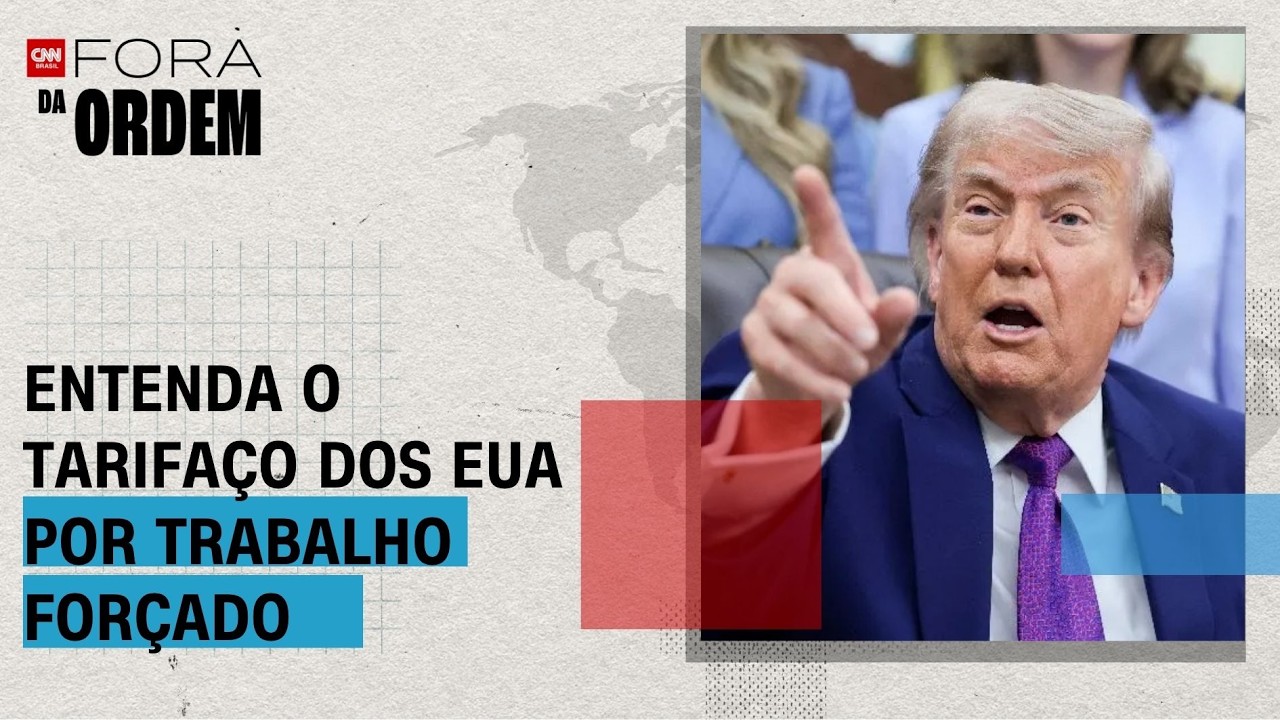
Brazilian commentators stress that the problem lies not only in the size of the tariff, but also in the arbitrariness of the reasoning behind it. CNN Brasil analyst Lourival Sant’Anna noted that the justification for the U.S. measures changed as Washington sought a legally acceptable construction for a policy it had already chosen. In the CNN Brasil analysis, this is read as criticism not simply of the tariffs, but of the negotiating model itself, in which economic pressure is accompanied by political conditions and constantly changing rules. (cnnbrasil.com.br)
For Brazilian business, the consequences are measured not in rhetoric. According to an estimate cited by Folha de S.Paulo, the relative tariff gap between Brazilian goods and their competitors in the U.S. market rose to 7.5 percentage points; the National Confederation of Industry says that a significant share of the country’s exports is affected by the American measures. (www1.folha.uol.com.br) The local response is therefore pragmatic: Brasília does not want a trade war, but is increasingly seeking alternative markets and fears that dependence on access to the United States is becoming an instrument of political influence.
The Brazilian conclusion is particularly telling—and rarely heard in American debates: Trumpism is viewed not as a distant U.S. phenomenon, but as a factor capable of influencing the distribution of power within Brazil itself. In an O Brasilianista column, the affinity between Bolsonarismo and Trumpism is described as an obstacle to normal trade diplomacy: Washington’s foreign policy has become entangled in Brazil’s electoral polarization. (obrasilianista.com.br)
A unified picture thus emerges. Ukraine sees the United States as both a vital military partner and a potential architect of a dangerously hasty peace. Germany sees it as an essential ally whose domestic turbulence is accelerating Europe’s search for autonomy. Brazil sees it as a huge market and, at the same time, a power capable of turning trade negotiations into a lever of ideological and electoral pressure. In all three countries, America remains a central force, but it is no longer synonymous with a predictable order. The main question being asked of Washington abroad today is not “Will the United States influence the world?” but “What rules is it itself prepared to impose on that influence?”