In late August 2026, the United States is being discussed in Beijing, Canberra and Berlin not as the familiar center of the Western order, but as a country whose decisions simultaneously create military, economic and political risks for partners and rivals alike. Three themes stand out in local debates: the protracted US confrontation with Iran and the fate of the Strait of Hormuz; Washington’s new tariff confrontation with Canada; and the broader question of whether security can still be built around American guarantees. The overall conclusion in all three countries differs in tone but coincides in substance: the problem is no longer just Donald Trump as an unpredictable leader, but the fact that US policy is increasingly seen as unconstrained by institutions, alliances and rules.
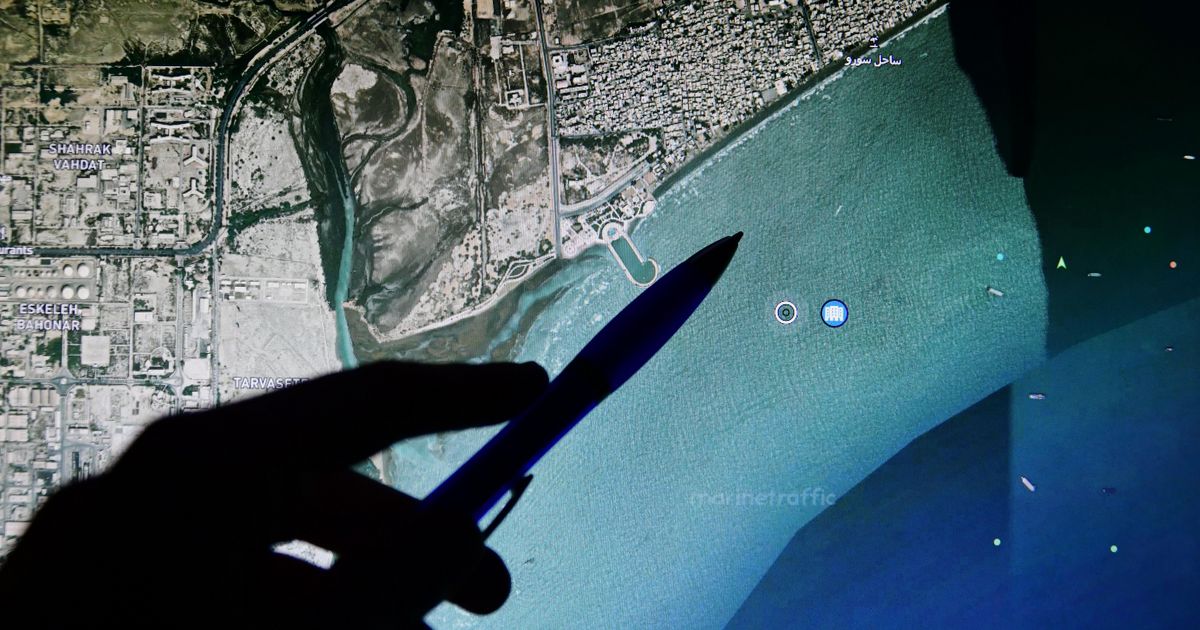
The most acute issue remains Iran. China’s state-backed expert debate describes the American campaign primarily as a demonstration of diminishing power: military means have not secured a political result for Washington, while the shift toward threats of “economic war” is interpreted as evidence that it lacks a convincing next step. In a CCTV analysis, Niu Xinchun, director of the Institute of Arab Countries at Ningxia University, calls control of the Strait of Hormuz Tehran’s main trump card. Qin Tian, deputy director of the Middle East division at the China Institutes of Contemporary International Relations, goes further, arguing that losing control of the strait would become a symbol of the weakening of American hegemony in the Middle East. This perspective is characteristic: Beijing looks not so much at the military campaign as a standalone crisis as at its significance for the broader balance of power—whether America can impose rules in a region on which Asia’s energy security depends. (news.cctv.com)
The German reaction is markedly less triumphant and far more legalistic. For Berlin and German analytical centers, the danger lies not only in the war’s failure to end, but also in the way it is eroding the regime of freedom of navigation on which Germany’s export economy depends. An analysis by the German Institute for International and Security Affairs explicitly stresses that the status of an international strait cannot be altered either by a coastal state or by an agreement between individual countries to the detriment of third parties; the authors call for the collective defense of maritime law. This is a crucial nuance: German criticism is directed not only at Iranian restrictions on transit, but also at the very idea that Washington has the right to unilaterally reshape the rules governing the passage of ships under the pretext of security. (swp-berlin.org)
In Australia, the same crisis is perceived even more personally—through the price of gasoline, inflation, maritime trade and the country’s involvement in the American military architecture. Australian Minister Kristy McBain warned that the longer the war continues, the greater the impact on households and businesses; opposition spokesman Dan Tehan called the very idea of charging for passage through Hormuz particularly alarming, as it could set a precedent for the South China Sea, a vital route for Australian trade. (abc.net.au) This makes Australia’s specific anxiety especially clear: if the United States can declare itself the arbiter of transit in the Persian Gulf, what will that mean for the future rivalry with China in the Indo-Pacific?
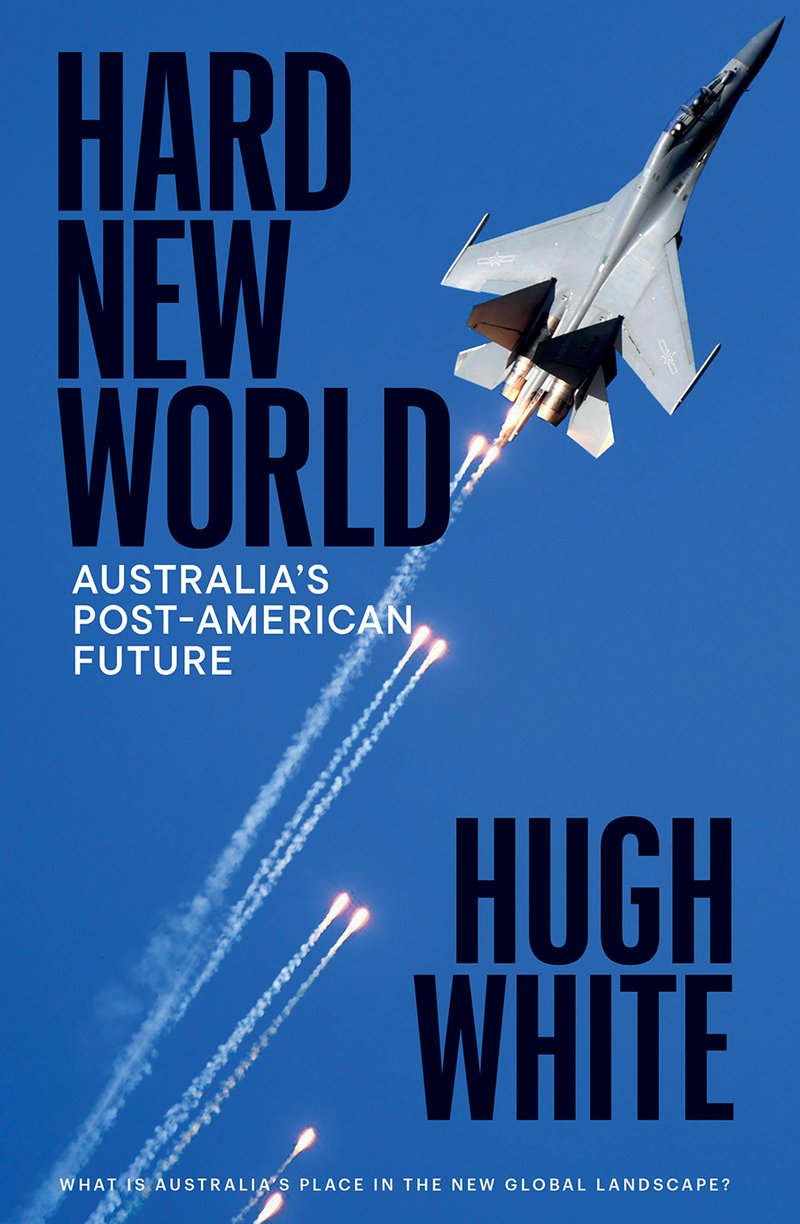
That is why, in Canberra, the debate over Iran quickly turns into a debate over AUKUS—the defense partnership between Australia, the United States and the United Kingdom. In an ABC commentary, political editor Jacob Greber drew an uncomfortable conclusion for the alliance’s supporters: AUKUS “binds Australia to America’s actions, whether it wants that or not.” Former Prime Minister Paul Keating, a longtime opponent of the deal, calls it the worst in the country’s history. Sam Roggeveen of the Lowy Institute, meanwhile, reads Canadian Prime Minister Mark Carney’s call for cooperation among middle powers as a warning: excessive closeness to any great power turns a state into a supplicant. (abc.net.au) This does not mean Australia is turning toward China. On the contrary, the Australian elite still considers the American presence a necessary deterrent. But the local debate increasingly features demands not to replace dependence on the United States with dependence on Beijing, but to build greater strategic autonomy.
This mood is reinforced by a deeper assessment of America’s retreat from Asia. In a recent Lowy Institute article, a researcher argues that Trump did not create America’s retreat; he became its symptom: the United States has fewer reasons and less political will to shoulder its former global commitments. (lowyinstitute.org) For Australia, this is probably the most painful conclusion of all: a change of president in Washington may not restore the former predictability, because American domestic politics itself is increasingly ill-equipped to support the country’s role as guarantor of the regional order.
The tariff dispute with Canada has become a vivid example of why US allies increasingly distrust even economic agreements with Washington. After negotiations collapsed, America’s 50 percent tariffs hit a number of Canadian goods, and from January 1, 2027, Trump promised to extend that level of duties to automobiles, auto parts and steel. Prime Minister Mark Carney responded with a “dollar-for-dollar” formula, saying that Canada had been attacked. (tagesschau.de) German commentators view the conflict as a stress test for the entire North American production system. Handelsblatt correspondent Laurin Meyer put it aptly: the tariff does not “restructure” North America’s economic space; it “taxes its connections.” In the automotive, steel, energy and agricultural sectors, goods cross the border repeatedly before becoming finished products. Political pressure on Canada therefore inevitably returns as higher costs for American companies and consumers. (handelsblatt.com)
In China, this episode is interpreted as confirmation of a long-promoted argument: Washington’s tariffs are not a special instrument aimed at China, but a universal mechanism of pressure, even against its most closely integrated allies. Xinhua describes the current phase as a threefold struggle—for economic resilience, a domestic political base and the negotiating initiative—while noting that Carney’s strategy is to turn the dispute into a problem for US domestic politics and force the White House back to the negotiating table. (news.cn) For Chinese audiences, the Canadian episode itself is less important than the lesson: even deep interdependence, a shared border and the USMCA agreement do not protect against sudden American escalation. This makes China’s argument for diversifying trade and technology links more persuasive not only within the PRC, but also to countries that once regarded the US market as the most reliable.
Germany and Australia do not share China’s desire to declare these developments proof of America’s irreversible decline. Yet they increasingly converge with Beijing on a much narrower, practical diagnosis: the United States has begun using power, sanctions and tariffs in ways that make an alliance with it a source of risk in its own right. The German press speaks of a “trade war” and a dangerous spiral of retaliatory measures; Australian authors write about the cost of dependence and the need to prepare for an America that may take less interest in Asia’s security; Chinese analysts focus on the limitations of US military and economic pressure. (tagesschau.de)
The main international shift, therefore, is not that China, Australia and Germany assess America in the same way. They do not: China sees a strategic opening, Germany a crisis of rules, and Australia the risk of losing sovereign choice. But all three debates increasingly depart from the old assumption that American power automatically produces stability. It is now more often seen as a force whose consequences must be hedged—diplomatically, economically and militarily.