In Turkey, South Korea and India, discussion of the United States in early October 2026 is no longer focused on the familiar question of how close relations with Washington are, but on another: how long can American promises be relied upon? Three very different countries share the same impression: Donald Trump’s administration has turned trade, security, energy and even alliance commitments into a single set of pressure levers. Their responses, however, differ. Seoul is trying to buy predictability through major investments in America; New Delhi is demanding that the terms of any deal be fixed in a way that cannot be overturned by another White House decision; and Ankara is seeking to use Erdoğan’s personal contact with Trump to lift sanctions and return to the F-35 program—while remembering that decisions in the United States are not made by the president alone.
The most vivid common theme is trade, which from the local perspective has ceased to be an economic technicality and become a test of political sovereignty. This is especially clear in India: negotiations on an agreement with the United States have once again reached an impasse, even though the two sides announced a framework agreement back in February. Finance Minister Nirmala Sitharaman described the situation as a “plateau,” while U.S. Trade Representative Jamieson Greer said that a final deal “is not imminent.” For Indian author Soumya Bhowmick, the most important cost of American tariffs is not the rate itself but the “confusion”: businesses do not know what regime will be in place tomorrow or whether any concession reached will disappear because of a new investigation, sanctions law or court ruling. In his column for The Indian Express, he urges New Delhi to seek not an attractive tariff figure but conditions that are “harder to reverse.” This is a characteristic Indian view: a dispute with the United States is not a reason to sever ties, but neither is it an ordinary negotiation over market access; it is a test of whether India can preserve its strategic autonomy while purchasing American energy, technology and weapons.
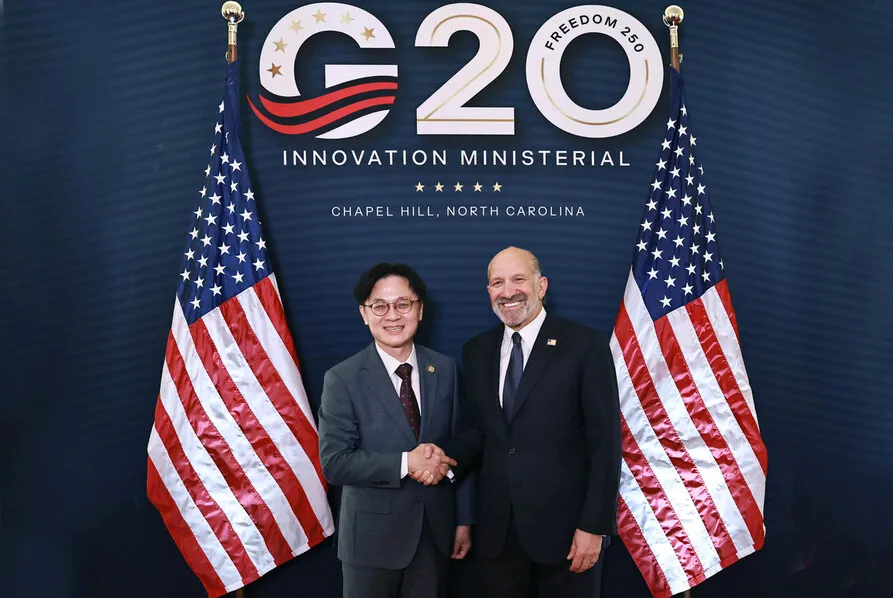
The South Korean debate is even more practical and тревожный. Seoul is already linking lower American tariffs to a package of strategic investments in the United States: the first project announced is the construction and operation of a gas-fired power plant in Texas, while eight major nuclear power plants and an Alaskan LNG project are also under discussion. A Yonhap timeline shows that this arrangement grew out of a deal under which South Korea agreed to invest $350 billion in exchange for a reduction in tariffs from 25% to 15%. In the Korean press, however, this is increasingly viewed not as a voluntary industrial strategy but as the price of a temporary reprieve. Commenting on American pressure to build semiconductor plants in the United States, the editorial board of Hankyoreh urges the government to negotiate while “holding the leverage.” The underlying concern is that Washington wants not merely investment, but the transfer to America of the production expertise on which South Korea’s export model rests.
Turkey’s discussion of tariffs is less institutionally structured, but no less emotionally charged. Local economic commentators associate the new American measures with a double blow: customs barriers are hurting textiles and finished clothing, while the conflict involving Iran is driving up energy costs. An Ekonomim article emphasizes that Turkey has been included among the countries that could face an additional duty of 10–12.5%; another column in the same publication calls the decision on textiles a blow to a sector that was already in serious difficulty. Turkey’s response therefore differs from India’s: New Delhi is thinking about the rules governing a major power, while Ankara is also concerned with the direct social impact on vulnerable exporters and domestic inflation.
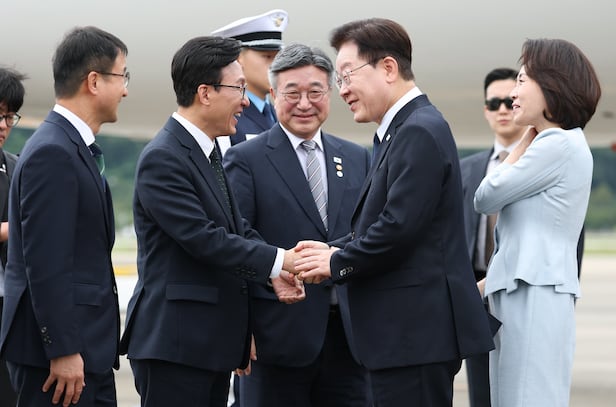
The second common thread is distrust of American military policy in the Middle East and an unwillingness to pay for it with their own resources. Trump’s statement that the United States could expand strikes against Iran after the midterm elections was not perceived in South Korea as a distant Middle Eastern story. It overlapped with an already sensitive question: should an ally assist America in an operation that has no direct connection to the security of the Korean Peninsula? An Hankyoreh editorial endorsed President Lee Jae-myung’s statement that “we will not send troops,” interpreting it as a refusal not only to dispatch a contingent but also to participate indirectly—through patrol aircraft or demining teams. This marks an important shift: even a country where the alliance with the United States remains the foundation of national defense is drawing a line between alliance commitments and involvement in an American war.
For India and Turkey, the Iranian crisis looks even more immediate. The Indian editorial position is not limited to anti-war rhetoric: after Indian sailors were killed in American strikes in the Persian Gulf, New Delhi was forced to make its red lines explicit to Washington. The Indian Express presents the dilemma rather bluntly: India must preserve its partnership with the United States, but neither open confrontation nor submission will work. For a country with a vast seafarer diaspora, dependence on maritime trade and longstanding ties with Russia and Iran, American military policy poses a simultaneous risk to people, energy supplies and its freedom of maneuver.
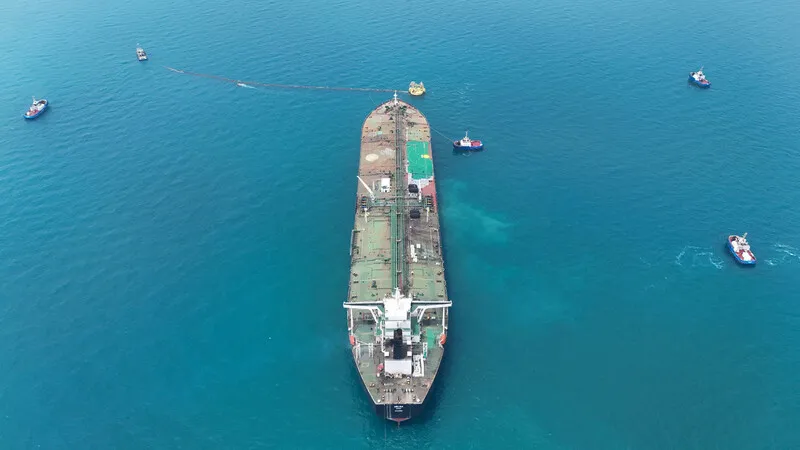
In Turkey, geography adds to the problem. Rising oil prices and tensions around the Strait of Hormuz are seen as an immediate threat to the balance of payments and inflation. But Turkish commentary also contains a broader idea: U.S. military activity does not strengthen American leadership; it undermines it, because allies are refusing to follow Washington automatically. The sharpest voices in the Turkish spectrum see this as evidence of the decline of American hegemony; more moderate authors speak not of decline but of the need for Turkey to avoid building its policy around expectations of Trump’s next personal gesture.
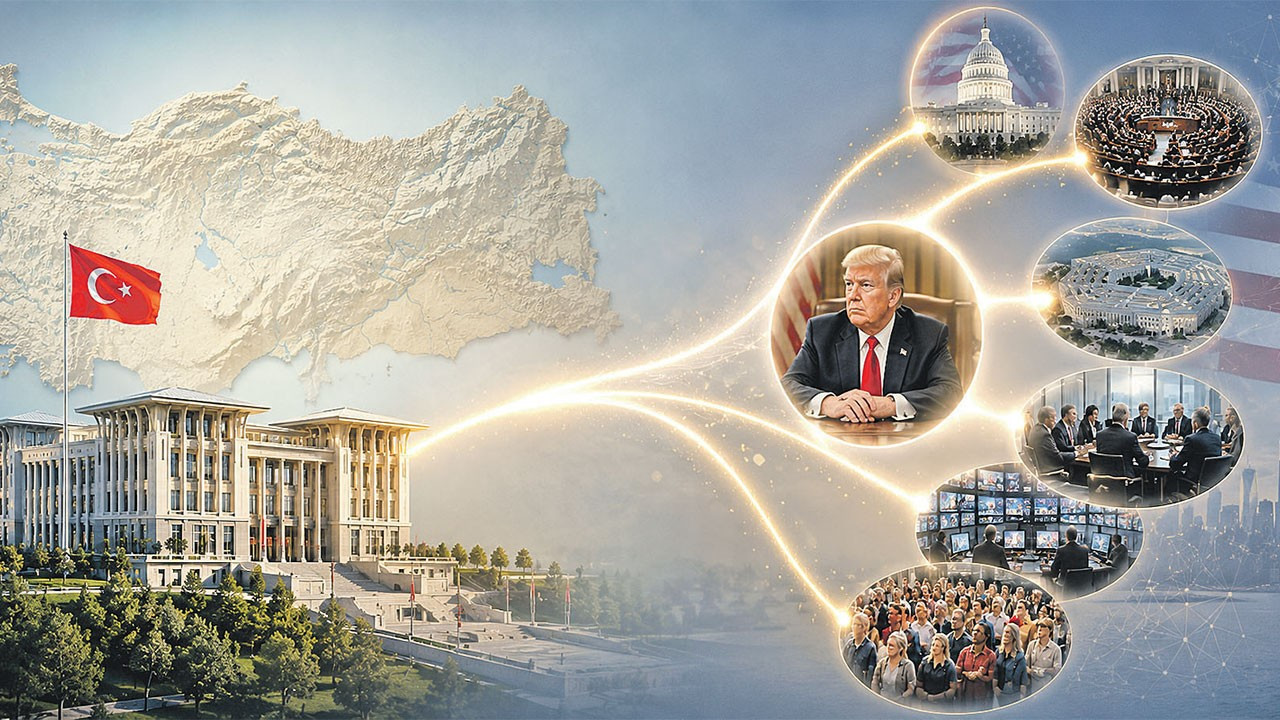
Personal diplomacy is the third theme linking all three countries, although it is especially pronounced in Ankara. After the NATO summit in Ankara in July, Trump promised to work on lifting the CAATSA sanctions imposed on Turkey after its purchase of Russian S-400 systems, and sent a positive signal regarding the F-35. Turkish Deputy Foreign Minister Berat Gümrükçü said that the sides had created political and military working groups and that “this time we really feel that we are closer” to a settlement, as reported by Ekonomim. Yet even in Turkey’s business press and publications close to the pragmatic center, this optimism is accompanied by a significant caveat. An Ekonomim columnist warns that a foreign policy based solely on Trump is vulnerable because the United States has Congress, lobbies, the bureaucracy and public opinion. This is perhaps the most precise local conclusion: the president’s personal goodwill may open a door, but it does not override American institutions.
In South Korea, similar dependence on a single administration is expressed differently. Conservative professor Kim Young-soo writes in a Chosun Ilbo column about the need to survive in a “world without America”: in his view, Trump treats alliances as deals and international rules as expendable material. But the author does not reach an anti-American conclusion. On the contrary, he believes that South Korea cannot replace the United States in deterring China and must therefore strengthen its own defense while preserving the alliance. This is the key Korean difference from the Indian and Turkish approaches: fear of China and North Korea limits Seoul’s freedom to maneuver against the United States more strongly than irritation over trade pressure.
Indian authors, by contrast, are increasingly questioning the very formula of “special relations.” Former foreign minister and parliamentarian Shashi Tharoor calls the main source of the crisis the “radical unpredictability” of MAGA’s transactional policy in an article for The Indian Express. In his assessment, India is no longer seen in Washington primarily as a counterweight to China; it is increasingly viewed as a market for American goods, energy, technology and weapons. Kanthi Bajpai puts it even more bluntly in his column: “special relations” have given way to cold transactionalism. This is painful for the Indian elite not because it expected altruism from the United States, but because the previous arrangement appeared mutually beneficial: America helped strengthen India in Asia, while India helped contain China. Now tariffs, pressure over Russian oil and the possibility of a U.S.–China rapprochement are calling into question the very strategic logic of that exchange.
What is particularly notable is that in all three countries, criticism of America does not turn into a call to reject it completely. In India, people speak of diversification and “red lines,” but not a rupture. In South Korea, they demand that the country not participate in an American war against Iran, but do not question the defense alliance itself. In Turkey, they are skeptical of Washington’s promises, but at the same time want CAATSA lifted and access to the F-35. The common denominator is not anti-Americanism but a new diplomatic realism: the United States remains too important to ignore, but too unpredictable to trust without safeguards.
This view from Ankara, Seoul and New Delhi reveals a shift that is easy to underestimate when reading American debates. For allies and partners, the problem with Trump is not only the harshness of his demands. More important is that every agreement—on tariffs, energy, military affairs or technology—is perceived as a temporary pause before the next round of pressure. Thus, the main international response to America is becoming neither a choice between loyalty and rupture nor an attempt to break away, but a search for ways to make relations with Washington less personal, less one-sided and, ultimately, more reversible for America itself.