As of August 29, 2026, discussions of America in South Korea, Japan and India revolve around one shared concern: Washington is increasingly using force not only in the military sense, but also through control over trade routes, access to its market and the right to work in the United States. The most acute symbol of this has been the protracted US-Iranian confrontation over the Strait of Hormuz. But two other issues have emerged alongside it in Asian debates: new US tariffs, including on drones, and a proposal to once again charge employers $103,265 for a new H-1B visa application. On the surface, these are different decisions—war, trade protection and migration policy. To Asian observers, however, they form a single picture: America is turning its power and the size of its market into instruments of coercion, while its partners are being forced to pay in advance for the unpredictability of this policy.
Hormuz is the point where this concern is felt most directly. After August 28 marked six months since the start of the US-Israeli war against Iran, there is growing skepticism in Seoul and Tokyo that Washington’s statements about restoring freedom of navigation automatically mean a return to normal trade. President Donald Trump insists that the United States has regained the upper hand in the strait, but for Asian countries what matters is not the formula about “control” but the ability to receive oil, gas and components without interruption. In an analysis by EAI President Chung Jae-sung and researcher Park Ji-eun, South Korea’s East Asia Institute describes American statements that the strait is effectively US territory primarily as coercive negotiating rhetoric, rather than a realistic assertion of sovereignty. The authors draw a more important conclusion: for Tehran, control over the passage of vessels is not merely a bargaining chip, but an asymmetric instrument for regime survival. Therefore, even a partial resumption of shipping does not eliminate the risk of a new crisis. (global.eai.or.kr)
This is a distinctly Korean perspective: rather than arguing over who is “winning” the US-Iran confrontation, it assesses how dangerous it is to build a national economy on the assumption that American military power will always guarantee predictable trade. EAI recommends that South Korean companies avoid rushing back to regular routes, gradually reduce their dependence on passage rules imposed by Iran, and closely monitor the prospects for Omani mediation. Particularly notable is the analysts’ assessment that the baseline scenario of alternating negotiations and escalations has a 50% probability, while the scenario involving the collapse of mediation has a 30% probability. This is not a forecast of imminent peace, but a call to adapt business and government to prolonged instability. (global.eai.or.kr)
In Japan, the same problem is framed even more starkly—as an exposed vulnerability in the country’s energy security model itself. In a recent report by the Japan Research Institute, Naoyuki Fukuda writes that the crisis revealed two weaknesses: the excessive concentration of sources and supply routes in the Persian Gulf and the Strait of Hormuz, and the vulnerability of the domestic oil-product distribution chain. In other words, even if a tanker manages to pass through the strait, that does not mean the crude will be converted into fuel and reach Japanese consumers without delays. Japan’s response contains little hope that the problem can be solved by the US Navy alone; instead, it focuses on diversifying procurement, building oil reserves, and expanding the role of nuclear and renewable energy. (jri.co.jp)
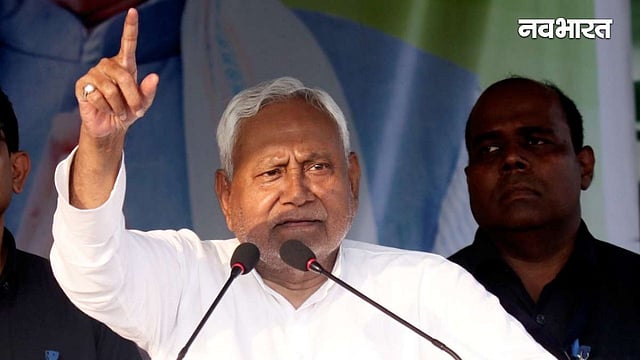
The Indian press views Hormuz through an even broader set of risks. In an editorial by Amrit Vichar, the crisis is described as an issue in which New Delhi must simultaneously support Omani mediation, seek guarantees from Iran for Indian shipping, defend its energy interests in negotiations with the United States, and develop alternative supply channels from the Gulf states. In a commentary by Navbharat, the emphasis shifts to sanctions against Iran and the potential damage to India’s project at the port of Chabahar. For India, this is not an abstract port: it provides access to Afghanistan and Central Asia while bypassing Pakistan. India’s response to American pressure is therefore ambivalent: Delhi does not want to quarrel with Washington, but it is not prepared to calmly accept a situation in which US strategy toward Iran blocks its own regional geography. (amritvichar.com)
The second shared theme is American protectionism, which Seoul and Tokyo increasingly view not as a temporary trade dispute but as the new norm in alliance relations. The tariff regime for drones and their components is especially telling: from September 3, the United States will impose tariffs of up to 100% on certain categories of products. South Korea’s Ministry of Trade emphasizes that Korean goods are subject to a 15% ceiling, while also acknowledging the urgent need to clarify the details with Washington and assess the consequences for the industry. The Seoul government briefing makes the prevailing mood clear: even treatment that is preferential compared with China’s or the general regime is not seen as a guarantee—conditions may change by sector and depending on America’s definition of national security. (admin2.korea.kr)
Japan’s reaction is similar in substance but more technocratic. JETRO explains that Japanese, Korean, Taiwanese and European supplies have received a combined ceiling of 15%, while sensitive categories of drones may be subject to a 100% tariff. At the same time, the US scheme provides tariff exemptions for companies that invest in production on US territory. Tokyo reads this as an unmistakable signal: access to the American market is increasingly purchased not through the quality of exports, but through the localization of capital, technology and jobs in America. An alliance with the United States does not eliminate trade pressure; it merely makes it possible to negotiate a lower rate and a longer adjustment period. (jetro.go.jp)
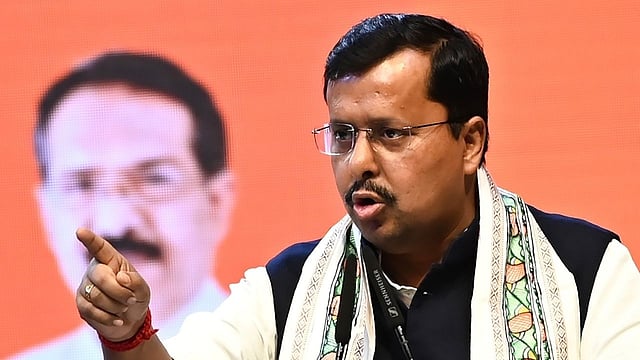
The most distinctive, but politically highly sensitive, Indian issue is H-1B. On August 24, the US Department of Homeland Security proposed introducing an additional $103,265 fee for H-1B visa applications subject to the annual cap. Formally, this is still a proposed rule rather than an enacted regulation: the department says it is needed to offset government expenses related to reviewing, administering and overseeing immigration programs. (content.govdelivery.com) In India, however, it is seen as a blow not only to outsourcing companies but also to the very notion of the United States as the primary platform for the career advancement of the engineering and IT elite.
Yet India’s response reflects not only resentment but also pragmatism. The National Association of Software and Service Companies, Nasscom, said that Indian technology firms have already substantially reduced their dependence on H-1B visas by expanding hiring directly in the United States. In a statement reported by the Indian news agency Press Trust of India, the industry is effectively telling Washington that the program is needed to address skills shortages, not to displace American workers. This is an important tone. Indian business is not responding with calls for confrontation; it is demonstrating that it has already adapted to American political risk—localizing part of its workforce, investing in training and now demanding not privileges but predictable rules. (ibc24.in)
This is the most unexpected shared conclusion emerging from South Korean, Japanese and Indian discussions. In all three, the United States remains an indispensable partner: a military ally for Seoul and Tokyo, the largest market for their industries, a technological center and a key strategic partner for India. But the image of America as a provider of stability is changing noticeably. South Korea is learning to live with the fact that American power at Hormuz does not eliminate insurance and logistics risks; Japan is turning the crisis into a program for structural energy autonomy; and India is trying to protect its sea routes, Chabahar and the mobility of its human capital at the same time. In all three countries, what is growing is not anti-Americanism but a more sober understanding: dependence on the United States now requires not trust but costly insurance—in the form of energy reserves, local production, alternative routes and indigenous technological ecosystems.