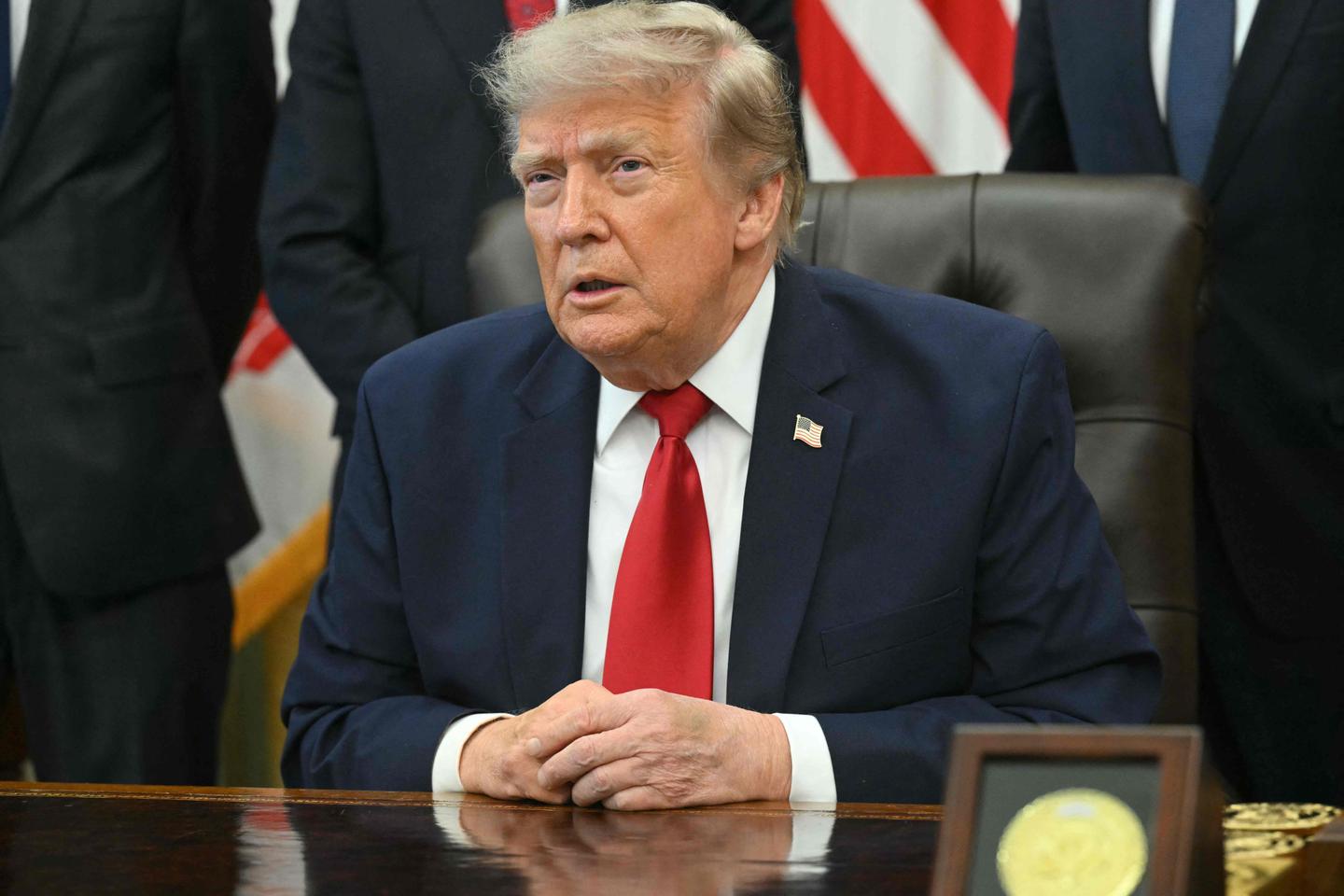
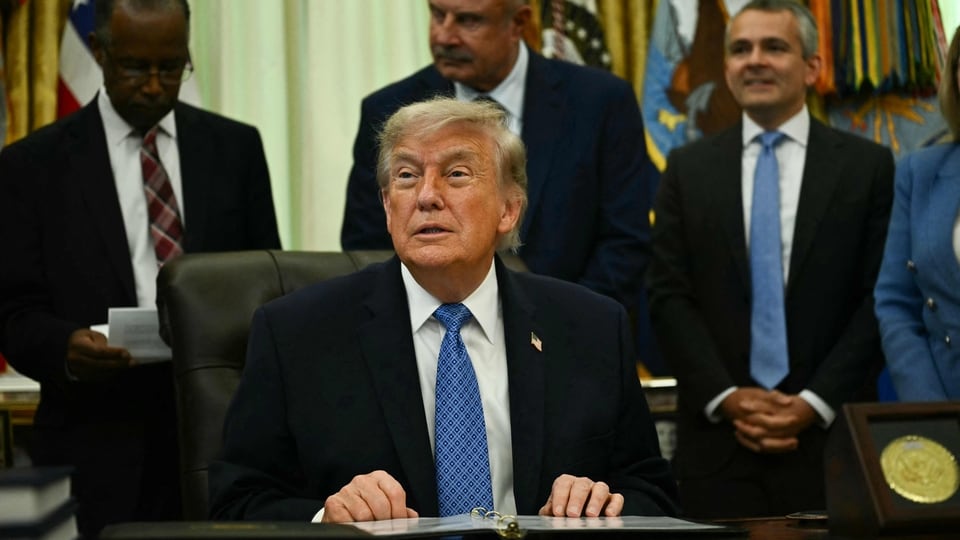
In South Korea, India and France, the American agenda this summer is no longer perceived as a collection of isolated news reports from Washington. Local commentary is coalescing into a broader picture: under Donald Trump, the United States remains an indispensable partner, while simultaneously becoming a source of trade, military and political uncertainty. Three topics are discussed particularly often: the use of tariffs as a tool of pressure, the consequences of America’s war with Iran, and concerns about the state of American democracy itself. What unites these reactions is not anti-Americanism as such, but doubts about the predictability of a country on which too much depends.
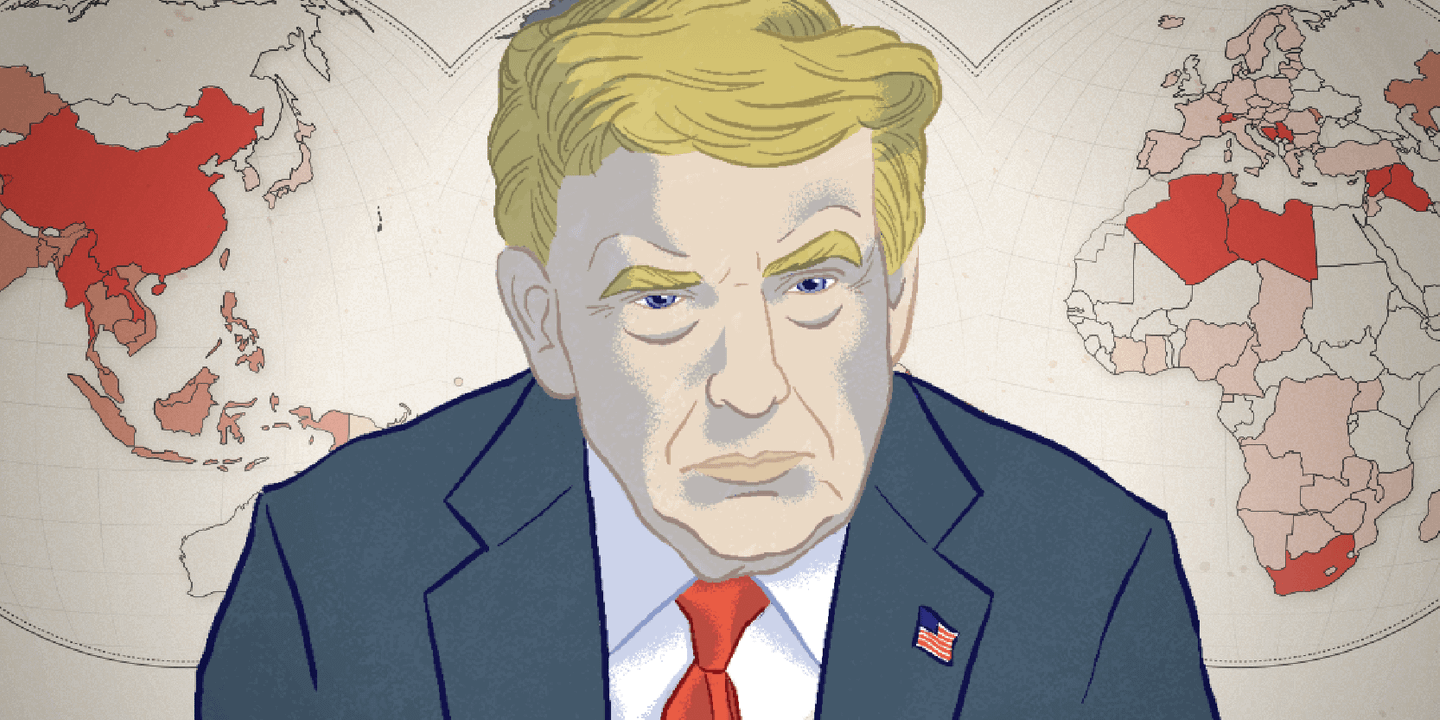
The most practical grievance is the transformation of access to the American market into a lever of political coercion. In Seoul, discussion has focused on new U.S. tariffs under Section 301 of the Trade Act. In July, the Korean government warned that new measures could follow the end of the temporary global tariff, while a rate of 12.5% was being considered for Korean goods. In Korean business circles, this is seen not simply as another tariff adjustment, but as a signal that trade rules may change in line with the White House’s domestic political logic. An overview by KPMG Korea emphasizes the unusual nature of the mechanism itself: Washington used Section 301 for the first time to pressure countries over the regulation of imports produced using forced labor. For Seoul, this means that export risks now depend not only on prices, quality and bilateral negotiations, but also on which social or legal standard the United States next decides to turn into a trade criterion. (seoul.co.kr)
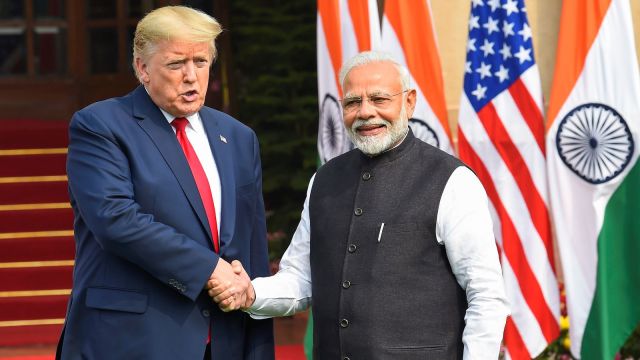
In India, the dispute sounds even sharper because it has compounded accumulated disappointment. In a column for The Indian Express, Indian researcher Vivek Mishra writes that bilateral relations are simultaneously facing pressure from tariffs, migration policy, purchases of Russian oil, and technological competition surrounding AI. The tone itself is significant: this is not about a temporary “disagreement between allies,” but about the possibility that the existing mechanisms for managing the relationship may prove inadequate. Indian public debate increasingly views partnership with the United States as necessary to contain China, but not reliable enough to serve as the foundation of an economic strategy without the safety net of ties with Europe, Russia, the Middle East and the countries of the Global South. (indianexpress.com)
The French reaction is less tied to a specific tariff rate, but the logic is similar: Paris sees tariff policy as part of a broader American shift from coordination among allies toward transactions in which power outweighs shared rules. The French newspaper Le Monde describes the new U.S. foreign-policy doctrine as a world in which national interest, economic gain and bilateral pressure displace international law and established alliances. For a French audience, this is not an abstraction: such an approach strengthens Emmanuel Macron’s argument for European strategic autonomy—the ability of Europe to defend itself, produce critical technologies and conduct trade policy without constantly looking to Washington for guidance. (lemonde.fr)
The second common concern is the U.S. war with Iran and the instability surrounding the Strait of Hormuz. Here, it is particularly clear how differently countries measure the cost of American military power. For South Korea, this is primarily a question of energy, freight, insurance and industrial resilience. A study by the Korea Institute for Industrial Economics and Trade urges readers to view transport, insurance and raw-material costs not as a short-term military disruption, but as permanent “structural security costs.” In other words, from the Korean perspective, an American operation in the Middle East immediately becomes a problem of production costs for Korean factories and the resilience of the export model. (kiet.re.kr)
Indian analysts draw a somewhat different conclusion from the same crisis. A paper by the Observer Research Foundation says that Hormuz could become a symbol of the “Trump 2.0” era: strategic cooperation between India and the United States remains indispensable, but increasingly encounters diverging regional interests and views on the acceptable use of force. For Delhi, Iran is not only an adversary of America, but also an important regional neighbor, an energy factor and a route into Eurasia. India therefore cannot accept the American framework—one in which Tehran is exclusively an object of isolation—without incurring losses. This is a rare case in which India’s tradition of multi-alignment is not merely a diplomatic habit, but a way to reduce the risks generated by an ally’s policies. (orfonline.org)
In France, the Iran issue reinforces an old fear of American escalation, the consequences of which are borne primarily by Europe and regions neighboring the Middle East. French commentators note not only the conflict itself, but also the lack of a clear strategy for ending it. In Le Monde, Trump’s Iran policy is described as a combination of a desire for a show of force and growing involvement in a protracted conflict. And following the resumption of the U.S. naval blockade, according to South Korean news agency Yonhap, the dispute over control of Hormuz has once again acquired practical significance for international shipping. In Paris, this strengthens the belief that Europe must have its own diplomatic line—not because it can ignore the United States, but because it should not automatically share the consequences of every American military adventure. (lemonde.fr)
The third issue—the state of American institutions—is particularly prominent in France, but also resonates in Asia. The French press views preparations for the U.S. midterm elections not as an ordinary partisan dispute, but as a test of the American system’s ability to constrain the president. In an investigation by Le Monde, Michael Waldman, president of the Brennan Center for Justice, is quoted as saying that Trump’s persistence on voting issues is intended not only to revisit the 2020 election, but also to spread fear, doubt and confusion among voters. For the French, accustomed to viewing the United States as the world’s oldest modern democracy and an ideological ally, this issue has an almost symbolic significance: America no longer appears to be an unquestioned model to invoke in debates over liberal institutions. (lemonde.fr)
South Korean observers view the same problem through the lens of the reliability of American commitments. The National Strategic Portal of the Parliament of the Republic of Korea directly links possible changes after the U.S. elections to the future of agreements between Seoul and Washington on trade, investment and military security. In other words, America’s domestic conflicts become a foreign-policy risk for Korea: if agreements depend on the loyalty of a particular administration and its electoral interests, then even a strong alliance ceases to be fully predictable. (nsp.nanet.go.kr)
India’s response is less moralizing, but no less wary. According to data presented by Hindustan Times, Indian confidence in Trump has fallen sharply, while negative views of the United States have reached their highest level in a quarter-century. The reasons cited are quite specific: global tariffs, strict migration policy, and Washington’s actions in conflicts involving Iran and Venezuela. For India, this matters not because public opinion automatically determines Narendra Modi’s policy, but because the emotional foundation of the old story about a “natural alliance between two democracies” is disappearing. In its place comes a cooler calculation: cooperation with America is necessary, but trusting it unconditionally is dangerous. (hindustantimes.com)
The most unexpected common feature among the three countries is that none of them is calling for a break with the United States. Seoul cannot replace the American security umbrella; Delhi has no interest in weakening the American presence in the Indo-Pacific; and Paris is not abandoning the transatlantic relationship. Yet everywhere, demand is growing for diversification—of markets, energy suppliers, defense capabilities and diplomatic channels. France frames this as European sovereignty, India as strategic autonomy, and South Korea as economic security and reduced dependence on vulnerable routes.
A new international response to the United States is thus taking shape: America remains too powerful to ignore, but is no longer predictable enough to rely on without contingency plans of one’s own.


![A U.S. Navy helicopter deployed in the maritime blockade of Iran [Captured from U.S. Central Command’s X account. Resale and database use prohibited]](https://img9.yna.co.kr/etc/inner/KR/2026/08/01/AKR20260801008900071_01_i_P4.jpg)