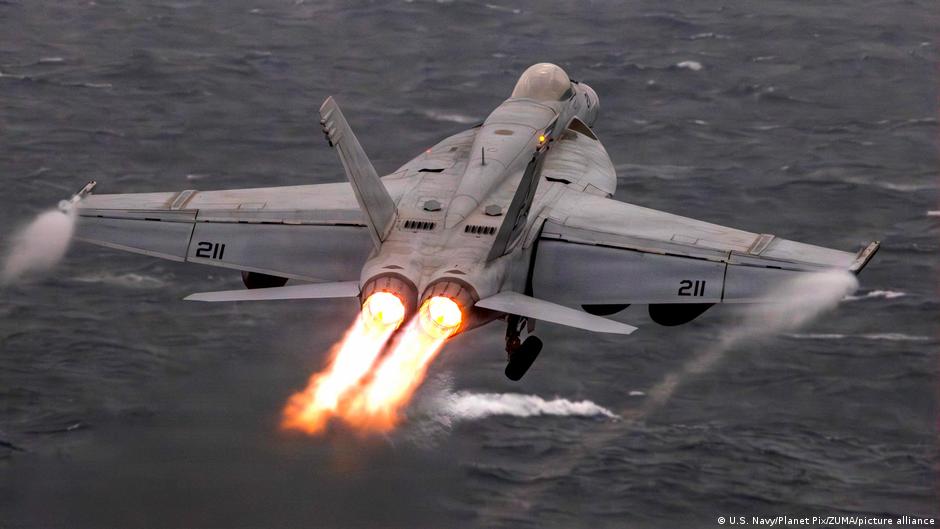
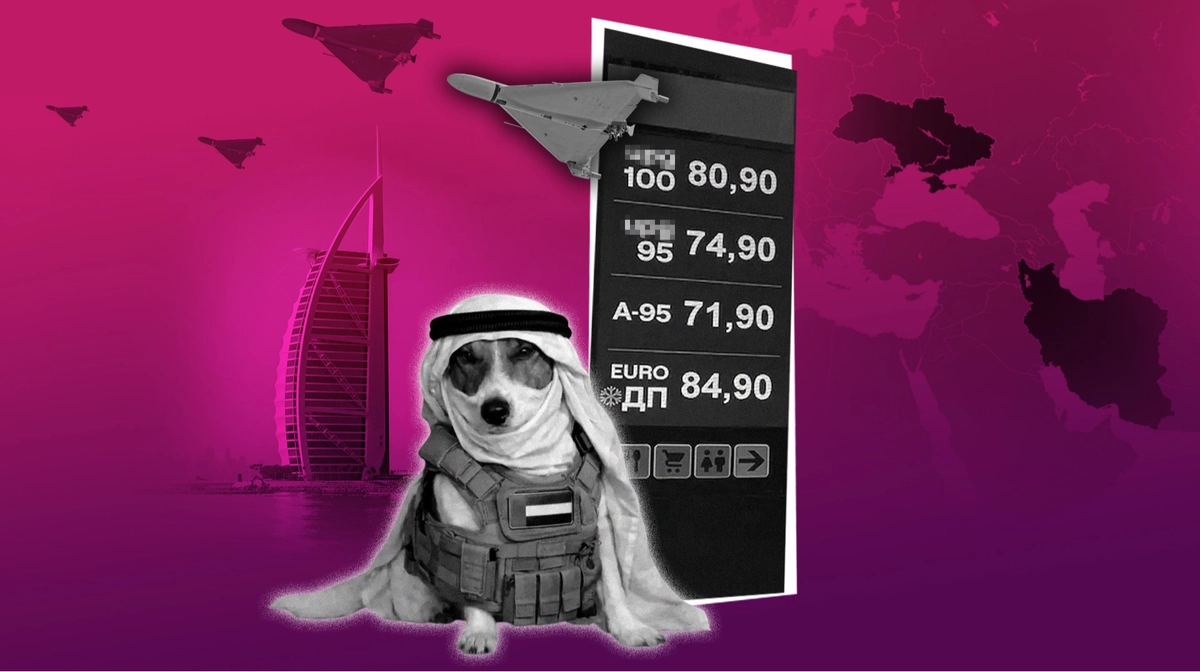
As of September 2, 2026, the attention of South Korea, Germany and Ukraine is focused less on the domestic twists and turns of American politics than on the consequences of two foreign-policy decisions by Washington: the renewed military escalation with Iran around the Strait of Hormuz and the United States’ closed-door contacts with Moscow over an alleged 28-point plan to end the war in Ukraine. At first glance, these are different stories—oil and tankers in the Persian Gulf, negotiations over territory and sanctions in Europe. Yet local debates converge on one point: America’s allies increasingly see Donald Trump’s administration as a power capable of rapidly using force or opening a negotiating channel, but far less predictable when it comes to who will ultimately pay for the strategic consequences.
The Iran issue is particularly acute in Seoul. For South Korea, Hormuz is not an abstract piece of Middle Eastern geography, but an artery on which energy imports, freight rates, export competitiveness and consumer sentiment depend. A review by the National Strategic Information Portal of the National Assembly Library of the Republic of Korea records that after a new exchange of strikes on August 30 and September 1, two tankers were attacked in the strait, including a vessel linked to the Korean company Chang Myung Shipping; shipping traffic fell sharply, while oil prices rose by approximately 5%. This turns the American operation from news about a distant war into a direct economic risk for South Korea. (nsp.nanet.go.kr)
The Korean reaction is practical and almost entirely devoid of ideological pathos. The question is framed not as “Should the United States contain Iran?” but as “Does Washington have a realistic way out of the conflict without disrupting transit and markets?” The official Korean review explicitly warns of the risk that recurring limited clashes could become entrenched—a state somewhere between peace and war. (nsp.nanet.go.kr) For a country whose industries are particularly sensitive to raw-material costs and maritime logistics, this is the worst-case scenario: not a one-off shock that can be offset with reserves, but a prolonged risk premium built into the price of oil, insurance and shipping.
But in Seoul, this concern has a second layer. The war with Iran is viewed as a factor capable of changing Trump’s priorities on the Korean Peninsula. In a Korea Economic Daily article, the reduced scale of the US–South Korean Ulchi Freedom Shield exercises is explained as an attempt by the White House to achieve quick diplomatic results with Pyongyang ahead of the US midterm elections in November. The author calls this a continuation of Trump’s “transactional” view of the alliance: security is assessed in terms of cost and the partner’s reciprocal contribution. (wsj.hankyung.com) Professor In Eul-chul of Kyungnam University’s Institute for Far Eastern Studies adds an uncomfortable detail for Washington: thanks to its military and economic rapprochement with Russia, as well as cooperation with China, North Korea now depends significantly less on diplomacy with the United States. (wsj.hankyung.com) In other words, the Korean perspective is that the American president may want a quick détente, but Pyongyang is no longer obliged to help him create such a picture of victory.
In Germany, the escalation with Iran provokes similar concern, but it is expressed in a different language—the language of strategic futility and Europe’s financial vulnerability. In a Deutsche Welle analysis, the American practice of regularly striking Iranian facilities as they are rebuilt is described as “mowing the lawn”: the adversary is not destroyed once and for all, but periodically weakened to an acceptable level. The problem, the article emphasizes, is that this model may not eliminate the threat but instead make the war self-sustaining: Tehran rebuilds its air defenses, radars, missiles and mine-laying capabilities, and the United States strikes again. Moreover, Mona Yacoubian, an expert at the Center for Strategic and International Studies, warns that continued attacks could push Iran to conclude that its only reliable means of deterrence is its own nuclear weapon. (amp.dw.com)
This is an important German perspective: Berlin does not dispute that the security of shipping in the Strait of Hormuz matters, but fears that Washington’s chosen method of ensuring it will produce precisely the kind of prolonged instability from which Europe suffers most. In a column for Südkurier, German commentator Christian Grimm links the Iran campaign to another American problem—public debt, inflation and high interest rates. His conclusion is blunt: the growth of US borrowing is already making credit more expensive for other countries, while military spending and high fuel prices increase the threat of renewed financial stress. (suedkurier.de) Behind this criticism lies more than irritation with Trump. Germany feels dependent on two American variables at once: American military power in the security sphere and American monetary and fiscal policy in the economy.
Ukraine’s reaction to the US conflict with Iran is even sharper, because Kyiv measures every new American commitment not only in oil, but also in air-defense missiles. In a column by Mykhailo Dubinyansky in Ukrainska Pravda, the war with Iran was described as a risk that American surface-to-air missiles could be diverted from Ukraine—a category of weapons that was already in chronically short supply there. (pravda.com.ua) Ukraine’s fear is not that the United States will lose interest in the war with Russia because of a single Middle Eastern crisis. It is deeper: Washington may remain involved in several conflicts at once, but begin allocating scarce resources according to the logic of an immediate American threat rather than the logic of Europe’s long-term security.
At the same time, Ukraine is trying not to reduce American policy to the simple formula “Trump is pro-Russian.” An analysis of the consequences of the Anchorage summit offers a more precise—and perhaps more troubling—idea: Trump is primarily “pro-Trump.” Ukraine may be valuable to him as a source of combat experience, drone technology, joint production and future commercial projects, but that usefulness does not equal security. The author puts it almost aphoristically: new interdependence with the United States makes Kyiv more valuable to Washington, “but not safer.” (pravda.com.ua)
That is why the renewed discussion of the 28-point peace plan is being received so nervously in Kyiv. According to Gazeta.ua, on September 1, US Treasury Secretary Scott Bessent discussed Trump’s plan with his Russian counterpart Anton Siluanov, while Ukrainian society followed the developments amid air-raid alerts and Russian strikes. The article highlights what matters most to the local mood: it is not the fact of negotiations itself that matters, but their outcome. The author sees a danger in Europe once again finding itself on the margins of the discussion, even though its own approach had been coordinated with Kyiv. (api.gazeta.ua)
Here, the German and Ukrainian reactions converge almost word for word. For Kyiv, negotiations without firm guarantees could create a pause in which Russia rearms. For Germany, they are dangerous because the United States may reach an agreement on European security in a format where Europe is present more as an object of the consequences than as a full-fledged participant. It is telling that, in the same Ukrainian article, Siluanov’s arrival at a meeting of G20 finance officials is called an “alarming signal,” while German Finance Minister Lars Klingbeil reportedly reacted especially sharply to his presence. (api.gazeta.ua)
The most unexpected feature of these three national debates is the absence of the familiar question of whether the United States will remain the leader of the West. Seoul, Berlin and Kyiv start from the assumption that America remains indispensable—as a military power, issuer of the world’s key reserve currency, provider of technology and security partner. The dispute is about something else: can a strategy be built around an ally that simultaneously protects sea routes and turns them into a war zone; promises negotiations while leaving their terms uncertain; demands greater contributions from its partners while making decisions capable of sharply increasing their risks?
South Korea is responding by trying to calculate the cost of American actions for tankers, oil and deterrence against North Korea. Germany is calling for reduced dependence on Washington’s political impulses without severing the transatlantic link. Ukraine is seeking to turn its military value to the United States into lasting security, rather than allowing it to become a bargaining chip in a larger deal. The common conclusion among local voices is not anti-American. It is far more complicated: Trump’s America remains necessary, but its allies are finding it increasingly difficult to regard it as predictable.