By September 21, 2026, discussions of America in France, Japan and South Korea have come to share not one sensational story, but a common perception: under Donald Trump, Washington’s policy has become simultaneously more belligerent, more personalized and less predictable for its allies. At the forefront are the protracted U.S. war with Iran, the sudden reduction of U.S.–South Korean military exercises, and the transformation of trade and investment issues into instruments of political pressure. In local debates, the United States is no longer seen simply as a guarantor of order. Increasingly, it is viewed as a partner whose decisions can instantly alter the military balance, oil prices and the conditions for access to the American market. (lemonde.fr)
The most painful issue they share is the war with Iran, because it is forcing allies to question America’s ability to manage the Middle East while simultaneously deterring threats in Asia. In the French press, the concern is framed primarily as a question of Washington’s strategic capacity. In a Le Monde article, the Trump administration’s unpredictability is presented not as an episode of diplomatic eccentricity, but as a factor forcing Asian allies to reconsider their entire security architecture. The French perspective is characteristic: it focuses less on whether the United States will win a particular campaign and more on whether America’s very way of waging war is undermining trust in alliances and international rules.
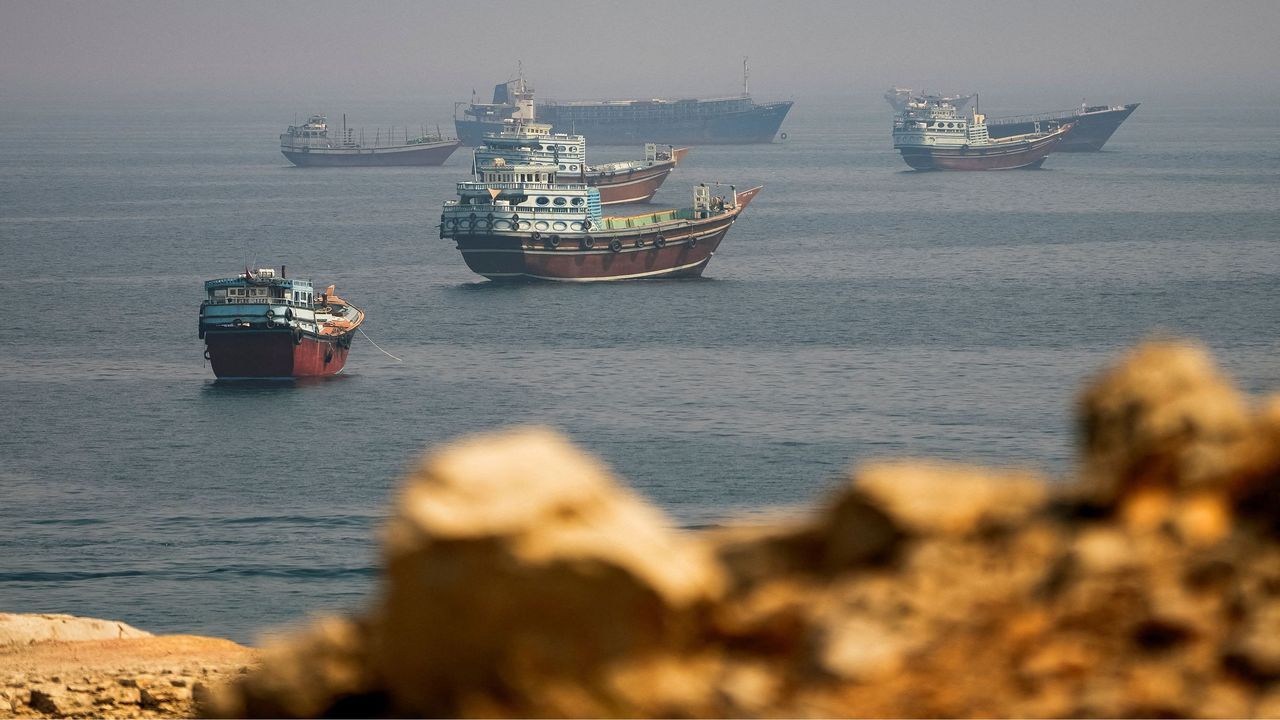
Japan’s reaction is even more concrete. In an analysis by Nippon.com, the war with Iran is described as a source of American distrust that Washington is “spreading itself.” For Tokyo, the main risk lies not only in oil and shipping through the Strait of Hormuz. If U.S. aircraft carriers and other forces remain tied down in the Middle East for an extended period, deterrence in the Indo-Pacific will weaken—above all in a potential crisis around Taiwan. This is an important Japanese qualification to the American agenda: in Washington, Iran is often treated as a separate theater, while in Tokyo it is seen as an event that directly changes the calculations of Beijing, Pyongyang and Moscow.
In South Korea, the Iranian issue is also heard as an economic and political threat. Korean commentators note that Trump has publicly promised to end the war after the November midterm elections, linking the end of the conflict to falling oil prices. The Hankyoreh interpreted this as an attempt to reassure voters alarmed by the prolonged war and high energy prices. But for Seoul, the very linkage is troubling: the security of a crucial oil route and the fate of the conflict appear to depend on the U.S. domestic political calendar. And when Trump said on September 18 that a “serious decision” was approaching—whether to resume major strikes against Iran—Korean newspapers read it as a signal that the scale of escalation is still determined by the president’s personal choice rather than by a stable allied strategy. (mk.co.kr)
The second issue is the price of the American alliance. This became particularly acute after Trump’s August 17 order to sharply reduce joint U.S.–South Korean exercises, citing his “excellent relationship” with Kim Jong Un. The conservative South Korean newspaper Dong-A Ilbo expressed the fear in stark terms: a unilateral reduction in exercises casts the shadow of a “Korea without Korea”—that is, the risk of a direct Washington–Pyongyang deal made over Seoul’s head. In this view, the problem is not simply the number of days of exercises; it is that the ally does not know whether its defense might become a bargaining chip in the U.S. president’s personal diplomacy.
There is, however, another, more pragmatic view in Korea. Lee Sang-shin, director of the Unification Policy Department at the Korea Institute for National Unification, argues in an institute analysis that reducing the exercises could potentially be compatible with Seoul’s policy of “responsible peaceful coexistence” with the North. In his assessment, the theory that Korea was being punished for refusing to participate in the Iranian operation should not be overemphasized. More important is to use the opening to resume U.S.–North Korean dialogue—while ensuring that Seoul is not excluded from it. This is the distinctly Korean duality: concern over American unreliability coexists with the hope that the same unpredictability could open a path toward easing tensions on the peninsula.
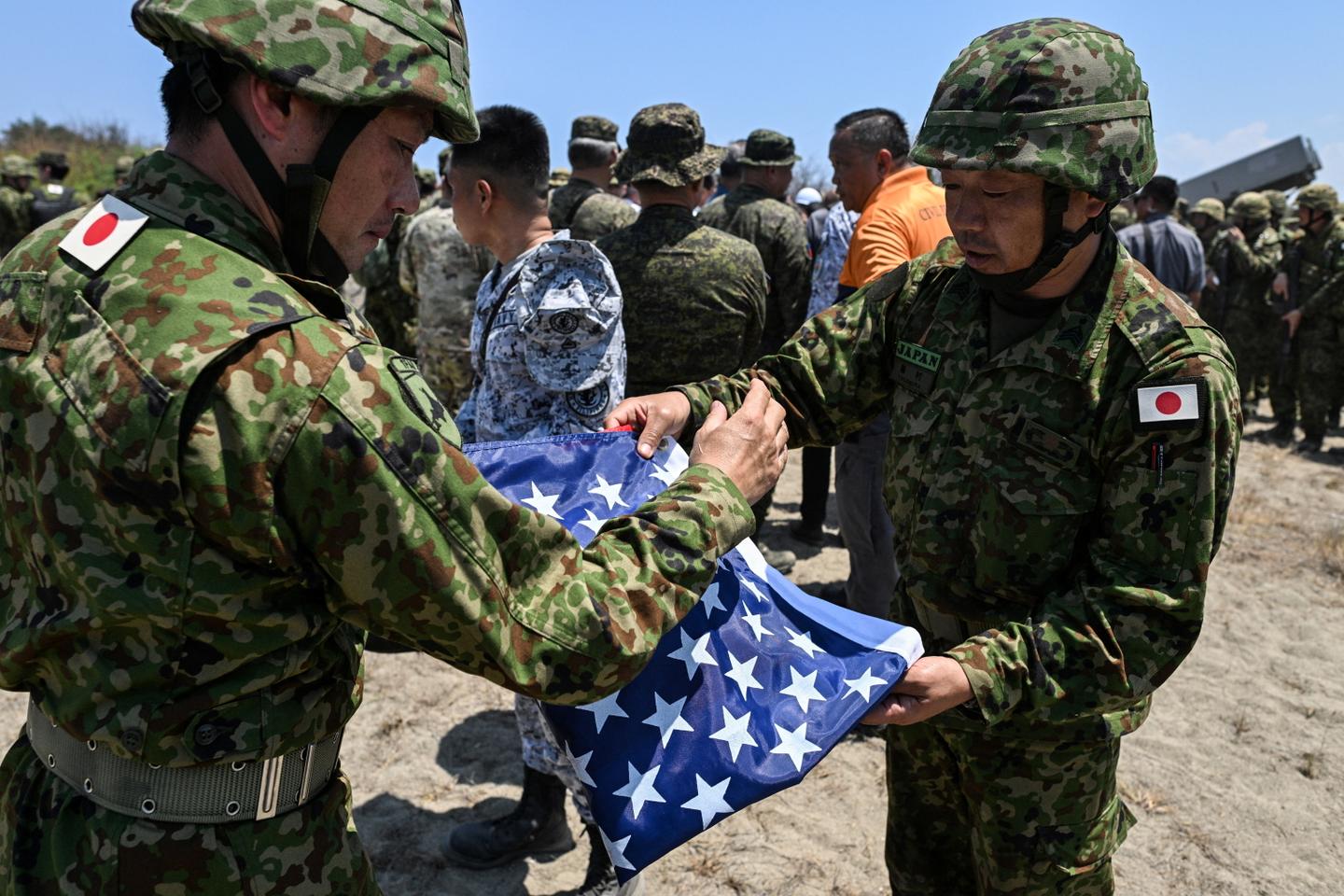
Japanese analysts view this as a redistribution of responsibilities throughout the American alliance system. In an East Asia Institute report, the simultaneous expansion of the Japan–U.S.–Australia Oriental Shield 26 exercises and reduction of the U.S.–Korean program are described as an asymmetric restructuring: the burden is increasing along the Japan–Australia–India axis while weakening along the U.S.–Korea axis. This leads to an unusually sober Japanese conclusion: Tokyo should not automatically interpret the reduction in exercises as an American withdrawal, but it must prepare for Washington to demand ever more insistently that allies bear the costs and risks of regional deterrence themselves. (global.eai.or.kr)
The French view overlaps with the Japanese one, but leads to a different political instinct. For Paris, the instability of American commitments is another argument in favor of European strategic autonomy. French observers see Trump’s conduct as more than an Asian problem: it demonstrates how dangerous it is to build security on the assumption that the U.S. president will consistently follow established alliance practices. Paris is therefore more focused on Europe’s ability to act independently, while Tokyo is concerned with strengthening the network of alliances around Japan, and Seoul with avoiding becoming an object of negotiations between great powers.
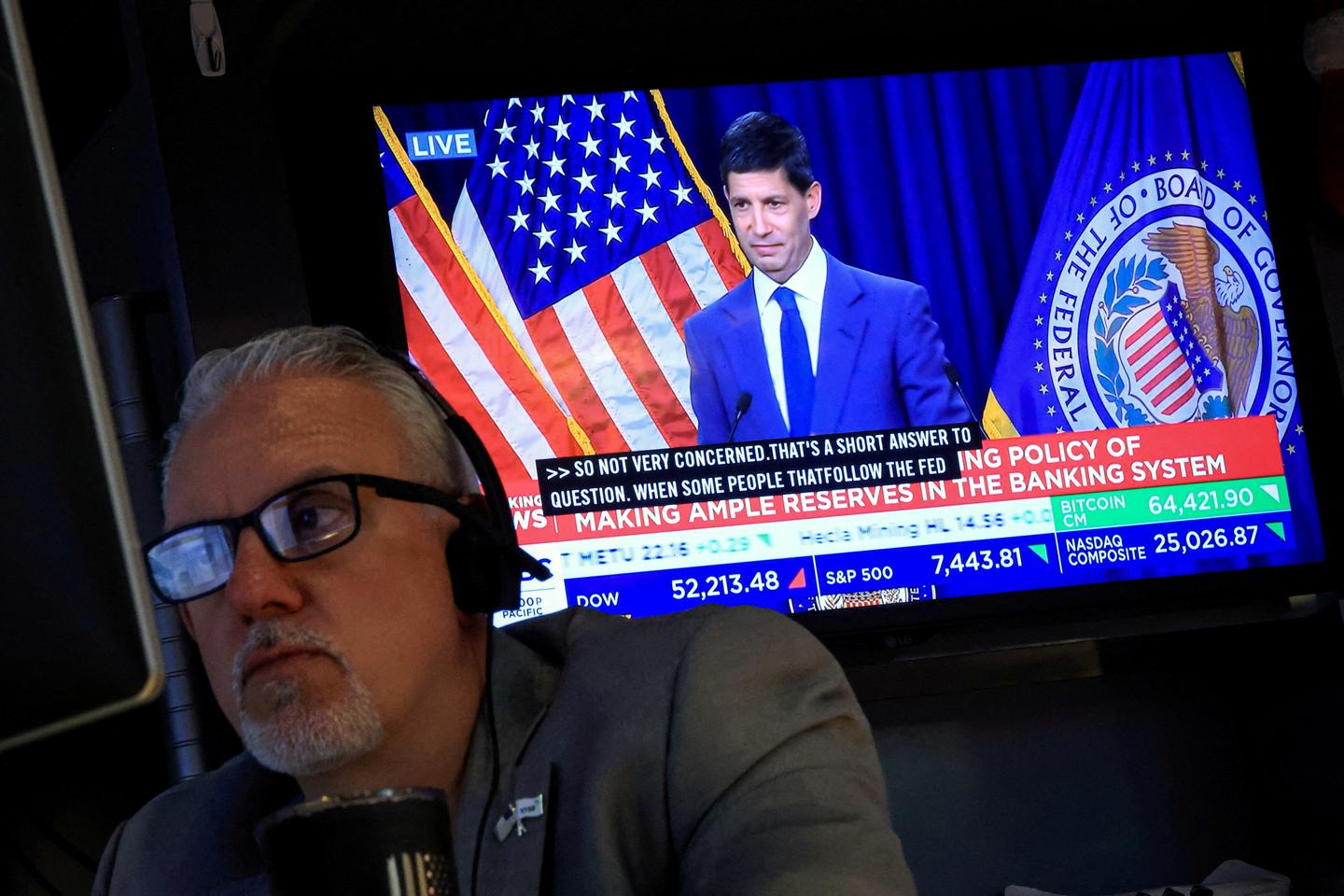
The third common thread is the merging of economics and security. Trump is pressuring the Federal Reserve, threatening to halt trade with countries that run trade surpluses with the United States, and making no secret of his willingness to use tariffs as a personal lever. As Le Monde notes, this approach is not reducing uncertainty but expanding it: tariffs fuel inflation, while political pressure on the Fed calls into question the predictability of U.S. economic policy. For France, this is above all a warning about the vulnerability of European exporters to bilateral threats from Washington.
For South Korea, economic pressure is already inseparable from alliance issues. The Korean newspaper Hankyoreh cites Andrew Yeo, a Korean affairs specialist at the Brookings Institution, as saying that accumulated disagreements over investment in the United States could damage relations between the two countries, with security and economics in the Trump administration potentially ending up “on the same table.” This is especially revealing: Seoul’s investments, participation in U.S. projects, shipbuilding, technology and possible support in the Strait of Hormuz are all becoming elements of a single bargain. Even tariffs on specific Korean goods, including solar-energy and drone components, are perceived not as ordinary commercial measures but as part of this new negotiating environment. (hani.co.kr)
This is where the French, Japanese and Korean reactions converge. They do not share an identical assessment of Trump: in France, concern is stronger over international law and European autonomy; in Japan, over a military vacuum in Asia; and in Korea, over the risk of being bypassed in negotiations with the North. But all three countries reach the same conclusion: America remains an indispensable power, yet the old formula of trust in it no longer works automatically. An alliance with Washington now requires not only loyalty but also constant hedging—with national military capabilities, diversified economic ties and readiness for the next American turn to be announced on social media before allied capitals even hear about it.


![President Trump. [Yonhap News]](https://wimg.mk.co.kr/news/cms/202609/18/news-p.v1.20260918.cd984b7ed2b243ea896504ad901ded13_P1.jpg)