In the first days of September, the main American issue in Japanese, Chinese and Turkish discussions was not U.S. domestic politics itself, but a combination of three elements: a new escalation of pressure on Iran, the threat of secondary sanctions against its trading partners, and Washington’s familiar use of tariffs as an instrument of coercion. Local observers see the same pattern in all this: the United States is trying to preserve freedom of military and economic maneuver, while the costs of this strategy—from expensive oil to disrupted supply chains—are shifted onto allies, Iran’s neighbors and the largest Asian economies. Following the U.S. strike on facilities on Iran’s Larak Island on August 30 and Tehran’s retaliatory actions, tensions around the Strait of Hormuz were once again perceived not as a prolonged backdrop but as a risk of immediate escalation. (thepaper.cn)
The broadest reaction in all three countries is skepticism toward the idea that economic strangulation can replace a political settlement. In China, this skepticism is expressed most directly. In a Pengpai analysis, Sun Degang, director of the Center for Middle East Studies at Fudan University, describes a shift in roles: the United States, he says, is seeking to “wear Iran down through an economic cold war,” while Tehran is trying to force Washington to accept its terms more quickly through active measures. The Chinese interpretation is important because it does not reduce the crisis to the nuclear program: control over Hormuz is understood as a test of whether America still retains the ability to set security rules in the Persian Gulf unilaterally. In another Chinese analysis, Qin Tian, deputy director of the Institute of Middle East Studies at the China Institutes of Contemporary International Relations, calls control of the strait a symbol of American hegemony in the region: in his view, yielding here would signal its weakening. (chinanews.com.cn)
At the same time, the Chinese debate emphasizes the limits of American pressure. Pengpai notes that the policy of maximum economic pressure announced by Washington on August 19 depends less on the forcefulness of its language than on whether third countries—above all the UAE and China—are actually prepared to cut off Iran’s trade and financial channels. Chinese authors see a contradiction here: the United States wants to punish countries supporting Tehran, but overly strict enforcement of secondary sanctions would inevitably affect Chinese banks, oil refineries and yuan-based transactions, turning the Iranian issue into a new front in the U.S.-China confrontation. This prospect is already apparent in Japanese analysis as well: the Dai-ichi Life Research Institute believes that the exclusion of major Chinese banks from the sanctions campaign may be explained by the White House’s reluctance to worsen relations with Beijing ahead of the planned September 24 meeting between Donald Trump and Xi Jinping. (dlri.co.jp)
In Japan, the same American campaign is viewed primarily through the language of an ally’s vulnerability. Tokyo does not publicly dispute Washington’s stated goal—preventing further destabilization of the region—but focuses on the consequences for Japanese companies, shipping and energy security. Chief Cabinet Secretary Kihara said on August 25 that the government was studying the substance of the new U.S. measures and their impact on Japanese businesses; at the same time, he stressed the importance of reopening the Strait of Hormuz as soon as possible and reaching a final U.S.-Iran agreement. (news.tv-asahi.co.jp) This is a characteristically Japanese formula: not directly challenging American power, but demanding predictability and a negotiated way out of the crisis. Japanese commentators, however, are increasingly unsure that Washington is genuinely moving toward a deal. In a Kobe Shimbun editorial, the American approach is described as having reached its limit: pressure is being applied not only to adversaries but also to allies, while expanding the sanctions coalition remains doubtful precisely because of China’s resistance. (kobe-np.co.jp)
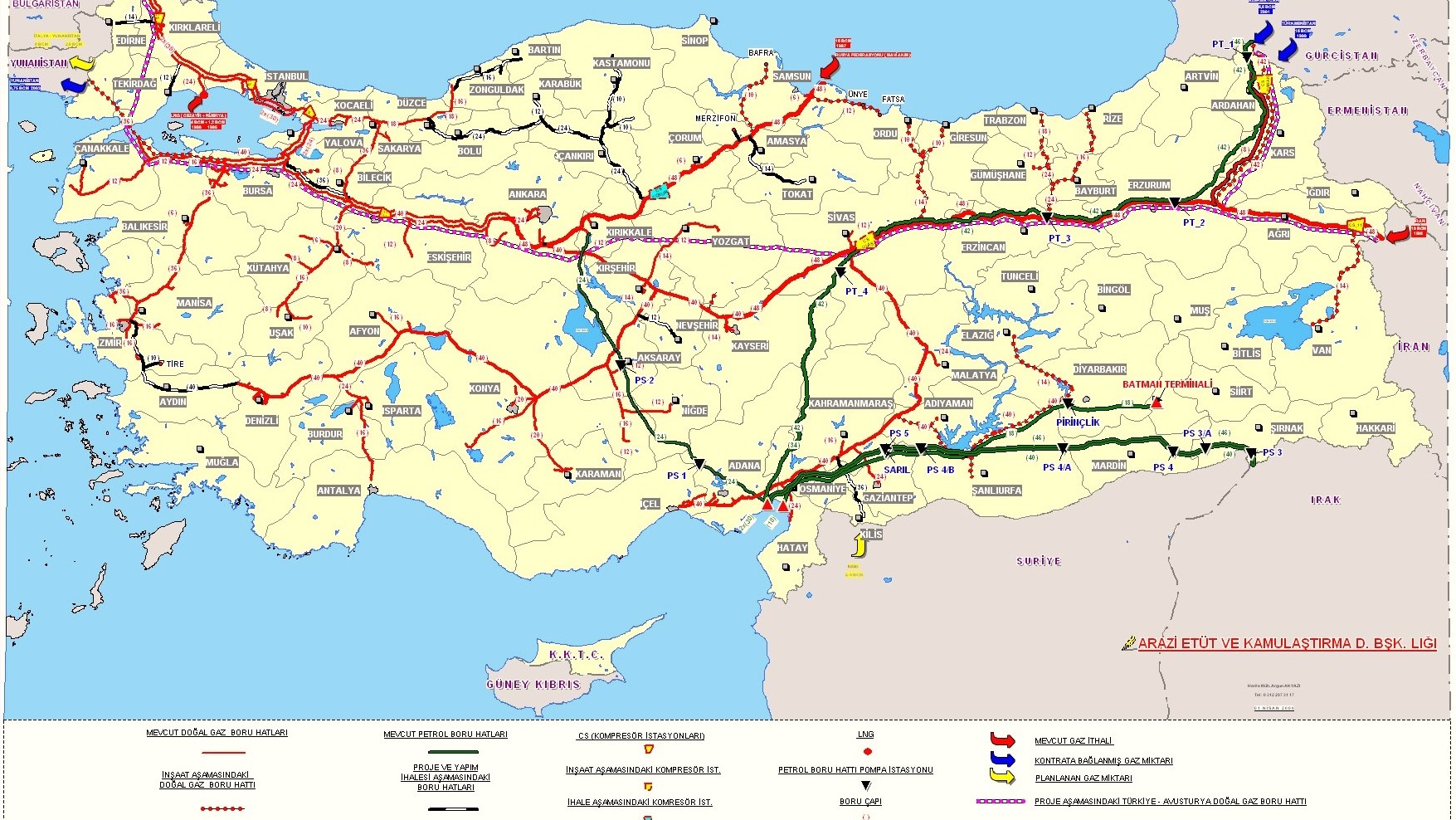
For Turkey, the American line on Iran is not an abstract dispute over the global order, but almost an accounting problem capable of becoming a social one. In a Turkish DW report, the threat of secondary sanctions is described as a direct challenge to a country that remains one of Iran’s major trading partners. The concern is not limited to a decline in bilateral trade: the U.S. warning that violators could be shut out of the dollar-based financial system affects banks, logistics companies and exporters even before any penalties are formally imposed. Turkish energy expert Mehmet Öğütçü, writing in a column for Yetkin Report, advises Ankara to prepare a “dual stress test” in case sanctions against Iran and Russia are intensified simultaneously. His particularly striking conclusion is that losing Iranian gas would be a manageable problem on its own, but the simultaneous impact of Iranian and Russian sanctions shocks would turn energy into a systemic economic and strategic crisis. (yetkinreport.com)
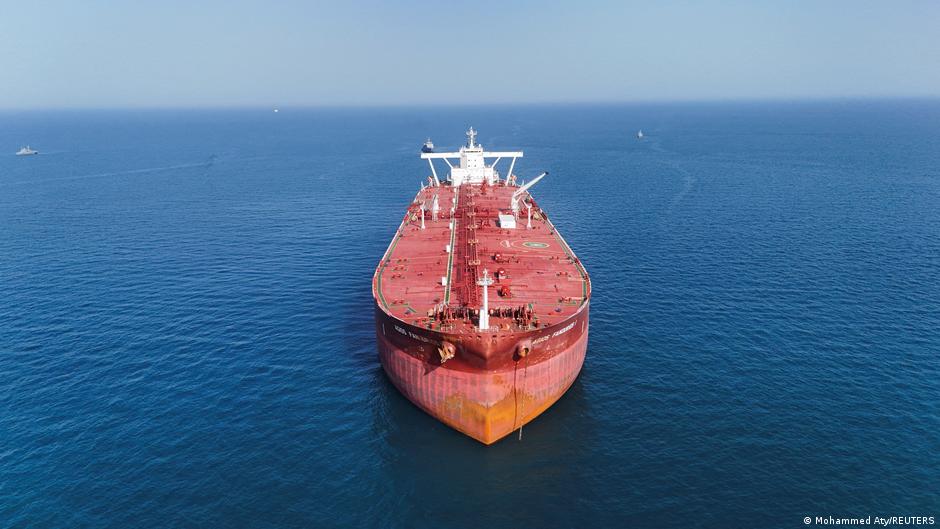
That is why in Turkey, the debate over the United States quickly becomes a debate about oil, inflation and the current account. DW Türkçe cites an estimate by the Central Bank of the Republic of Turkey: a $10 increase in the price of oil could widen the country’s current-account deficit by $2.6 billion over the following 12 months. For an economy still struggling with high inflation, Hormuz is not a distant sea passage but a channel through which the U.S.-Iran conflict is transmitted into gasoline prices, imports and credit costs. Analysts at Gedik Yatırım put it even more clearly: uncertainty surrounding the strait is critical for Turkish inflation and monetary policy. (amp.dw.com)
The second common theme is tariffs as part of the same American philosophy of pressure. In Japan’s case, this is particularly painful: NRI executive economist Nobuhide Kiuchi writes that the new 12.5% tariff on Japanese goods introduced in July continues a policy in which the Trump administration is seeking new legal grounds for trade pressure after courts restricted its previous tariff mechanisms. His key conclusion concerns not the size of the rate but its consequences: this tactic increases uncertainty for both the Japanese and global economies. (nri.com) Chinese economic reviews offer an almost mirror-image assessment: the new U.S. tariff regime against dozens of trading partners is viewed as a “change of packaging,” rather than a rejection of the previous policy; under this logic, much of the cost is passed on to American importers and consumers, while the global price is reflected in instability across production chains. (finance.sina.com.cn)
Ultimately, Japanese, Chinese and Turkish perspectives differ in their political sympathies but converge in their diagnosis. Japan fears that its alliance with the United States does not protect it from arbitrary economic demands. China sees an attempt to preserve slipping strategic superiority without entering into a direct and excessively costly confrontation with Beijing. Turkey views Washington as a power whose decisions could simultaneously obstruct trade with a neighbor, raise energy prices and narrow the room for independent diplomacy. The most unexpected common theme in these discussions is not whether America is strong enough, but whether it can still turn power into a durable order. For now, local analysts are answering this question with growing caution: the United States can radically change the rules, but is becoming less and less able to ensure that the rules will work afterward.